


The Luce is Ferrari moving forward in its own way. With an interior developed alongside one of the world’s most respected design collectives, and a name that simply means light, Ferrari sets out its electric future.
This February Ferrari revealed both the interior and the name of its new full electric sports car at an event in San Francisco. Luce, meaning light or illumination in Italian, is intended as more than a model name. Ferrari frames it as a guiding idea. Electrification here is a means, not the end goal. Design, engineering and imagination come together to create something genuinely new rather than simply adapting what already exists.
The presentation marked the second of three reveal stages. The underlying technology was first shown at Ferrari’s facility in Maranello in Italy in October 2025, while the exterior will finally be unveiled this coming May. The rollout has been gradual, allowing each element of the car to be introduced and understood before the full picture appears.
Built with the best
Much of what makes the Luce interesting comes from Ferrari’s five year collaboration with LoveFrom, the creative collective founded by designers Sir Jony Ive and Marc Newson. Their brief was straightforward but ambitious. Rethink how drivers interact with cars at a time when screens and software increasingly dominate cabin environments.

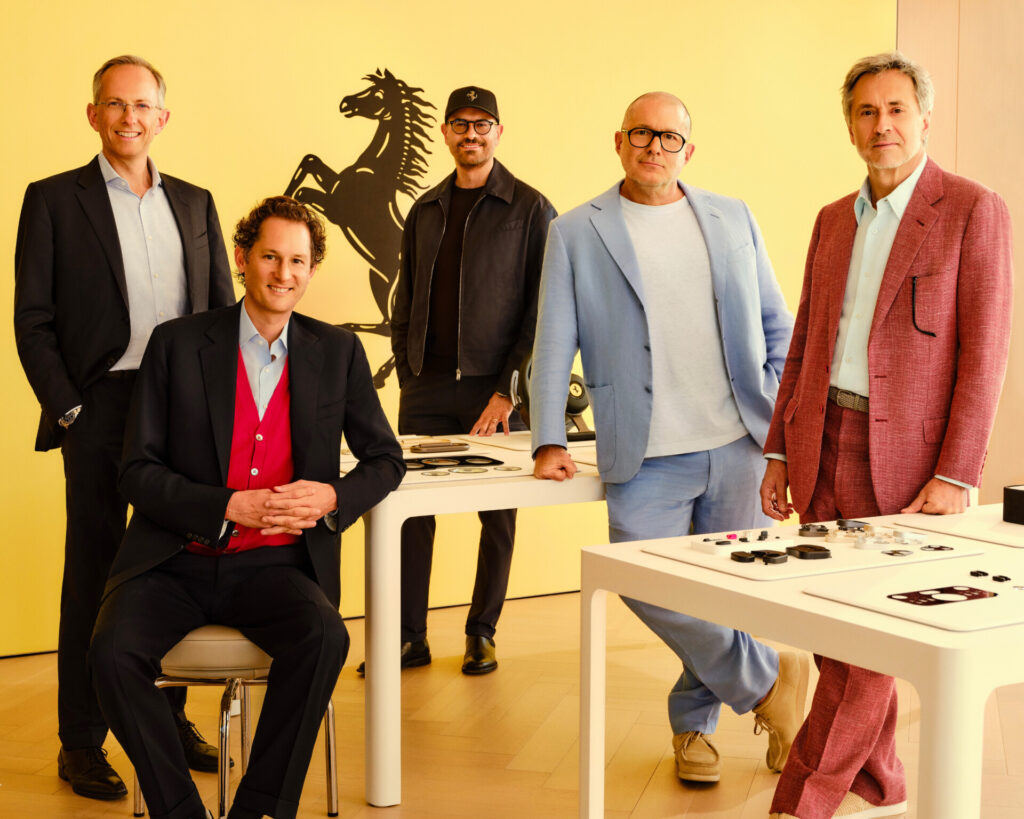
LoveFrom worked closely with Ferrari’s design team led by Flavio Manzoni, with a clear philosophy guiding decisions. Make interaction feel natural. Remove anything unnecessary. Keep the driver at the centre. Importantly, the collective was given real creative freedom from the start, and the consistency of the final result reflects that trust.
Inside the Luce
Inside, the cabin reads as one clean, uncluttered space. Displays, controls and layout all serve driving first. Nothing feels decorative or overloaded. Hardware and software were developed together, so physical and digital elements feel like parts of one coherent system rather than separate layers.
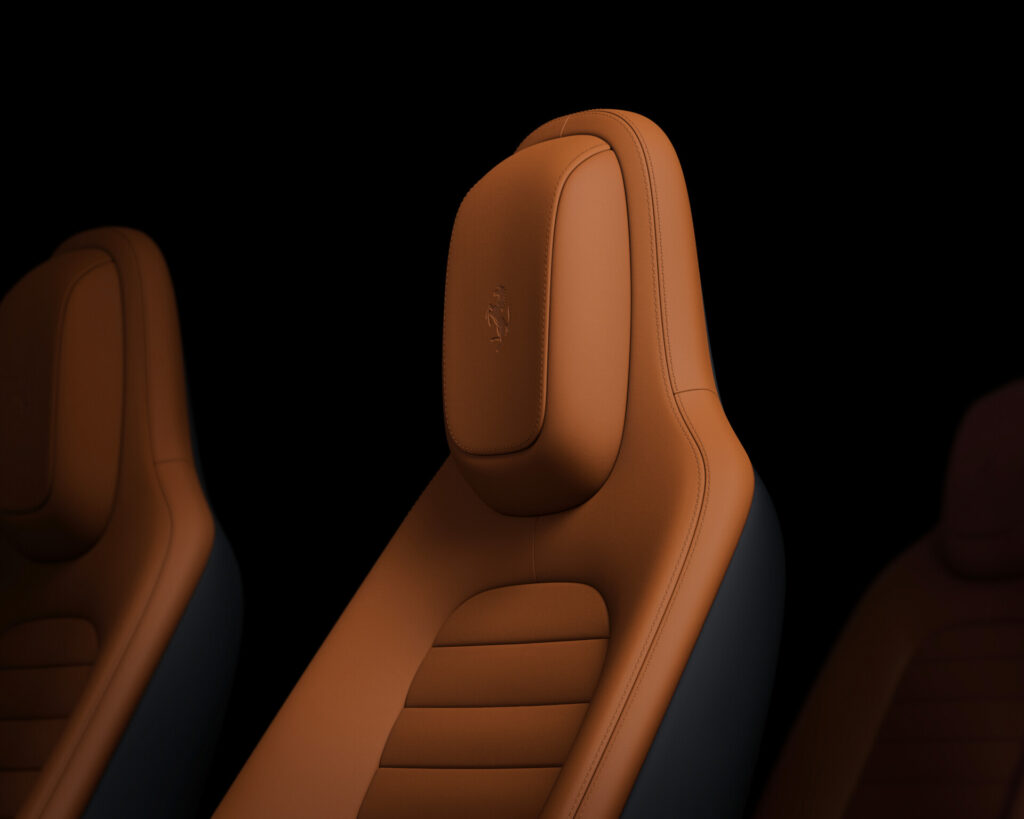
A simple organising idea runs through the interior. Controls sit where hands expect them, while information appears where eyes naturally fall. Drivers get what they need quickly, without distraction. It sounds obvious, but achieving that level of clarity is surprisingly difficult.
Hands on
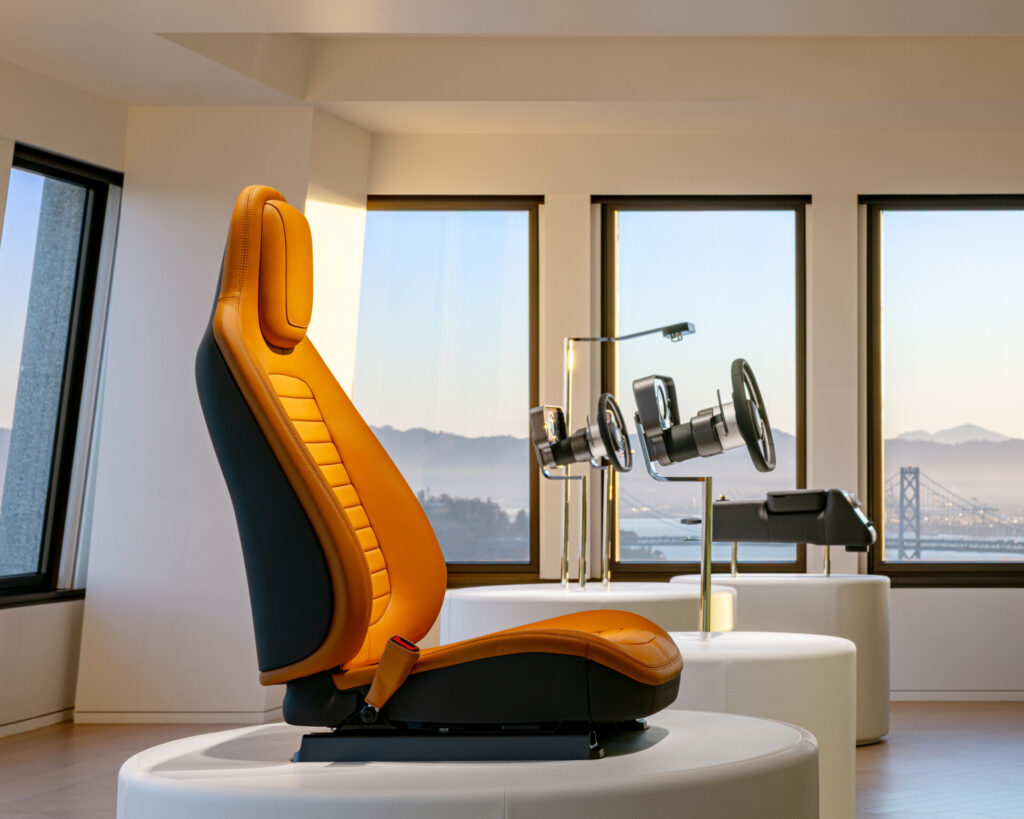
One of the most refreshing decisions is Ferrari’s resistance to the industry trend toward giant touchscreens. Many controls in the Luce remain physical, using buttons, toggles and dials that provide proper feedback when used. The layout draws from classic sports cars and Formula One thinking, focusing only on essential functions.
The steering wheel is a good example. Built from fully recycled aluminium alloy developed specifically for this car, it takes inspiration from classic three spoke wheels produced by Nardi in the 1950s and 60s. Nineteen CNC machined parts form the wheel, and it weighs 400 grams less than a standard Ferrari steering wheel. That reduction may sound small, but drivers notice details like this.
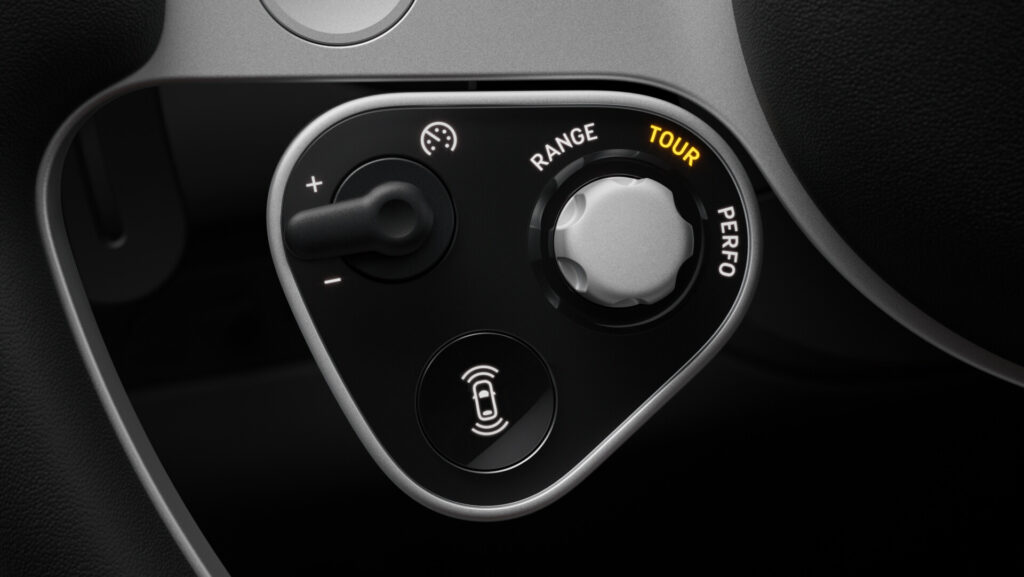
Controls are grouped into two analogue clusters, echoing Formula One layouts. Ferrari test drivers ran more than twenty evaluation sessions to fine tune both the tactile feel and even the sound of each button press. These are small details, but they shape the experience every time the car is driven.
It starts with the key
Ferrari has always made something of the ignition moment, and the Luce continues that tradition. The key itself is crafted using glass technology from Corning Incorporated, marking the first time the material has been used in a car key. It carries an E Ink display that consumes power only when its colour changes, another automotive first.
Docking the key in the central console triggers a short sequence. Its colour shifts as it settles into place, while the binnacle and control panel illuminate together. Nothing dramatic, but enough to build anticipation before the car even moves. Small rituals like this often become the moments drivers remember most.
The view from the driver’s seat
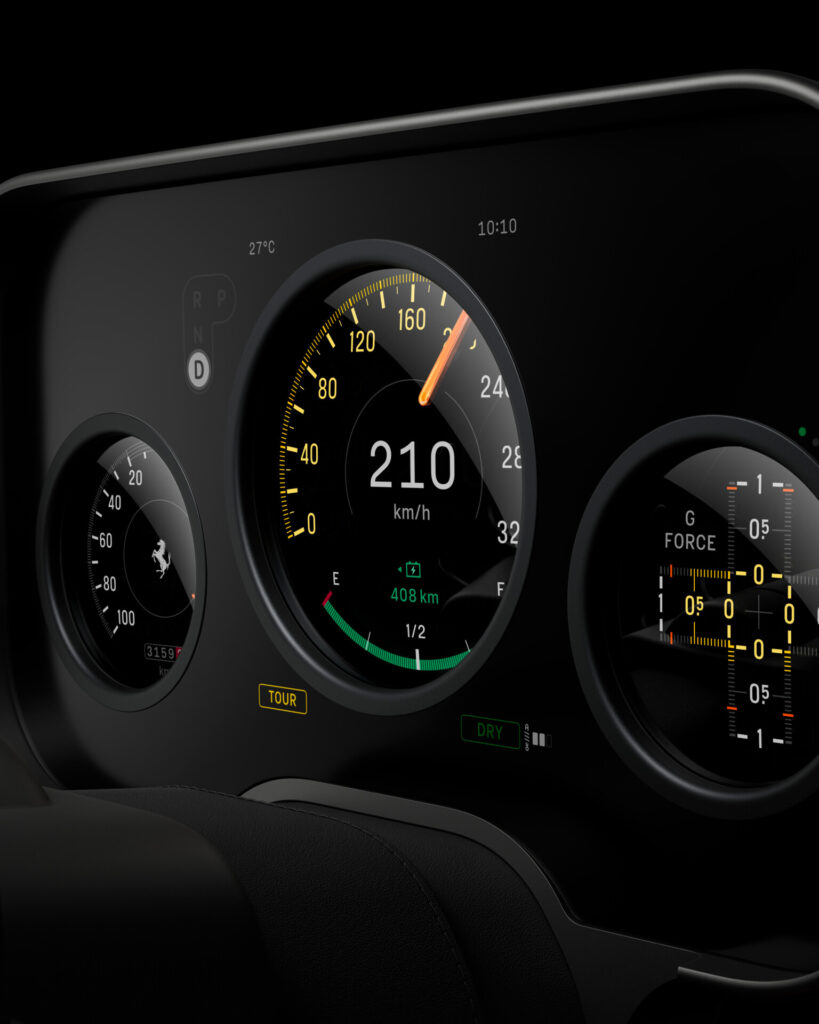
Three displays structure the cabin experience. A driver binnacle, a central control panel, and a rear control panel share a new custom typeface inspired by historic Ferrari typography and Italian engineering lettering, giving visual consistency throughout.
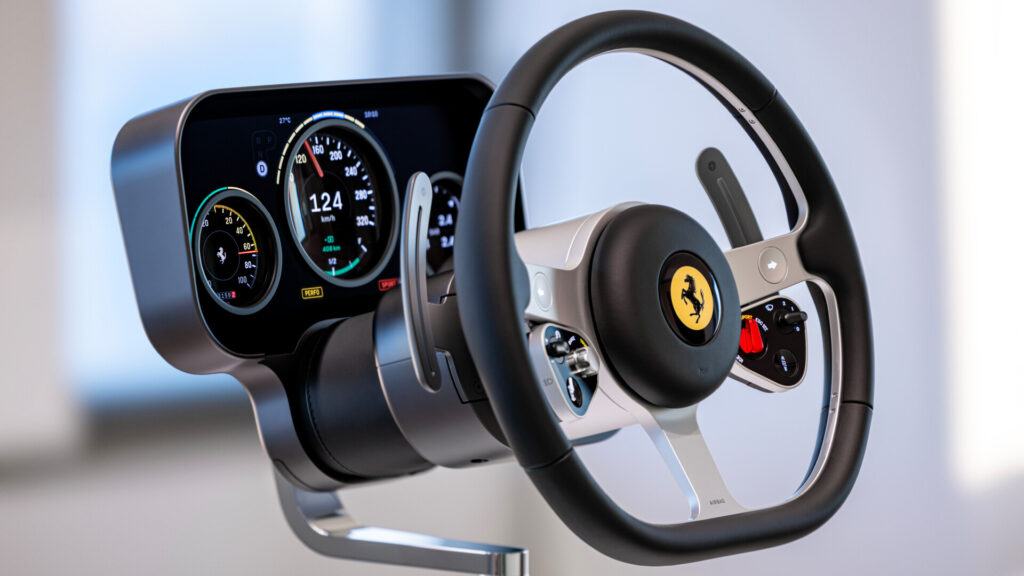
The binnacle is especially interesting. For the first time in a production Ferrari, the instrument cluster is mounted directly on the steering column, moving with the wheel when adjusted. Two overlapping OLED displays create the unit, developed with help from engineers at Samsung Display. The upper display contains three cutouts revealing a second screen beneath, producing a layered depth that catches the eye without becoming distracting.
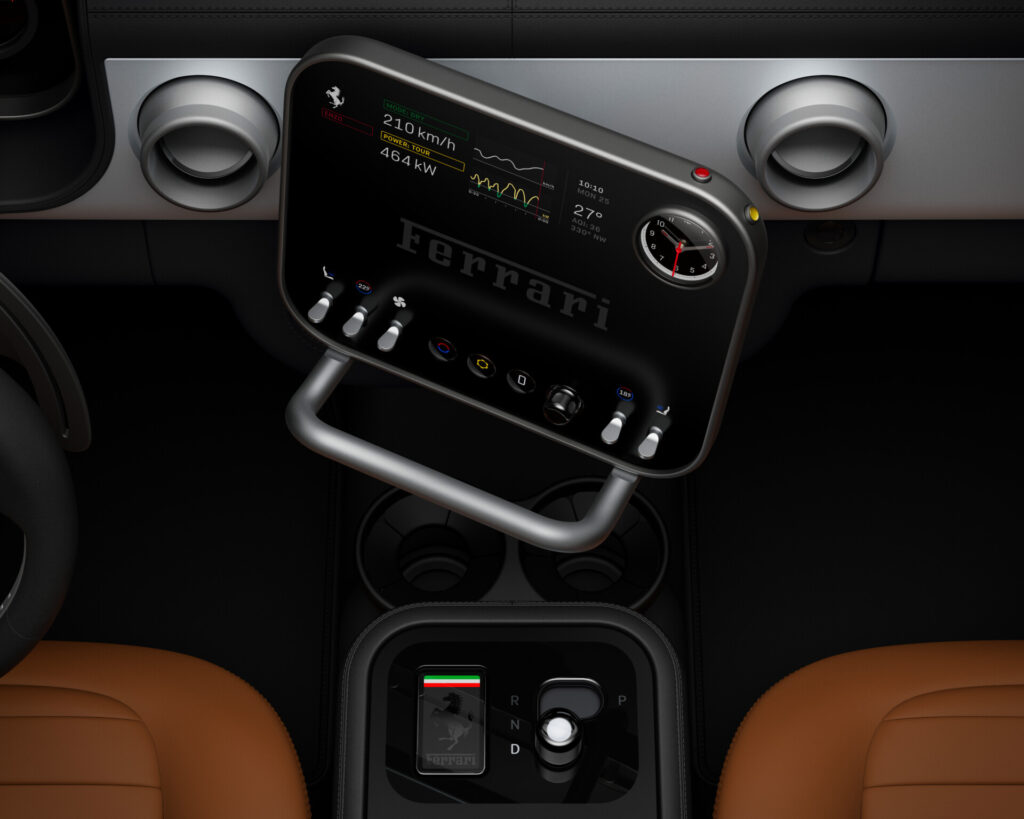
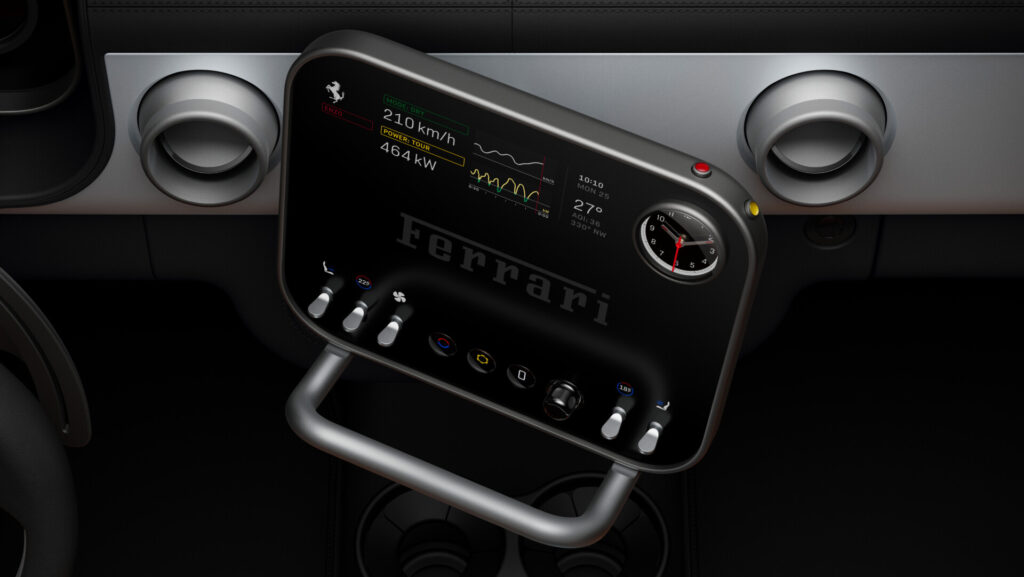
The central control panel sits on a ball and socket joint, allowing it to turn toward either driver or passenger. A palm rest makes operation comfortable without needing to look down. Built into this panel is one of the car’s most unexpected features, a multigraph that feels closer to watchmaking than automotive design.
Three tiny motors move aluminium hands across a minimalist dial, offering four modes including clock, chronograph, compass and launch control. Watching the hands shift between functions feels mechanical and tactile, even though it is digitally controlled. It is a small detail, but one that neatly captures Ferrari’s blend of heritage and modern technology.
The Materials
Material choices throughout the Luce feel purposeful. Aluminium components use fully recycled alloy, machined from solid billets and finished through an anodisation process that creates microscopic hexagonal structures on the surface. The result improves durability while maintaining a rich finish designed to last.
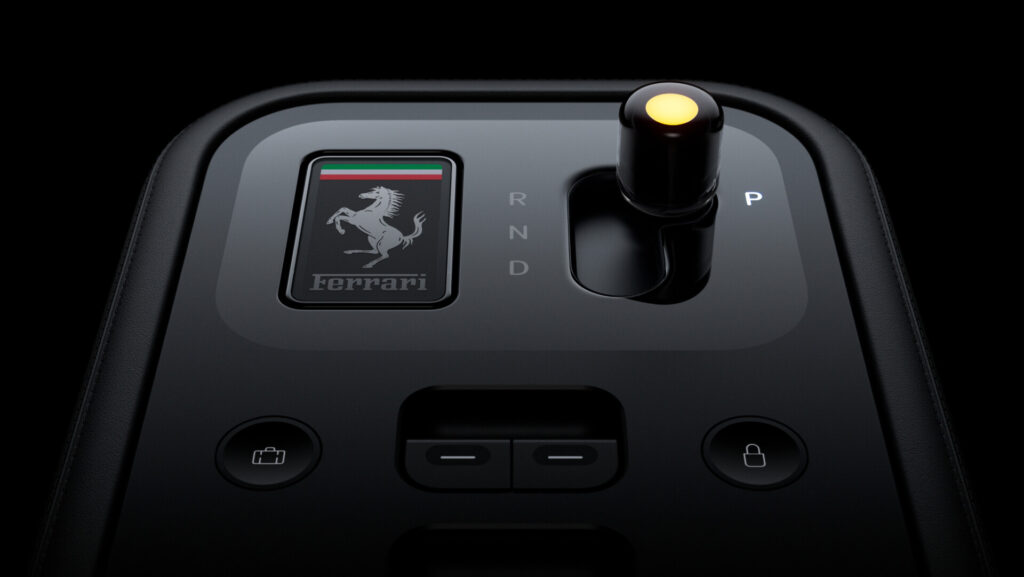
Glass appears across the cabin, from the central console to the shifter. Producing the shifter required new manufacturing techniques, with lasers creating holes half the width of a human hair to lay down graphics with extreme precision. The same tough glass technology appears across major touch surfaces, chosen for clarity and resistance to scratching and impact.
The Full Reveal
The exterior will finally be revealed in Italy this May, and expectations are understandably high after such a detailed interior preview. What has already been shown suggests Ferrari understands what needs to evolve and what should remain untouched. The Luce feels like Ferrari deciding how electric driving should work on its own terms. And that difference is likely to matter.