


Lexus has unveiled the LFA Concept, a battery-electric sports car designed to answer a challenging question: can an EV truly move the soul? Its reveal arrives amid the automotive industry’s electrification push, a transition often at odds with the intangible qualities that make sports cars special.
What sets this concept apart is its development alongside Toyota Gazoo Racing’s GR GT and GR GT3 models, under the personal guidance of Toyota Motor Corporation Chairman Akio Toyoda, better known in automotive circles as Master Driver Morizo. His mission is to safeguard the craftsmanship and engineering techniques that risk fading as the world shifts to electric propulsion.
The car draws inspiration from Shikinen Sengu, a centuries-old Japanese practice in which Shinto shrines are periodically rebuilt to preserve and transmit craftsmanship across generations. Applied to the LFA Concept, veteran engineers mentor emerging talent, ensuring knowledge evolves while tackling the unique challenges of electric sports car design.
Engineering Foundations with Racing DNA
The LFA Concept rests on three core principles: a low centre of gravity, minimal weight paired with high rigidity, and uncompromising aerodynamic efficiency. Techniques developed for the GR GT and GR GT3 flow into the concept, while electric-specific innovations explore what battery power can uniquely offer.

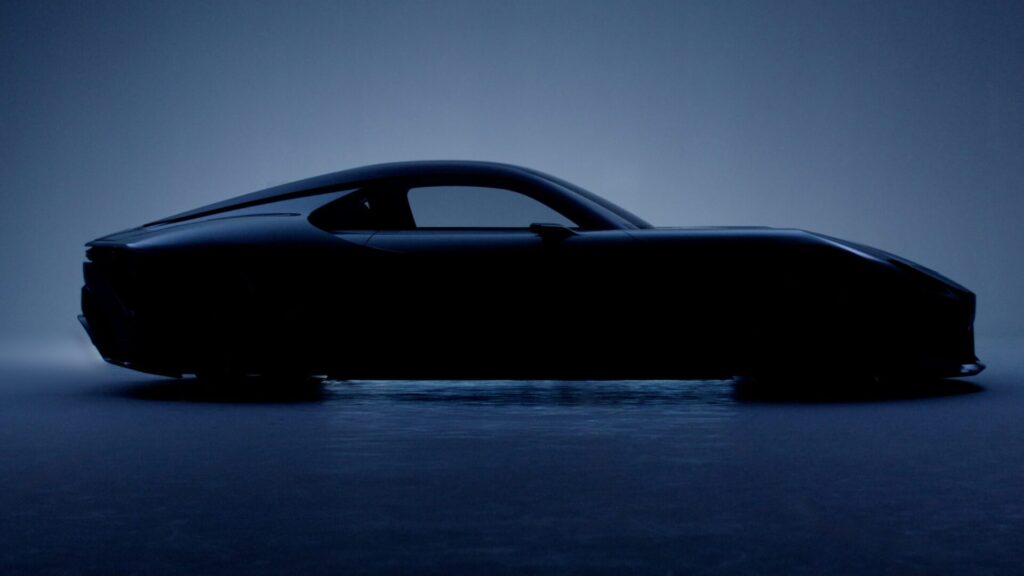
At 4,690mm long, 2,040mm wide, and just 1,195mm tall, the proportions are purposeful. A 2,725mm wheelbase promises balanced handling, while the low roofline hints at aerodynamic intent rather than mere aesthetics. Seating is strictly for two.
Powertrain and Performance Vision
An all-aluminium chassis prioritises lightness and torsional stiffness, borrowing from GR GT architecture to manage battery mass while maintaining razor-sharp responsiveness. Every element is designed to translate driver input into precise performance. While exact output figures remain under wraps, the concept leverages high-voltage battery packs integrated into the chassis floor for mass centralisation. Cooling channels, rigid battery trays, and heat-exchange solutions are designed to maintain peak performance under high-load conditions, whether cornering on a track or sprinting on an open road.
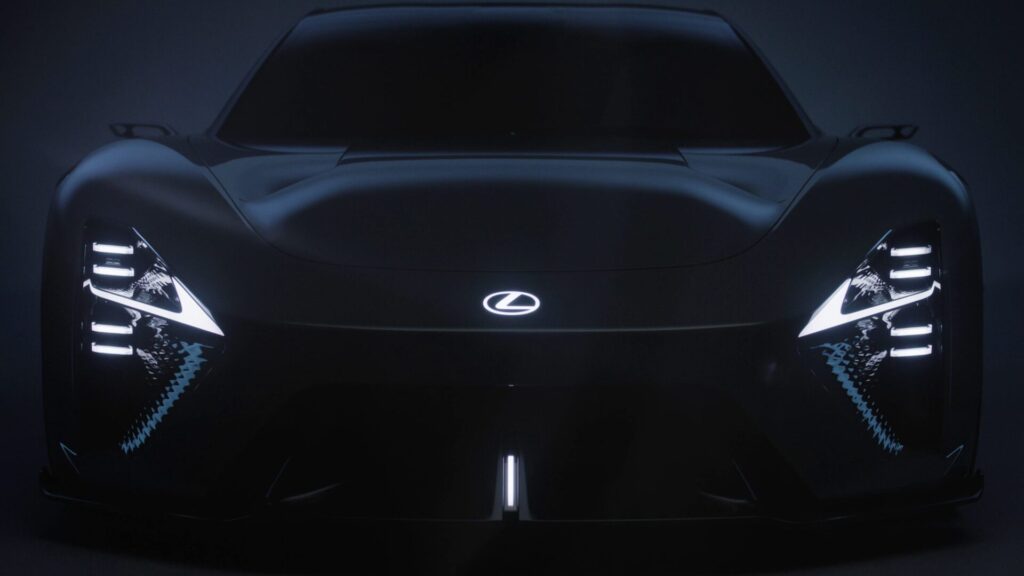
The EV layout allows engineers to redistribute weight optimally, eliminating the traditional engine bay constraint. This grants designers freedom to sculpt a low-slung, aerodynamic profile without compromise. Electric motors are expected to offer near-instant torque delivery, with software-tuned drive modes that replicate the engagement and responsiveness expected from Lexus’ performance halo vehicles.
The Immersion Philosophy
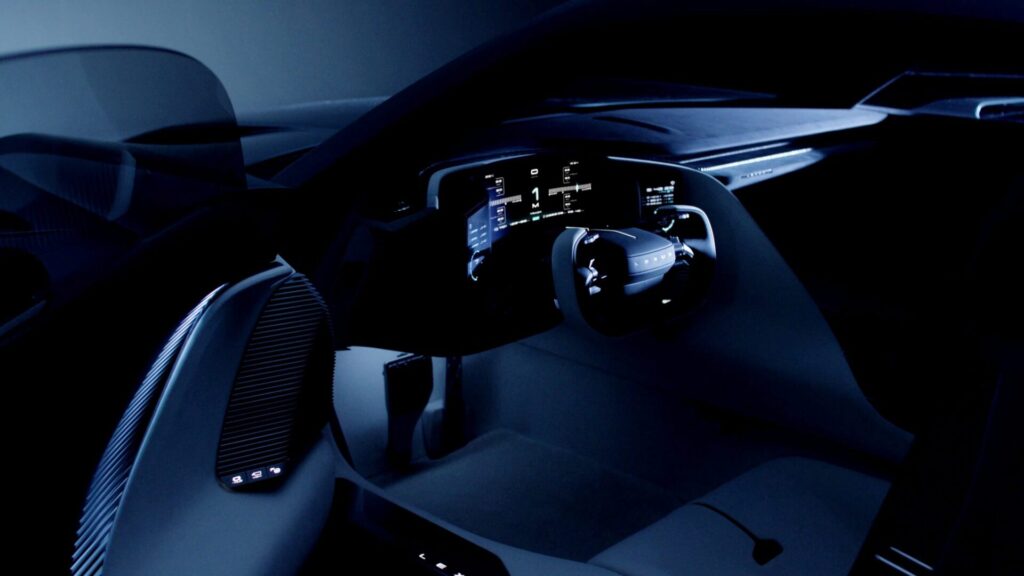
Lexus describes the concept’s core objective as “Discover Immersion”. The cockpit has been engineered around what the manufacturer terms an ideal driving position, designed to enhance the connection between person and machine. Every control surface, every switch placement, every sightline has been refined to create an environment where operating the car becomes instinctive.
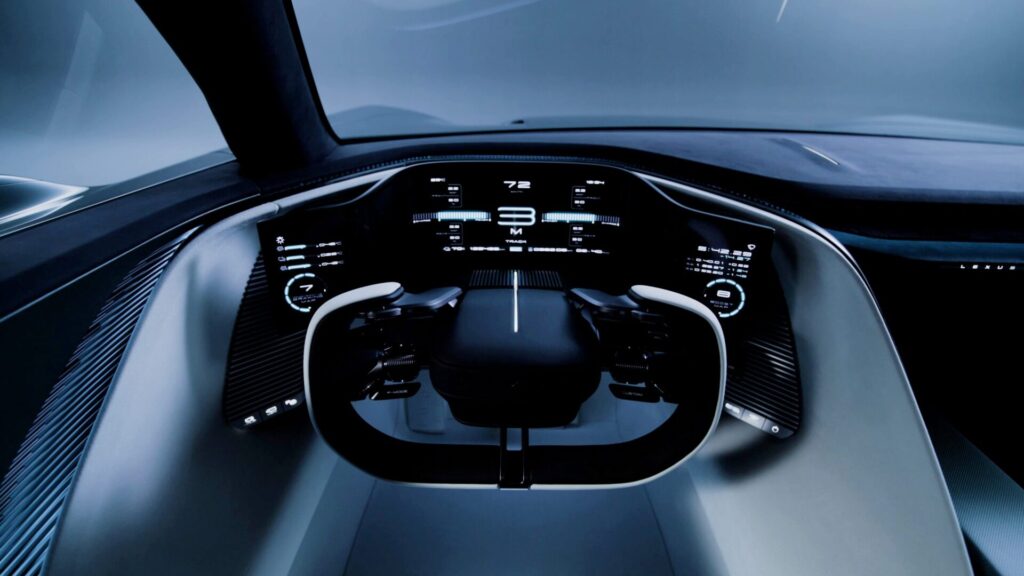
The steering wheel, optimised for sports driving, eliminates hand repositioning mid-corner. Switches are operable by feel alone, so the driver remains fully engaged with the road. Minimalist yet purposeful, the interior strips away distraction, leaving only the pure act of driving.
Form Serving Function
The exterior fuses sculptural design with aerodynamic purpose. Smooth surfaces, controlled air channels, and active aero elements optimise airflow around the wheels and underbody. Battery placement permits a low, elongated nose and cab-forward cockpit, improving drag coefficient while retaining coupe proportions.
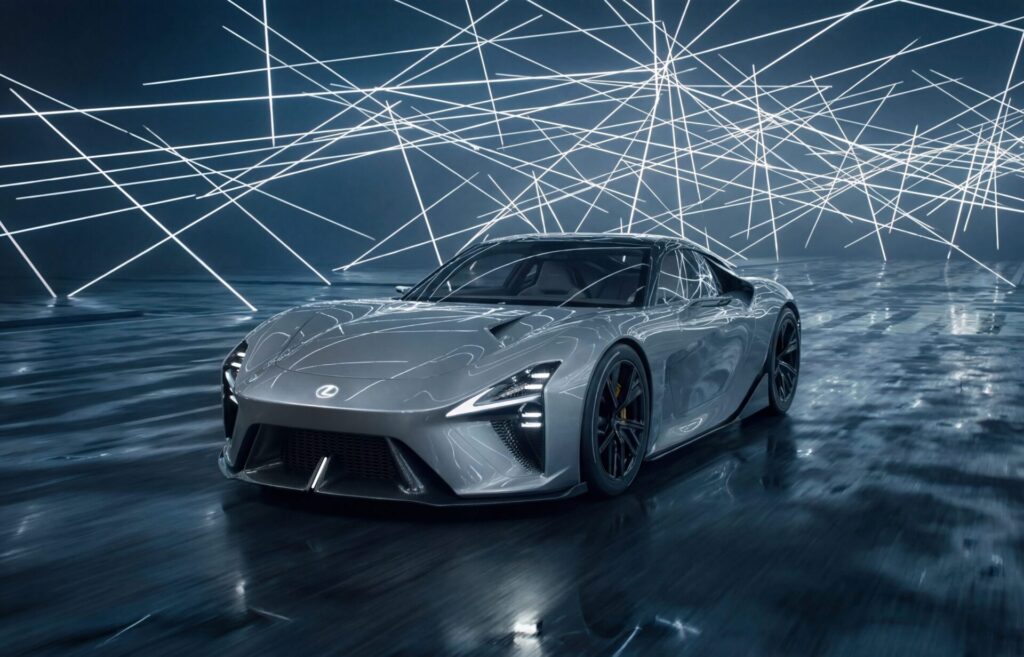
The body is engineered to minimise lift at high speed, with rear diffusers and venting derived from GR GT aero studies. Lexus has positioned this concept as more than visual; the sculpting is integral to stability, cooling, and handling at the limits of EV performance.
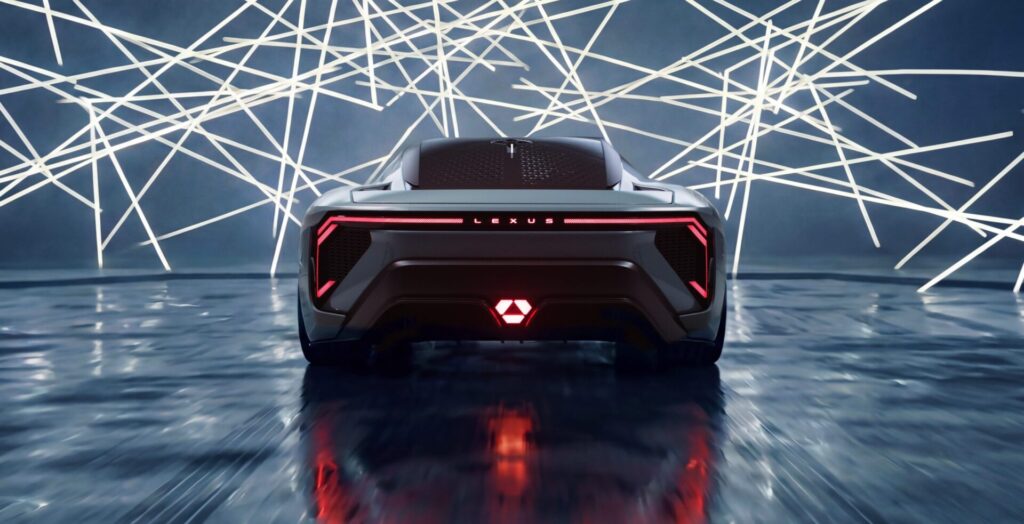
The LFA badge carries some history behind it. The original LFA (2010–2012) set a benchmark with its V10 engine and carbon-fibre monocoque. Here, Lexus signals that EVs can inherit the same engineering audacity and driver-centric philosophy. The concept follows a lineage of halo vehicles, from the Toyota 2000GT to the original LFA, showcasing technical expertise while inspiring future teams.