


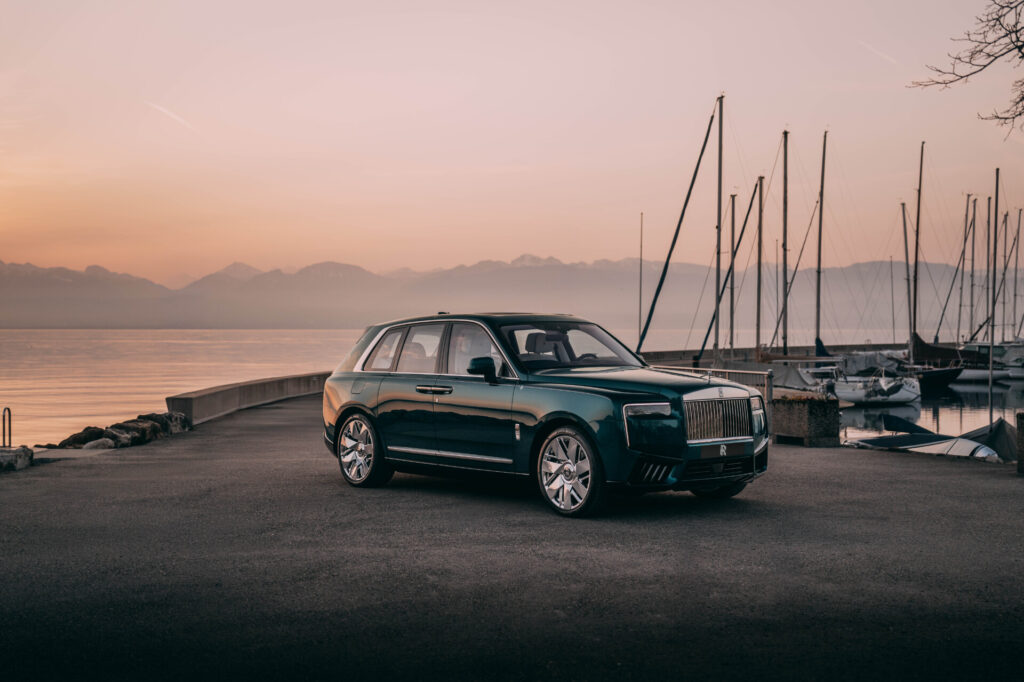
Rolls-Royce has unveiled Cullinan Yachting, four Private Commissions inspired by the world of yachting. Each car is named after a cardinal compass point and carries details drawn from open water, from hand-painted wakes on the fascia to wind charts mapped across the headliner. The collection also traces a personal story, one that begins with the founder of the marque and a 154-foot schooner called Santa Maria.
Rolls-Royce and the sea have a long history together. Before the marque existed, Charles Rolls’ family owned the Santa Maria, a 154-foot, 235-ton schooner powered by a twin-cylinder 80HP steam engine. After leaving Cambridge in 1898, the young Rolls served as Third Engineer aboard her, gaining his earliest experience of mechanical work. The ship’s logbooks show regular voyages from Shoreham, on the south coast of England, to ports across the Mediterranean, including Naples, Malta, Algiers and the Côte d’Azur.
That same coastline now sits behind Cullinan Yachting, a collection of four Bespoke motor cars built around the look and feel of contemporary yachting. North, South, East and West each take their name from a compass direction, and every detail inside and outside the car has been shaped around that theme, from the fascia artwork to the Starlight Headliner above the rear seats.
Crafted by hand
Each car features a hand-painted artwork on the fascia and picnic tables showing the wake of a tender cutting across open water towards a yacht at anchor. The direction of the wake follows the compass point of that particular car, so no two are the same. The composition runs the full width of the fascia, finished in a Bespoke colour called Piano Milori Sparkle, a deep metallic blue drawn from the waters of the French Riviera.

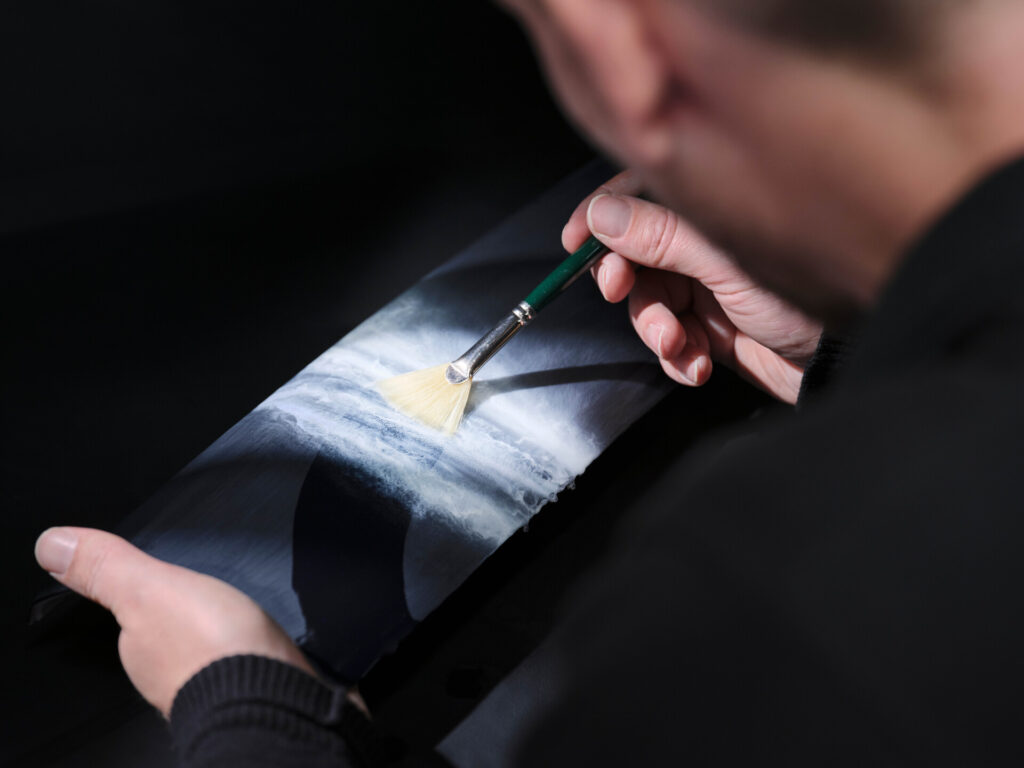
Getting the wave effect right took two months of work. Pigment is airbrushed onto wet lacquer, then shaped with a fine brush while air is directed across the surface to move the paint naturally. Rolls-Royce now employs full-time painters working solely on this kind of detail. It is not something you notice immediately, but once you see it, the interior becomes something quite different.
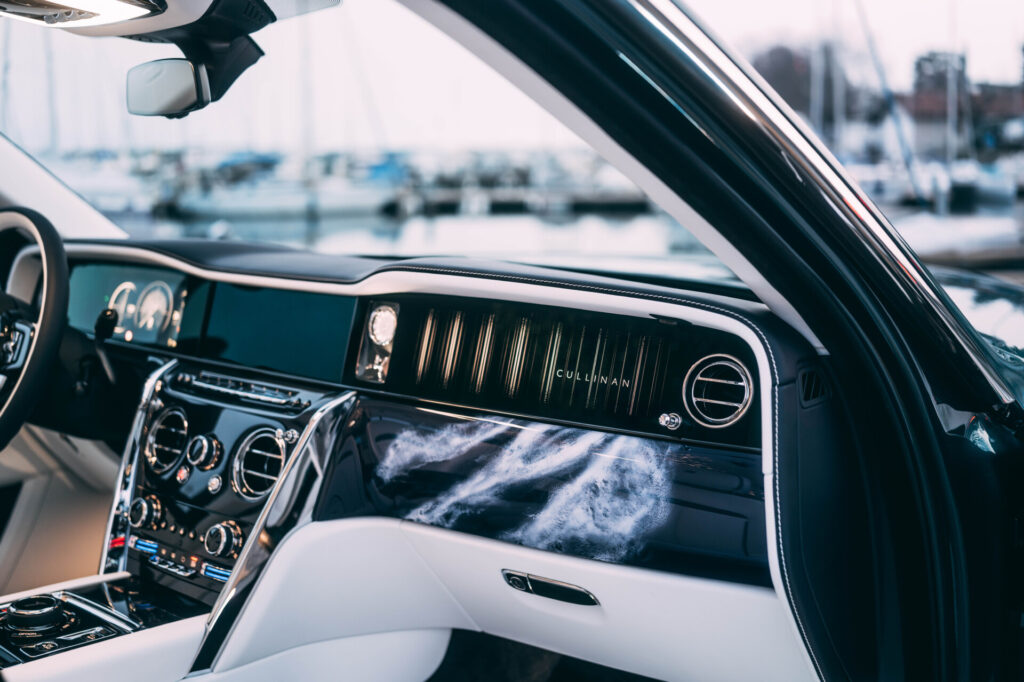
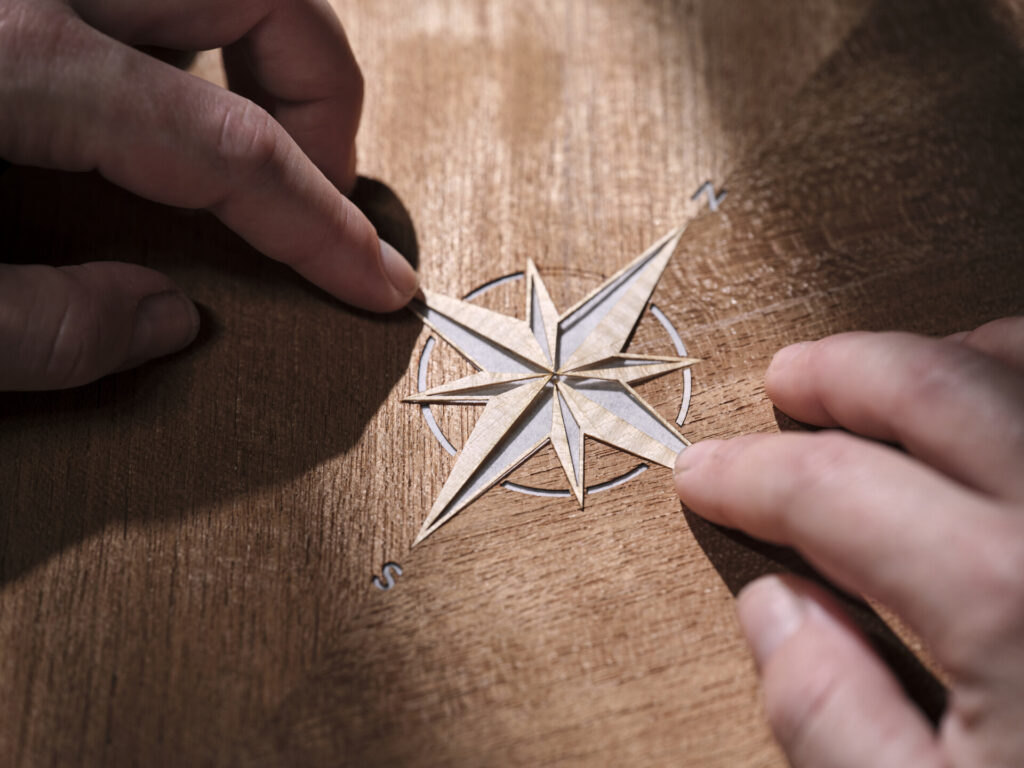
Open Pore Teak covers the rear Waterfall, rear centre console lid and door panels throughout the collection. It is the same wood used on yacht decks, brought in here for its feel and its honesty as a material. On the rear Waterfall, a marquetry compass motif is laid into the teak, made from more than 40 individual pieces of veneer in Sycamore, Teak, Ash and Black Bolivar, each one cut and placed by hand.
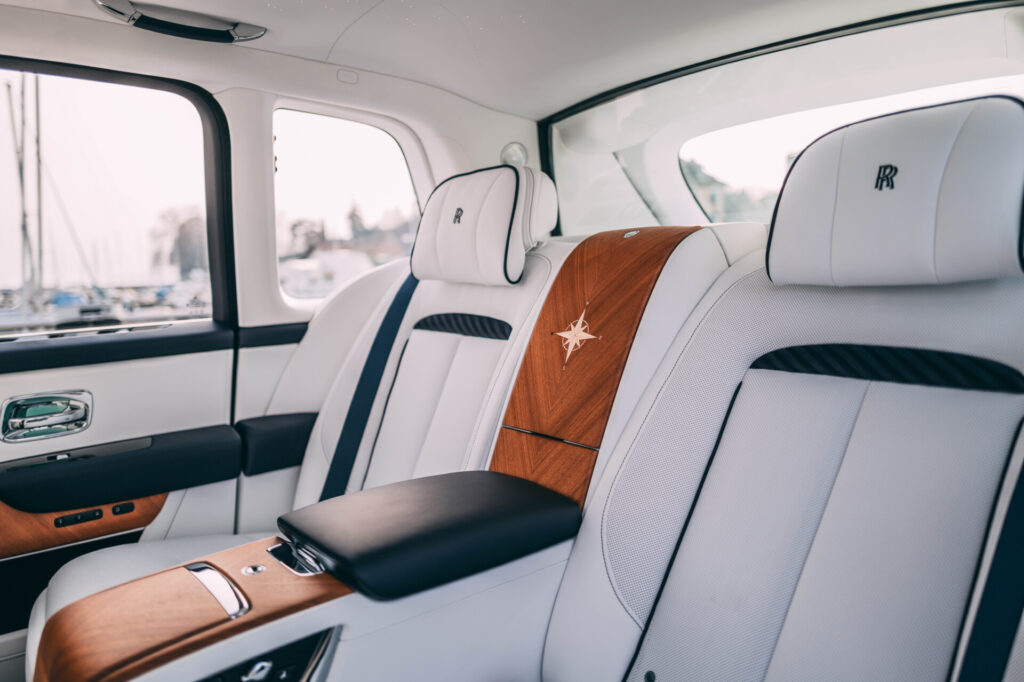
The seats are trimmed in Arctic White and Navy Blue leather, with Navy contrast stitching, piping and headrest monograms. The seat inserts carry a rigging pattern stitched in diagonal bands, created by an artisan trained in the Royal Navy with a background in yarn and embroidery. Each stitch follows the same logic as twisted rope, where the direction of the strand gives the whole thing its strength. The rope pattern also appears on the illuminated treadplates when the coach doors open.
THE HEADLINER
Each car has a Starlight Headliner mapped to the wind patterns of the Mediterranean Sea. Rather than a standard arrangement of static lights, the fibre-optic points here trace real air current data, charted by the Rolls-Royce Bespoke Collective and rendered across the headliner in slow, shifting movement. Static and animated fibres are layered together to give the impression of wind moving across open water.
The data comes from the same stretch of ocean the Santa Maria sailed more than a century ago. It is a quiet detail, not something that demands attention, but it gives the interior a sense of place that is hard to put into words.
“Yachting is a world inhabited by many of our clients, and one we’ve come to know intimately. These highly Bespoke Cullinan motor cars celebrate the deep connection between that culture and Rolls-Royce: a relationship that began with our founder, Charles Rolls, and continues to this day. From shared design values with racing vessels to collaborations with marine designers for clients who wish to pair their motor car with their yacht, maritime craft has long informed our approach.”
Martina Starke, Head of Bespoke Design, Rolls-Royce Motor Cars
Dressed for the ocean
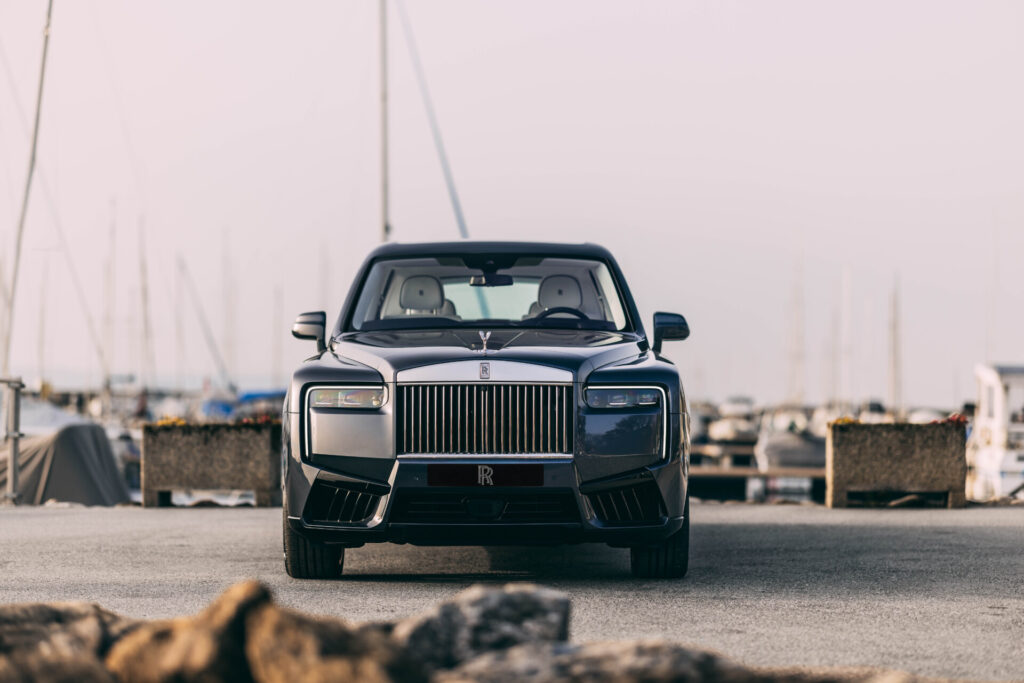
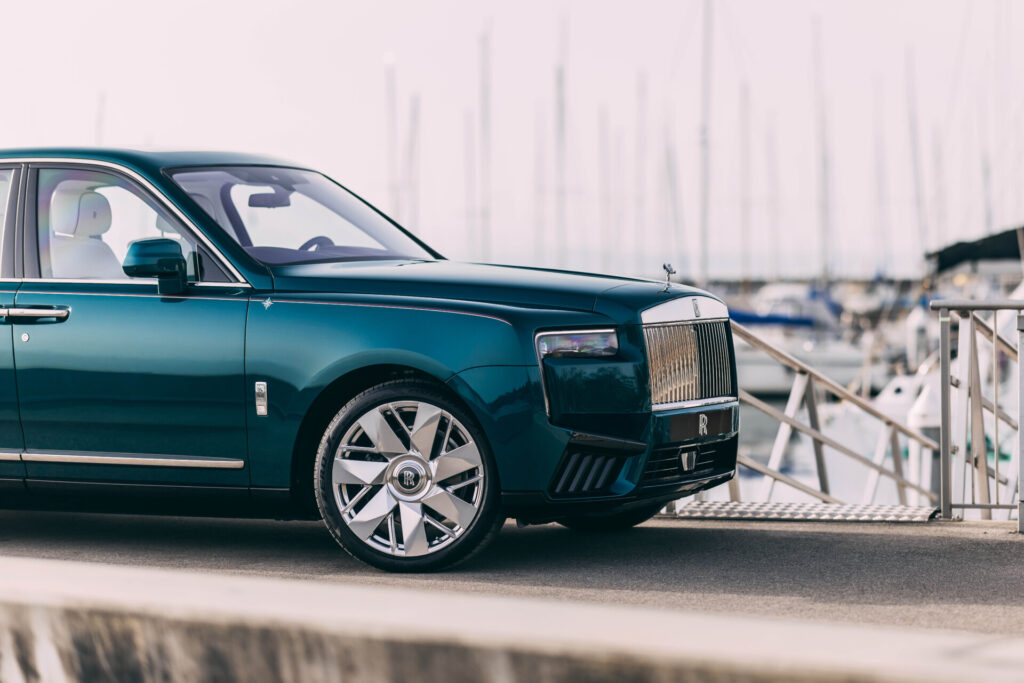
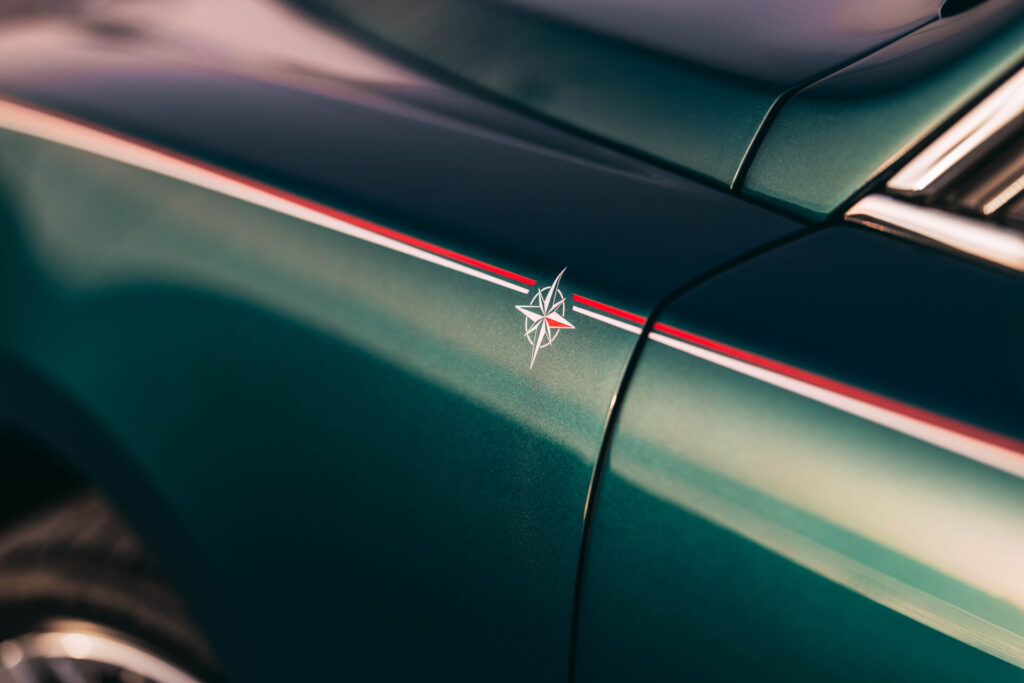
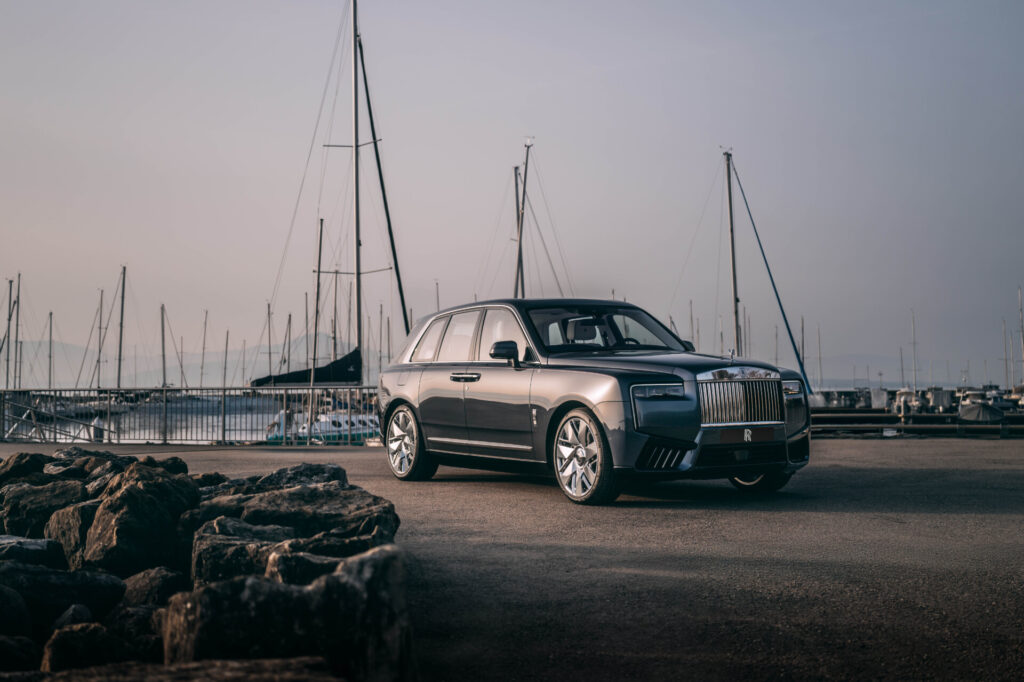
Each exterior colour is matched to its compass direction. North is finished in Crystal over Light Blue, a cool, pale shade suited to higher latitudes. South uses Crystal over Arabian Blue IV, deeper and warmer. East is Dark Silk Teal, calm and considered. West is Sapphire Gunmetal, a darker finish that shifts in different light. Each car also carries a hand-painted compass motif on the front wings with the relevant directional point picked out in red, and a Twin Coachline in Phoenix Red and Arctic White applied by hand. All four sit on 22-inch Fully Polished alloy wheels, a nod to the polished metalwork found on the fittings and rails of a well-kept yacht.
The link between Rolls-Royce design and naval architecture runs through the marque’s history at a level that goes beyond decoration. The ‘waft line’, that is the lower body profile of a Rolls-Royce motor car, draws directly from yacht design, creating a sense of effortless motion by reflecting the road beneath it, much as a hull reflects the water it moves through.
The J-class racing yachts of the 1930s built to compete in the America’s Cup and still regarded as some of the most beautiful vessels ever made, have long served as a reference point for the marque’s design team. Their sweeping lines, long overhangs and large sail plans combined elegance with genuine performance in a way that Rolls-Royce has always admired. Heritage models including the Phantom Drophead Coupé, the Spectre and the coachbuilt Boat Tail have all drawn on those same influences.