


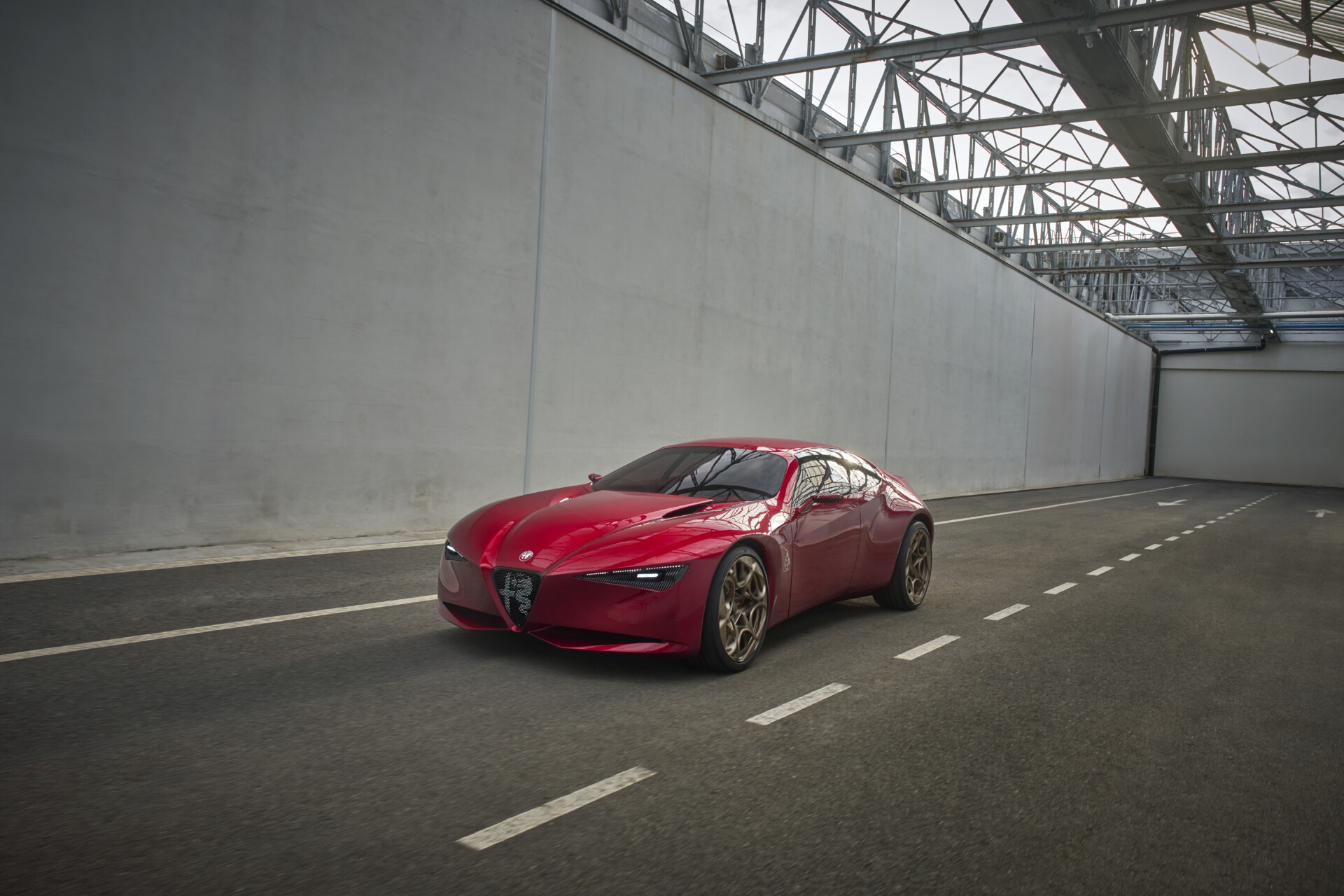
Alfa Romeo has unveiled the Cuorerosso, a concept car that sets out how the Italian marque intends to meet the electrified age without surrendering the character that has defined it since 1910. Making its world premiere at the Paris Motor Show, the dramatic 2+2 coupe combines the elegance of a Gran Turismo with the visual presence of a supercar, cloaked in a deep new Liquid Ink Red finish.
The name says a great deal about the intent. Cuorerosso joins the Italian word for heart with the red that has always stood for Alfa Romeo sportiness, a pairing the brand describes as two identifying elements that beat together. The concept is neither a preview of a specific production model nor a simple styling exercise, but a manifesto designed to guide the cars that follow it.
For a brand that has spent more than a century building cars around the relationship between machine and driver, the stakes are clear. Cuorerosso signals a future line-up that will embrace several energy solutions while keeping driving pleasure at its core, a message Alfa Romeo hopes will carry its identity into a new chapter.

A manifesto for the multi-energy era
The concept previews a flexible, multi-energy strategy that will spread across the key segments of the market. Alfa Romeo envisages future models up to 4.7 metres long, with room for Quadrifoglio performance versions, offered with Full-Electric, Plug-in Hybrid, Mild Hybrid and Full-Hybrid solutions so customers can match a car to their needs without giving up the badge on the bonnet.
At the top of that imaginary range sits a 2.9 V6 Full-Hybrid powertrain, paired with Q4 all-wheel drive, a torque converter and a carbon fibre driveshaft. It is a clear statement that electrification, in Alfa Romeo’s hands, is being used to amplify performance rather than dilute it.
Santo Ficili, chief executive of Alfa Romeo and Maserati, frames the philosophy in human terms. ‘With Cuorerosso, we bring this identity into the future, one open to different energy solutions, in which technology, function and quality are always at the service of emotions and driving pleasure,’ he said. The brand calls the idea Bellezza Necessaria, or necessary beauty.
Beauty with nothing to spare
Bellezza Necessaria works as a design method as much as a slogan. Alfa Romeo’s Centro Stile spent only a week or two on initial sketches before moving straight to three-dimensional modelling, treating the car as a single solid block to be sculpted. Wheels, glass and detail came later, once the essential form had emerged from the process of removing whatever the design did not need.
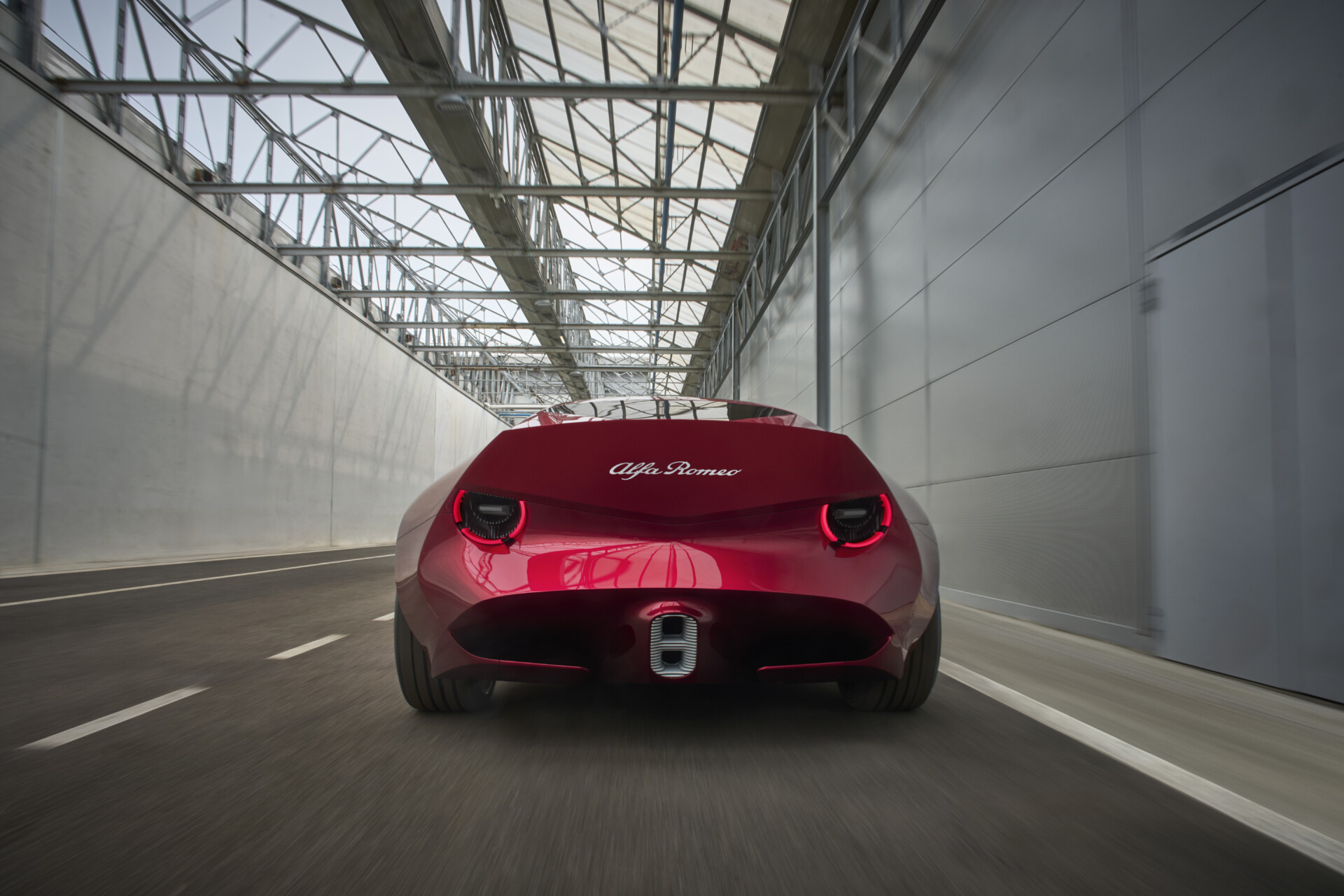
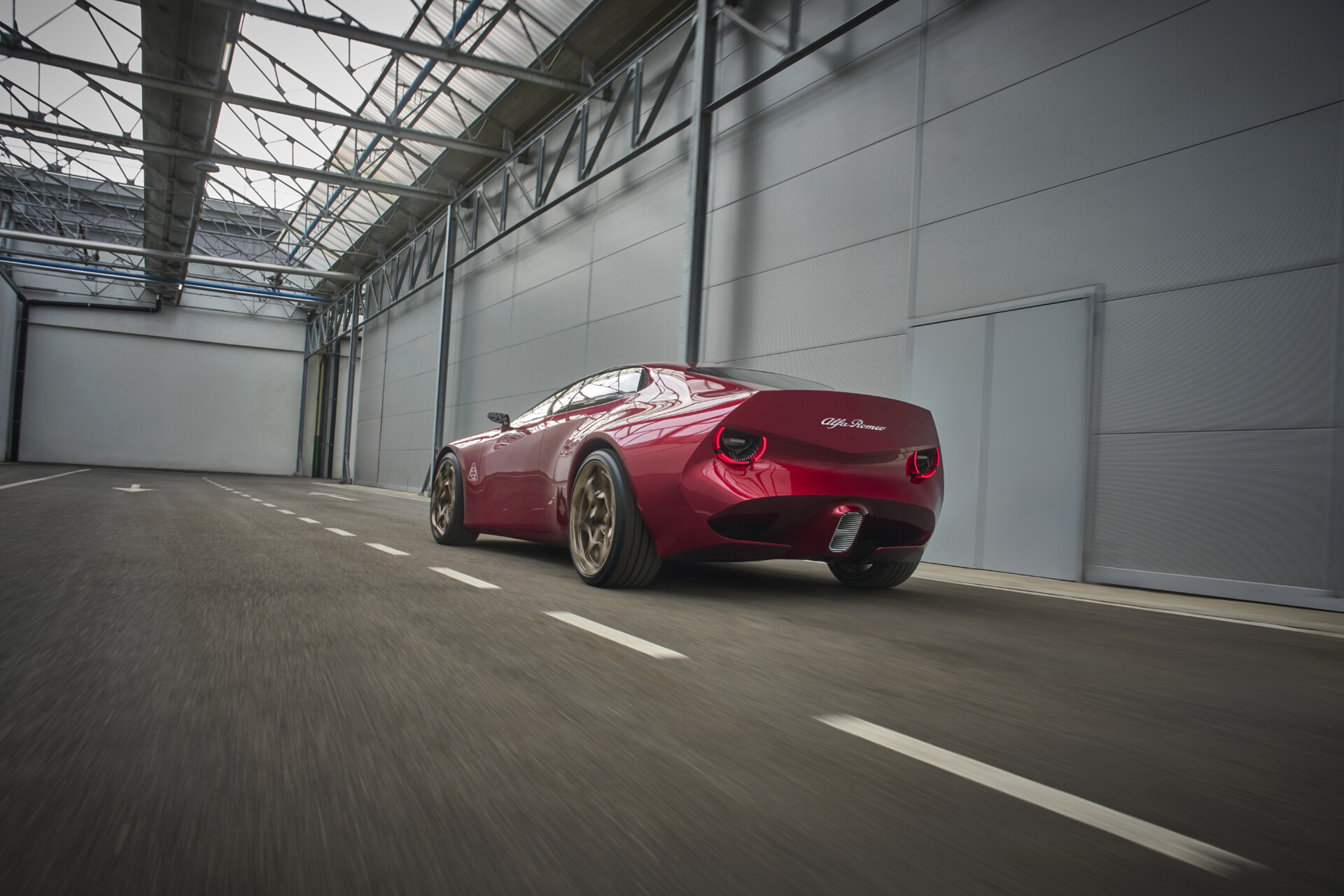
The result reads as a continuous, monolithic sculpture whose surfaces flow like liquid metal along the body. The famous Coda Tronca truncated tail, the Trilobo face and the central Scudetto all appear, the latter rising from the bodywork like the wake of a boat moving through water. A grille of small backlit triangular elements produces a light signature that, fittingly, beats like a heart.
The engineering supports the shape. At 4,700 mm long, 1,980 mm wide and just 1,331 mm high, with a 2,930 mm wheelbase and a weight of 1,750 kg, the concept achieves an aerodynamic coefficient of 0.28 thanks to its uninterrupted form, truncated tail and a diffuser built low into the bodywork.
Technology gathered around the driver
Inside, the philosophy of reduction continues. The dashboard draws on the architecture of the 1967 33 Stradale, and ahead of the driver sits the Cannocchiale Vivente, a reworking of Alfa Romeo’s telescopic instruments. It offers two settings, Immersivo with the traditional two-element view and Concentrato, in which the two telescopes physically merge into one, echoing the essential instrumentation of past racing cars.
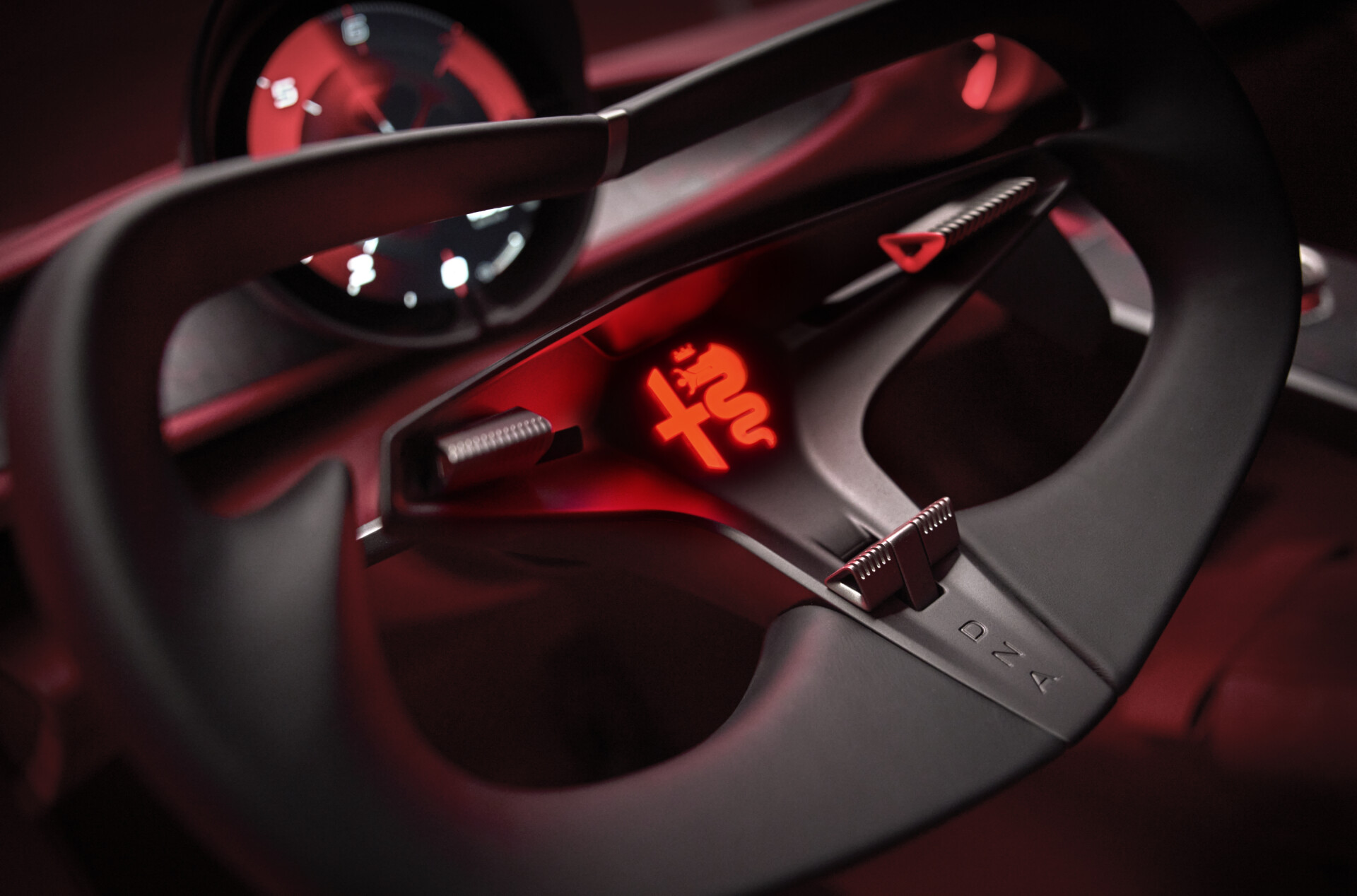
A Magma Display control centre on the central tunnel combines a digital touch surface with a rotary dial, a drive mode selector and toggle switches, while a steer-by-wire system allows the iconic three-spoke steering wheel to keep a strongly physical, analogue feel. Three driving experiences, Cruise, Sport and Quadrifoglio, adjust how much the car engages its driver, and the platform has potential to develop within Stellantis’ STLA SmartCockpit.
The mechanical specification underlines the intent, with air suspension and Brembo carbon-ceramic braking system equipped with specific Alfa Romeo calipers. Doors open via a touch control on the roof, the windows sit flush and the forged wheels reinterpret the classic telephone-dial pattern through six circular elements arranged in a 2+2+2 scheme across three spokes.
Red as a source of energy
The colour is treated as an energy rather than a paint choice. Liquid Ink Red pairs a fine aluminium base with a transparent coloured layer, so light penetrates the surface and reflects from within, holding the finish somewhere between liquid metal and incandescent lava. As the viewing angle changes, the bodywork shifts towards black, as if lit from the inside.
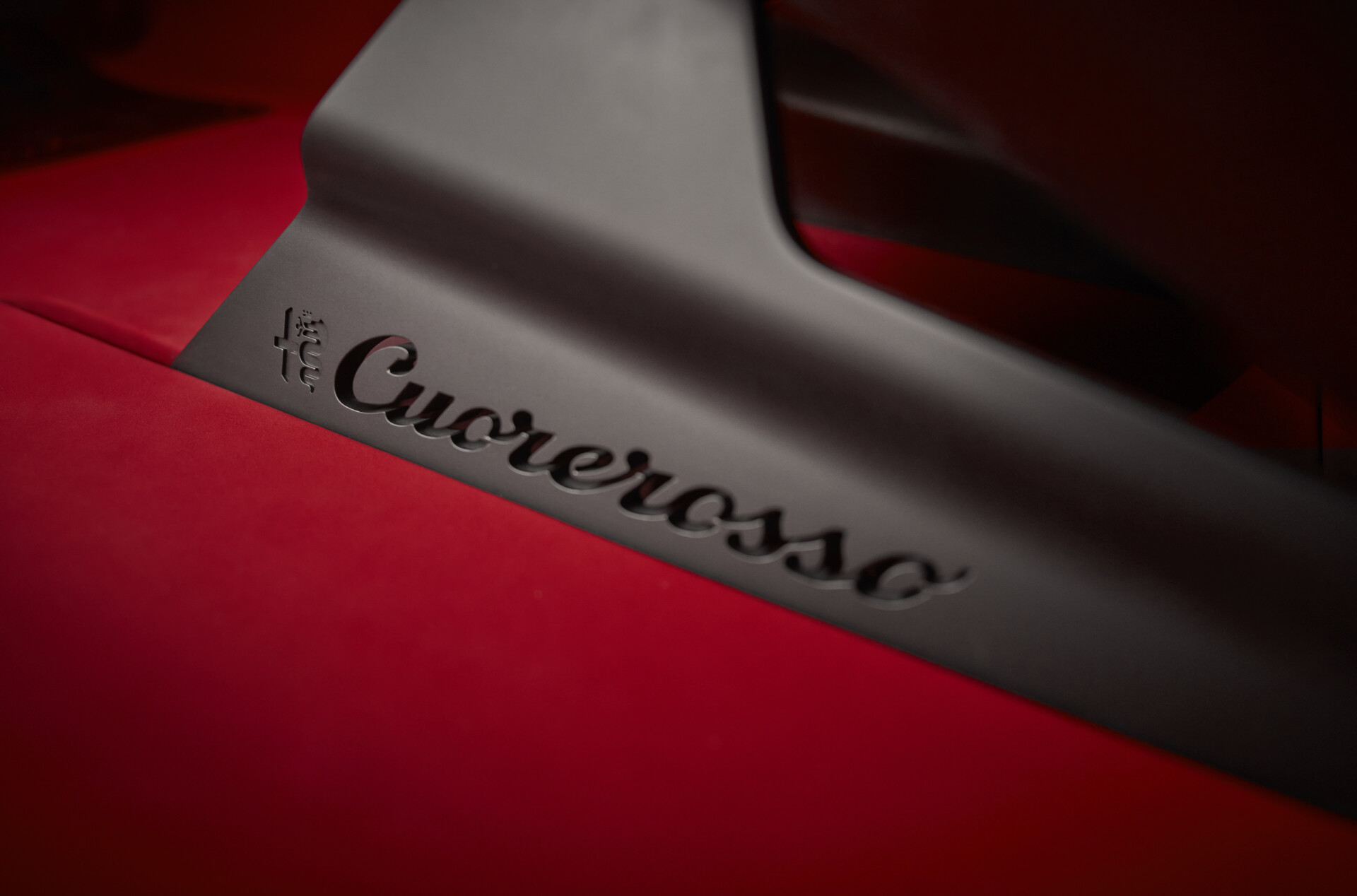
The cabin carries the same idea in matter rather than paint. Hand-finished Poltrona Frau nubuck is used only where occupants touch, a regenerated leather containing 60% post-industrial upholstery waste gives material a second life, and a transparent monofilament fabric developed with Luna Rossa, the sailing team, spans the dashboard. Recycled carbon fibres combined with red resins and a removable travel bag built into the dashboard complete a cabin where every component has a reason to exist.
The red also has a job to do. It intensifies towards the driver’s seat, translating growing concentration into colour, and the interior lighting communicates the selected driving mode, dimming in Quadrifoglio setting to leave four points of light that recall the Cross from the Alfa Romeo badge.
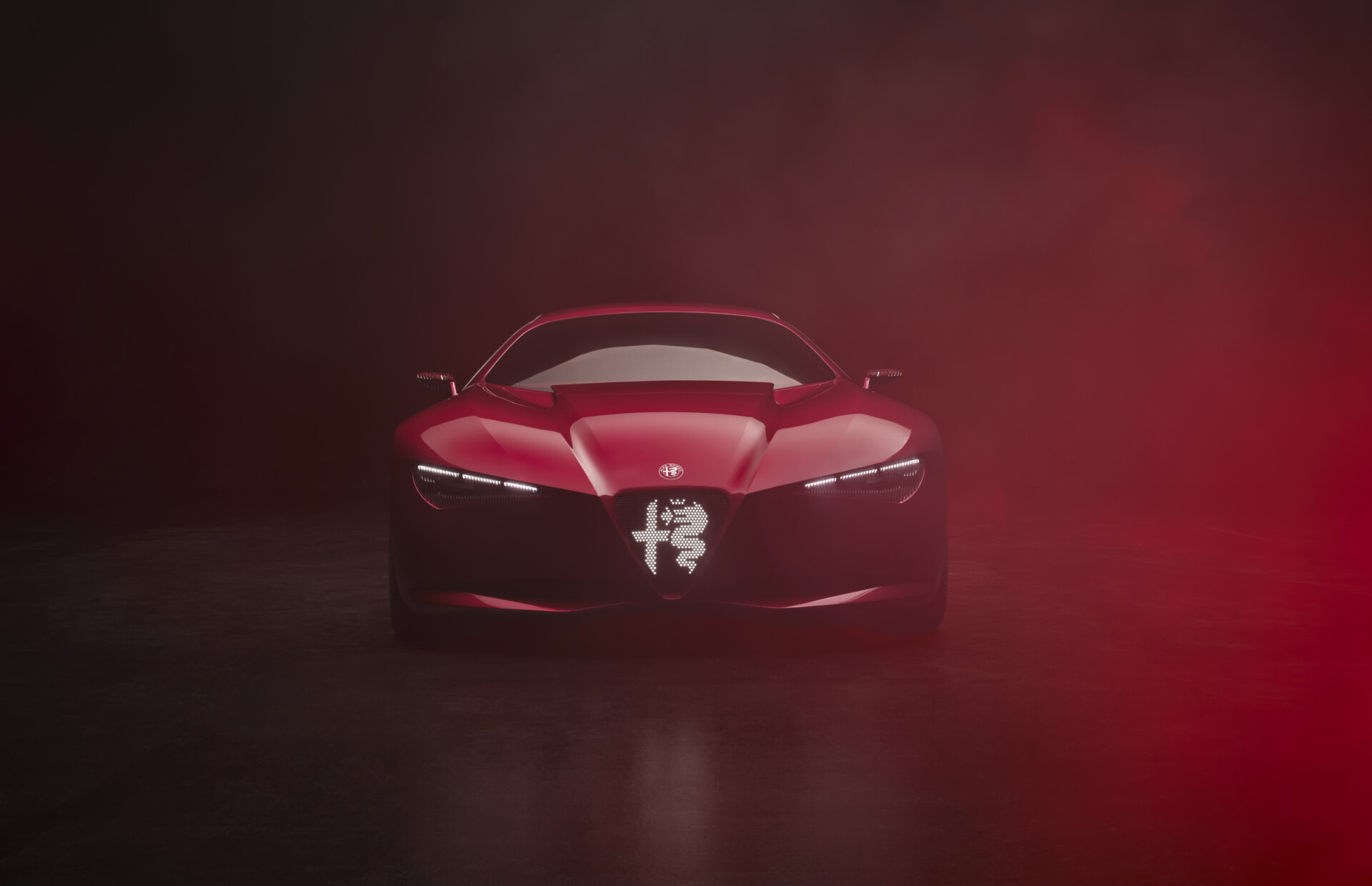
With Cuorerosso, Alfa Romeo has drawn a line from its past to a multi-energy future without letting technology crowd out emotion. The concept will not itself reach showroom floors, yet the language of proportion, function and colour it introduces is expected to shape the models that follow, from the family car to the next Quadrifoglio.
For a marque that has always argued a car should do more than move people, that may be the point. The heart, as the name suggests, remains red.