


The watchmaker that won horology’s highest honour with its dual chronograph now refines the formula further. Grade 5 titanium meets aquamarine accents in a timepiece that doesn’t simply track elapsed seconds, but rethinks what a chronograph can achieve. Stephen McDonnell’s inventive calibre returns with flyback capability, allowing pilots, drivers and anyone timing multiple events to reset and restart instantly. The EVO treatment adds 80 metres of water resistance and shock absorption to a mechanism ambitious enough to make you question why conventional chronographs ever settled for less.
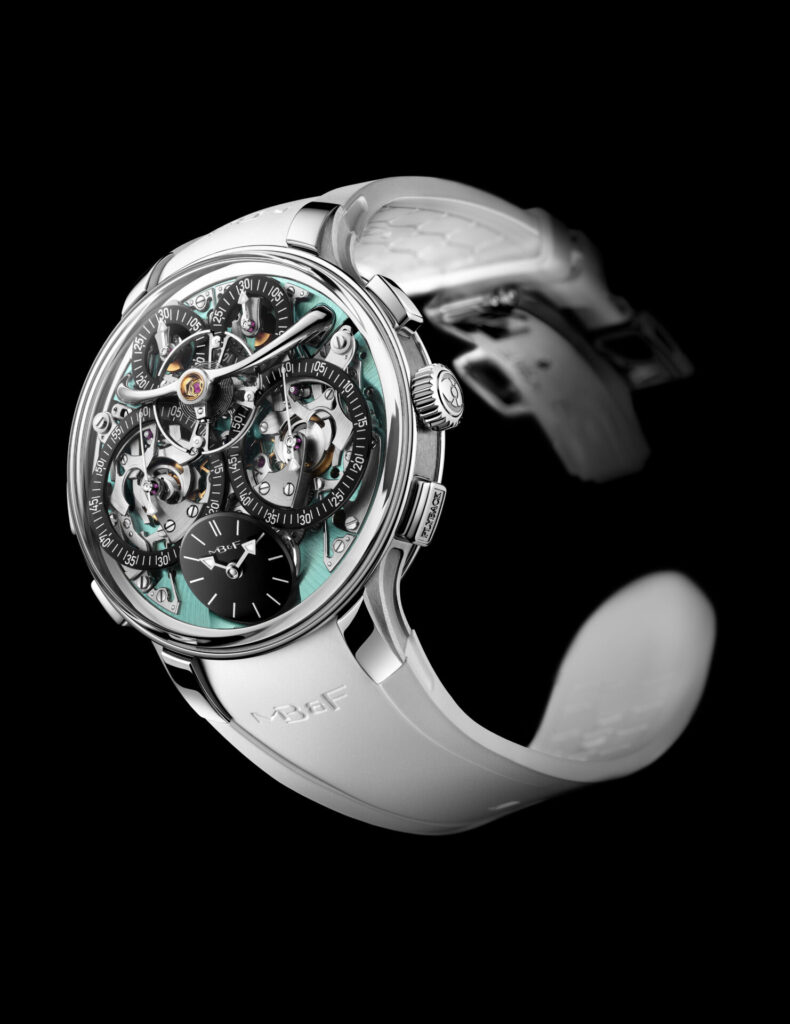
The LM Sequential Flyback EVO is the result of patience and careful development. When the original LM Sequential EVO launched in 2022, it was already a breakthrough, as MB&F’s first chronograph and the winner of the Aiguille d’Or. From the outset, however, the movement was designed to accommodate a flyback function.
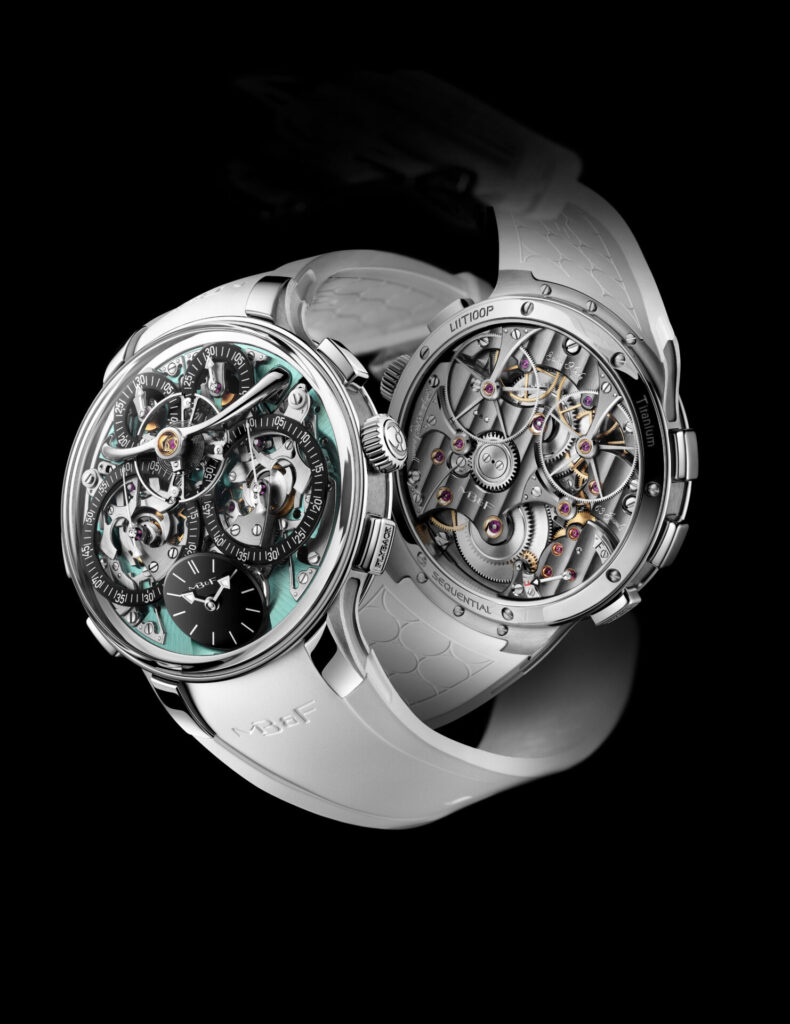
Stephen chose not to introduce it immediately. Launching an entirely new chronograph architecture alongside an unproven flyback system would have compromised long-term reliability. After years of refinement, the flyback debuted in 2024. In 2026, it arrives in EVO form, housed in titanium and paired with an aquamarine dial that adds both clarity and visual depth.
Two Chronographs, One Movement
At the heart of the LM Sequential Flyback EVO are two fully independent chronographs housed within a single movement. Each has its own seconds and minutes display, controlled by dedicated start, stop and reset pushers.

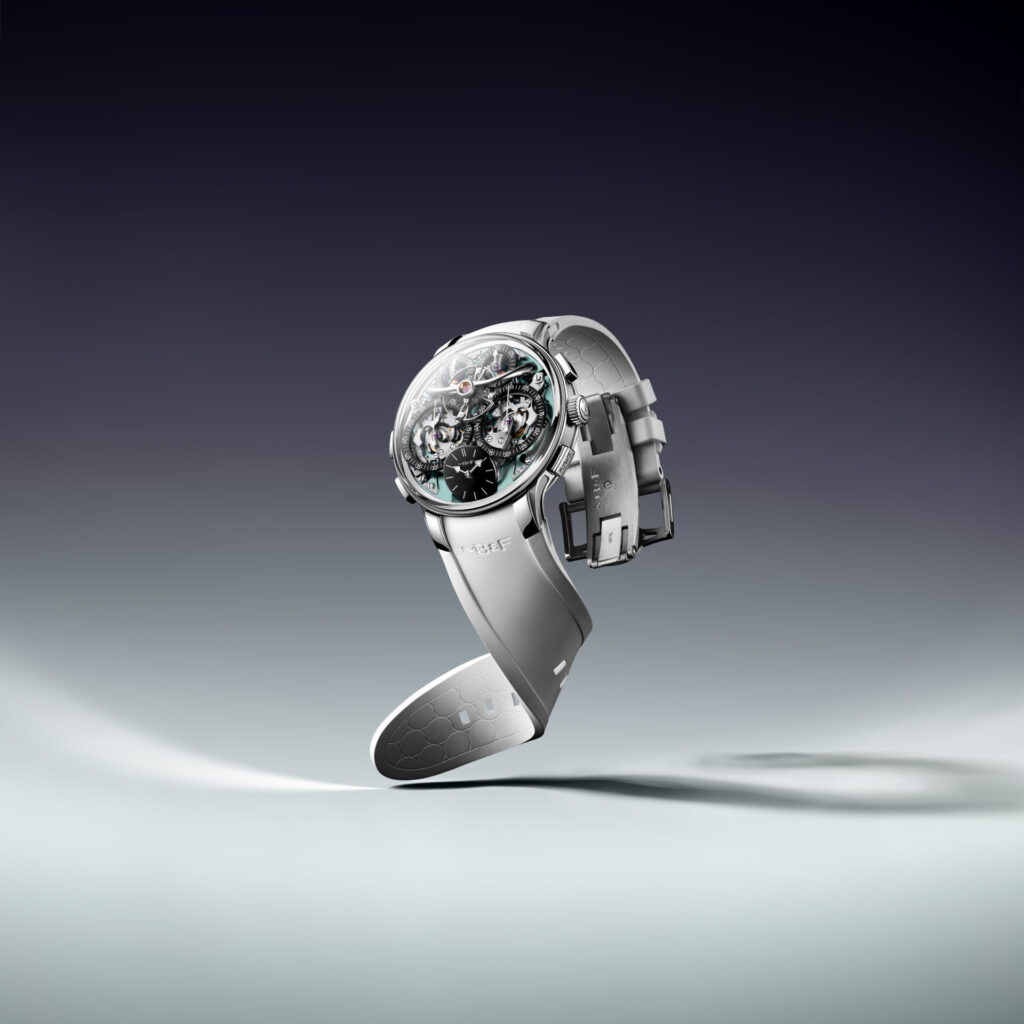
The defining feature is the Twinverter pusher at nine o’clock. Acting as a binary switch, it instantly reverses the running state of both chronographs. If both are stopped, they start together. If both are running, they stop simultaneously. If one is active and the other is not, their roles switch. This architecture allows the watch to manage independent timing, simultaneous timing, cumulative timing and sequential lap timing with ease. Despite the sophistication of the tech, the controls remain clear and intuitive.
Flyback Integrated
The flyback function allows a chronograph to reset and restart with a single press while running. In the LM Sequential Flyback EVO, both chronographs are equipped with flyback, significantly expanding the watch’s usefulness for timing repeated or consecutive events.
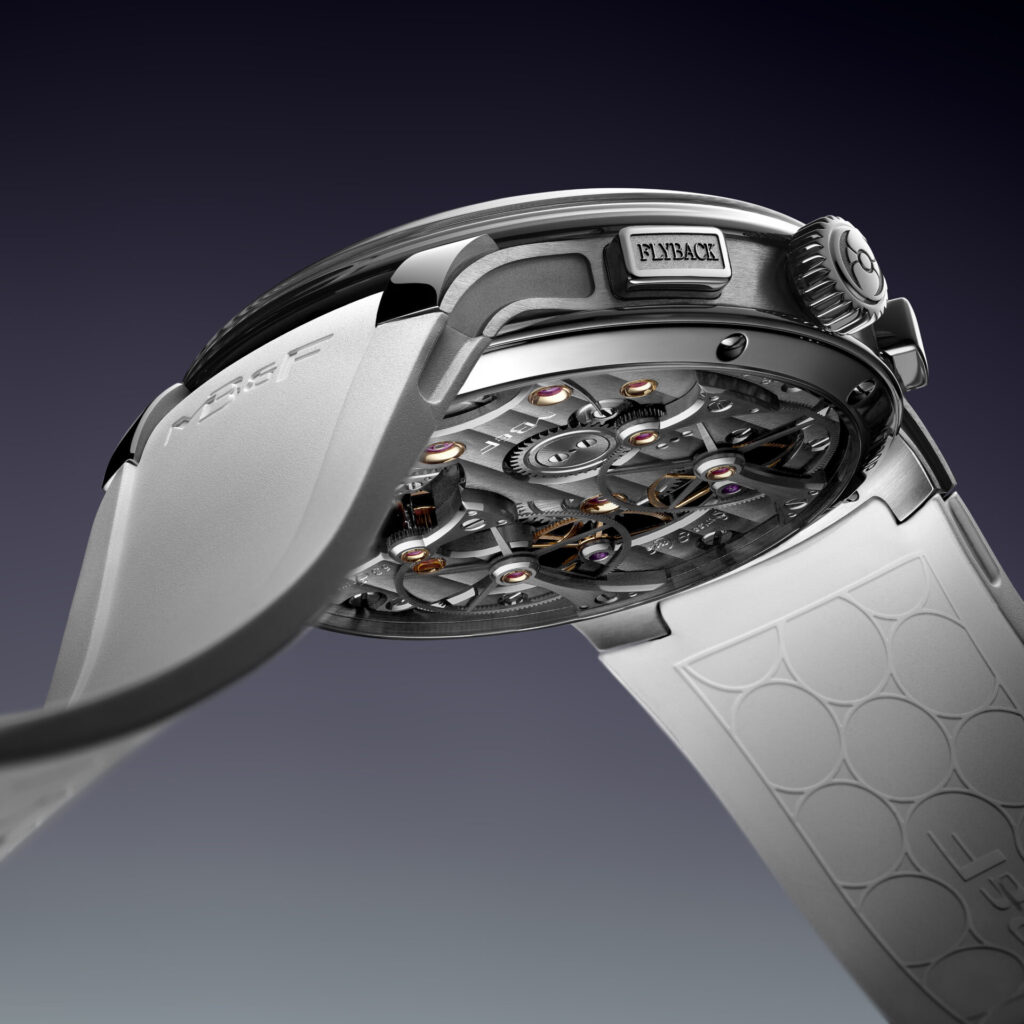
This capability is supported by a refined system of jewelled components, including a specially developed jewelled roller that eliminates friction during reset. Operation remains smooth and precise, with no interruption to chronometric performance. The flyback integrates fully with the Twinverter system, meaning it can be used across all timing modes rather than as a standalone feature.
Inside the EVO
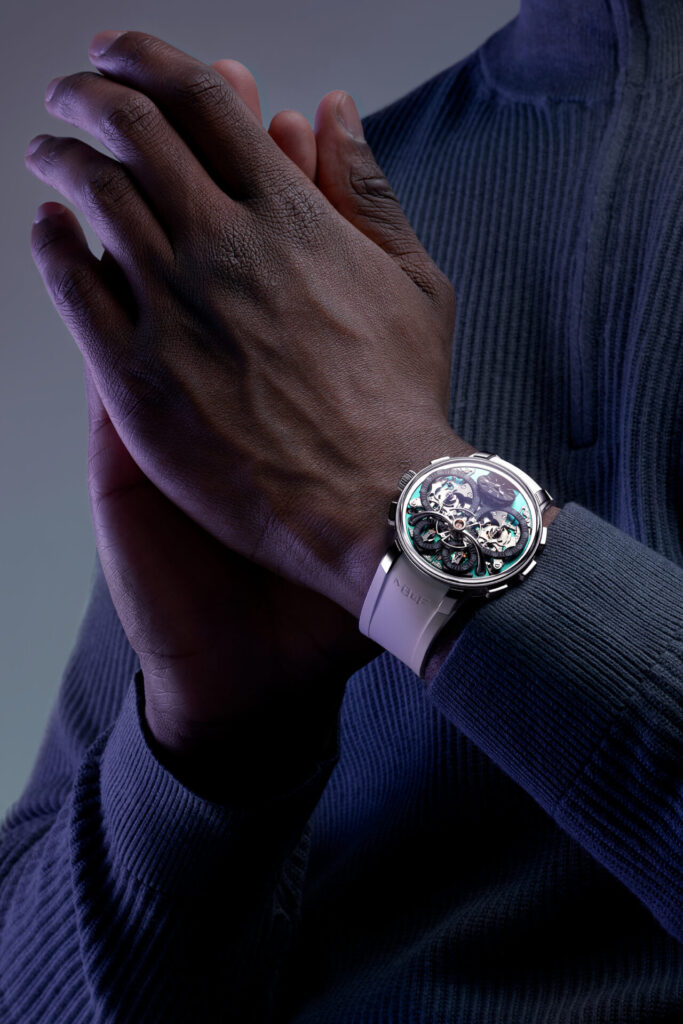
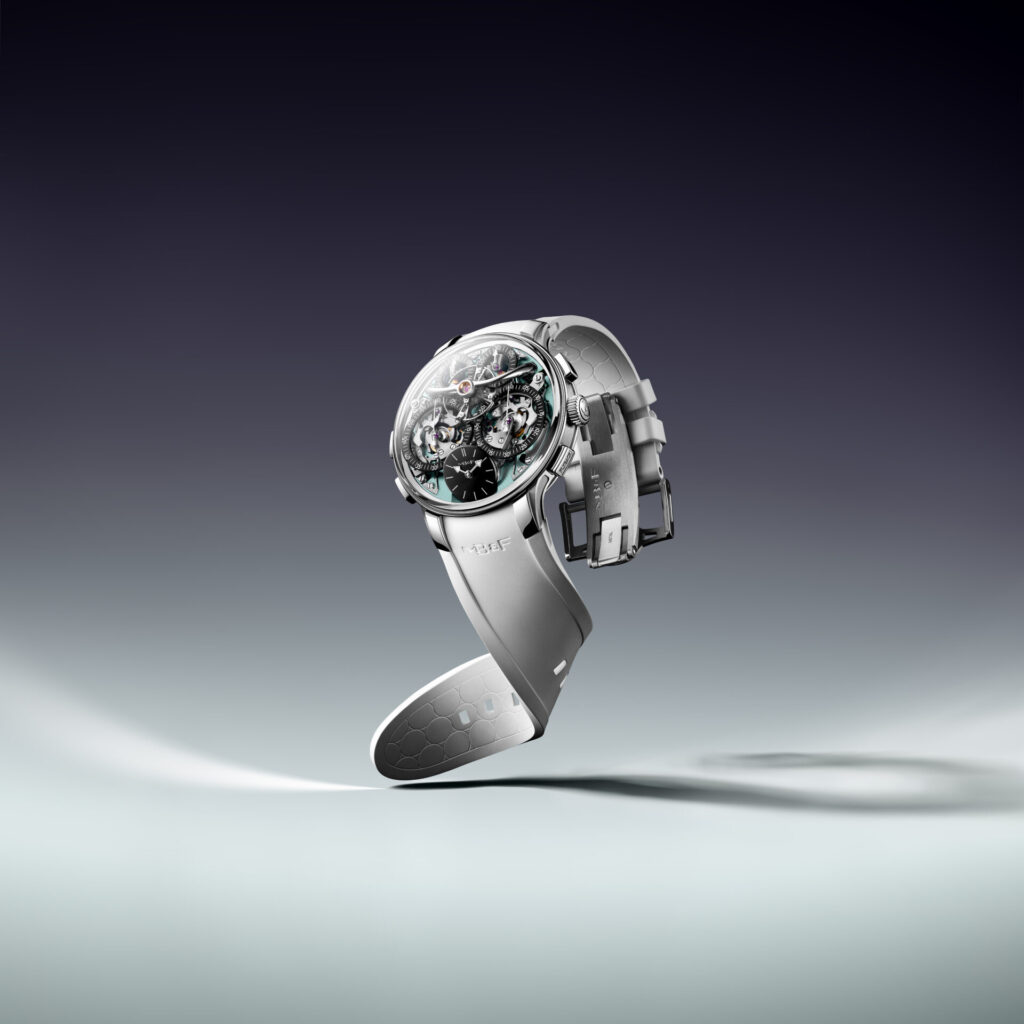
Translating complex chronograph mechanics into daily wear requires careful engineering. The EVO collection delivers this through a series of structural upgrades that protect the movement without sacrificing the Sequential’s distinctive aesthetics. Grade 5 titanium provides strength with minimal weight, while 80 metres of water resistance and a screw-down crown ensure real-world resilience. An integrated rubber strap balances comfort and security.
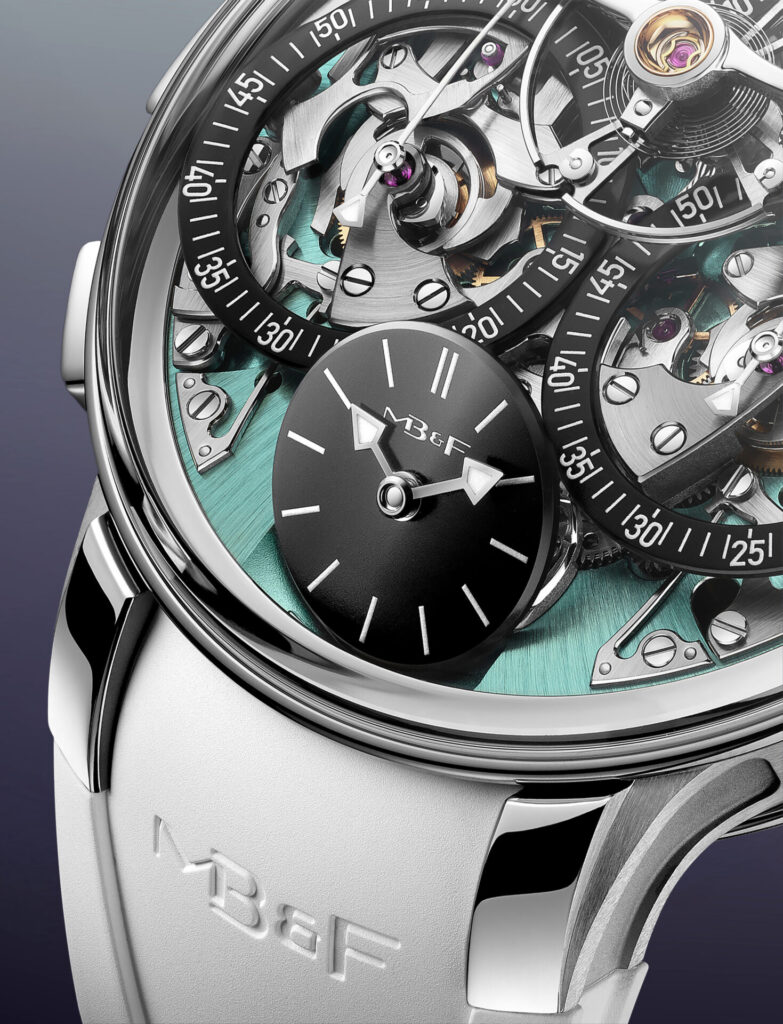
At the core of the EVO case is MB&F’s FlexRing shock-absorption system, positioned between the case and movement. This annular dampener cushions impacts along both vertical and lateral axes, protecting Stephen’s intricate mechanism during activities that would challenge conventional chronographs. The absence of a traditional bezel opens sight lines to the domed sapphire crystal, treated with anti-reflective coating on both surfaces. Super-LumiNova enhances legibility across all displays, including the tilted time dial at six o’clock, carried over from the classic Legacy Machine edition.
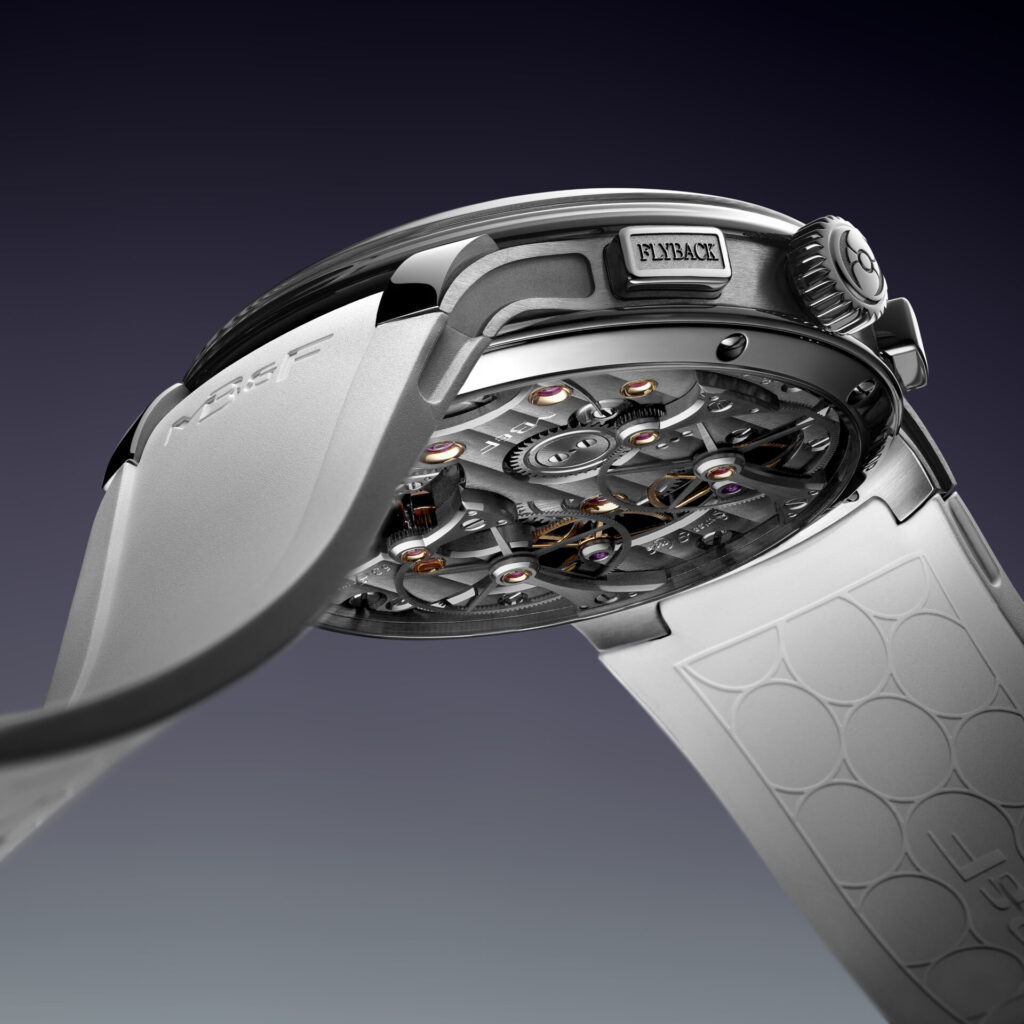
The movement itself is finished in darkened NAC, reinforcing the EVO’s more technical character. Hand-applied bevels, Geneva waves and engraving remain present throughout the 621 components. Sixty-three jewels support the manually wound calibre, while twin mainspring barrels deliver a 72-hour power reserve. The flying balance wheel at twelve o’clock features a Breguet overcoil and beats at 3Hz, maintaining stable chronometry despite the complexity of the dual chronograph system.
From Concept to Aiguille d’Or
Early horseracing chronographs used ink droplets to mark elapsed times on rotating dials, preserving results until the dial could be cleaned. Motor racing required multiple pocket chronographs mounted on frames and operated by combined levers. Stephen recognised that the combined lever principle could work brilliantly if miniaturised and refined. Two independent chronograph systems linked to a single oscillator would eliminate timing discrepancies, while the Twinverter would allow instant switching between modes.
The solutions emerged gradually. By repositioning the vertical clutch within the main gear train, Stephen eliminated chronograph hand flutter without relying on friction springs that reduce power. Internally jewelled clutch shafts kept performance stable whether the chronographs were running or not. The Twinverter introduced a form of programmable logic to mechanical watchmaking, which was an idea shaped by Stephen’s earlier work on the LM Perpetual’s mechanical processor.
The Flyback Function
The original LM Sequential EVO arrived in 2022 as MB&F’s twentieth calibre and first chronograph. Winning the Aiguille d’Or that same year confirmed that collectors and industry experts recognised something genuinely new. Stephen and the MB&F team knew the flyback belonged in the design from the beginning. The movement had been prepared for it from day one.
Perfecting the mechanism took time, with nine months of prototyping including four months dedicated exclusively to the flyback system. Six complete redesigns addressed issues visible only to those engineering the solution. Choosing to wait and to release the Sequential first and add flyback only once it met the same standards reflects a discipline often absent from contemporary watchmaking.
The 2026 release brings everything together. Titanium construction, aquamarine aesthetics, improved legibility through the tilted time dial, and flyback functionality that operates with near invisibility. The LM Sequential Flyback EVO offers timing capability that changes how elapsed time can be measured.
Technical Details
The case measures 44mm wide and 18.2mm thick. It is made up of 74 components, working with the FlexRing system to protect the movement. The aquamarine dial adds contrast and depth, while Super-LumiNova ensures clear legibility in all lighting conditions.
A power reserve indicator sits on the back, visible through the sapphire display caseback. Both front and rear crystals are treated with anti-reflective coating. The integrated rubber strap is secured with a titanium folding buckle, reinforcing the watch’s practical focus.
Stephen McDonnell’s calibre is made up of 621 components, combining two chronographs, a flyback function and Twinverter control within a single movement. The finishing is extensive, with polished bevels and internal angles throughout. The balance wheel features regulating screws and operates at 21,600 vibrations per hour.
Producing the movement requires the work of multiple specialised partners. Chronode, Bandi, HorloFab and others manufacture key components, while Atokalpa produces the balance wheel. Dedicated finishing specialists complete the decoration and surface treatments, each contributing to the final result.