


Named after the Greek god who drove a chariot of fire across the sky, the Apollo EVO brings a sense of mythological theatre to the modern racetrack. At its core is an 800 horsepower, naturally aspirated V12, paired with active aerodynamics capable of generating more downforce than the car’s own weight. Developed in collaboration with HWA AG, the German motorsport specialists behind the legendary Mercedes-Benz 190E 2.5-16 EVO II, the Apollo EVO redefines expectations of what a track-focused hypercar can be.
Building on the foundations laid by the Intensa Emozione, the EVO is sharper, faster, and more singular in its purpose. Performance figures are striking. A top speed of 208 mph and a 0 to 60 mph time of approximately 2.5 seconds place it firmly among the elite.
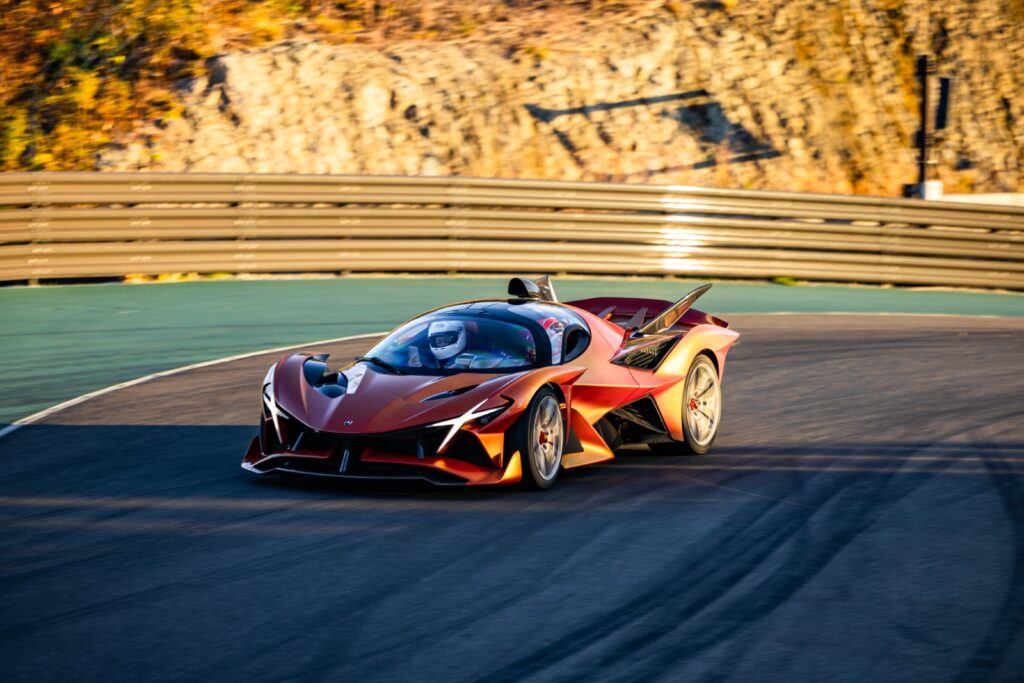
This is a machine built around motorsport principles, developed with HWA AG’s racing expertise informing every decision.
Chassis and Structure
The foundation of the EVO is its carbon fibre monocoque, which provides a rigid and lightweight base for the suspension and aerodynamic loads. Total vehicle weight is approximately 2,900 pounds, supporting consistent braking performance, controlled tyre wear, and thermal stability during extended track sessions.

The cabin structure continues this approach. Carbon fibre and lightweight aluminium form both the interior surfaces and structural elements, reducing mass while contributing to stiffness and safety. There is little separation between form and function, with components designed to perform multiple roles where possible.
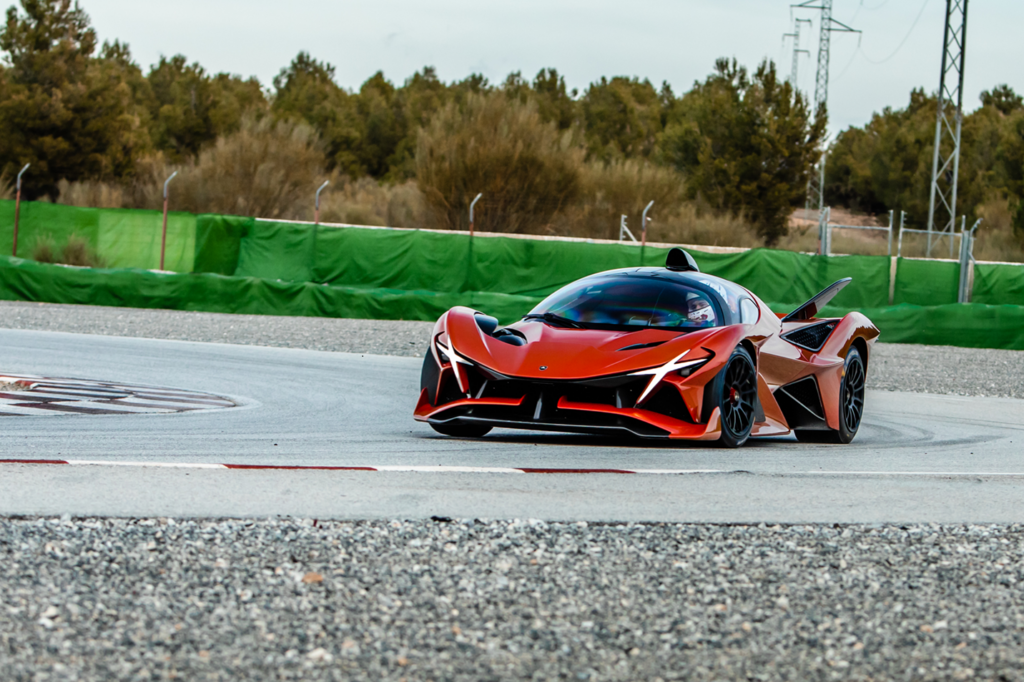
Seats are mounted directly to the monocoque, with pedal adjustment used to set the driving position. This layout improves structural consistency and maintains a fixed relationship between the driver and the chassis. The steering yoke is compact and positioned for direct input, with controls kept minimal and accessible at speed.
Active Aerodynamics
Aerodynamic performance plays a central role in the EVO’s behaviour on track. At 200 mph, the car generates close to 3,000 pounds of downforce, pressing it firmly into the surface and improving stability through high-speed sections. The active aerodynamic elements adjust continuously in response to speed, braking, and load. These systems are designed to maintain balance rather than maximise peak figures, helping the car remain predictable as conditions change.
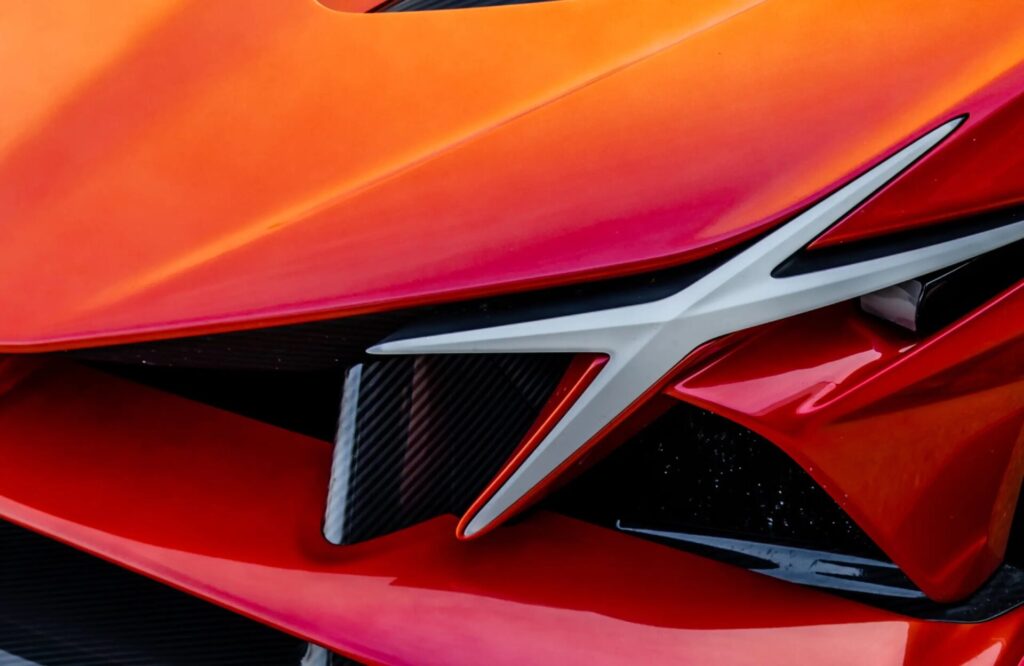
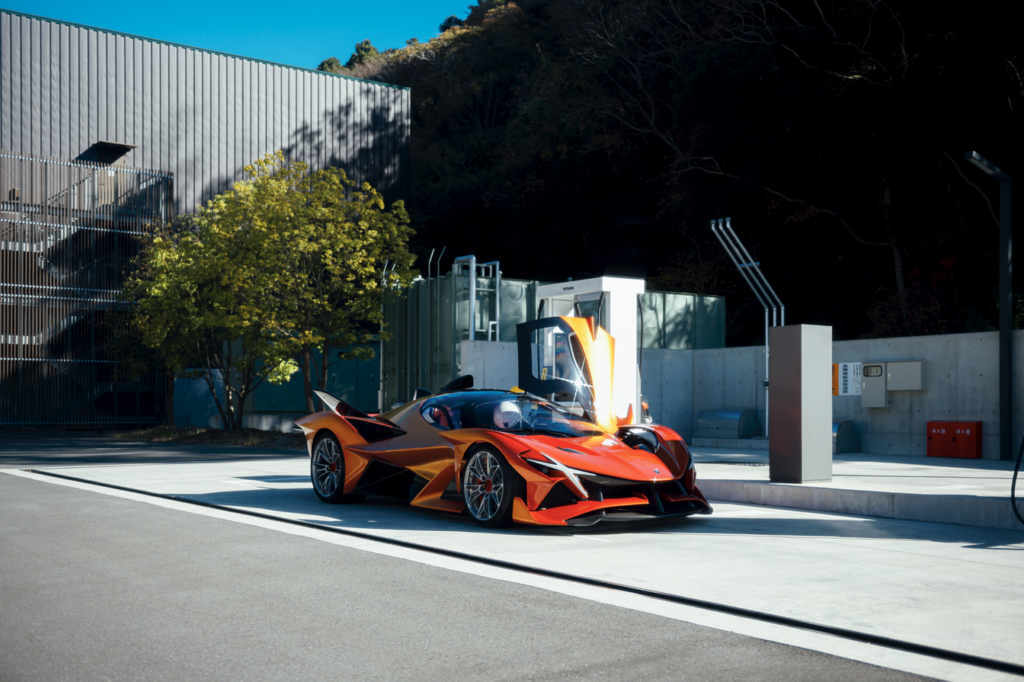
The bodywork is shaped entirely around airflow management. Cooling channels, ducts, and aerodynamic surfaces are positioned to support consistent performance rather than visual impact. A deployable rear spoiler works alongside the active aero elements to manage stability during acceleration and braking.
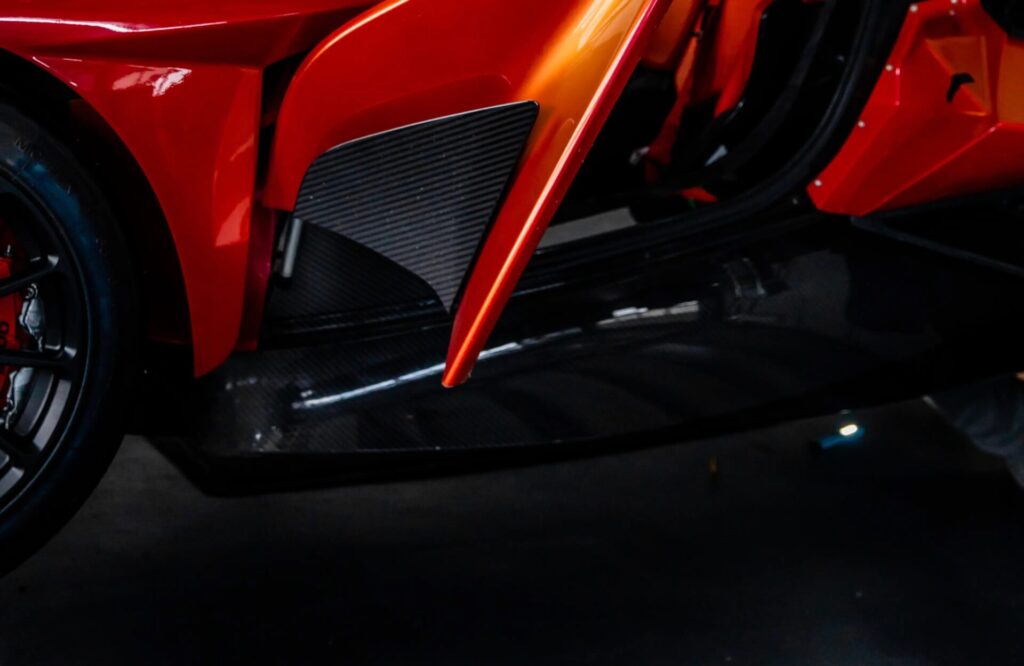
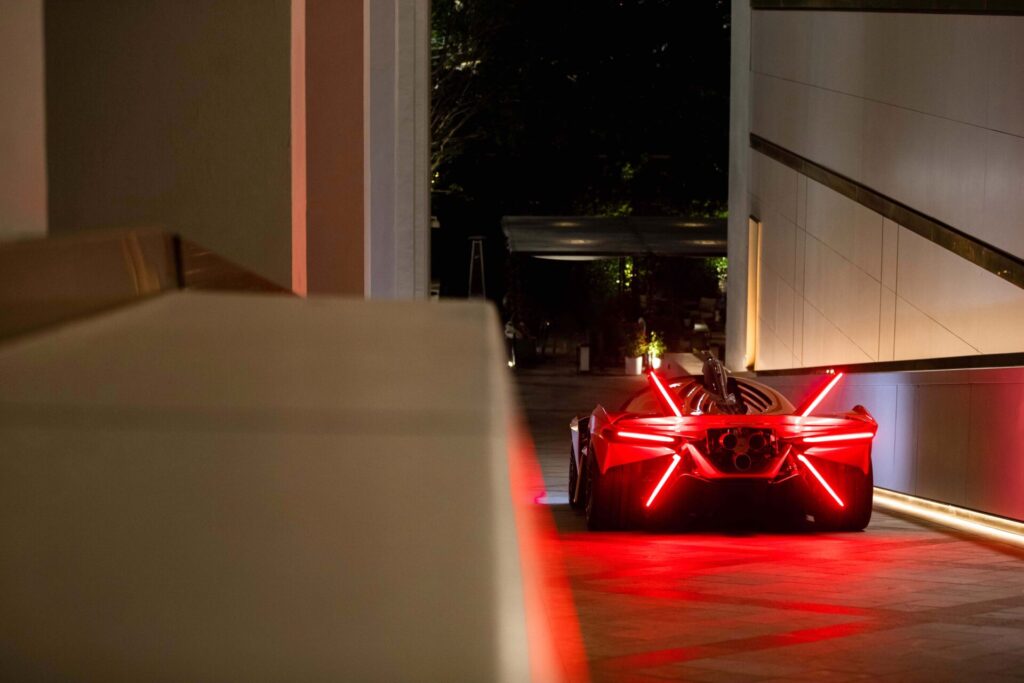
Butterfly doors are used to improve access to the cabin given the car’s low ride height and wide sills. Lighting elements and body contours follow the same functional approach, integrated into the overall aerodynamic strategy.
Naturally Aspirated V12
Power comes from a 6.3 litre naturally aspirated V12 producing 800 horsepower and 564 lb-ft of torque. The engine revs to 8,500 rpm and delivers power in a linear and predictable manner across the rev range. The absence of forced induction keeps throttle response consistent and allows the driver to manage power delivery precisely, particularly on corner exit. Power is sent to the rear wheels through a six-speed Hewland sequential gearbox, operated via electropneumatic paddle shifters for fast, reliable changes under load.
The rear-wheel-drive layout reduces drivetrain complexity and concentrates mass over the driven wheels. The powertrain has been configured with durability and consistency in mind, supporting repeated hard laps rather than short bursts of performance.
Suspension and Braking
The suspension system uses pushrod-operated layouts at both the front and rear, with adjustable components allowing the car to be set up accurately for different circuits and conditions. The geometry supports consistent tyre contact and stable handling as aerodynamic load increases with speed.
Braking is handled by 15-inch carbon ceramic discs at all four corners. These are designed to manage repeated high-speed stops while maintaining pedal feel and resistance to fade. The brakes are paired with forged alloy wheels measuring 20 inches at the front and 21 inches at the rear.
Michelin Pilot Sport Cup 2 R tyres are fitted as standard, offering high grip while remaining predictable across a wide temperature range. For more demanding circuit use, Apollo offers a race specification package that includes steel brakes, 18-inch wheels, and slick tyres. This configuration supports longer sessions and simpler servicing in track-only environments.
Engineering Partnership
HWA AG worked closely with Apollo throughout the development of the EVO. The company’s motorsport experience is evident in the car’s structural design, suspension layout, and approach to cooling and durability.

Systems are designed to operate under sustained load, with attention given to integration and serviceability. The EVO has been engineered as a complete package, with each system developed to support consistent performance rather than isolated gains.
Built for Use
The Apollo EVO is intended for drivers who plan to use their cars on track. Production will be limited, and pricing will reflect the level of engineering involved.
Its character is defined by focus. Low weight, high downforce, a naturally aspirated engine, and a chassis developed around motorsport principles shape the driving experience. The EVO has been built around how it performs when pushed, with little emphasis placed on versatility or presentation. For the small number of owners who will drive it as intended, that clarity of purpose is the defining feature.