


Mike Jennings, chef and food writer
After almost 30 years in professional kitchens, I have watched cooking change beyond recognition. We have embraced water baths, induction, combi ovens and equipment capable of controlling temperature to within a degree. Precision has undoubtedly made us better cooks.
Yet one of the things exciting me most about restaurants today requires none of that technology. Fire.
Where cooking began
It is where cooking began. Before ovens, temperature probes and Michelin stars, we had wood, flame and raw ingredients. There is something wonderfully honest about the fact that, thousands of years later, some of the world’s most exciting chefs are returning to exactly that.

But this is not simply about throwing a steak onto a barbecue. Fire can be incredibly delicate.
Fire as an ingredient
Take an oil and introduce a glowing piece of charcoal to it. Leave that flavour to develop and suddenly you have something capable of transforming a mayonnaise served alongside beef tartare. Char leeks until they are almost unrecognisable, dry them and turn them into a bittersweet powder.
Take beautiful langoustines or scallops and expose them to intense heat for only seconds. Fire becomes another ingredient.
And then there is the theatre. A beautiful T-bone hitting a grill: the fat begins to render, the edges caramelise, smoke rises and flecks of sea salt fall through the grill and begin to dance on the glowing embers beneath. You hear it. You smell it. You see it. As restaurants increasingly compete not simply to feed people, but to give them an experience they will remember, that matters.
Restraint, not brute force
One chef who has genuinely influenced the way I look at fire is Lennox Hastie at Firedoor in Sydney. His journey took him through the Basque Country and Asador Etxebarri before eventually opening Firedoor, a restaurant where cooking revolves around wood and flame.
What fascinates me about Hastie’s cooking is the restraint. Fire is not reserved for big cuts of meat. He has shown how intense heat and smoke can work with ingredients as delicate as shellfish and caviar. At Firedoor, even the choice of wood becomes part of the cooking process.
We are seeing that philosophy much closer to home too. Tomos Parry’s Michelin-starred Brat in London has built a reputation around its wood-fired grill and oven, most famously cooking whole turbot slowly over fire, another example of fire being used with control rather than brute force.
A plate of venison
For me, the best way to explain why I love this style of cooking is through a plate of food. Take beautiful British venison loin, cook it over fire and allow that deep, gamey flavour to pick up the slightest smokiness. Add parsnips, caramelised over the coals until their natural sweetness intensifies.
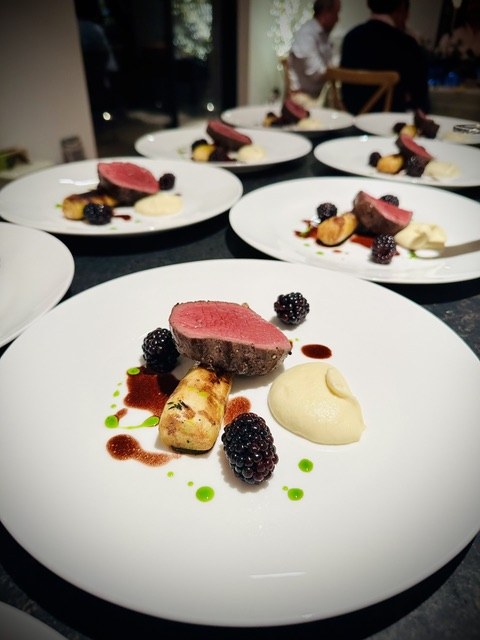
A handful of pickled blackberries brings acidity through the richness, then just kiss the plate with Douglas fir oil. Suddenly there is this fresh, citrusy woodland note running through everything.
That plate is not about showing off. It is Mother Nature doing most of the work. As chefs, we are incredibly fortunate to be surrounded by an abundance of extraordinary ingredients, and our job is to understand when to intervene, and when to get out of the way.
Fire, used properly, does not disguise an ingredient. It takes it somewhere else.
So, is cooking with fire the new fine dining, or simply smoke and mirrors? After almost 30 years behind the stove, I know which side of the fire I am standing on.
Mike Jennings is a chef and food writer with almost 30 years of experience in professional kitchens.