


Sarita Handa has spent more than three decades turning Indian hand embroidery into textiles for the home. Its latest move took a different route from the trade fair or the showroom: a four-day showcase at Arlington House Apartments in London’s St James’s, where more than 30 designers, clients and prospective clients were invited to see the collection in a setting that resembled a home rather than a stand.
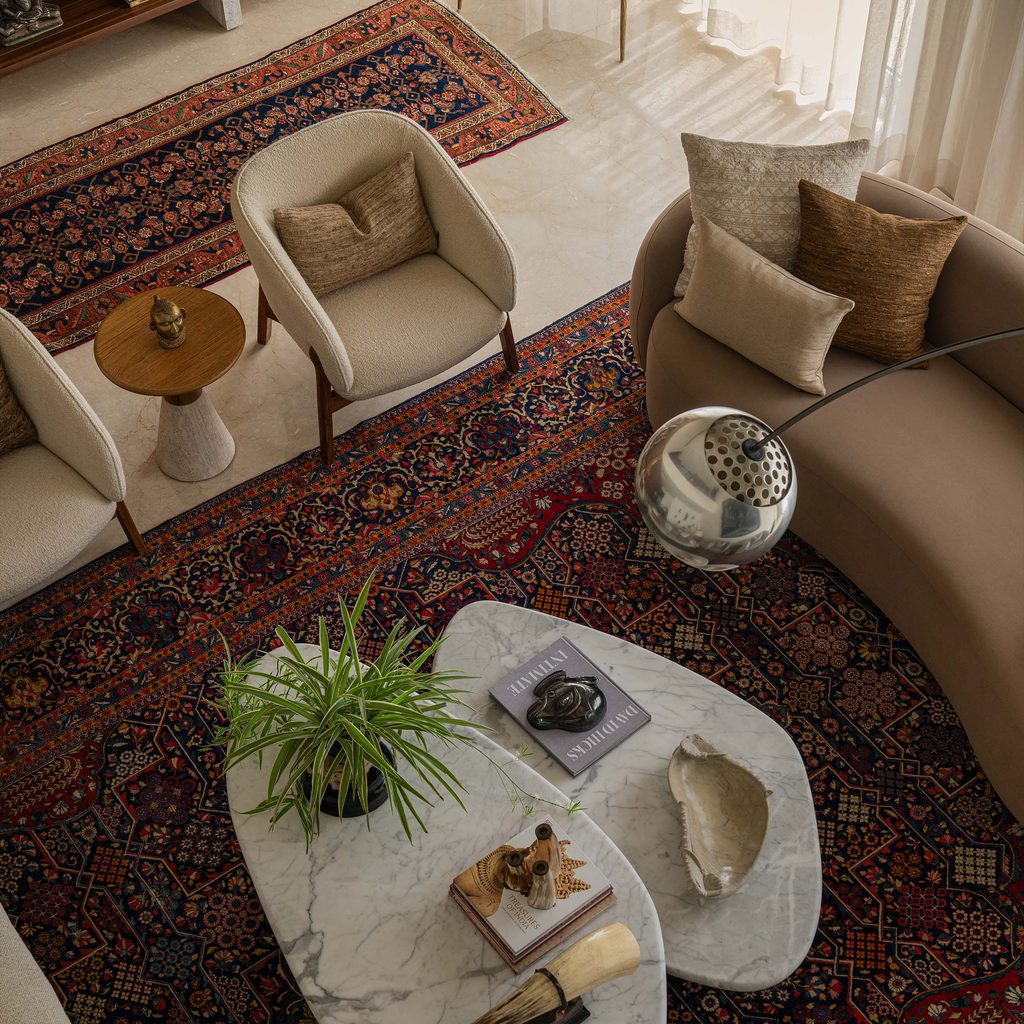
The event, hosted by the company’s head office team alongside its UK head Nadia Minkoff, also marked the launch of a dedicated hospitality offer spanning specialist wall coverings through to fabrics for bed linen. For a business long known as an export house, the London showing signals where it sees the next phase of growth: in the detail-driven interiors of hotels, residences and private homes.
A collection designed to be lived with
Bed linen, table linen, cushions and quilting were displayed across a range of fabrics, with print variations for bedding and knitted throws alongside the hand-finished embroidery for which the brand is known. Placing the pieces in furnished rooms let guests judge how a colour reads against a wall rather than against a white exhibition panel.
Colour and texture
New colourways moved through terracotta, taupe, bark and muscovado, an earthy palette set against fine cottons, linens and velvets. The layering of quilting and embroidery gave the collection a restraint that reads as quiet rather than plain.

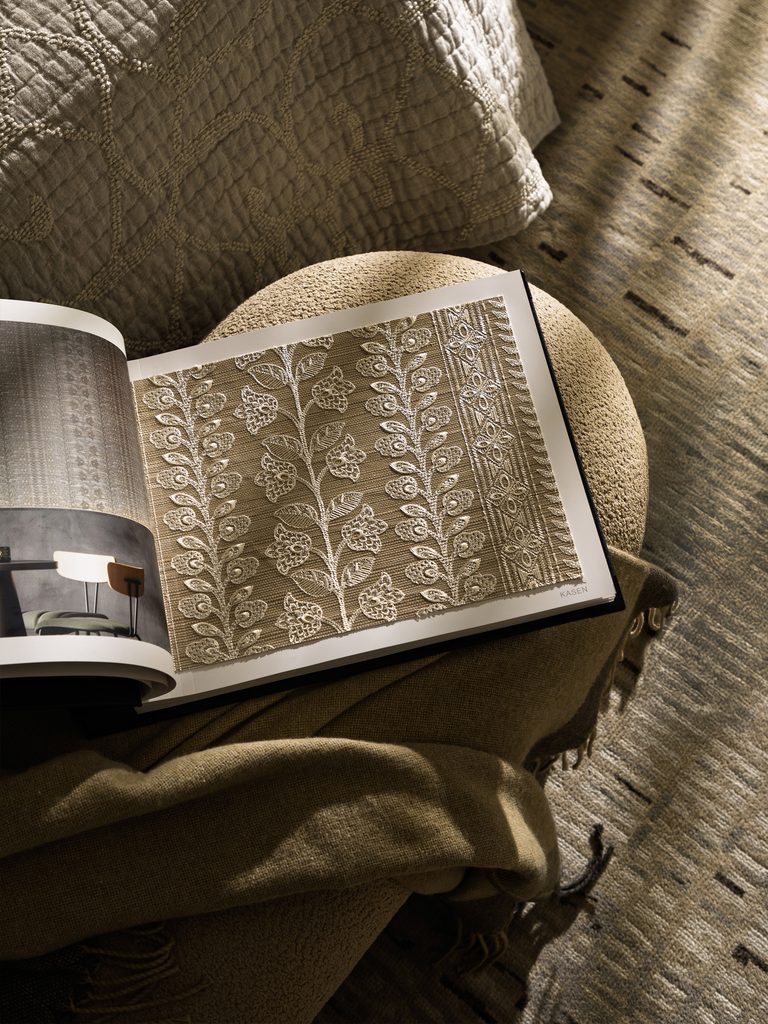
Texture carries the interest where pattern is held back. A little pile and the slight unevenness of hand stitching register differently in daylight and lamplight, which is why interiors buyers ask to see fabrics in situ before specifying them at scale.
Three quilts from the archive
Among the pieces on show were three original hand-stitched quilts made more than 30 years ago. They served as a working reference for the skills the company still relies on, and as a reminder of the distance between a machine finish and a hand one.
That continuity has a commercial value that is easy to undervalue. Hand embroidery carries the small irregularities that signal human work, and buyers at the upper end of the interiors market increasingly ask for evidence of who made a piece and how.
From export house to hospitality supplier
Sarita Handa founded the company in 1992, drawing on a knowledge of textile traditions gathered while travelling across India as an army wife. The techniques the house works with include aari, chikankaari, zardozi, phulkari and kantha, several of them historically associated with court dress or with the trousseau pieces given to brides.
Thirty years of technique
Its first collection translated vintage French textile designs through those Indian embroidery methods, and the range has since extended from patchwork quilts and hand quilting into hand-spun and hand-woven fabrics, then into furniture and decor.
That progression matters to anyone buying at this level. A supplier able to move between soft furnishing and furniture reduces the number of relationships a design team has to manage, and keeps tone consistent from the bed to the chair beside it.
What hotels now ask for
The hospitality service widens the customer base from private clients to procurement teams specifying fabrics at volume. Wall coverings sit alongside bed linen within a single offer, which simplifies the process for interior designers working to a fixed delivery date.
The materials support the pitch. Cotton and linen are breathable and biodegradable, and the company frames its quilting heritage as a low-waste approach to production. For hotel groups pressed to document the provenance of what they specify, that is a more useful argument than ornament on its own.
The case for craft in a demanding market
Luxury interiors have spent a decade moving towards restraint, and the accompanying shift is in how value is explained. A plain linen with an embroidered border asks the buyer to pay for skill and time rather than for a visible logo.
For executives furnishing a home, a private office or a hospitality asset, the calculation turns on durability and distinctiveness. A piece that can be machine-washed and handed on, as the company describes its Timeless Quilt, answers a different question from one built to last a season.
The London showcase was small by trade standards, at more than 30 guests across four days. Its ambition was larger: to put Indian hand embroidery in front of the people who make specification decisions, and to let the work speak in the rooms it is made for.