


Sotheby’s will offer 70 pieces from the personal jewellery collection of Pauline Karpidas in a dedicated evening sale in New York on 8 December, with the whole collection estimated at around £7.5 million. A public exhibition opens at the Breuer building on 2 December, six days before the auction.
The sale follows two record-breaking dispersals of her art and design. The 2023 auction of her Hydra home raised more than £27.6 million, and last year’s London series realised £101 million (£102.2 million), which Sotheby’s describes as the most valuable single-owner sale series ever staged in the city.
A collection built on instinct
Karpidas, now 83, has assembled one of the more personal jewellery collections of the past half century. She bought across periods and makers rather than within a single house style, moving between Art Deco Cartier, Retro pieces by Boucheron and Van Cleef & Arpels, and the independent work of Suzanne Belperron.
Her approach mirrors the one she took to art. She has described herself as a temporary custodian of the objects that pass through her hands, a phrase that sits oddly with a collection so closely identified with its owner.

From Manchester to Athens
Born Pauline Parry in Manchester, she moved to Athens in the 1960s and opened a shop. There she met Constantinos Karpidas, the Greek shipping magnate and art patron known as Dinos, whose enthusiasm for what she called the beauty of wonderful things shaped her eye.

Andy Warhol painted her, and the two bonded, by her account, over her Belperron jewellery and a shared interest in the design of the 1940s. That friendship later brought pieces from his estate into her collection. The sale includes a Verdura amethyst and diamond brooch and earclip set bought at the 1988 auction of Warhol’s effects, estimated at £14,914 to £22,371.
The pieces that carry history
The headline lot is a coloured diamond and chalcedony ring by Joel Arthur Rosenthal, the maker known as JAR, estimated at £1.9 million to £2.7 million. A second JAR piece, a gold and gemstone floral pendant necklace, carries an estimate of £186,418 to £260,985, and two further JAR rings in the sale are pitched between £223,701 and £484,686.
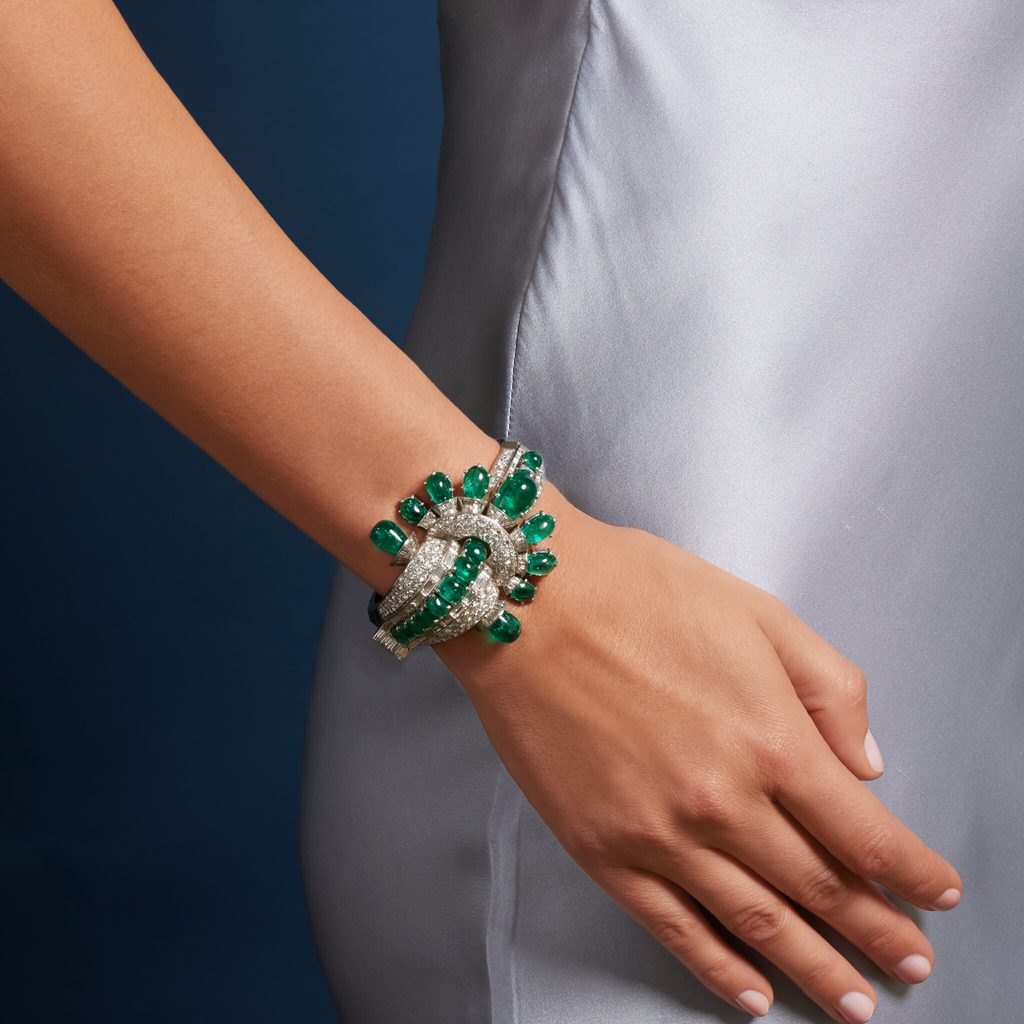
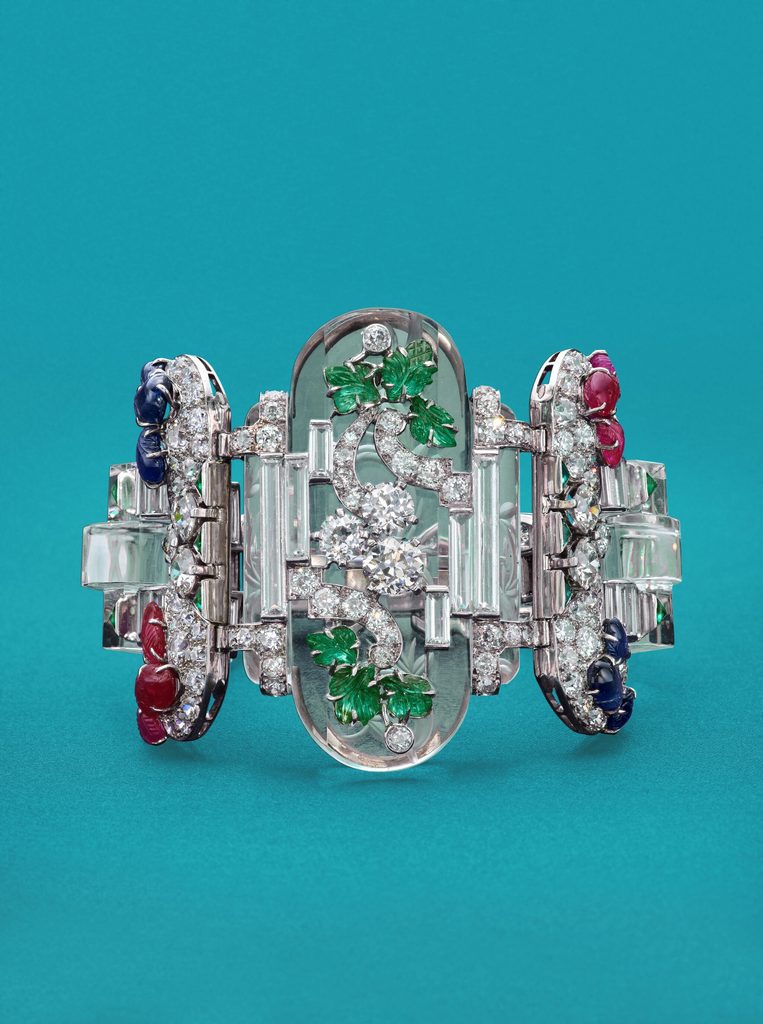
Around them sits a group of Art Deco Cartier, including an emerald, onyx and diamond floral bracelet and a Tutti Frutti clip-brooch estimated at £111,851 to £186,418. Retro jewels by Boucheron, Bulgari and Trabert & Hoeffer Mauboussin fill out the picture of a collector who followed conviction rather than fashion.
Provenance from the Windsor sale and Warhol’s estate
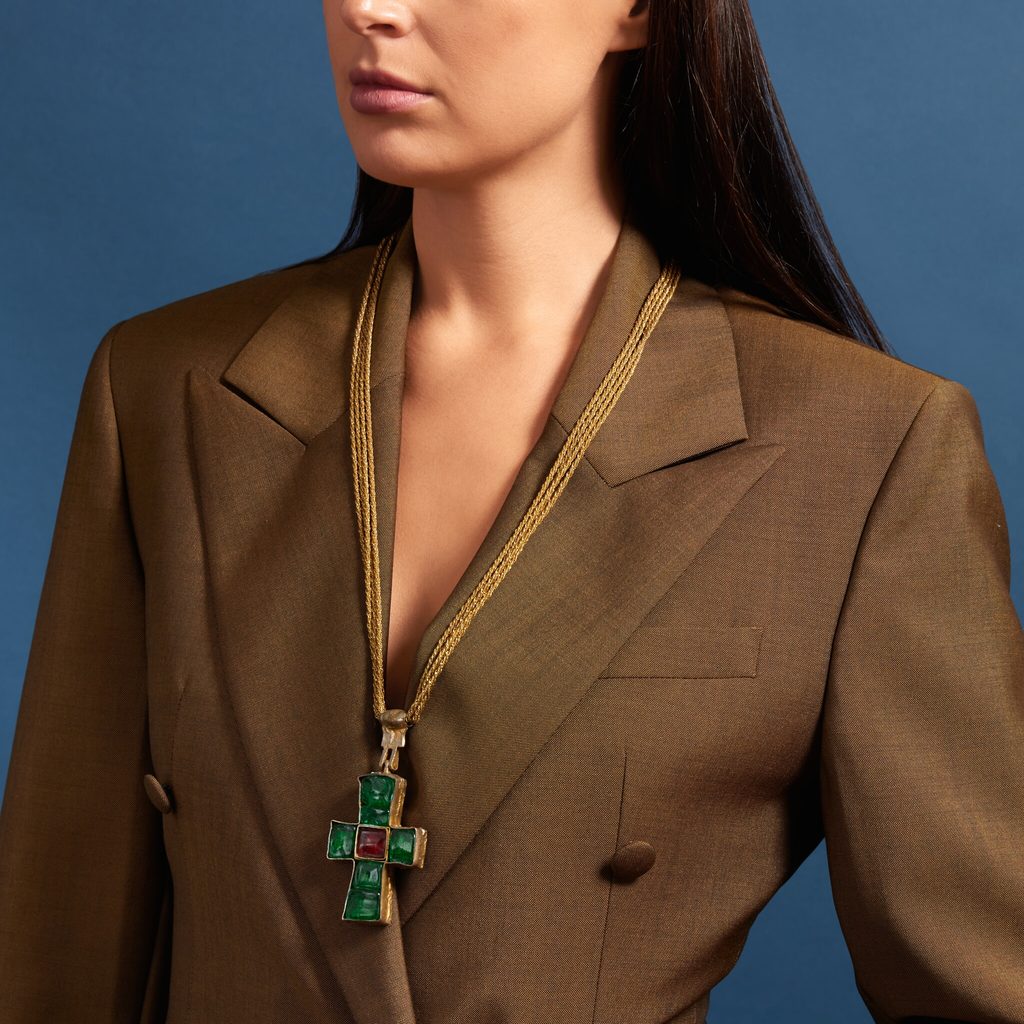
Several lots carry histories beyond their makers. A pair of Cartier ruby boule bead earrings and a matching ring, estimated at £74,567 to £111,851, were bought at the 1987 Sotheby’s sale of jewels from the Duchess of Windsor. An early 18th-century sapphire and gem-set reliquary cross, once owned by a cardinal, is estimated at £59,654 to £89,481.
For buyers, that paperwork matters as much as the stones. Jewels with a documented line of ownership attract collectors who treat them as objects with a story rather than as stores of value, and the Karpidas name now carries weight of its own after two high-profile sales.
A market that rewards private collections
The auction arrives as demand for signed vintage and artist jewellery holds firm at the top of the market. Belperron, JAR and mid-century Cartier have all set records in recent years, and single-owner collections give buyers a shortcut to pieces that rarely come to auction individually.
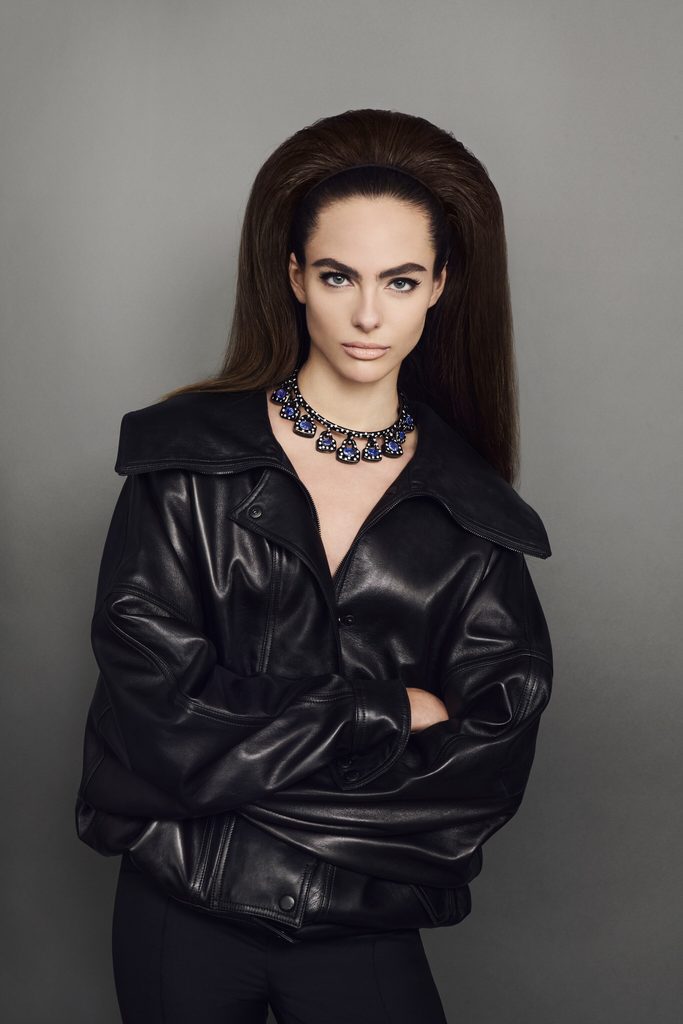
The estimate levels suggest restraint rather than exuberance. A £7.5 million total for 70 lots is modest against the £101 million achieved for her London art and furniture, which may reflect the smaller sums that jewellery commands lot by lot, even at the highest level.
What the sale says about collecting
Karpidas has framed the auction as a transfer rather than a farewell. She has said that the pieces she has lived among should now find their next generation of custodians, and that she intends to keep collecting and supporting artists.
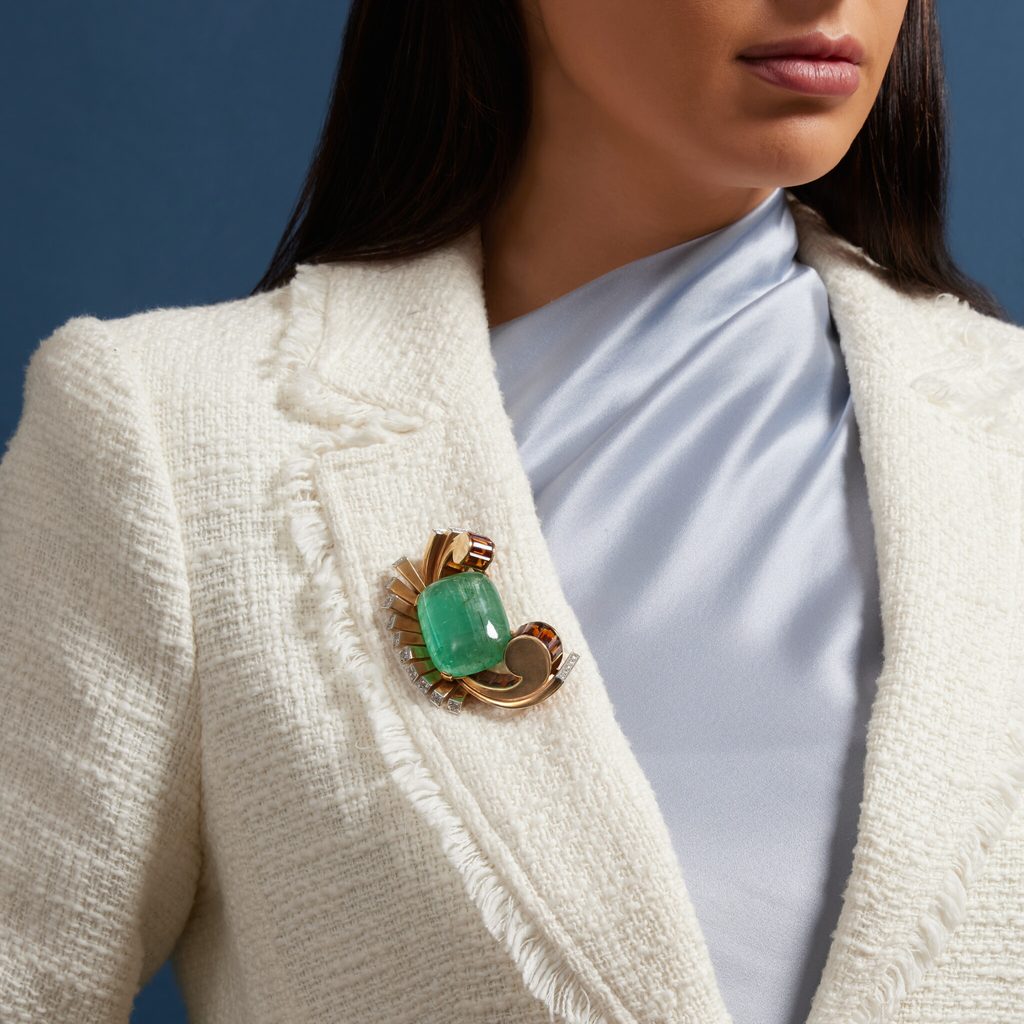
That continuity is part of the appeal for the room. Buyers bidding in New York will be competing for objects worn by a woman who knew the artists and makers behind them, a line of connection that cannot be manufactured at a later date.