


Every so often, the car becomes the point of the journey rather than the means of making it. That was the thinking behind our four-day loop of southern England: three exceptional hotels, some of the best driving roads within reach of London, and one of the fastest production cars on sale today to link them together.
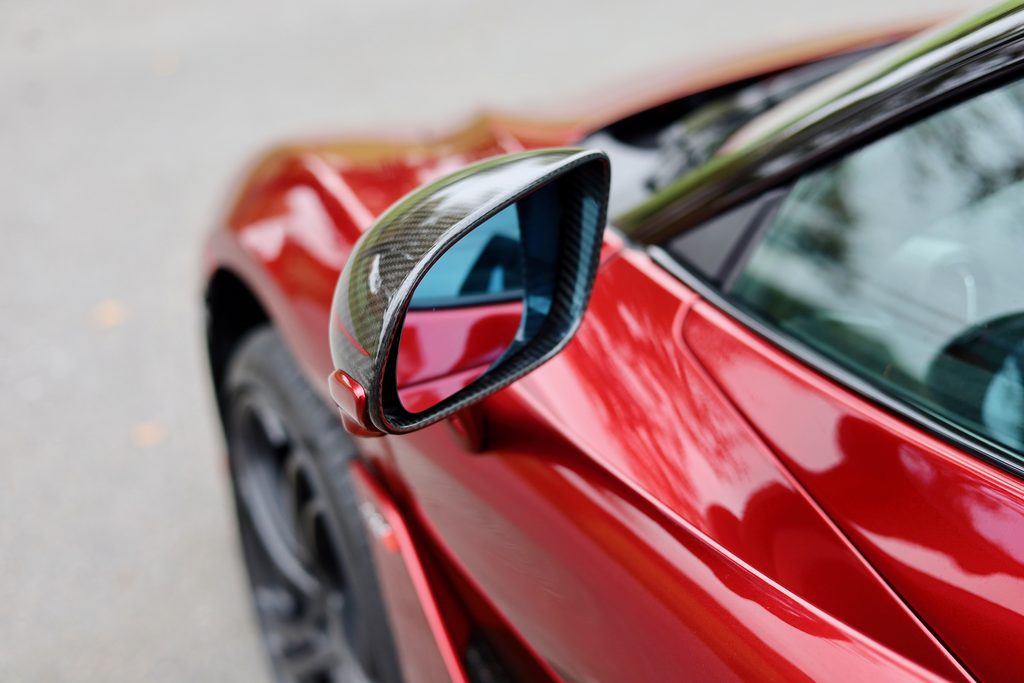
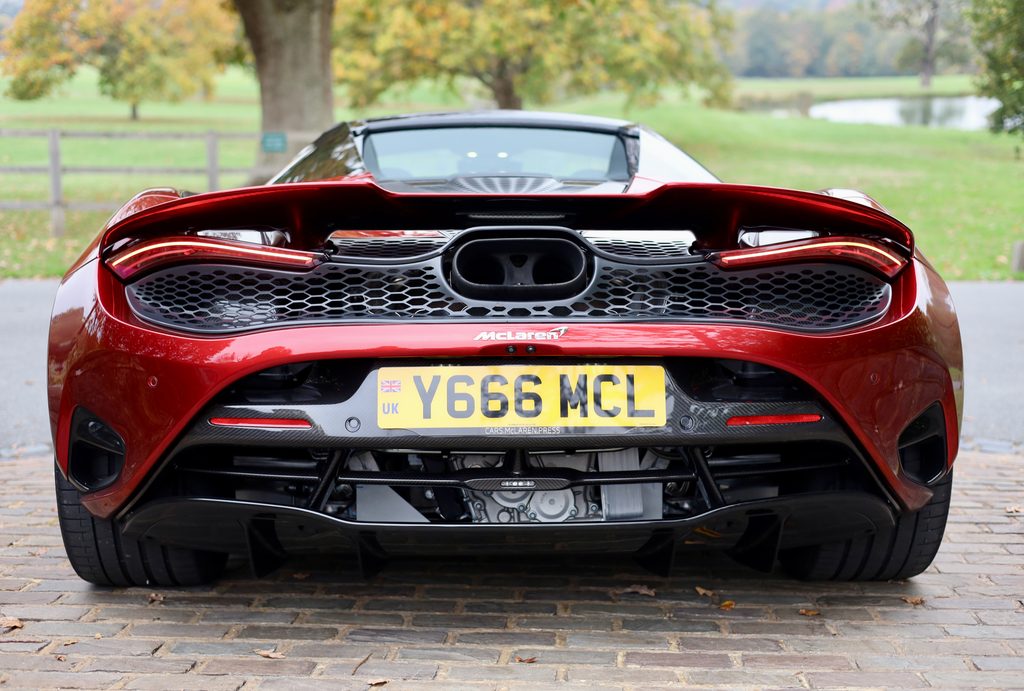
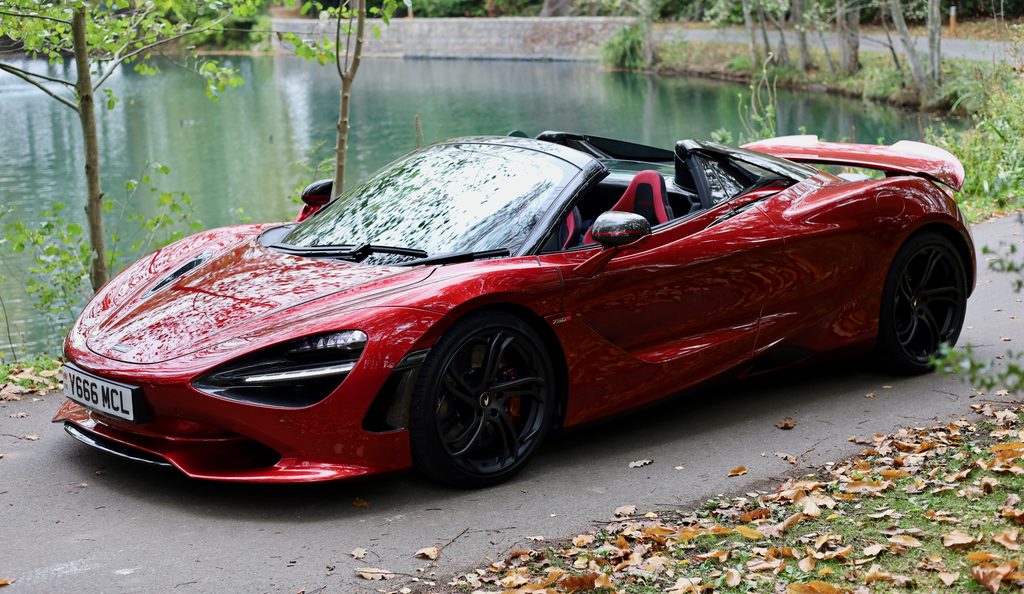
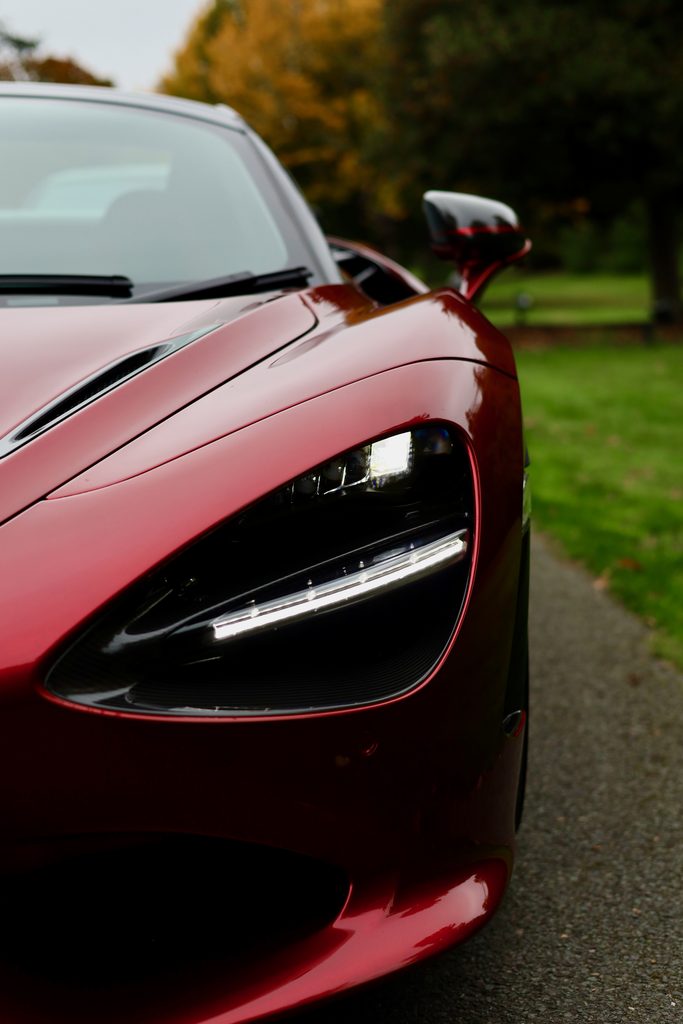
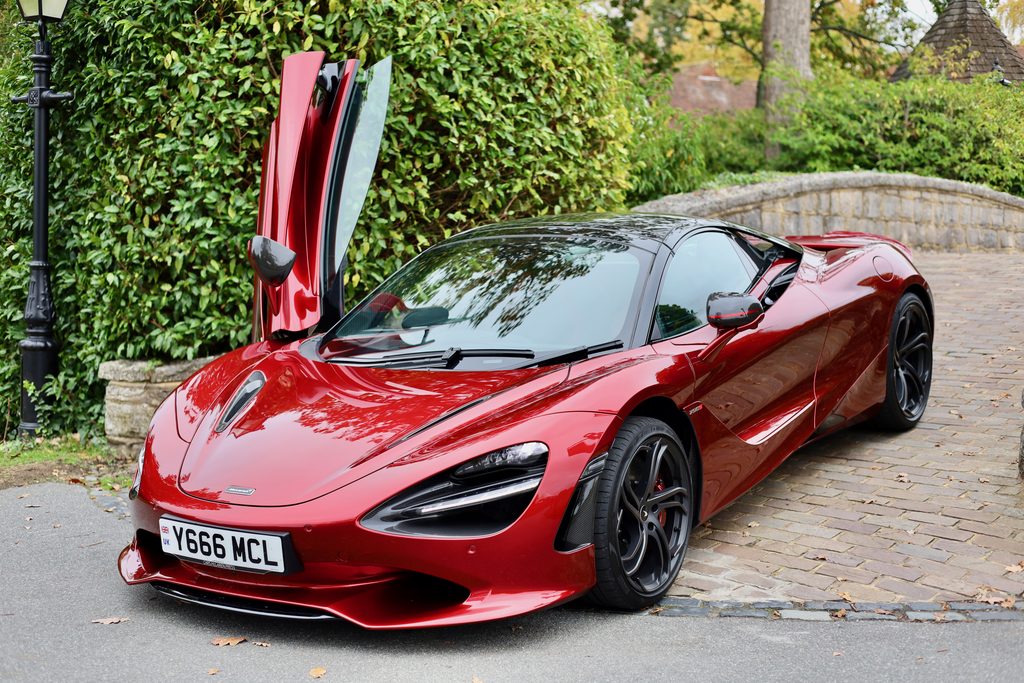
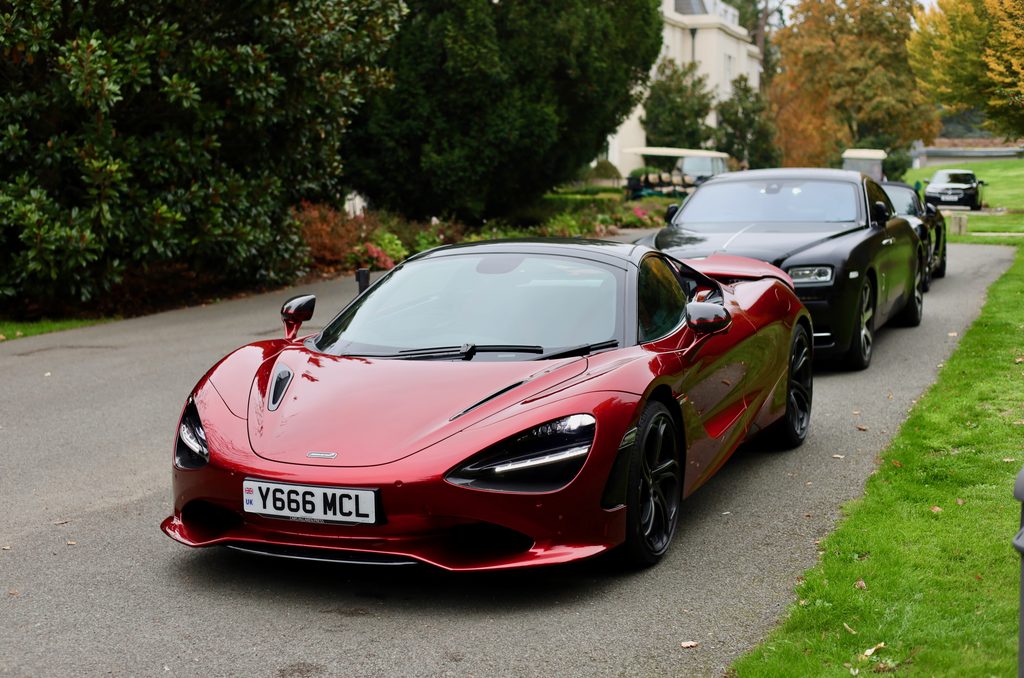
Our weapon of choice was a McLaren 750S Spider, the open-top version of the most powerful series-production supercar McLaren builds. Ours had been specified with almost everything the options list allows, and finished in MSO Volcano Red with gloss carbon fibre across the body and a cabin trimmed in Alcantara.
The plan was simple. We would collect the car from the McLaren Technology Centre, head south to the Sussex countryside, continue west to the Dorset coast, then make our way back through Berkshire before returning the keys. The roads in between would decide the rest.
Behind the gates at Woking
The McLaren Technology Centre sits quietly on the edge of Woking, and nothing about the approach prepares you for what lies inside. Once our passes had been approved at the security checkpoint, we were led into a building that looks as though it belongs to a Bond villain, with one important difference. The arsenal here is made up of some of the most significant road and racing cars ever built.

It is an office, a vehicle development facility and a service workshop, but it also works as a time capsule. The collection runs from the very first McLaren racing car to the latest hypercar technology, and includes the McLaren F1. Its top speed of 240.1mph, set in 1998, remains the record for a naturally aspirated production car almost three decades later. Some areas were so confidential that our cameras stayed firmly in our bags.
Our car was waiting in front of the lake, framed by the glass atrium and looking every bit the star of the show. A technician walked us round it and talked us through the controls before we loaded up. With no space behind the seats in the Spider, everything had to go in the front luggage compartment. Its 150 litres held a cabin-sized suitcase, a duffel bag and a backpack, and we squeezed the smaller items into every remaining corner.
Roof down, briefly
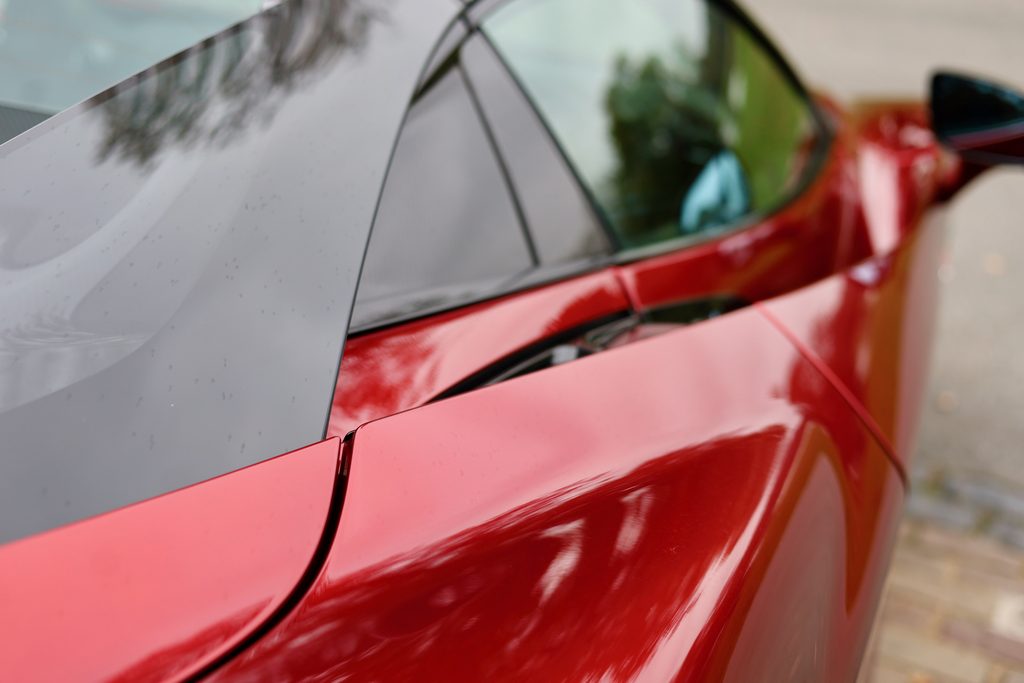
A Spider demands to be driven with the roof down, so that was the first thing we tried. The one-piece retractable hard top folds away in 11 seconds at speeds of up to 50km/h. For a few glorious minutes we had open sky and a V8 roaring behind our heads. Then the cold autumn air reminded us that it was November in England, and the roof went straight back up.
The technician had shared a trick for exactly this situation. The small pane of glass behind the cabin drops down on its own at the touch of a button, while the roof stays closed. That opens a direct path between the engine and your ears, so every crackle, pop and roar from the exhaust floods into the cabin while the heater keeps everyone warm. We barely closed it again for the rest of the trip.
First impressions
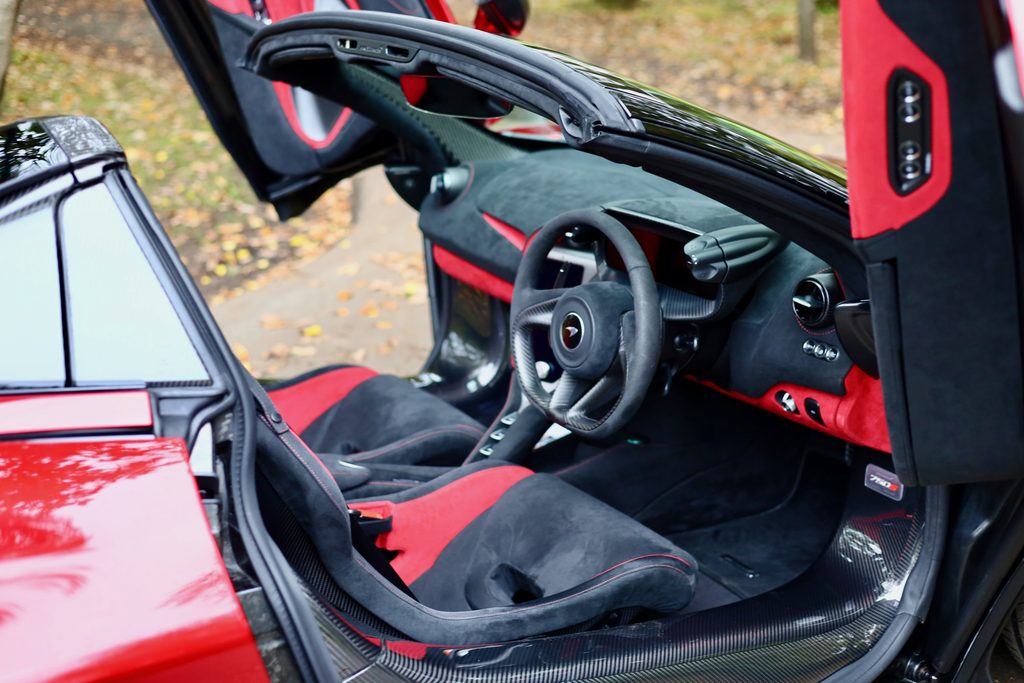
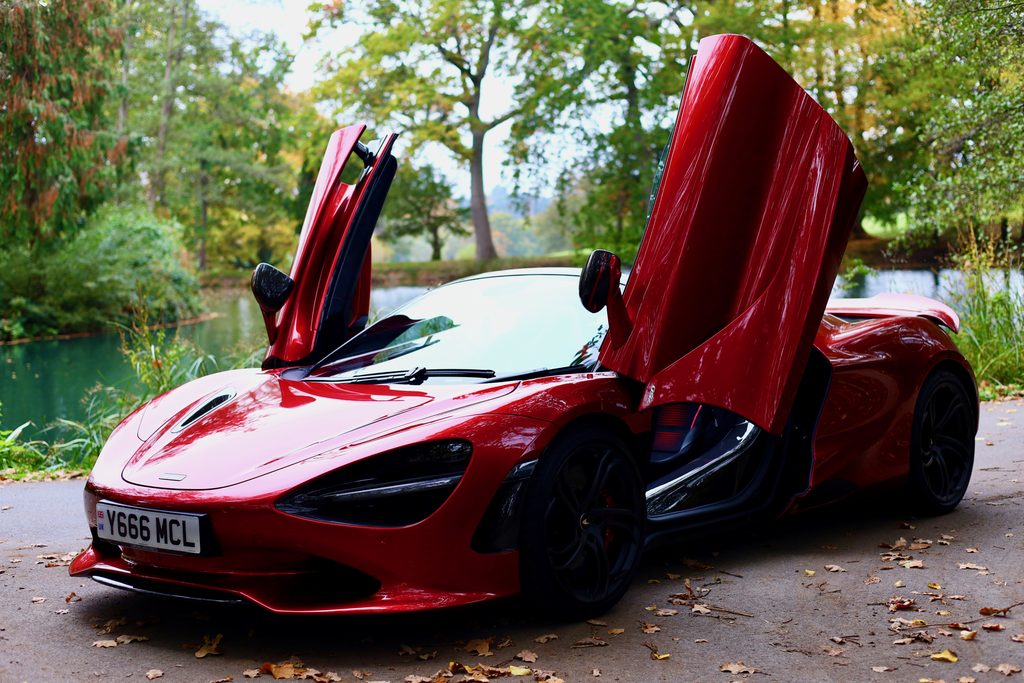
The dihedral doors swing upwards and outwards, which is pure theatre, yet they turn out to be surprisingly practical in a tight car park. Lowering ourselves into the high-bolstered carbon fibre racing seats was never going to be graceful. Once we were in, the seats closed around us like a fist, and the door, seatbelt and every switch fell easily to hand.
Starting the car is a small ceremony. The brake pedal is rock hard, a reminder that this car needs race-car stopping power from its carbon ceramic discs, 390mm at the front and 380mm at the rear. Press the start button and the 4.0-litre twin-turbocharged V8 explodes into life with a bark through the central-exit sports exhaust. One more button selects drive, and we were away.
What surprised us most was how easy the car is to live with at low speed. Supercars often struggle in traffic, and British roads guarantee plenty of it. The 750S takes congestion in its stride, and the nose lift raises the front splitter in around four seconds, which made speed bumps far less stressful. McLaren does not pitch it as a daily driver, but it copes with everyday driving far better than we expected.
Finding the limits, carefully
As the traffic thinned, we started to explore what the car could do. The first proper squeeze of the throttle was a shock to the system. The acceleration is brutal, the horizon rushes towards you and the scenery blurs at the edges. Our stomachs were left somewhere behind on the road.
Then came the brakes. McLaren quotes 30 metres to stop from 62mph and 113 metres from 124mph, and from the driver’s seat that stopping force is almost violent. Stamping on the pedal threw us forward so hard against the belts that our faces ached. The carbon racing seats earned their place here, holding us so firmly that we never slid an inch.
Despite all that drama, the car inspires enormous confidence. The carbon fibre Monocage II-S chassis, the hydraulically linked suspension, the precise electro-hydraulic steering and wide Pirelli P Zero tyres (305mm at the rear) all feed a steady stream of information from the road to your hands and spine. You feel completely connected to the car, and that feeling dares you to keep pushing.
Track mode
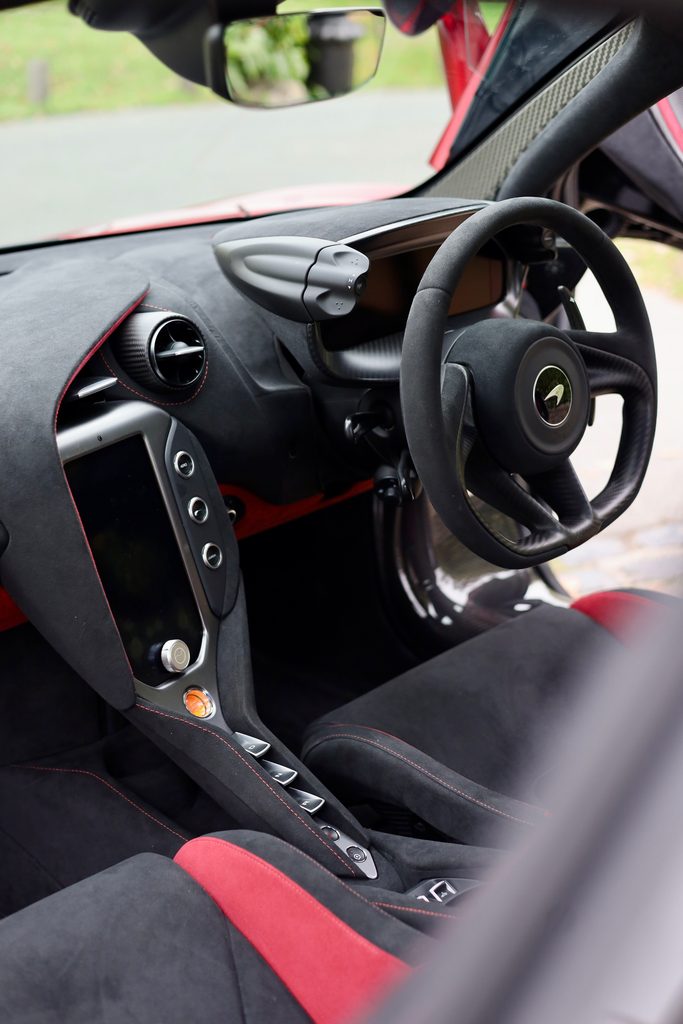
The driving modes are selected from controls on the carbon binnacle above the steering wheel. The extended carbon shift paddles are linked across the back of the wheel, so you can change up or down with either hand. After a few hours we felt brave enough to select Track mode for both chassis and powertrain. It is far too much for the public road, but it would have been rude not to.
Track mode turns a road-going weapon into a missile. Bury the throttle and the twin turbochargers spool up instantly, with no pause while they gather themselves. Acceleration arrives like a wave, pinning us into the carbon seats as the exhaust note rises from a growl to a full scream. The rev counter races towards the red line with alarming speed, and the engine keeps pulling all the way to its peak of 750PS at 7,500rpm.
Timing becomes everything. At the exact moment the red line arrives, a flick of the paddle slams the transmission into the next gear with such ferocity that it feels like a full-force kick to the back. There is no delay and no hesitation, and the whole process is instantaneous. Then the turbos pile in again, the exhaust screams again and the red line comes rushing back for the next gear.
Slowing down is just as dramatic. Pull the left paddle and the gearbox blips the throttle by itself to match the revs, with a sharp crack from the exhaust, so each downshift is clean and perfectly judged. Every part of the car is tuned to one purpose, which is covering ground as quickly as physics allows.
McLaren quotes 0 to 62mph in 2.8 seconds, 124mph in 7.3 seconds and 186mph in 20.4 seconds, with a top speed of 206mph. These numbers are astonishing on paper and frankly unhinged from the driver’s seat. Most supercars build speed in a progressive, linear way. The 750S unleashes instant, screaming, raging power that never seems to run out.
The best comparison we could find was a rollercoaster with the driver in charge of the speed, one that keeps letting you go faster. It was terrifying and exhilarating in equal measure, and utterly addictive. We wanted that feeling again and again, which is exactly why we eased off before we got ourselves into trouble.
The Volcano Red effect
We had worried the car might attract the wrong kind of attention, and we were happily wrong. Admiring looks, photographs and friendly questions followed us everywhere, at fuel stations, in town centres and on hotel driveways. Every reaction was warm and curious, and not once did anyone treat it as showing off.
The welcome at each hotel was just as enthusiastic. Doormen and receptionists were visibly pleased to see the car arrive, and at all three properties we were offered the most prominent parking space for everyone to admire. We had expected that to feel slightly embarrassing. Instead, it made us proud to be driving a car with such a celebrated badge on its nose.
South Lodge, West Sussex
Heavy traffic and a wrong turn or two meant we arrived at South Lodge far later than planned, but the welcome more than made up for it. A winding private drive leads through 93 acres of Sussex countryside to the manor house, built in 1883 by the naturalist Frederick DuCane Godman, and the car was parked directly outside the front entrance. Our host gave us time to freshen up and kept the kitchen open at The Pass, the hotel’s Michelin-starred restaurant, where a relaxed seven-course tasting menu showcased seasonal British produce. Highlights included a Louet-Feisser oyster with fermented grains, turnip and dill, a perfectly roasted duck breast with crackling skin, beetroot and radicchio, and a zesty lemon thyme pannacotta that was easily our favourite dessert.
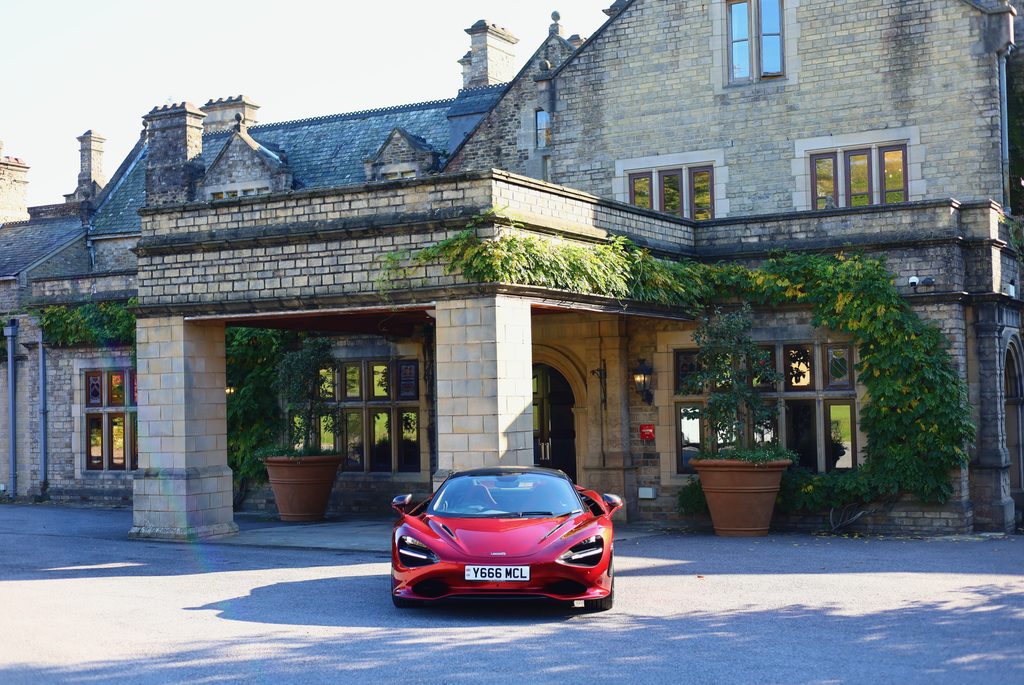
We retired to the Elizabeth, a very large suite that pairs grand, traditional decor with every modern comfort, and woke thoroughly restored. Breakfast in the à la carte restaurant brought a lobster and crab crumpet and an off-menu plate of smoked salmon, poached eggs and capers, before the staff steered us towards the spa. Set in its own 44,000-square-foot building, it was named Spa of the Year at the AA Hospitality Awards 2023 and includes a 22-metre indoor infinity-edge pool, a thermal suite and a heated outdoor hydrotherapy pool that steams against the cold country air. Before we knew it, it was time to leave, and the V8 fired into life as we set off south-west towards the coast.
Hotel du Vin, Poole
Hotel du Vin Poole occupies a Georgian mansion built in 1776 for Isaac and Benjamin Lester, merchants who made their fortune in the Newfoundland fishing trade, on Thames Street just off the historic quayside. For once we arrived exactly on time for check-in, and once again the car was given the prime parking spot. Our room sat in a separate building a few steps from reception and felt like our own small cottage, with a freestanding bathtub in the bedroom and a bathroom set down a short flight of stairs in its own alcove. A walk along the quay in the fading afternoon light was the perfect way to stretch our legs after the drive.
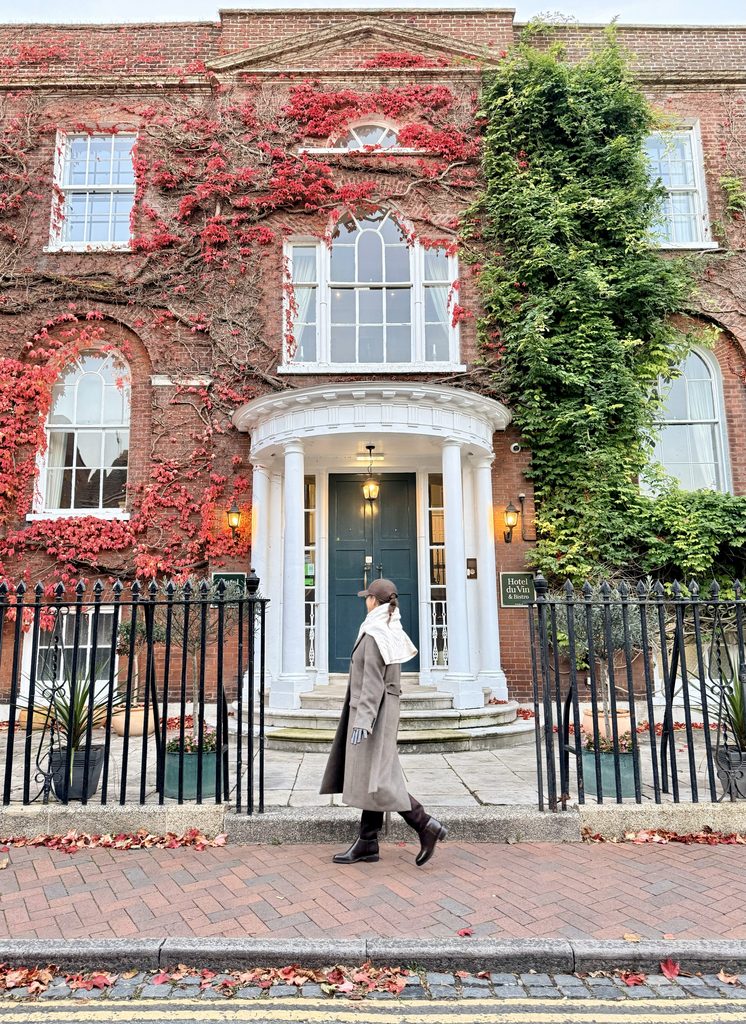
Back at the hotel, we settled in for drinks in front of the open fire in the bar, a warm and unhurried spot on a cold autumn evening. Dinner in the restaurant was a shared chateaubriand, cooked perfectly and served with a generous selection of accompaniments and fries that were too good to resist. A restful night followed in our cosy, modern room. The next morning, despite the cold, the car roared into life without hesitation.
The road back north
Packing the car had become routine by now, with every bag finding its usual corner of the front compartment without any thought. We headed back towards Surrey on the more scenic routes, looking for open roads where the car could finally stretch its legs. With a few hundred miles behind us, we were ready to explore Track mode properly.
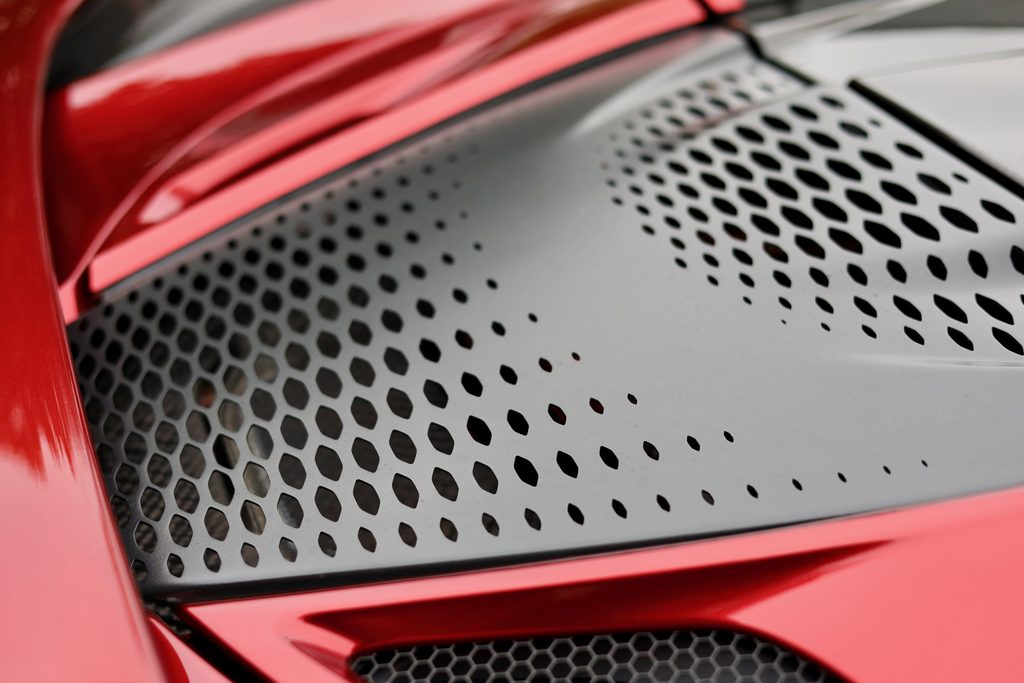
This is where the car showed us just how extreme it really is. The first time we were too greedy with the throttle, the rear tyres spun up and the back of the car twitched. For a split second our hearts stopped, and the full weight of 800Nm of torque became very real. Then the electronics stepped in, gathered everything up and carried us on as if nothing had happened.
The relief was enormous, and it taught us an important lesson. The 750S is forgiving enough to keep you out of trouble, but it never lets you forget that you are driving one of the fastest production cars in the world. Hard driving is rewarded, carelessness is not, and complacency is never an option.
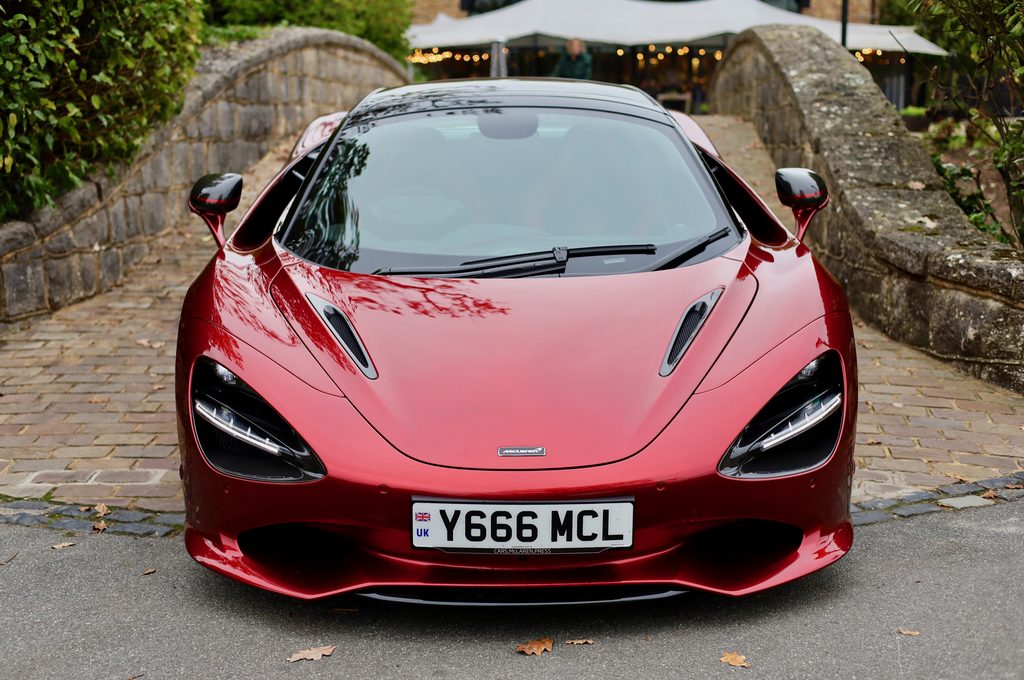
On twisting B-roads, the chassis came into its own. Track mode stiffens everything up, and you feel every small imperfection in the road surface through the seat. Even so, the stiff carbon tub and tightly controlled damping keep the car composed and allow you to place it with real precision. We would love to unleash it on a circuit one day, but the itinerary was not built for that.
Coworth Park, Berkshire
Our final stop was Coworth Park, the Dorchester Collection’s country house hotel, set in 240 acres of parkland bordering Windsor Great Park near Ascot. As we pulled up, heads turned once more, the welcome was as warm as ever and the best spot at the front had been reserved for us, which we could easily get used to. Arriving early for once, we used the time while our room was prepared to photograph the car around the estate, and the concierge pointed us towards a lake on the grounds that made a stunning backdrop. With its doors raised like wings, the 750S looked magnificent, and as ever, passers-by wandered over to ask about the car and to share their appreciation.
The estate’s buggy service then delivered us to Loft Cottage, a detached two-storey house so new that it was not yet listed on the hotel’s website. Inside were an open fire laid each evening by the concierge team, a large television above it and a bottle of Veuve Clicquot already waiting on ice. The standalone spa, with its Technogym equipment, large heated indoor pool, sauna, steam room and ice room, filled a slow afternoon. Dinner at The Barn, beside a huge open fireplace and with the smell of the flame grill filling the room, brought a standout halibut crudo with clementine and jalapeño, a honey and jerk-glazed Yorkshire pork chop and a warm doughnut with chocolate sauce that we shared without regret.
Handing back the keys
All too soon, it was time to return to Woking. The car was brought round to reception, the front compartment was packed for the last time, and we set off for home. It was a short drive, and we made the most of every mile with a final few bursts of savage acceleration before the McLaren Technology Centre came back into view.
Above all, the trip was enormous fun. Taking a car developed with the track in mind on a British road trip came with its share of quirks. We played luggage Tetris every morning, climbed in and out of deep racing seats with no dignity at all, lifted the nose for every speed bump and abandoned the open roof within minutes. Cycling through the chassis options to find the perfect settings for the road ahead. The dramatic doors, the blips of the engine on the downshifts, even the slightly annoying first-world problems like trying to adjust the temperature on the touch screen whilst pulling 5 G’s around a corner. Every one of these quirks became part of the adventure, and we would not change any of them.
What impressed us just as much as the performance was the quality of the car itself. Everything feels engineered rather than simply assembled, from the solid thunk of the doors to the switches and stalks machined from solid metal. After four days of hard driving, broken country lanes and cold mornings, not a single squeak or rattle had appeared. The car felt as tight on the final mile as it did on the first. The reliability rumours that have circulated certain McLarens in the past have most definitely been ironed out in this latest generation. The 750S never missed a beat.
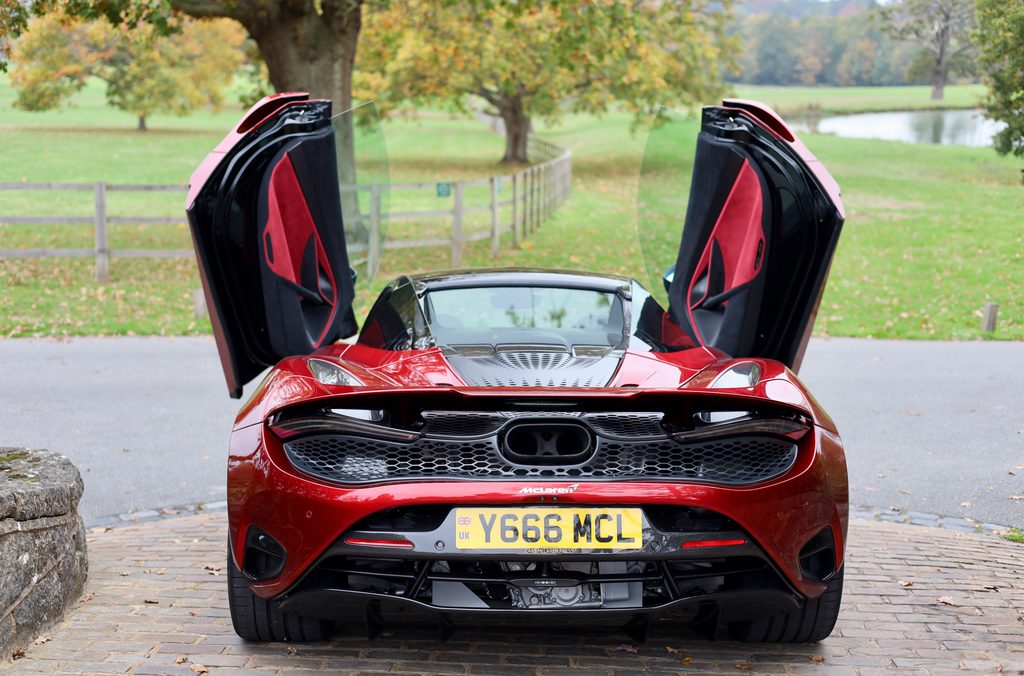
The cabin is a special place to spend time. Our car had the Performance interior in Carbon Black and Ember Orange, with Alcantara covering almost every surface you touch and gloss carbon fibre across the upper trim, sills and steering wheel clasp. The materials look superb and feel even better, and the design is clean, focused and built entirely around the driver. Pure race car one moment, it becomes a refined grand tourer the next.
The optional Bowers & Wilkins 12-speaker audio system deserves its own mention. On the motorway stretches it filled the cabin with clear, rich sound at any volume, and it kept us company through the slower miles between hotels. When the roads opened up, we often turned it off, dropped the rear glass and let the V8 take over. With all respect to Bowers & Wilkins, no speaker system can compete with that soundtrack.
Handing over the keys was harder than we had expected. The 750S Spider is mad, ferocious and gloriously over the top, yet it managed four days of hotels, traffic and luggage without complaint. It turned every road into an occasion. We hope to return soon for the new McLaren 788HS, the limited-run finale to this family of supercars, and we already know we will not want to give that one back either.