



Brandon Friesen’s career in B2B media and marketing spans more than three decades, taking him from the early days of technology publishing through to the front line of one of the most significant shifts the marketing industry has ever encountered. Having held senior roles at organisations including CMP, UBM TechWeb, InformationWeek, and DWA, he brings a depth of experience that few agency leaders can match. Since joining Just Global in 2012, he has guided the agency through a fundamental transformation, turning a U.S.-based, media-focused firm into a full-service global operation with teams across the Americas, EMEA, and APAC, and campaigns running in more than 60 countries.
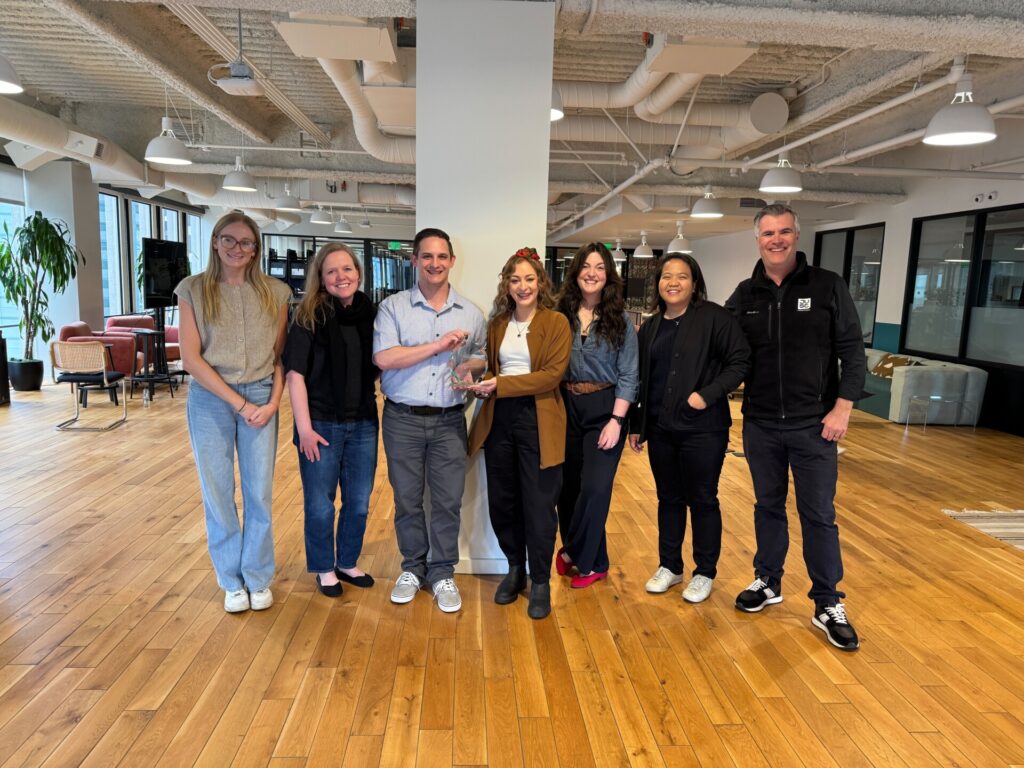
At the heart of Just Global’s model is a conviction that brand and demand should never operate in isolation. By bringing strategy, creative, media, account-based marketing, and advanced analytics under one roof, the agency gives enterprise clients a single, accountable system designed for the realities of complex B2B buying, long sales cycles, large buying groups, and increasing pressure to connect marketing directly to revenue. Now, with AI reshaping how buyers discover and evaluate solutions, Friesen is once again positioning the agency ahead of the curve, developing specialised AI agents, building toward an end-to-end AI revenue operating system, and redefining what a modern agency partnership looks like for global brands operating at scale.
You joined Just Global in 2012 and have since guided the agency through a significant evolution, expanding from a U.S.-based media firm into a full-service global operation across nine countries. Looking back, what was the defining strategic decision that set that transformation in motion?
“For starters, I’ve made many strategic decisions along the way, and I would be the first to admit I got plenty wrong. The best decisions I’ve made are hiring some of the great people around me today. But one defining moment stands out.
“About 7 years ago, not too long after losing my dear business partner to cancer, we lost a major pitch with a well-known global tech company. They were a client, but when the business went up for review, our pitch came in second place. The clear deciding factor was simple. We lacked a global footprint. I made a vow to myself after that loss: we were going to expand globally. That was the moment we committed to building a global business.
“Rather than growing slowly and organically, we chose to accelerate through acquisitions. We brought in the right expertise, evaluated the market carefully, and completed two acquisitions. One gave us presence across EMEA, Australia, and Singapore. The other established us in Japan.
“That fundamentally changed who we could serve. It allowed us to support clients at the scale they needed and pushed us to evolve into a truly global partner.”
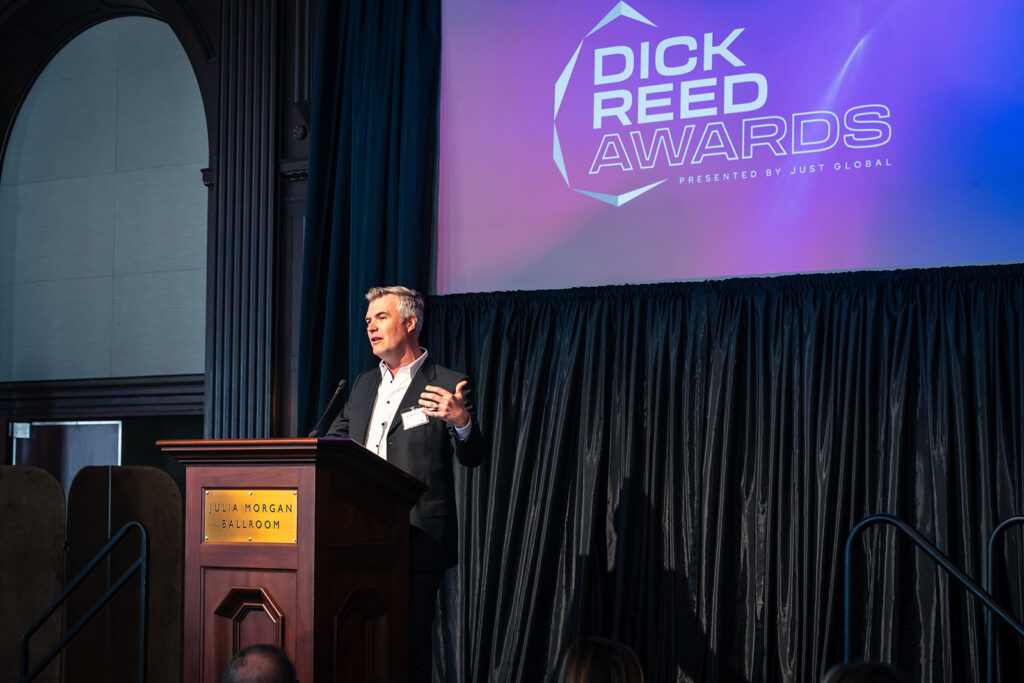
The perception of B2B marketing has changed considerably in recent years, with organisations increasingly recognising its direct commercial value. From your vantage point leading a global B2B agency, how has the status of marketing shifted within enterprise organisations, and why is its role as a direct driver of revenue now being taken so seriously?
“B2B marketers have gained a stronger seat at the table, but they are also under more scrutiny than ever.
“For a long time, B2B marketing relied heavily on chasing MQLs and last-touch conversions. The problem is that those models do not reflect how buyers behave and engage on the path to a sale. Enterprise sales cycles are long, often 12 to 18 months, and reducing marketing’s impact to a single touchpoint was a broken model.
“Thanks to advancements in what we call account-level analytics, we can now connect marketing activity to pipeline and revenue in a way that resonates with sales. That is a monumental shift. It allows marketing and sales to align around the same target accounts and the same definition of success.
“When you move beyond chasing short-term metrics, you unlock creativity. You can invest in brand and build demand instead of just capturing it.
“We are also seeing B2B marketing reflect how people actually consume media. That includes connected TV, podcasts, and social platforms beyond tried-and-true platforms like LinkedIn. With better data, we can understand how those touchpoints influence real buying behavior.
“On top of that, AI-driven discovery is creating a new frontier. What we think of as GenAI engine optimization is pushing brands to rethink content, visibility, and how they show up in entirely new environments.”
Just Global’s model is built around aligning brand, demand, and account-based marketing into a single, accountable performance system. In practice, what does that mean for a client navigating a long buying cycle with a large, distributed buying group?
“Here’s a simple rule. Don’t try to generate leads and pipeline from a target account without first warming it up with a brand campaign. In other words, do not expect demand from an account that does not know who you are.
“Too often, companies try to generate leads from cold accounts without investing in brand first. Stating a tired expression, B2B buyers are people too. Emotion and memory matter in B2B. If you are not memorable, you are not considered.
“Build awareness and familiarity through media channels where people spend the most time. Use consistent and customize creative that stands out from the crowd. Then layer in demand generation to capture that interest. Finally, apply account-based strategies to engage and convert specific buying groups from specific accounts.
“B2B buyers don’t think, “oh, what a great brand ad.” Or “what a great email.” Or “what a great sales call.” They just experience your brand as one continuous journey, not disconnected tactics.
“The challenge is that this takes time. When organizations focus only on short-term wins, they miss the opportunity to build a sustained pipeline and improve close rates over time. That is why we have structured our business to bring strategy, creative, media, ABM, and analytics together. From first exposure to closed revenue and beyond, marketing should be contributing across the entire journey.”
AI is changing how buyers discover, evaluate, and make decisions, often before they’ve spoken to a single salesperson. How is that shift in behaviour affecting the way your clients approach go-to-market strategy, and what adjustments are you seeing the most forward-thinking organisations make?
“This is probably the most common conversation with clients right now. Buyers are increasingly starting their research in AI-driven environments like Claude, Gemini and ChatGPT instead of traditional search. That changes how brands get discovered.
“If you are not showing up in those environments, you are invisible early in the buying process.
“To help clients navigate that, we developed an Answer Engine Activation Report. It looks at how a brand appears across AI-driven discovery channels compared to competitors, what target accounts are actually asking, and delivers an action plan to fill the gaps in content and visibility.
“At the same time, rising costs in traditional search engines, once the center of any paid media mix, are pushing brands to diversify. We are seeing more investment in channels where attention already exists, like CTV, streaming, OOH, audio, and social, paired with more dynamic lead generation experiences. The critical GTM motion here is connecting everything to a common Target Account List.
“Even lead generation itself is evolving. Static assets like whitepapers are being replaced by more interactive, agent-driven experiences. It is a meaningful shift in how buyers engage.”
Agentic AI, where systems can autonomously plan and execute tasks, is beginning to reshape how marketing workflows are structured. How do you see that playing out inside agencies and client organisations, and where does it create the greatest opportunity?
“There is a lot of justified excitement around agentic AI, and also a plethora of noise.
“Right now, I see two extremes. One is driven by hype and overpromising. The other is more grounded and focused on solving real problems.
“We have taken the second approach. Instead of trying to build one all-encompassing system from the jump, we are developing specialized agents that handle specific tasks across media, creative, analytics, and operations. In fact, we have 50 live active agents, 18 in testing and many more in early development.
“Over time, these systems will become more connected. But starting with strong, reliable foundations matters.
“This said, let’s please not forget the humans. Human oversight is still essential. AI is a powerful tool, but it is still a tool. The real opportunity is removing friction, improving work product, and giving people more space to unleash their creativity and ingenuity.
“This also impacts our people and HR team operations. Difference-making talent is trained on using AI. Hiring practices are focused on people with AI acumen. We are investing in people who know how to work with AI, because that combination of human judgment and machine capability is where we believe the magic will happen.
“Longer term, we are working toward an end-to-end AI Revenue OS for clients. This people-driven, integrated AI system will unify account intelligence, buying group orchestration, AI-powered creative, media activation, and revenue measurement to help brands move from fragmented execution to full-funnel growth. All grounded in deep B2B expertise.”
With teams across the Americas, EMEA, and APAC, and clients including the world’s leading cybersecurity brand and other global fintech organisations, Just Global operates at considerable scale across genuinely diverse markets. What does that global reach allow you to offer clients that a more regionally focused agency simply cannot?
“Most of our clients are global, multi-national B2B brands, so the ability to support them across regions is not a nice-to-have, it is a must.
T”hat said, global does not mean purely centralized. Marketing has to work in-region. For example, a VP of APAC Marketing based in Singapore cares primarily meeting their own KPIs. The same is true across regions. Often down to the country level. Buyers in Japan consume media very differently than buyers in Korea. The UK is not France. Those nuances matter, and they directly impact performance.
“What we offer is the ability to balance that local relevance with global coordination.
“Because we operate across nine countries and run campaigns in over 60, we understand how to execute in-market while still connecting everything back to a unified strategy. That means a consistent brand narrative, shared data and insights, and the ability to scale what works across regions without losing what makes each market unique.
“There is also a significant efficiency gain. We can centralise areas like data, analytics, and parts of media planning, while allowing other channels to be managed locally where it makes sense. That combination drives both performance and operational efficiency.
“When brands rely on separate regional agencies, they often lose that connection. There is duplication, fragmentation, and missed opportunities to learn and improve across markets.
“Our role is to bring that together. One connected system, built to perform globally, but executed with local precision.”
Your career spans B2B publishing, media, and advertising, with leadership roles across a number of significant organisations in the sector. What has that breadth of experience taught you about leading through periods of industry change, and how do you apply those lessons now?
“I’ve been in B2B media and marketing since I was 12 years old. If you don’t change and adapt, you fade away. The industry is constantly reinventing itself. If you are not willing to adapt, it is a difficult industry to stay in.
“As a leader, the first step is acknowledging that change is hard. It creates uncertainty, and people experience that differently. I am far from perfect, but I try to lead with empathy while maintaining a clear vision for the future.
“For me, listening to customers has always been the anchor. Even when we have made mistakes, staying close to what clients need and understanding their markets has helped guide us forward.
“Our people are the foundation of the business. Business is personal. I focus on thinking “we” not “me” to prioritize what’s best for the business, the team and the journey. I want our collective group to be in best position to succeed as things evolve.
“At the same time, you have to lean into change. Have the hard conversations. That is where the opportunity lies. You can use change to raise the bar over the long run.”
Looking ahead, how do you expect the relationship between agencies and their clients to evolve as AI becomes more deeply embedded in marketing operations, and what will agencies need to offer that technology alone cannot?
“The relationship is becoming much more integrated. We used to say we were an extension of our clients’ teams. Increasingly, we are simply part of those teams.
“In the strongest partnerships, we are involved in shaping strategy, not just executing it. That includes co-developing solutions, whether that is new solutions, new operating models, or new ways of going to market.
“As AI takes on more operational work, the value of the agency shifts. While flawless execution is still paramount, it becomes more about the expertise we deliver. That’s why we love being a B2B specialist. We have a deep understanding of our clients’ businesses, their buyers, and how to design a system that drives outcomes. That system includes people, data, AI, and workflows, and how they work together.
“Agencies that succeed will be those that go deep, bring real domain expertise, and take accountability for results. Ultimately, the role becomes less about channel execution and more about being the architect and operator of the marketing system. But let’s never lose sight of the fact that relationships are the most important thing in business.”