



The Executive Magazine speaks exclusively to Jamie Barber, Founding Partner of Cherry Equity Partners and Co-Founder of Loliss Capital, whose career has taken him from entertainment law to restaurant creation, hospitality investment and prime-time television. He began as an entertainment lawyer at Harbottle & Lewis, representing clients including Virgin, Chrysalis, Sir Roger Moore, Sir Michael Caine and Sir David Frost, before co-founding Hush in Mayfair in 2000, a restaurant he would go on to sell to Soho House in 2024. Along the way he created restaurant concepts including Sake No Hana, Villandry, Kitchen Italia, Cabana and Haché Burgers.
Today his career has settled into three overlapping roles: the £44.8 million hospitality turnaround fund Cherry Equity Partners, which operates 26 restaurants, hotels and pubs including Bistrot Pierre, Gusto and Cabana; the new GiGi Gusto Griglia on Deansgate in Manchester; and a growing profile as a broadcaster and mentor. In this exclusive interview he discusses the leap from law to restaurants, the craft of the turnaround and the discipline of protecting the guest experience while numbers are under pressure.
You began your career as an entertainment lawyer at Harbottle & Lewis, representing clients including Virgin, Chrysalis, Sir Roger Moore, Sir Michael Caine and Sir David Frost. What drew you from law to restaurants, and how has that legal training shaped the way you build hospitality businesses?
“I was very close to Sir Roger Moore and his family. Roger’s son Geoffrey had been trying to launch a restaurant chain modelled on Planet Hollywood, called Spy Cafe. It never came to fruition and, quite honestly, would have been a disaster. Roger asked me to get Geoffrey out of all the arrangements he’d tied himself to.
“After about six months the job was done, and Geoffrey turned to me and said, ‘I’ve always wanted to start a restaurant. Now I have no idea what to do.’ I said, ‘Why not start a more glamorous restaurant, somewhere you can invite your father, his friends and your friends too?’ He said, ‘I wouldn’t know where to start.’ I said, ‘You know what? I don’t know where to start either. I’ll leave law and we’ll do it together.’
“So with no money, no track record and no experience, the two of us secured a 10,000 square foot building right in the middle of Mayfair and opened Hush. It was extremely successful for 25 years until we sold it to Soho House.
“The legal training has obviously helped me navigate the business side of hospitality. But most of my approach to building businesses has actually come from my finance experience and the many entertainment funds I work with in the US. The way we underwrite new acquisitions is based on the discounted cash flow (DCF) models I became familiar with there.”
Since co-founding Hush in Mayfair in 2000, which you sold to Soho House in 2024, you have created concepts including Sake No Hana, Villandry, Kitchen Italia, Cabana and Haché Burgers. What separates a restaurant concept that endures from one that fades, and which lessons from these ventures stay with you today?
“I used to think it was a weakness that I came into the restaurant business without a hospitality background or being a chef. In fact, I now think it’s one of my strengths, because I view restaurants very much from the customer’s perspective and, quite honestly, from my own. I’ve always tried to create restaurants that appeal to me, on the basis that if I like it, hopefully there are many more people like me who will too.
“Hush endured for so long because it was classic rather than overly trendy, high quality and very reliable. These things sound simple, but getting them right year after year is actually an art.
“In some instances the whole economic model has changed around me, which is what happened with Haché. It was a small group of restaurants operating from very small sites that, a decade ago, would have been nicely profitable and scalable. With huge macroeconomic headwinds (increases in wages, utilities, food costs, rent and business rates), the relatively small profit each site makes means the model isn’t sustainable. That doesn’t change the fact that the product was amazing.”
Cherry Equity Partners is a £44.8 million hospitality turnaround fund operating 26 restaurants, hotels and pubs, including Bistrot Pierre, Gusto and Cabana. When you assess a business in difficulty, what are the first signs of genuine potential you look for?
“Businesses come under pressure for all sorts of reasons. Sometimes it’s an unsustainable capital structure, in other words it’s loaded with more debt than it can service. Sometimes it’s been pushed to expand into locations that turned out to be duds. Or the economic model has changed and the entire business is weak.
“We tend to focus on the first two: either sorting out the company’s financial profile and providing capital, or restructuring the business so the bad sites stop dragging down the good ones. It’s much more difficult when you see a group of restaurants that are all close to breaking even or losing money, with a big central overhead sitting on top.”
Restoring performance during difficult trading conditions is a demanding craft. How do you approach rebuilding a business while protecting the warmth and consistency that keep guests returning?
“It’s a very demanding craft, you’re right. We underwrite our acquisitions on the assumption that we can’t fix the difficult trading conditions. If the numbers work on that basis, then everything we do to right the ship enhances and creates value. That takes investment and commitment and, in quite a number of cases, rebalancing the proposition so it fits the current market.
“Consumers change over time. They get more sophisticated, and social media means they’re constantly exposed to new and great things. Larger casual dining businesses in particular often can’t keep current in a way that feels authentic and great. That is our special sauce: we have the capital and the depth of expertise in the team to do it. It’s actually quite thrilling.
“What we will never cut is the warmth. Small is beautiful, and however big we get, we’ll never stop behaving like an independent.”
Commercial discipline and the guest experience can pull operators in different directions. How do you keep the two in balance across a portfolio that spans brasseries, Italian restaurants and Brazilian barbecues?
“Everything is led by the experience. If the experience is right, the revenue will follow.
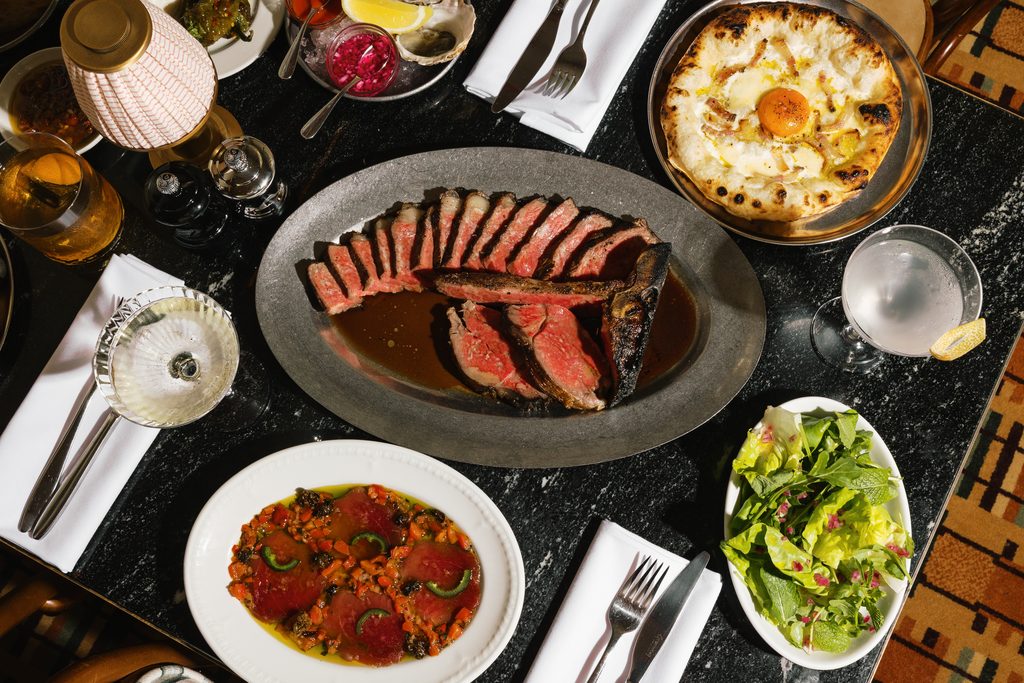
“The mistake many operators make when they try to scale is stripping out every bit of complexity so the business is as simple as possible to roll out. Over time I’ve come to the conclusion that complexity is good. Complexity is the point of difference that impresses people and makes you hard to replicate.
“Ultimately, I don’t think there’s room for yet another bland restaurant serving burgers, Korean fried chicken, truffle fries and a chocolate brownie. That’s been done to death. 2026 is a very different place to 2016.”
GiGi’s Manchester brings the Gusto Griglia concept to Deansgate. What is your vision for the guest experience there, and why did Manchester feel like the right city for this concept?
“Just to clarify, WANT Studios has been instrumental in the concept and graphic design, but the interiors were done by Russell Sage, award-winning designers I’ve worked with for almost 20 years.
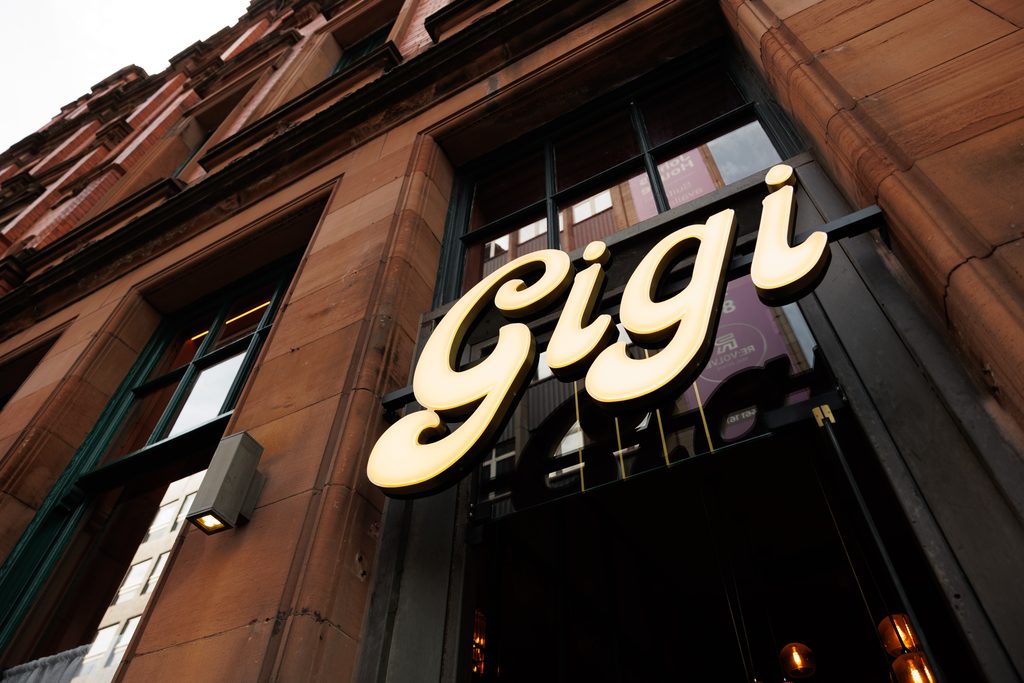
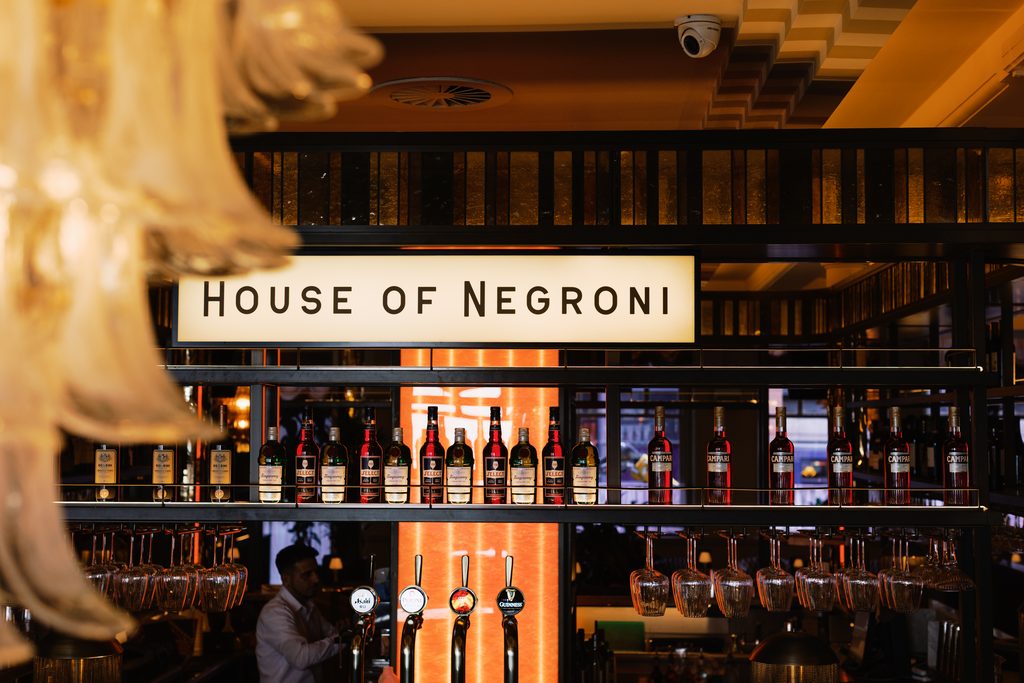
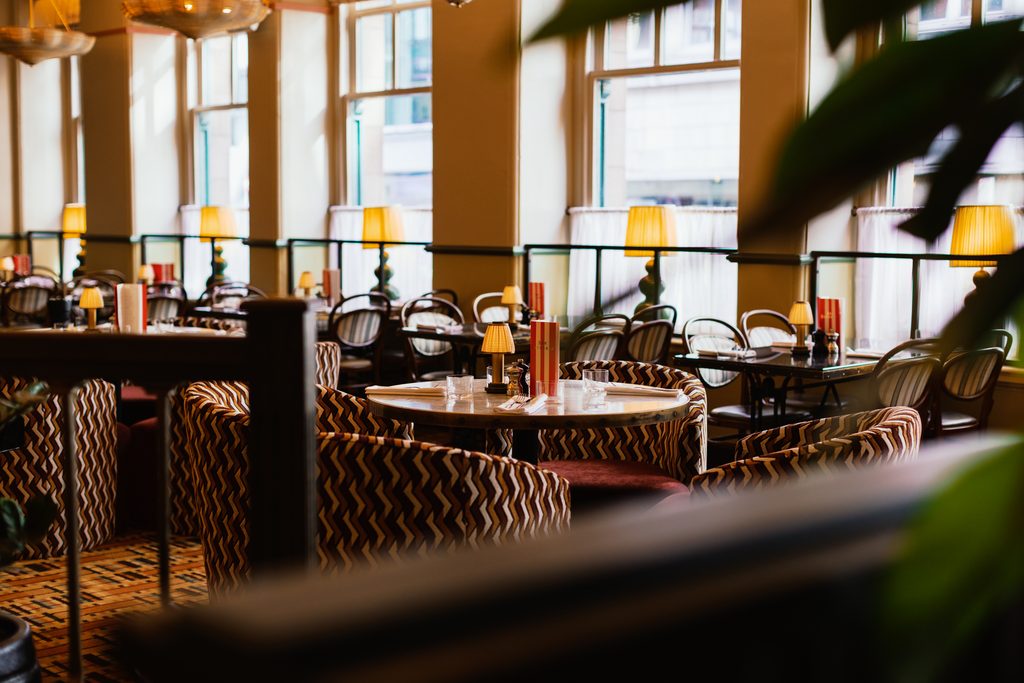
“What I really wanted to create was quite a grand Italian grill room, a concept that’s been in my mind for some time. I wanted the restrained glamour of the 1950s and 60s with a fairly feminine aesthetic, which feels like a real contrast to the very masculine dining rooms that have developed over the last five years or so.
“Ultimately the food had to be amazing, and sometimes these things are serendipity. When I first saw the incredible Grade II listed building on Deansgate, it felt as if the room had already done a lot of the heavy lifting for me. Such a grand room, high ceilings, period features. I could see the vision coming to life there.
“Manchester is a thriving cultural and dining city right now, on a par with, if not exceeding, what’s happening in London, so it felt natural to bring the concept there. At the same time, I was lucky enough to meet Sam Astley-Dean, previously co-founder of Onda. The timing was perfect. I was looking for someone with real calibre, experience and love of food to spearhead the vision from a culinary perspective, and he was at the point in his life where he was looking for exactly this kind of opportunity.
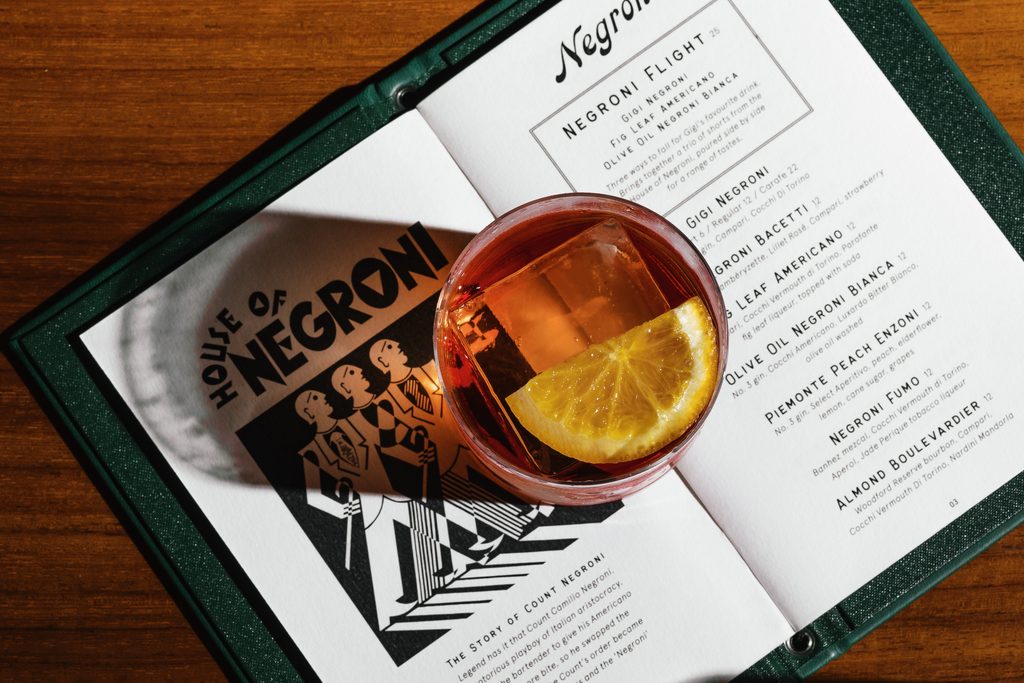
“We’ve worked incredibly well together because we share a mutual respect for each other’s deep understanding of food, particularly Italian food. In a sense, we speak the same language.”
As the resident business expert across two seasons of Million Pound Menu on BBC and Netflix, and with a forthcoming Channel 4 series alongside Fred Sirieix, what has television taught you about hospitality entrepreneurship that the boardroom has not?
“I spent quite a lot of time this year filming the forthcoming Channel 4 series with Fred, where we’ve tried to help a cohort of young entrepreneurs who have faced many challenges. It’s been a great reminder of the experience I’ve built up over 25 years in hospitality, and I have the scars to show for it! Above all, it reminded me that behind every set of numbers is someone who has risked everything.
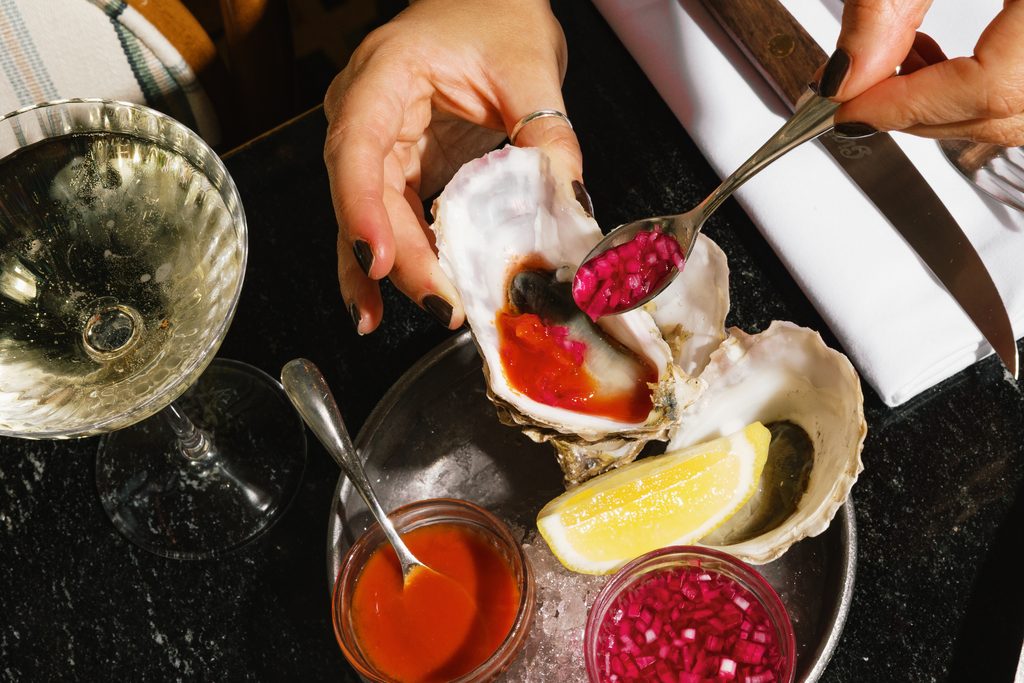
“I’ve found it particularly invigorating to pass some of that experience on to a younger generation. Outside of television, I’ve always tried to make time to answer questions people send me on LinkedIn, or to meet for coffees and calls about how essential hospitality businesses are vital to the economic vibrancy of the UK. I don’t think the sector gets nearly enough recognition, given the number of jobs it provides and the tax it generates, particularly through VAT and PAYE.”