



Pat Murphy founded MurphyCobb Associates two decades ago with a clear purpose: to close the gap between creative ambition and production reality. What began as a conviction that brilliant ideas deserved better execution has grown into a global consultancy working with some of the world’s leading brands, helping them produce more effective, more efficient and more responsible advertising. This year, as the business marks its 20th anniversary, Murphy shows no sign of standing still.
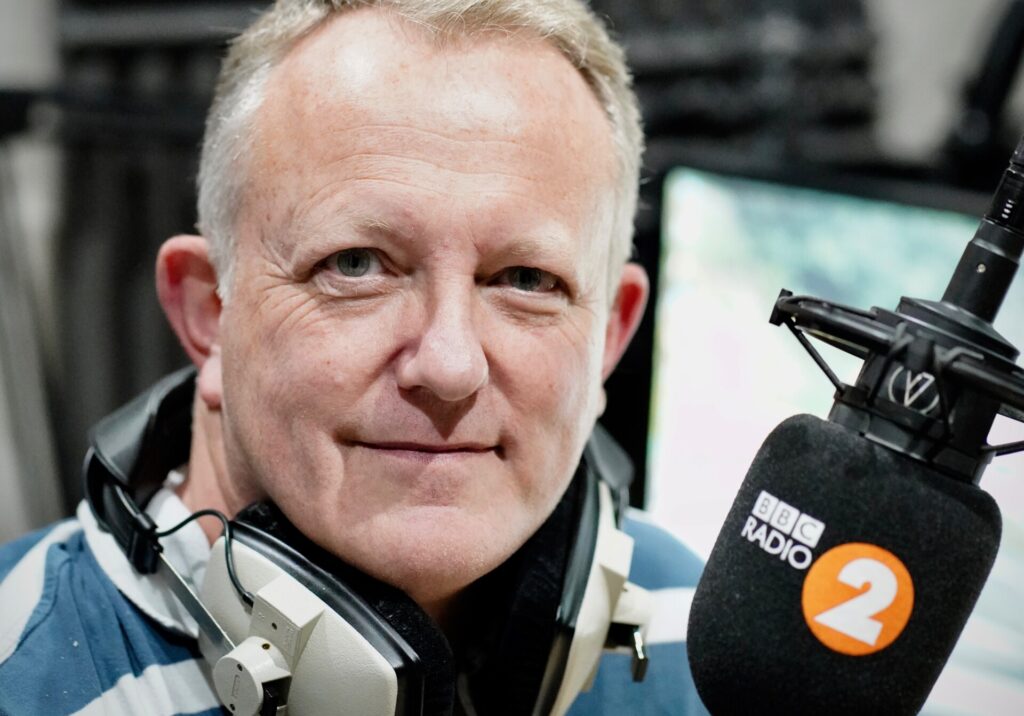
In this exclusive interview with The Executive Magazine, he discusses the seismic shifts reshaping the advertising industry, from the practical application of AI to the growing importance of sustainability in global campaign production. He also shares hard-won insight on what separates campaigns that endure from those that simply perform, how the best client-agency relationships are built, and what it will take for brands and agencies to thrive in the decade ahead. It is a conversation that is as much about the future as it is about the journey so far.
MurphyCobb Associates is celebrating its 20th anniversary this year, which is an incredible milestone for any independent agency. Looking back at how the business began, what was the founding vision, and how closely does the company you run today reflect what you originally set out to build?
“When we started MurphyCobb Associates, the vision was actually very simple: help support brands make outstanding business-building advertising campaigns whilst at the same time ‘buy it better’ so the investment can work as hard as possible. That was achieved by bringing more rigour, transparency and intelligence to the production process. At the time, production was often treated as something that happened after the big idea, when in reality it plays a huge role in whether that idea flies or flops. Luckily now, production is being seen as an integral part of the creative process and the producer sometimes regarded as the third creative.
“I wanted to build a business that sat in that space between creativity and commerce. Not to police creativity, but to protect it. To make sure brilliant ideas had the right production thinking around them so they could be delivered brilliantly, and efficiently. I guess my time at Procter and Gamble as Ad Production Manager was what opened my eyes to the fact that the client and agency agendas are often misaligned.
“Twenty years on now, that founding idea is still very much intact, but the business has grown up in all sorts of interesting ways. We’re now a global consultancy, we work across an extraordinary range of clients and markets, and technology has become a much bigger part of how we help clients make decisions. But at the heart of it, the mission is unchanged: enable creativity, deliver value.
“What has probably evolved most is the level of sophistication. We started with experience, judgement and a strong point of view. Today, we’ve added data, platforms, benchmarks, sustainability frameworks and AI into that mix. So the company I run today is bigger, smarter and more global than the one I first imagined, but it is still rooted in the same belief that great creative work deserves great production thinking. The value we bring today is much broader and often we are asked by clients to help design their content ecosystems because of the volume and types of content needed to reach their customers.”
AI is arguably the most significant development to reach the creative industries in a generation. How are you harnessing it at MCA to accelerate the creative process, and where do you see it delivering the greatest value and how are you using it to accelerate creativity rather than replace it?
“AI is undoubtedly one of the biggest shifts our industry has seen, and like most major shifts, it comes wrapped in both excitement and mild panic. My view is that AI should be used to remove friction, not remove humanity.
“At MCA, we’re using AI in ways that help clients make better decisions earlier. That includes analysing production options faster, identifying efficiencies, improving workflow visibility, supporting benchmarking, and helping teams explore more routes before money is committed. It’s incredibly powerful when used to speed up the parts of the process that are slow, repetitive or overcomplicated.
“Where I see the greatest value is in acceleration and augmentation. AI can help us get to smarter answers faster. It can open up more possibilities in pre-production, improve visibility across complex global campaigns, and free up talented people from admin and process-heavy tasks so they can focus on judgement, craft and creative problem-solving.
“In addition, for origination, generative AI tools can be hugely helpful for clients to produce ads that only 10 years ago would have cost millions, but now available for a fraction of that. We have our own internal AI and Creative Technologist to help clients navigate all the options available.
“What I don’t believe is that AI replaces the human magic. It doesn’t replace taste. It doesn’t replace emotional intelligence. It doesn’t replace the instinct that tells you whether something is merely efficient or genuinely brilliant. Creativity still comes from people, from culture, experience, tension, empathy, risk and imagination. AI can absolutely help us move faster, but it’s still humans who decide where to go and why it matters.
“So for us, the question has never been “How do we replace people?”. It’s “How do we give good people better tools?”. That is where the real opportunity lies.”
Sustainability is becoming a growing priority in how global campaigns are planned and produced. What practical steps are you taking to help clients reduce their environmental impact, and how has that focus opened up new ways of thinking about how campaigns are structured and delivered?
“Sustainability has moved from being a nice intention to being a serious business consideration, and rightly so. I will say that there is evidence now that this has been parked as a non-essential whilst companies are under political pressure to drop this agenda. However, production does have a real footprint, and if we’re advising clients on how to create work responsibly, that responsibility has to include environmental impact as well as financial value. We still believe it’s important and I am an avid follower of Paul Polman, the ex CEO of Unilever ,and his position on this subject. We need to leave a better world behind for our kids.
“The practical steps start with visibility. You cannot improve what you cannot see. So we work with clients to understand where carbon is being generated across the production chain – travel, transport, energy use, locations, materials, multiple shoot days, duplication across markets – and then we look at where smarter planning can reduce that impact without compromising the work.
“Often the answer is not one grand gesture. It’s a series of better decisions. Can we centralise certain elements? Can we reduce unnecessary travel? Can we build modular assets that work harder across channels and markets? Can we shoot once and create more value from that production investment? Can we use technology, virtual production or post workflows more intelligently? Sustainability tends to improve when planning improves. At MCA we have invested in having our own Production Sustainability Head who helps to guide our strategy on this.
“What’s interesting is that sustainability has actually opened up better creative and production thinking. It forces teams to be more intentional. It pushes collaboration earlier. It encourages smarter asset ecosystems instead of one-off thinking. And very often, the work becomes not only greener, but sharper, more connected and more efficient as a result.
“The best sustainability conversations are not about compromise. They’re about invention.”
Behind every iconic campaign is a set of decisions that most people never see. From your portfolio of work over 20 years, what do you believe consistently separates a campaign that resonates for years from one that simply performs well in the short term?
“The campaigns that last tend to have something deeper than efficiency or immediate effectiveness. They usually have a truth in them. Something emotionally resonant, culturally aware and recognisably human. They don’t just interrupt people, they connect with them.
“From a production and delivery point of view, the difference often comes down to clarity and bravery. The best campaigns usually start with a very clear idea, and then a series of disciplined decisions protect that idea all the way through development, production and execution. There’s less clutter, less compromise for the sake of comfort, and more confidence in the original thought. AI just happens to be one of the tools that can be deployed, it might also be virtual production or traditional film production. And hybrid solutions can be incredibly effective. Great and bold ideas can be achieved today at a fraction of the millions it might have cost only a few years ago
“Work that resonates for years tends to do something more powerful: it earns a place in memory. It feels distinctive. It says something worth saying. It is executed with craft, consistency and conviction. It also moved people by making them laugh, or cry and that is so hard still to achieve using AI. A campaign that we worked on was the Cadbury Gorilla ad, yet I am not sure that AI could come up with that idea. I am an AI optimist and believe that great human creativity is here to stay and AI can support the creative talent. You still need great taste and judgement and humans do that best.
“Great campaigns rarely happen by accident. They are usually the result of a thousand smart choices made in service of one strong idea.”
Leading a global consultancy means navigating different markets, cultures, and consumer expectations at the same time. What does that breadth of experience teach you about building creative work that travels and what principles guide the agency when adapting campaigns across very different audiences?
“Working globally teaches you very quickly that copy-and-paste is not a strategy. Just because something worked in one market does not mean it will land in another in the same way. Culture, context, humour, nuance, casting, pace, imagery, even silence – all of it matters.
“What does travel well is human truth. The strongest global work tends to be built on an insight or emotion that people recognise everywhere, even if the expression of it needs to shift locally. So our approach is always to separate what must remain consistent from what should flex.
“The constants are usually the core brand idea, the strategic intent and the emotional essence of the campaign. The variables are often the language, channel mix, content structure, cultural references and production approach. Good global adaptation is not about dilution; it is about intelligent translation.
“Our role is to help clients find that balance. Protect the integrity of the idea while making sure it feels native, relevant and respectful in each market. The best global campaigns do not feel imported. They feel understood.
“That is where experience matters. You learn that successful international work is not about making everything the same. It is about making everything connected.”
The most successful client-agency relationships tend to share certain qualities. From your perspective, what are the foundations of a partnership that consistently produces exceptional creative work and how do you build that kind of trust from the outset?
“Trust is everything, and it takes time to earn it. The best client-agency relationships are built on honesty, ambition and shared accountability. Not just good chemistry at lunch and a few approving nods in a meeting room, but a genuine willingness to challenge each other in service of the work. With all the current agency holding company consolidations I get the feeling that many clients are in turmoil about how these longstanding relationships are going to end.
“Sir Martin Sorrell recently said that they are all managing decline rather than building new and innovative fresh approaches. I think I have to agree with him, and the one thing that might suffer most, is the trust that has been built over years.
“Trust starts with transparency. Clear expectations, clear roles, clear decisions, clear budgets, clear timelines. A surprising amount of dysfunction in our industry comes from people pretending things are clearer than they really are. So from the outset, I believe in being open about what success looks like, what the constraints are, where the risks sit, and what needs to happen to get the best outcome.
“The second ingredient is mutual respect for expertise. Clients know their business. Agencies know how to unlock ideas. Production experts know how to bring those ideas to life. When those disciplines are valued properly, the partnership becomes much stronger. With MCA in the mix often we can help a client’s creative partners build better client relationships by supporting great creative outcomes but also help with better, more transparent production approaches.
“And then there’s courage. Great work usually requires some. The strongest relationships create enough trust for honest conversations, healthy disagreement and better decisions. That doesn’t mean every meeting is a love-in. Quite the opposite. It means people can be candid without becoming political.
“The partnerships that produce exceptional work are the ones where everyone feels they are on the same side of the table, trying to solve the same problem. When that happens, creativity tends to flourish. As we celebrate our 20th Anniversary this year, I am humbled by some of the amazing client messages we have received that have proved that our approach is right.”
For marketing directors and brand leaders looking to get more from their agency relationships, what advice would you offer and what are the questions they should be asking to ensure their investment is working as hard as it can?
“My first piece of advice would be this: don’t just ask what you are buying, ask what you are enabling.
“Too often, agency relationships are judged only by outputs, timelines and cost lines, when the better question is whether the partnership is creating the conditions for stronger, more effective work over time. Are you getting ideas that move the business? Are you getting smart strategic thinking? Are you getting production models that make your budget work harder? Are you learning and improving campaign by campaign?
“Marketing leaders should ask a few fairly direct questions. Are we briefing clearly enough to get the best out of our partners? Are our approval processes helping or hindering the quality of the work? Are we measuring success properly, beyond the obvious headline metrics? Are we building assets and systems that create long-term value, or are we reinventing the wheel every quarter? And importantly, do we have enough transparency around how production choices are being made? And are you leveraging the amazing tech like virtual production and AI in the right ethical ways to deliver better business building creative outputs.
“In 2020, we were challenged by Reckitt to design a new production approach to 1. Reduce production cost 2. Reduce carbon footprint and 3. Support better creative work. This needed a very radical approach which meant starting with a blank sheet, yet I have to say this client has been one of the bravest and entrepreneurial (albeit large) companies we have ever worked with. The programme was greenlit and our client is benefitting from some amazingly innovative thinking.
“We would also encourage brand leaders to ask whether their agencies feel like suppliers or true partners. If it’s only transactional, you’ll get transactional results. If there is trust, openness and a shared appetite to improve, the relationship becomes much more valuable. But remember the reason they are called agencies, is because they are meant to be a conduit to external suppliers. Yet they are all now bringing production under their one umbrella suggesting it’s the best, most efficient way to do what’s required for client to produce volumes of assets in every format for every channel. This should set off an internal alarm. Is this about revenue retention in the wake of decline or truly doing the right thing?”
As the agency enters its third decade, what opportunities are you most excited about and where do you believe the biggest potential lies for brands and agencies that are prepared to think boldly about the future of advertising?
“What excites me most is that we’re entering a period where the old boundaries are breaking down. The line between creativity, media, production, data, technology and operations is becoming much more fluid and that creates enormous opportunity for brands and agencies willing to rethink how they work. We have a model called ‘fluid networks’.
“AI will clearly play a major role, but we think the bigger story is orchestration. The winners will be the organisations that can combine human creativity, smart systems, responsible use of technology and agile production models into something genuinely effective. Not just shiny tools, but connected capability, and independent production suppliers that are deployed according to project.
“I also think there is huge potential in reimagining the value of content and production ecosystems. Brands are no longer making one hero ad and moving on. They are building living, evolving content systems across channels, markets and audiences. That requires better planning, better asset thinking, and better use of data and technology from the outset.
“At the same time, we believe there is an opportunity to make the industry better, not just faster. More sustainable. More transparent. More intelligent in how money is spent. More respectful of talent. More focused on what actually creates impact.
“For those prepared to think boldly, the future is very exciting. We have the chance to build an industry that is more creative and more accountable at the same time. That, to me, is the sweet spot.
“The future of advertising doesn’t belong to the people with the most tools. It belongs to the people who know what to do with them.”