



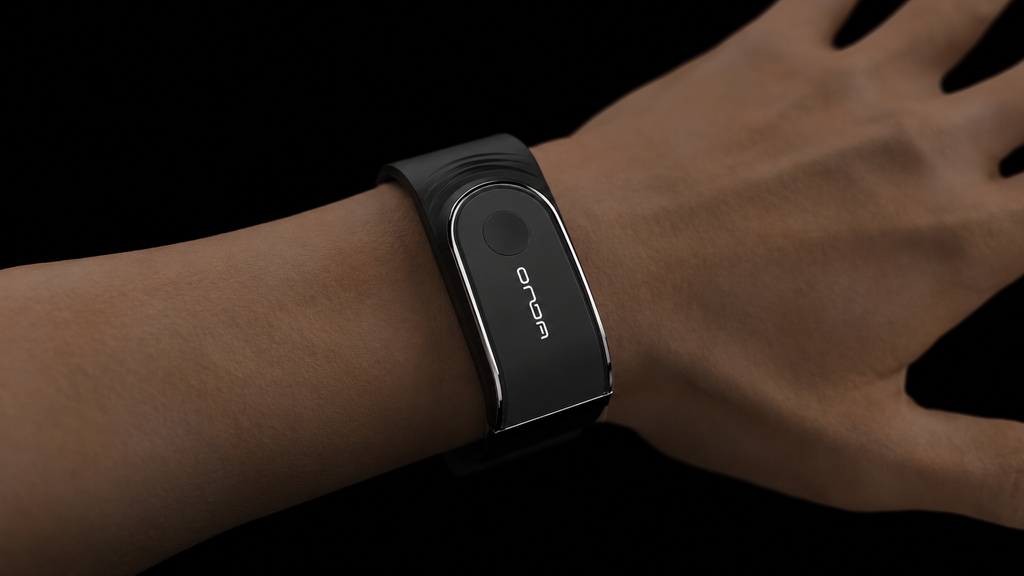
Shane Parmar is the founder of ONDA+®, a wearable mental wellness platform being developed to help people recognise and respond to rising stress earlier, rather than reviewing it after the event. He brings around 20 years of experience across sales, finance, healthcare, medical technology, digital innovation and entrepreneurship, with an early career that included work in cardiology, a coordinating role at the World Trade Center Geneva and consulting at the ICC from the age of 23.
His interest in prevention is also personal. In 2009 he survived a near-fatal car crash. Rebuilding parts of his speech, memory and physical ability shaped his thinking on health, resilience and the value of recognising meaningful change.
Under his direction, the company has filed a UK patent application for its adaptive physiological monitoring and intervention system, secured SEIS and EIS Advance Assurance, completed the 12-week AI Forge venture programme and been selected for the Grishin Robotics cohort. A UK StartUp Awards finalist, the business is currently in validation and prototype development, supported by a multidisciplinary team spanning product science, embedded systems, wearable engineering, AI, neuroscience and commercial strategy, and has received 29 expressions of interest through NHS and NIHR networks.
You have worked across a variety of sectors from sales, finance, healthcare, medical technology and digital innovation for close to 20 years, including time in cardiology and consulting at the ICC from the age of 23. During those years, what did that range of experience help you see about health technology that others were missing?
“Working in finance at the World Trade Center Geneva, consulting at the ICC from the age of 23, and later working across healthcare, cardiology, medical technology, sales and digital innovation taught me to look beneath the surface of an industry and understand its foundations.
“Every environment has its own expertise, pressures and ways of working. Finance taught me about performance and risk. Healthcare and cardiology showed me the importance of evidence, safety and human outcomes. Sales taught me to listen for the problem behind what someone initially says.
“That breadth helped me see the gaps between disciplines. Health technology cannot succeed through engineering alone. It must fit naturally into someone’s life, solve a genuine problem, earn their trust and make its value easy to understand.
“ONDA+® emerged from connecting those perspectives. We are bringing together physiological sensing, behavioural support and a deliberately simple user experience to explore how technology might help people respond to pressure earlier, rather than only reviewing it afterwards.”
Wearables measure movement, stress and sleep, yet leave people unsure what any of it means for them. When did you realise the real value sat not in the measurement, but in what the user does next?
“I have always been drawn to personal development and practical problem-solving, so measurement alone never felt like the destination. A dashboard telling you yesterday was stressful does not necessarily help you at the moment you need support most. I became interested in the gap between insight and action. Could technology recognise a meaningful change from someone’s normal patterns and offer a subtle prompt while they still have an opportunity to respond?
“I found products measuring aspects of stress and others offering interventions, but I did not see the complete experience I believed was needed.
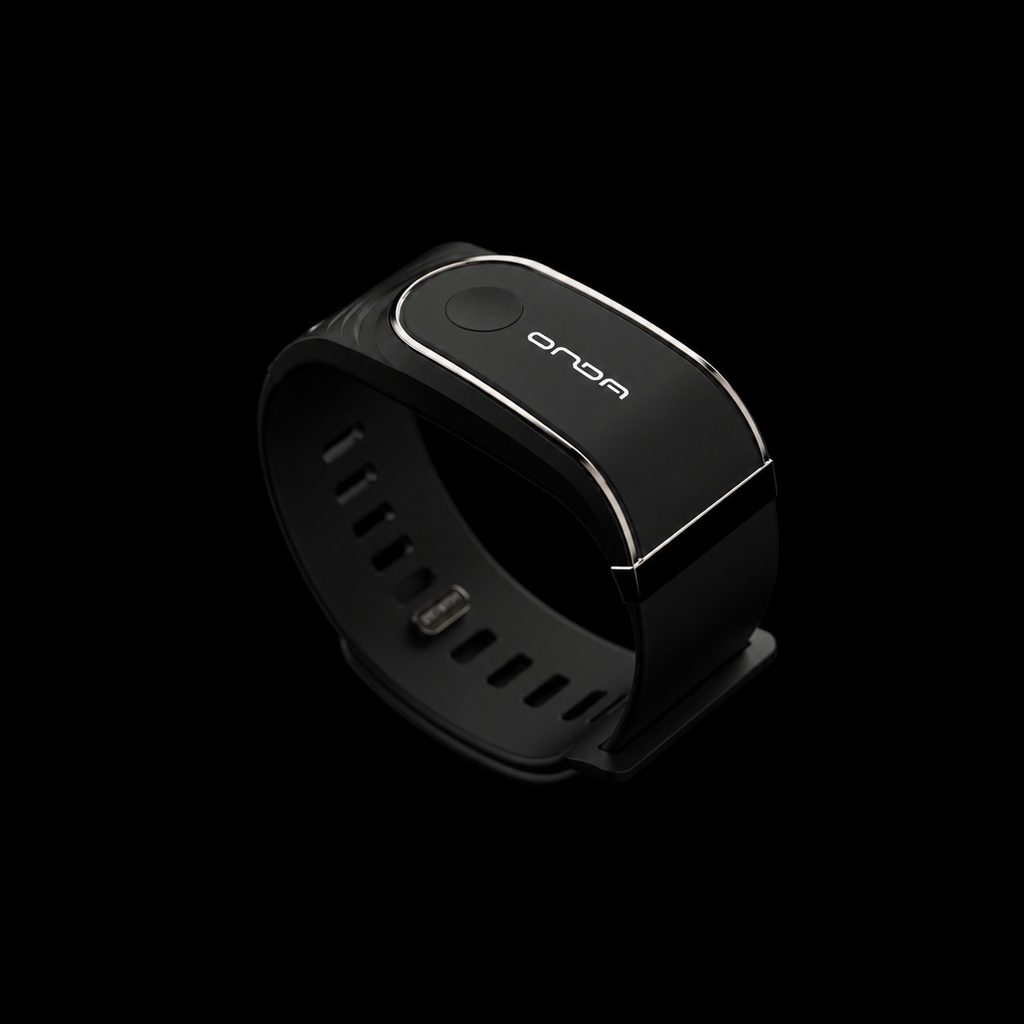
“That became the opportunity behind ONDA+®. Our vision is not simply to present another score. We are developing a screen-free wearable mental wellness platform intended to learn an individual’s patterns and, when appropriate, provide a discreet light or haptic prompt that helps them pause, regain awareness and decide what to do next.
“The individual remains in control. ONDA+® is not there to tell someone how they feel. It is designed to create a small but potentially valuable moment of awareness. We are now working to validate that proposition responsibly.”
Plenty of people notice a gap in a market. Far fewer act on it. What did you do in those first months to test whether the idea was worth building?
“The honest answer is that I did not validate the idea and then commit. I committed and validated it while moving. I recognised the potential significance of the problem and began developing the product vision, while challenging it through conversations with people across healthcare, compliance, engineering, logistics, manufacturing and business.
“Within our first two months, our guerrilla marketing attracted our first organic backer, someone with no prior relationship to us who chose to support the idea. That mattered because it showed the proposition could resonate beyond my existing network.
“We subsequently gathered more than 100 survey responses, with the majority indicating that they would consider using ONDA+® if it existed. We also began exploring employer interest and speaking with researchers, wellbeing professionals and prospective users.
“That evidence sharpened my conviction, but it did not create it. I believed the problem was worth solving before receiving outside acknowledgement. At the same time, conviction cannot become stubbornness. ONDA+® has evolved considerably, and I remain willing to change the solution whenever the evidence shows us a better route.”
High-performing business leaders often accept a high level of stress as normal. What are the practical signs that stress is starting to affect performance, and what can someone do about it before it takes hold?
“The earliest signs are often changes from someone’s normal patterns rather than one universal symptom. A person may struggle to concentrate or prioritise, become indecisive, make avoidable mistakes or react more emotionally than usual. They might become irritable or withdrawn, find it difficult to switch off, or experience disrupted sleep. Sometimes the peoplearound them notice the change first.
“The immediate response does not need to be complicated. Pause briefly, slow the breathing, step away from the screen, move physically or identify what is driving the pressure. That small interruption can create enough space to respond deliberately instead of continuing on autopilot.
“The wider response may require changes to workload, boundaries, recovery or support. If the pattern persists or begins affecting daily life, speaking with a manager, trusted colleague or appropriate health professional can be important.
“Resilience should not mean tolerating unlimited pressure. A purposeful pause is not weakness. It can be an act of performance intelligence.”
You have chosen a screen-free design, using subtle light and haptic prompts rather than another interface. What did that allow you to build that a screen would have prevented?
“The screen is not missing. Its absence is the point. We already spend an extraordinary amount of time looking at phones, laptops, dashboards and notifications. Asking someone to open another application and interpret more data could add friction at precisely the moment we want to reduce it.
“Removing the screen allowed us to design ONDA+® around presence rather than attention. It is intended to remain quiet when it is not needed and use discreet light or haptic prompts when there may be value in bringing the user’s attention back to the presentmoment.
“The goal is not to generate more notifications or demand constant engagement. It is to explore whether the right prompt, delivered at the right moment and in the right way, can support awareness and action without becoming another digital distraction.
“That restraint is one of the most important benefits of the concept. We want to build technology that respects your attention rather than competing for it.”
You are exploring workplace pilots alongside consumer interest. How are you deciding which market to lead with, and what should founders weigh up when they have more than one credible path in front of them?
“We are concentrating initially on high-pressure working environments because our early research indicates that the problem may be particularly frequent, visible and costly there.
“Our research and conversations have highlighted areas including finance, consultancy and management, where sustained pressure can affect individuals, teams and organisational performance. We are also seeing interest from consumers who are motivated to manage their wellbeing more proactively, including people who want to avoid repeating a previous experience of burnout.
“For employers, the potential value extends beyond individual wellbeing. Earlier, more personalised support could contribute to healthier performance, engagement and working cultures. However, it must be introduced responsibly. Participation should be voluntary, the individual should retain control, and personal information must never become a mechanism for workplace surveillance or judgement.
“The principle is to begin where the problem is both abundant and painful, and where the customer has a genuine reason to act. Founders should consider the severity of the problem, willingness to adopt, route to market, evidence requirements and whether the solution can produce measurable value.
“When you try to serve everyone, you often serve nobody particularly well. A clear initial customer profile gives you somewhere to learn deeply, prove value and build from. Expansion should follow evidence rather than assumption.”
Building a new category means proving the idea before there is a market to point to. With a UK patent application filed, SEIS and EIS Advance Assurance secured, the AI Forge programme completed, selection for the Grishin Robotics cohort and 29 expressions of interest through NHS and NIHR networks, how have you gone about establishing credibility at this stage?
“At this stage, credibility cannot come from one badge, announcement or conversation. It has to be built through consistent evidence across several areas.
“We filed a UK patent application to protect the underlying innovation, secured SEIS and EIS Advance Assurance to support future investment, completed the AI Forge programme and were selected for the Grishin Robotics cohort. We also sought early feedback through NHS and NIHR networks, generating 29 expressions of interest within our first few months.
“Those expressions of interest are not scientific validation or institutional endorsement, but they are meaningful evidence that professionals could see the relevance of the problem and wanted to explore the proposition further.
“More recently, we rebuilt our hardware-validation rig after systematically isolating a connection fault. We have since captured live red and infrared optical data responding to finger placement and completed an early adaptive peak-detection test using that signal. It is encouraging engineering progress, but it does not yet validate heart rate, heart-rate variability or stress-detection accuracy.
“We are now focused on the harder layers of credibility: technical development, responsible scientific validation, employer demand, academic collaboration, privacy and governance.
“I have never expected people to believe in ONDA+® simply because I speak passionately about it. Passion may open the door, but evidence is what keeps it open. My responsibility is to keep converting conviction into proof.”
You are preparing for workplace pilots and speaking with employers, researchers and wellbeing leaders. How do you expect earlier intervention to change working culture over the next decade, and what advice would you offer founders building in a category that does not yet exist?
“I hope earlier intervention helps create a working culture in which taking a brief, purposeful pause is understood as good judgement rather than weakness.
“Too often, people continue until sustained pressure has already affected their performance, relationships or wellbeing. Over the next decade, I believe responsibly developed technology could help individuals recognise meaningful changes earlier and give theman opportunity to respond before those patterns escalate.
“For organisations, this could support a more proactive approach to wellbeing and healthy performance. However, technology cannot create that culture alone. Employers must give people the permission and psychological safety to act, and privacy must be fundamental. The individual should remain in control of their personal data.
“My advice to founders building a category is to believe in the vision while remaining flexible about how it becomes real. Speak with the people experiencing the problem, ask difficult questions and allow evidence to improve the product without extinguishing the original insight.
“Then make the work visible. Talk about the problem, explain why your approach is different and invite the right people into the journey. You never know who is paying attention or who might possess the missing piece that moves the idea forward.”