



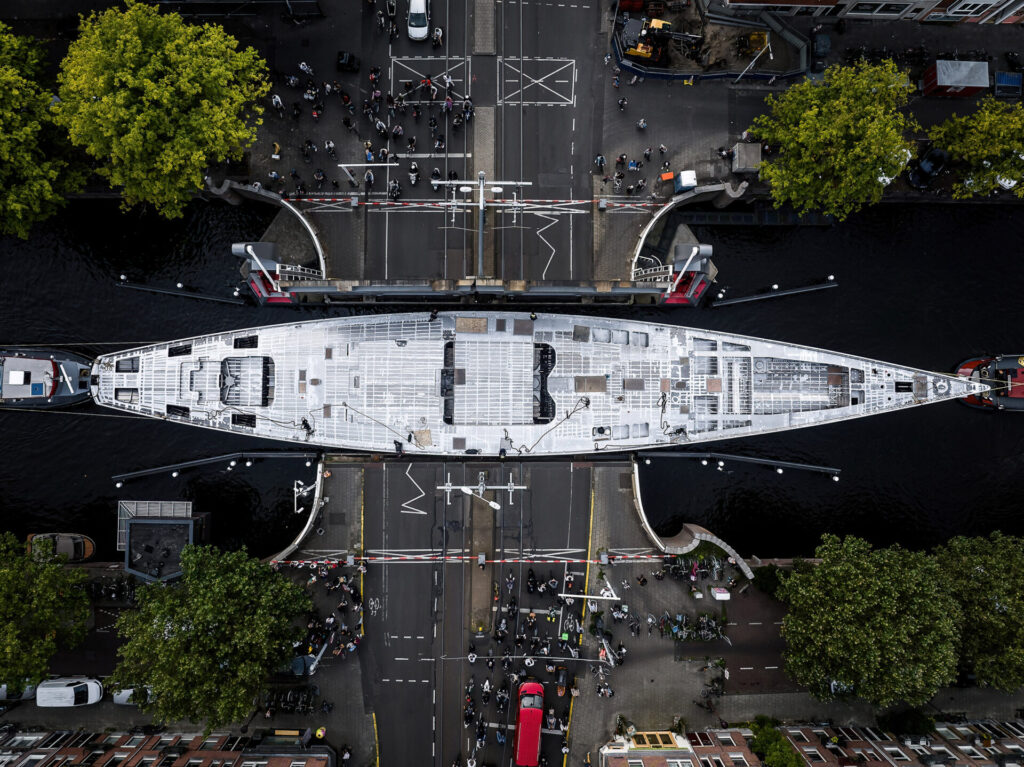
Zero is a sailing yacht that has done something no one has managed before. The 68.9-metre aluminium ketch left Vitters’ Dutch yard in this month with no engine, no fuel tanks and no engine room. Instead, she runs on sun, wind and the water moving past her hull.
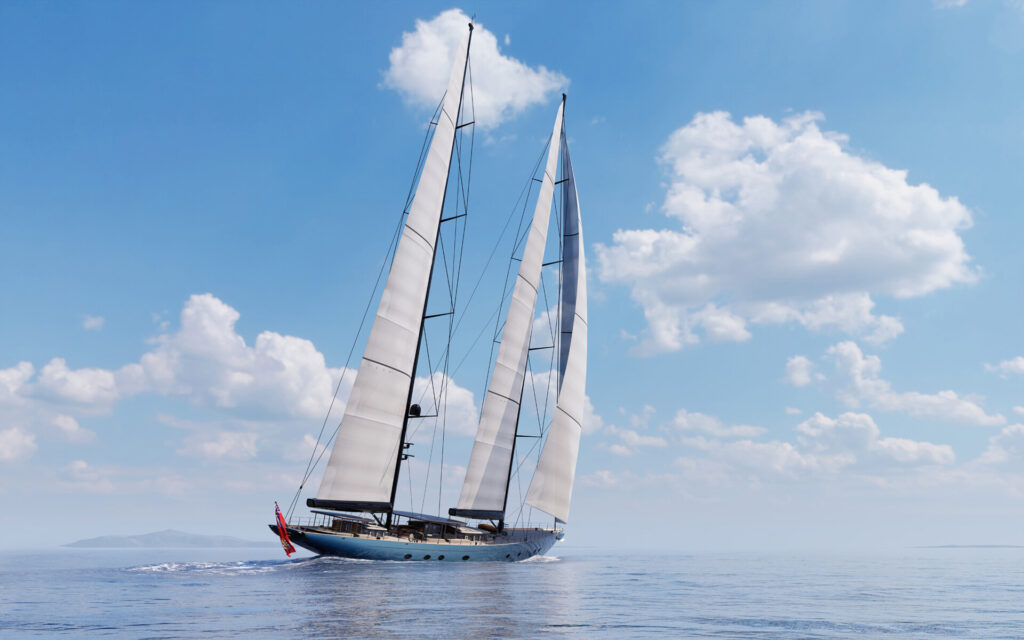
When the idea was first raised in 2019, yachts of her size could manage roughly 48 hours off-grid. Reaching fourteen days meant rethinking how energy is made, stored and spent, and the team pulled it off. Every calculation, drawing and system design behind her is being published for anyone to use, turning a private project into a shared starting point.
“If ever there was a boat that could change the status quo, this is it. From inside out, Zero puts creativity to the fore and leaves the rule book in its wake.”
Marnix J. Hoekstra, Co-Creative Director
Where it all began
The story began when Marnix Hoekstra, co-creative director at Dutch studio Vripack, was invited by a Fraser broker to meet a group of people at the Yacht Club de Monaco one Saturday morning in July 2019. That group was Foundation Zero, a set of impact investors chasing a single bright idea: the world’s first fossil-fuel-free superyacht.
Where others saw only risk, Hoekstra saw opportunity. He had already been experimenting with solar power through the club’s Energy Boat Challenge, and he was among the first to believe the thing could actually be built. That optimism is what set the whole venture in motion.
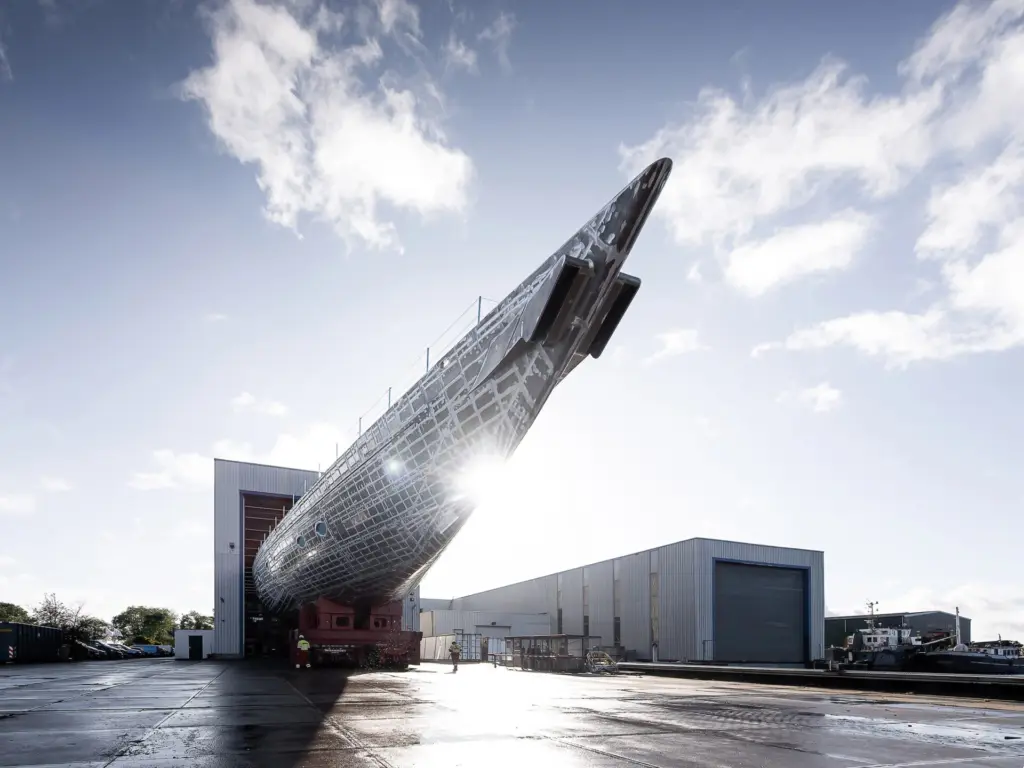
From there came a Dutch dream team ready to back the vision. Sailing specialist Vitters would build her, Dykstra Naval Architects would shape hull and rig, and engineering manager Eduard van Benthem would lead the technical push for the foundation. Around that core gathered coders, data analysts and a physicist known simply as Bob, whose bright ideas would go on to define the energy strategy.
The fortnight goal turned out to be the making of the project. Meeting it meant cutting energy demand and multiplying energy generation at the same time, a challenge that pushed the team towards solutions no one had tried before. On a conventional yacht of this size, batteries typically cover an overnight quiet period of about eight hours. Stretching that to 336 hours of freedom, with the air conditioning running and the showers hot, gave the team licence to reinvent almost everything, and they took it gladly.Where the yard might normally assign five or six engineers to a boat this size, Zero had eight to ten working on systems development alone, rising to between 120 and 150 people across the project during fit-out.
A clever split
The team spotted that most non-propulsion energy aboard a yacht, some 70 to 80% of it, goes on managing heat, whether warming water for showers and laundry or cooling cabins through air conditioning. Handing all of that to electricity, as tradition does, wastes a great deal, so they kept thermal and electrical energy in separate systems that never meet, letting heat exchange and inverse heat pumps do the work. The structure was reworked to keep warmth out, with an insulated deck topped in cork and the metal joints that leak heat replaced by connections that refuse to conduct it. Small moves, big savings.
Bob suggested running liquid across the solar panels, which grow very hot, to harvest high-grade thermal energy that would otherwise be lost. Six months of testing with thermal sensors at Vitters proved him right, with the hybrid panels capturing around 60 per cent of incoming energy as heat, producing water hot enough at 80 degrees to run laundry, showers and the air-conditioning system.
Power drawn from the water
Dykstra’s Mark Leslie-Miller worked out that the power flowing through the sails of a large yacht under way roughly matches one of the big 1.5-megawatt wind turbines seen onshore. Skim too much and the boat slows, but a generous slice is there for the taking.
The answer was hydrogeneration, a technique Dykstra had already proven on the 106-metre Black Pearl and on Perseverance. Serious harvesting calls for large propellers, so after trialling many configurations the team chose forward-facing props and a third-quadrant propeller, an arrangement Hoekstra says has never been used in superyachting before.
Velocity predictions show Zero comfortably topping 16 knots, and depending on wind and heading she can generate around 200kW through hydrogeneration, roughly ten times the total energy the boat consumes. There is a happy knock-on effect too, since a crew running low on charge simply sets more sail, takes her for a spin and fills the batteries back up.
Holding the charge
For heat, they borrowed salt batteries from land-based architecture, a canister of two salts that melts as it soaks up energy and releases it slowly as it sets, comparable in size to the day tank on a 500GT yacht. The spec sheet lists high-density lithium-ion and PCM salt batteries with a bank of 5.4 MW, holding several megawatt hours of energy.
Safety guided every choice on the electrical side. Off-the-shelf approved systems were not dense enough, so the team worked with a German battery specialist to build something better. Their guiding test was disarmingly human, as van Benthem put it, would you dare to sleep on top of it, and anything that fell short was sent back until it earned that confidence.
Beauty, built in
All of this, and none of it came at the expense of how she looks or feels. The investors understood that a bare test platform would teach the industry little, so comfort and elegance were designed in from the outset with no compromise, and it shows.
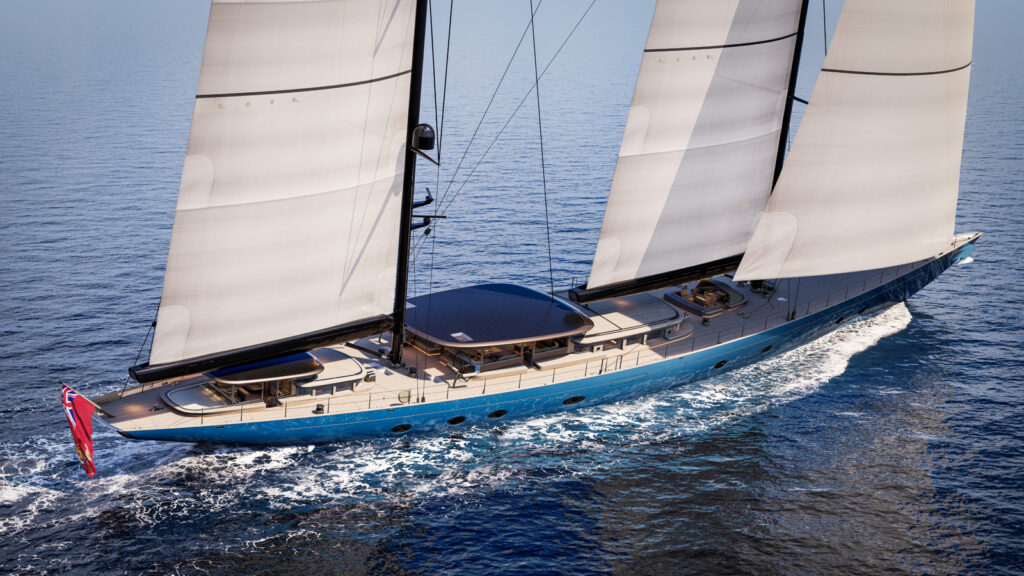
Zero features classical lines with rounded corners and generous bullnoses that tip a cap to the 1930s. The deck is laid in bare Tesumo, an engineered wood grown from a fast-maturing African tree that reaches quality in around 50 years, roughly a third of the time premium teak needs, with much the same character. Much of the technology hides in plain sight, the solar array tucked into a fixed bimini whose shadow line makes a thick, gadget-packed roof look like it is floating.
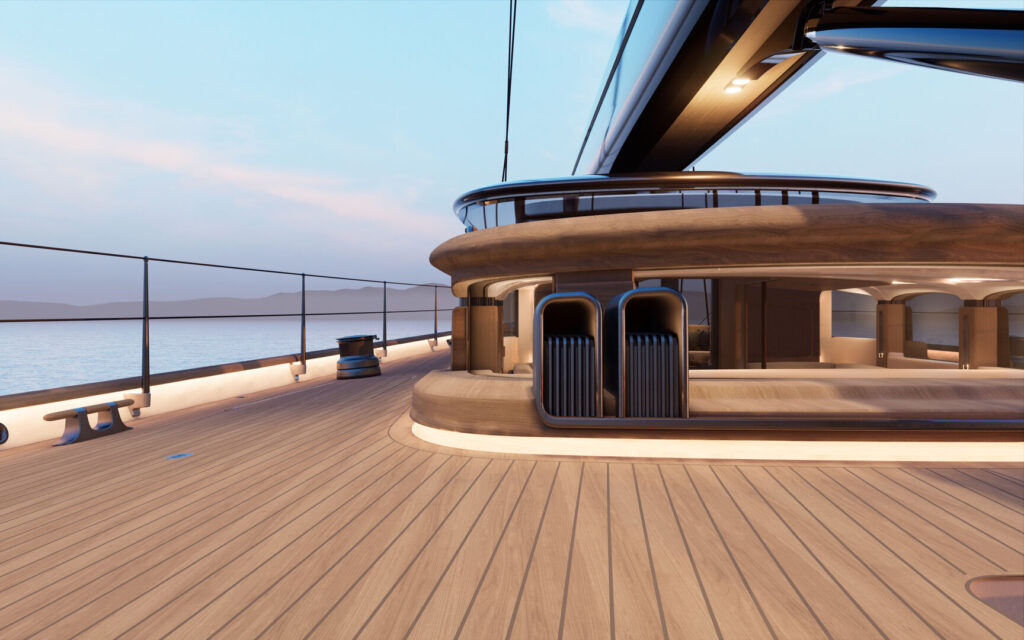
Down below, car-style retractable windows drop away to turn the deckhouse from cosy saloon to open deck at the push of a button, while cooling runs through pipes of coolant set into aluminium panels in the floor and ceiling, keeping the cabins fresh without air being blown around, and sipping barely any power while it does.
Zero now heads into months of sea trials, where theory meets weather and every system finally proves its worth. The rest of the fleet may take its time to follow, but the path is cut, the data is open, and the opportunity is there for the taking.