

Growth creates a paradox that few founders anticipate. The very decisions that help a business reach seven figures often become the reason it struggles to reach eight. Success creates complexity, complexity creates dependency and gradually, the founder becomes the operating system of the business.
Clients want direct access, employees wait for decisions, important relationships sit in the founder’s head, and strategic work gives way to operational firefighting. The company may continue to grow, but the founder experiences less freedom than ever before. While many entrepreneurs interpret this as a leadership challenge, in reality, the underlying issue is usually structural. The organisation continues to operate with the architecture of a start-up long after it has become a growth company.
I have seen this pattern repeatedly while building and exiting my own company, working with more than 100 founders and writing Breaking Out of Founders’ Prison, an international bestselling business book. The businesses may look different, but the pattern is remarkably consistent: the company has outgrown the operating model that created its early success.
Why growth creates dependency
My first instinct was the same as many founders’. I tried to solve the problem with people. I hired an operations manager, expecting the business to become less dependent on me, and when that did not work, I hired another. Only later did I realise I had been trying to solve a structural problem without redesigning the underlying architecture.

Replacing people does not redesign a business. That insight became the foundation of The Breakout Model. One of the biggest misconceptions in entrepreneurship is that businesses scale because founders work harder, employ more people or make better decisions. Those actions may create temporary progress, but they rarely change the structure that determines how the organisation actually operates.
Businesses scale by design, not by effort. The founder and the business are one system. You cannot redesign one without changing the other. A founder cannot continue leading a growth company with the habits that built a start-up, just as a business cannot become independent while every important decision continues to flow back to its founder.
The 5-Step Model
The Breakout Model was developed around five sequential steps that address this transition.
The first is Analyse. Most founders attempt to solve symptoms before understanding the system that produces them. They recruit senior people, implement new software or introduce additional meetings, while the real constraints remain invisible. Analysis reveals where decisions accumulate, where dependency exists and where growth is quietly being limited by the current structure.
The second step is Design. Every business is perfectly designed for the results it currently produces. Different outcomes require a different architecture. Founders must redesign the organisation around their future ambition rather than merely improving the business they have today. That includes the commercial model, organisational structure, leadership responsibilities and the role of the founder.
The third step is Shift. This is often the most demanding part because it requires founders to evolve themselves. The entrepreneur who successfully launches a company is rarely the same leader required to scale it. The rules that once helped build the business no longer support its next stage of growth. Leadership evolves from solving problems to creating direction.
The fourth step is Build. Design only creates value when it becomes operational reality. Processes, systems, governance and assets replace founder dependency with organisational capability. Artificial intelligence has become a significant accelerator in this stage. Used strategically, AI enables businesses to increase productivity without increasing organisational complexity at the same pace. Combined with automation and repeatable operating systems, it allows companies to create considerably more leverage from the same resources.
This becomes increasingly important as employing people continues to become more expensive, more regulated and operationally more complex. The businesses that outperform during the coming decade are unlikely to be those with the largest workforces. They will be the organisations that combine talented people with intelligent systems, scalable assets and technology to create greater value with less friction.
The final step is Lead. Once founder dependency has been reduced, leadership itself changes. Time previously absorbed by operations can now be invested in market positioning, strategic relationships, capital allocation, acquisitions and long-term innovation. The founder stops acting as the engine of the business and becomes the architect of its future.
Many entrepreneurs believe freedom arrives when they eventually sell their company. In reality, freedom begins the moment the business no longer depends on them. Whether the ambition is a successful exit, a portfolio of companies or a business that can endure for generations, the objective remains the same: transforming founder effort into organisational capability.
Technology will continue to evolve, and markets will continue to change. Artificial intelligence will reshape how organisations operate. Yet one principle is unlikely to change. The companies that create the greatest long-term value will not be those built around exceptional founders. They will be those deliberately designed to perform beyond them.
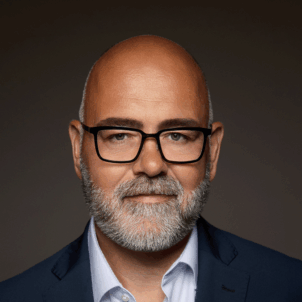
About the author: Dennis Kuipers is an entrepreneur, investor and mentor who built an international IT company from his attic into an organisation of more than 250 employees, generating €42 million in annual revenue across more than 35 countries. In his book, Breaking Out of Founders’ Prison, Kuipers examines what he calls Founders’ Prison: the point at which the structure a business built in its early years no longer aligns with the company it has become, creating friction and frustration that prevent further scale. He describes this not as a sign of failure, but as a signal for change.