



The Aston Martin DB5 arrived in 1963 and took to the screen with more conviction than most actors, becoming shorthand for British design almost overnight. It did rather more for the nation’s luxury standing than any advertising budget managed, and it has held that position ever since. Breitling spent the same decade building the Top Time, an unconventional chronograph pitched at a younger, faster crowd who wanted a watch with a bit of attitude.
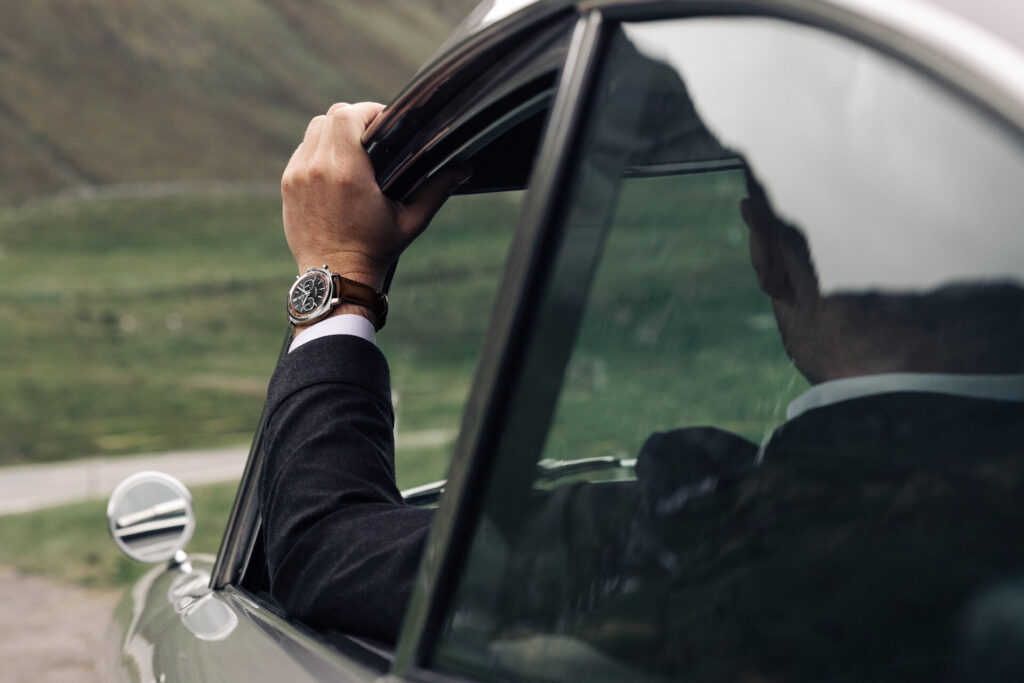
The two crossed paths on screen. A Top Time ref. 2002 sat on Sean Connery’s wrist in Thunderball in 1965, worn alongside the DB5 and marking the first Q-modified watch to appear in the James Bond series. Speed and style found a shared that single frame, and it is that meeting the new Top Time B01 Chronograph 41 Tribute to Aston Martin DB5 sets out to revisit.
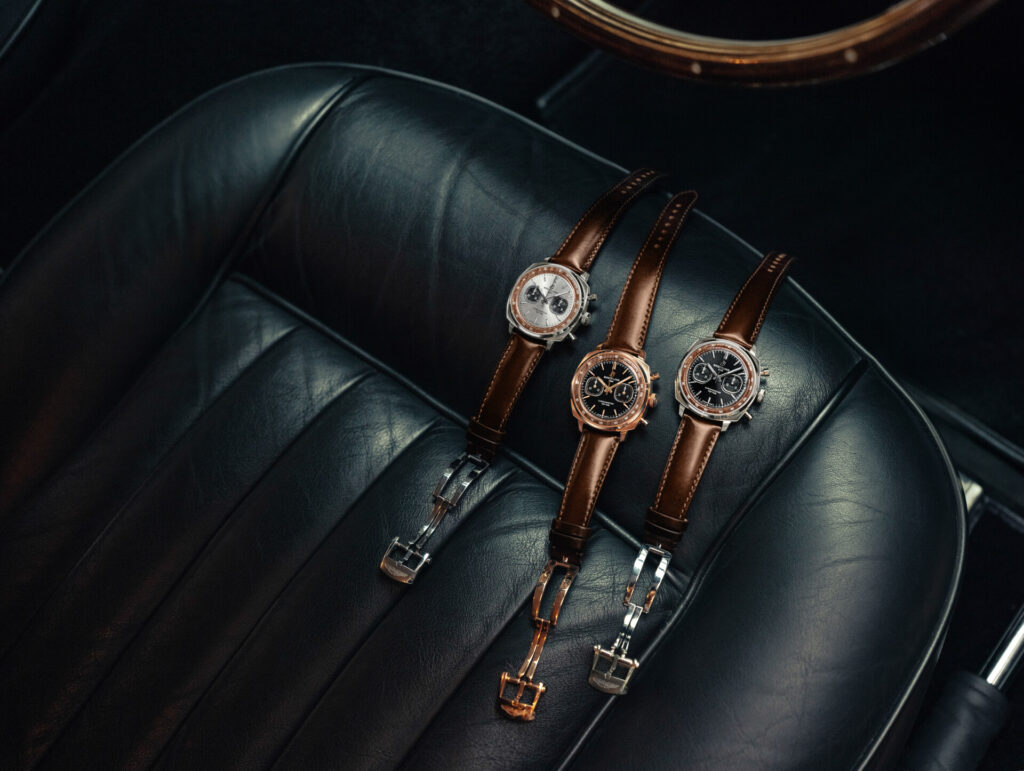
Rather than lean on nostalgia alone, the watchmaker has reworked the idea through material and form. Wood-inlaid details, hand-coloured gradient leather straps and carefully crafted dials echo the cabin of the DB5, and the whole thing is offered across three limited editions. The aim is to capture the feel of sitting behind the wheel of the classic grand tourer, without ever pretending to be the car.
A cabin on the wrist
Almost every design cue on the watch comes from the DB5’s interior rather than its bodywork. A cushion-shaped case with grooved corners and mushroom pushers recalls the profile of the original 1960s chronograph, while the squircle subdials borrow the look of round-cornered gauges from a classic dashboard. A wooden rehaut ring circles the dial, lifted directly from the DB5’s steering wheel, which is a detail you tend to notice only on the second glance.

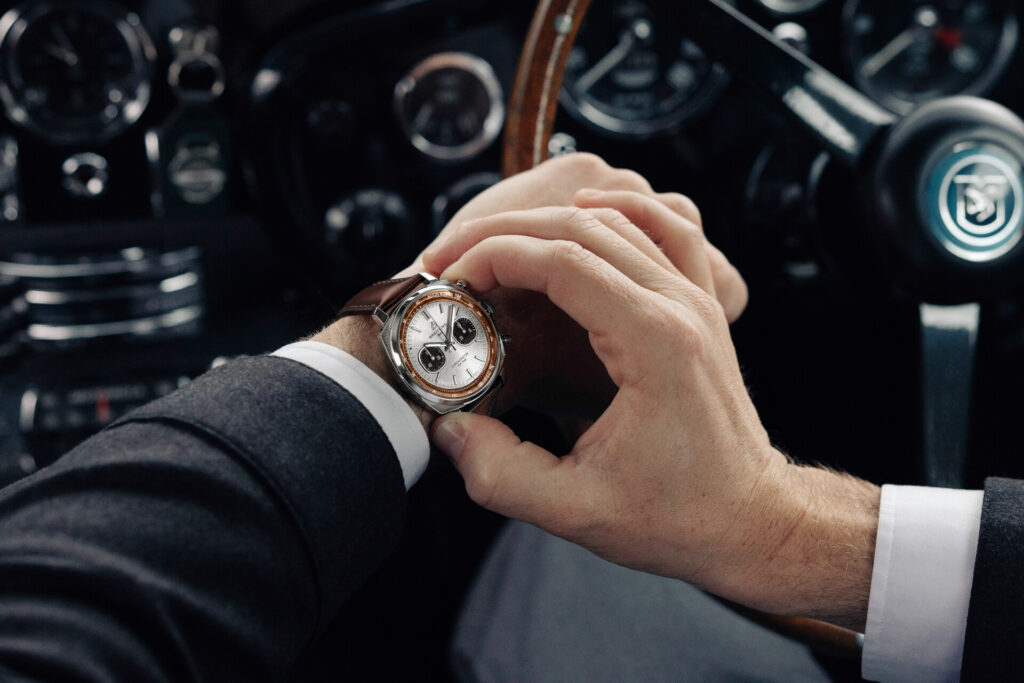
The hand-coloured gradient leather strap is finished to resemble fine automotive upholstery, giving the piece the tactile depth of a car cabin rather than a display case. The case measures 41 millimetres across and 13.80 millimetres thick, with water resistance rated to 10 bar, or 100 metres, so it wears with some heft without becoming unwieldy.
“This chronograph blends form with true function. As with the Aston Martin DB5, its beauty lies in its lines, materials, and finishings.“
Pablo Widmer, Head of Product Design, Breitling
Three distinct editions
Three versions make up the collection, each with its own temperament. The most familiar is the stainless steel model with a sunray brushed silver dial, limited to 1,022 pieces and closest in spirit to the original Top Time ref. 2002. Above it sits a steel case with a platinum bezel and a black lacquered dial, held to 315 pieces, where the platinum bezel adds noticeable weight against the high-gloss black surface.
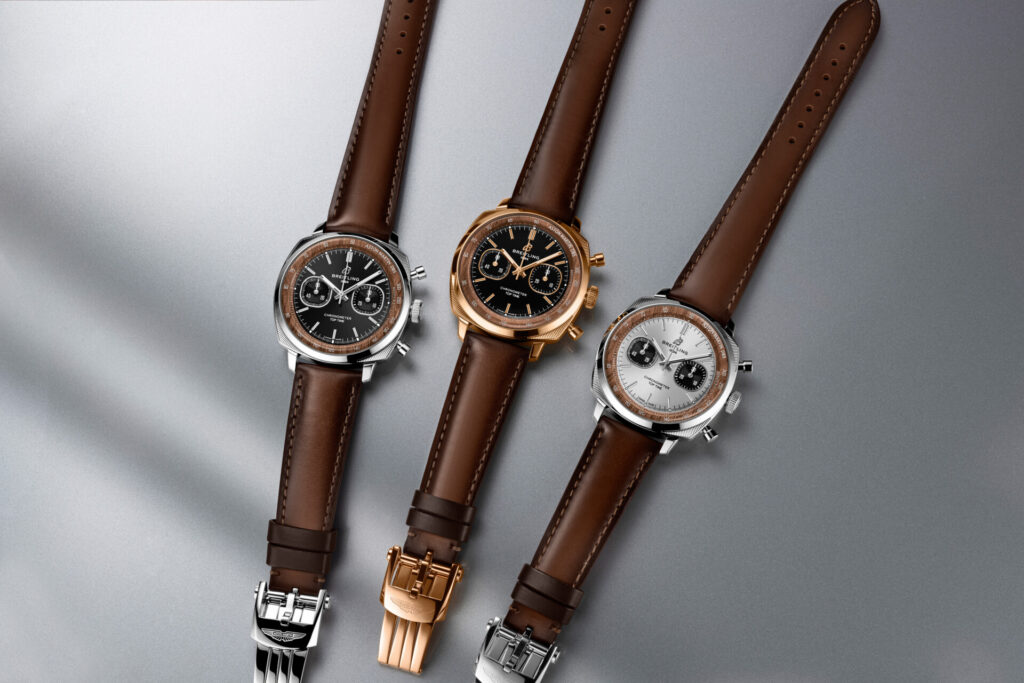
The most indulgent of the three is cased in 18-carat red gold with a dial cut from natural onyx, limited to 250 individually numbered pieces. This marks the first time Breitling has used onyx, and the stone lends the dial a depth that a printed or lacquered surface cannot match. Across all three, the subdials carry a concentric textured finish set within thin polished rhodium-coated rings, and every version rides on a brown calfskin strap with a beige lining and a folding clasp.
Under the caseback
The movement is where the tribute stops playing dress-up. Driving all three editions is the Breitling Manufacture Caliber 01, a COSC-certified chronograph built around a column wheel and a vertical clutch, the combination generally preferred for crisp, reliable actuation. It runs at 28,800 vibrations per hour, carries 284 components and holds a power reserve of roughly 70 hours, which is enough to see the watch through a weekend off the wrist.
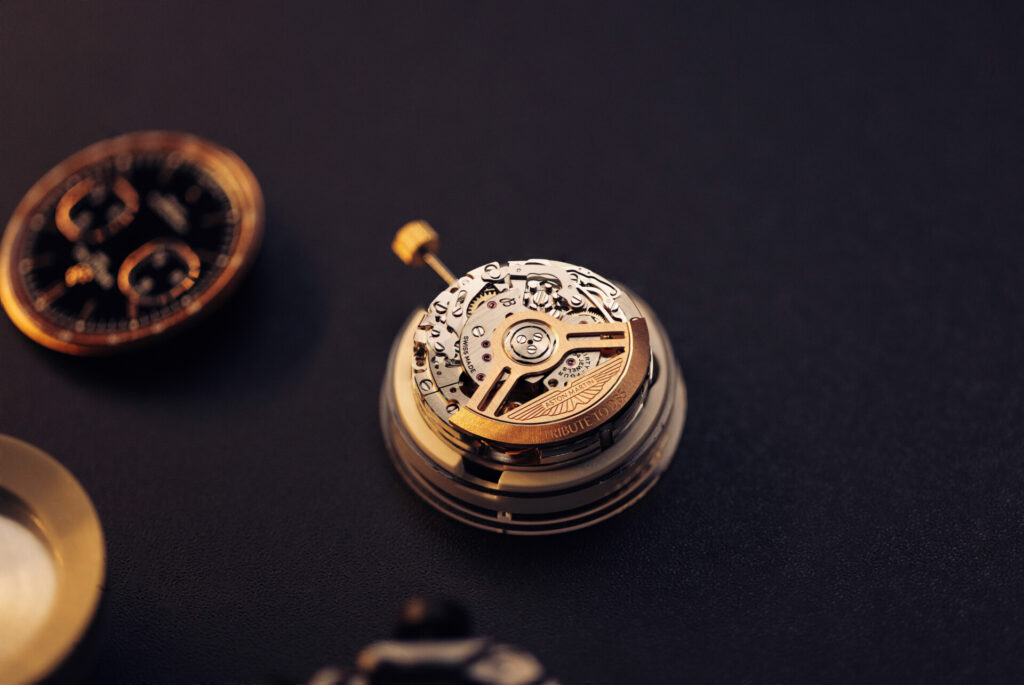
The self-winding mechanism uses a bidirectional rotor on a ball bearing, visible through the open sapphire-crystal caseback along with an Aston Martin engraving. That rotor is rhodium-plated on the steel model and rendered in 18-carat gold on the two precious-metal versions, a small flourish that changes the view depending on the edition. The chronograph reads to a quarter of a second across 30-minute counters, with the running seconds handled on the dial.
A shared heritage
Both names have been trading on heritage for well over a century, which is partly why the pairing feels earned rather than engineered. Breitling has been making watches since 1884, claims the invention of the modern chronograph and remains one of only a handful of independent houses to build its own manufacture calibres. Aston Martin, founded in 1913, has spent the years since turning out cars such as the Vantage, DB12 and Vanquish, and returned to the top tier of motorsport in recent seasons with its own Formula One team.
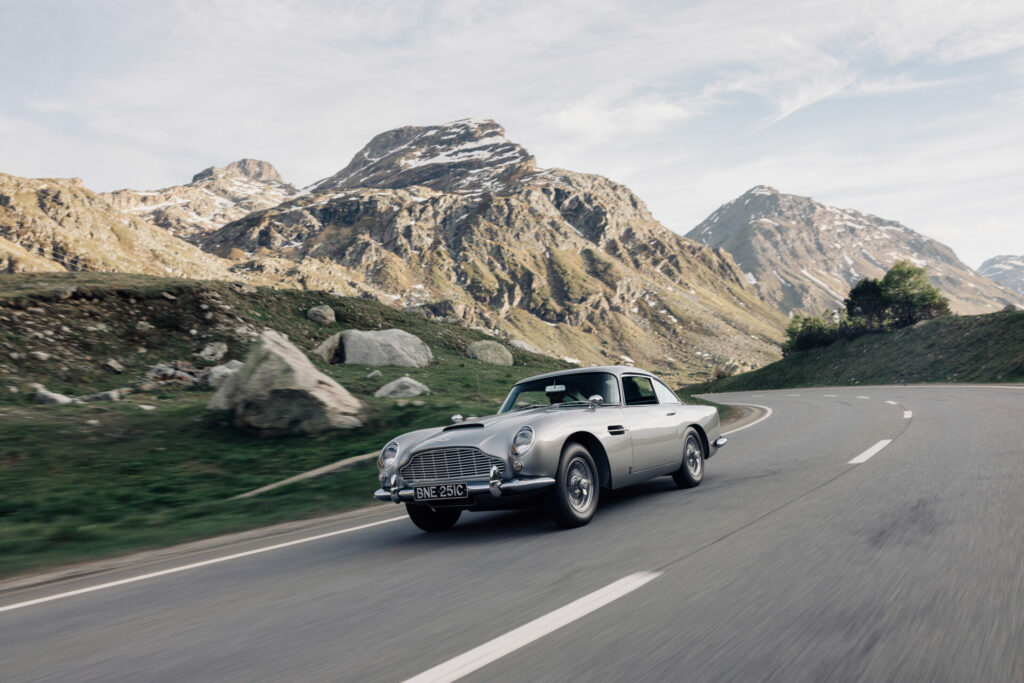
“The Aston Martin DB5 is one of those rare designs that never fades. It still feels as relevant today as it did in the 1960s. With this Top Time, we capture that sense of timeless style.“
Georges Kern, CEO, House of Brands
Aston Martin’s Executive Vice President and Chief Creative Officer, Marek Reichman, has described the editions as unlike anything the marque had produced before, the result of two design teams comparing notes. The DB5 remains the reference point that outlasts the rest, which is exactly the longevity the collaboration is chasing.