


Cartier has presented Le Choeur des Pierres, Chapter II, a high jewellery collection unveiled inside Kyoto’s National Museum. The collection places exceptional gemstones at the centre of every design, bringing sapphires, emeralds, rubies and diamonds together in a vivid display of colour, movement and craftsmanship. Its title translates as The Choir of Stones, and the French maison takes the name literally: each piece is composed so that the stones answer one another like voices in an ensemble.
A philosophy of listening to stones
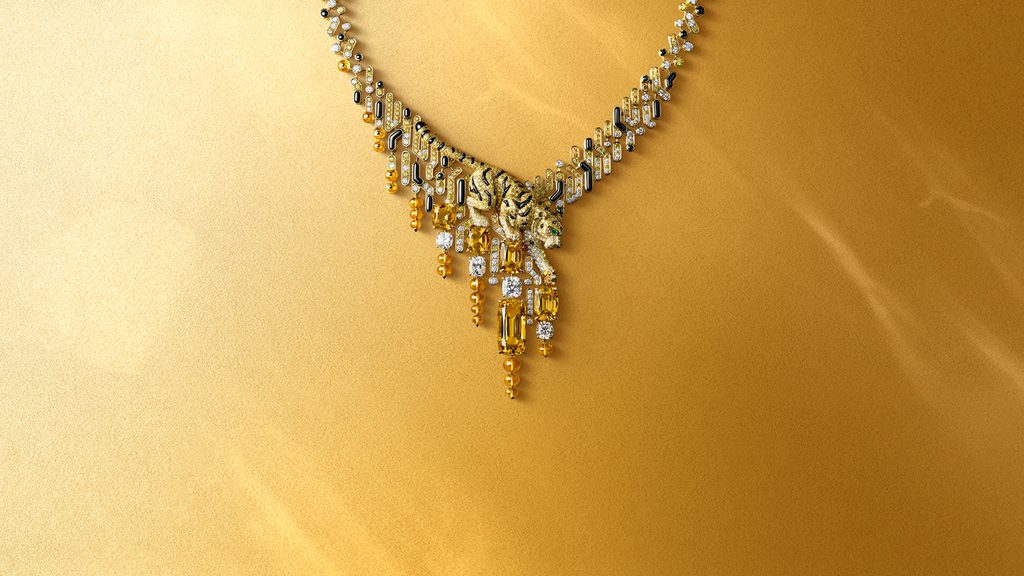
Across necklaces and earrings, geometric structures meet fluid, organic forms, giving each design its own distinct rhythm. Diamond settings sit beside cascading strands of coloured gemstones, while references to foliage, water and the panther lend the pieces a sense of life. Throughout the series, the gemstones set the direction for each creation rather than decorating a shape decided in advance.
Jacqueline Karachi-Langane’s guiding words
‘Letting a stone speak is to recognise in it a memory of the world, a beauty shaped by time and imbued with eternity,’ says Jacqueline Karachi-Langane, Cartier’s director of high jewellery creation. The creation serves the stone, she explains, revealing its nuances, its sparkle and its inner vibration. The statement amounts to a working method for the entire collection, with every setting built around the character of the gem it carries.
Stellara and the 41.01-carat sapphire
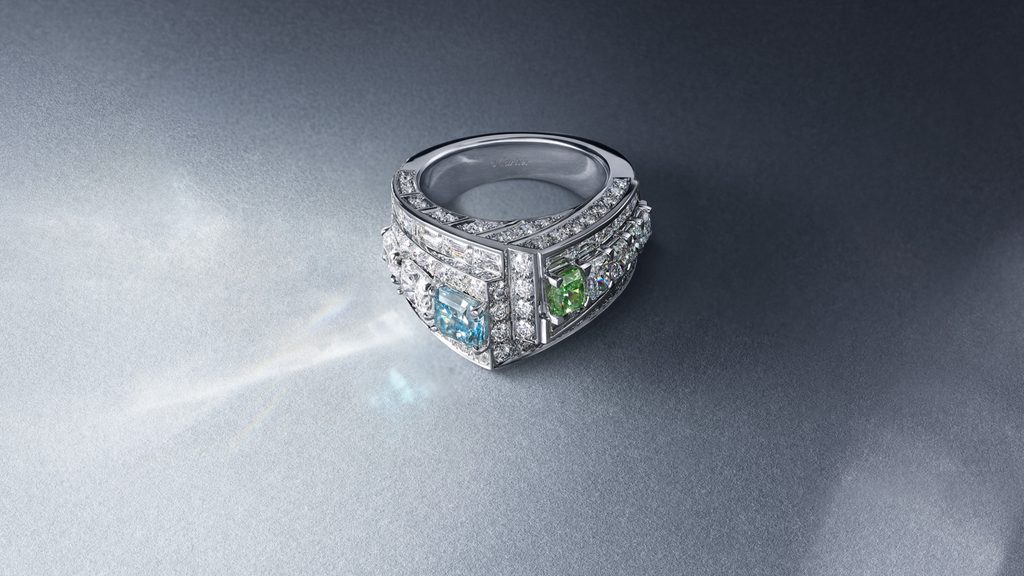
The approach is most visible in Stellara, a diamond necklace anchored by a 41.01-carat Ceylon sapphire. Radiating geometric patterns spread outward like waves from the central stone, while openwork construction lends the design a graphic quality and allows light to pass through the setting. The result reads as both precise and weightless, a structure that appears drawn by the sapphire itself.

Heritage codes in contemporary form
The collection also revisits Cartier’s long-standing visual language. Classical motifs return through contemporary structures and asymmetrical compositions, and the balance shifts between architectural precision and organic fluidity from one piece to the next. Stones are arranged in compositions that emphasise their interplay, balancing colour, texture and light in each finished design.
Panthère Tunya and the Zambian emerald
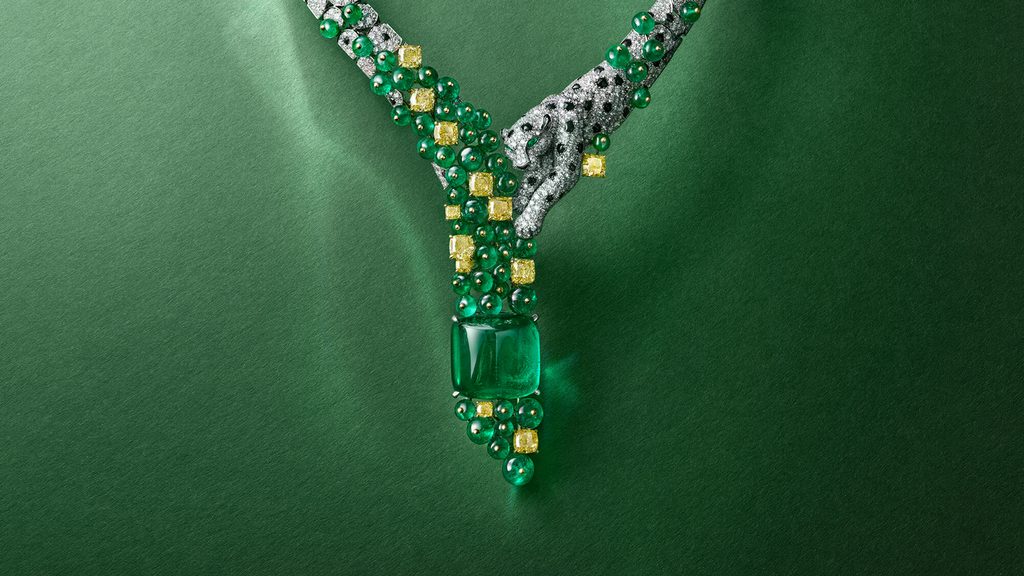
Panthère Tunya centres on a 48.12-carat Zambian emerald cabochon. Cascading emerald beads create a fluid, almost liquid effect around the stone, while a panther rendered in onyx and diamonds and nine cushion-cut fancy yellow diamonds introduce contrast and movement. The panther, a signature emblem of the maison, appears in sculptural form rather than as surface decoration.
The tutti frutti tradition returns
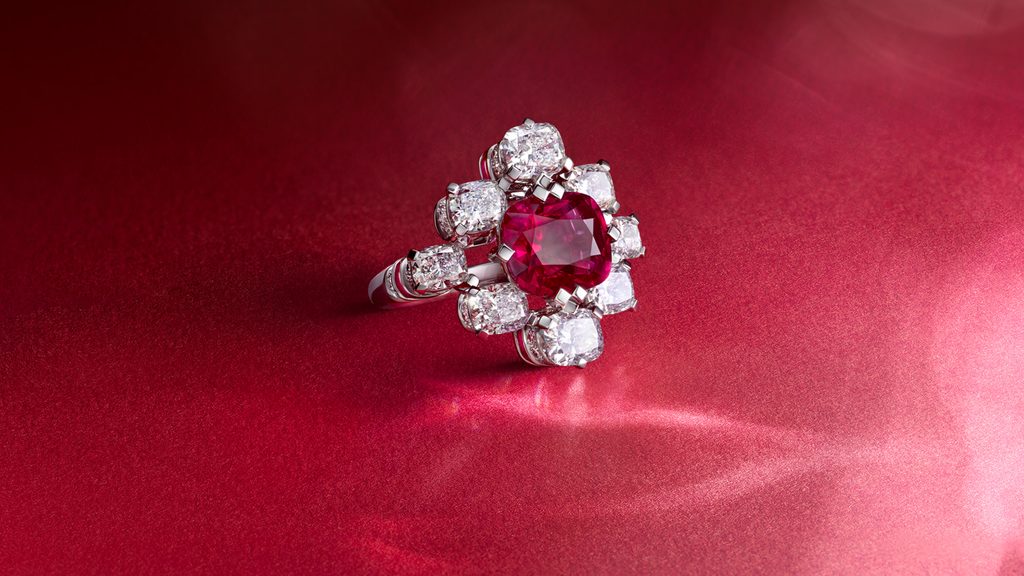
Cartier’s signature tutti frutti style, first explored in the 1920s, also returns in vibrant combinations of coloured stones. Sapphires, emeralds and rubies are set in lively arrangements that acknowledge the archive while speaking a contemporary language of form. The reference carries weight with collectors, as the style has long been sought after at auction and in private sales.
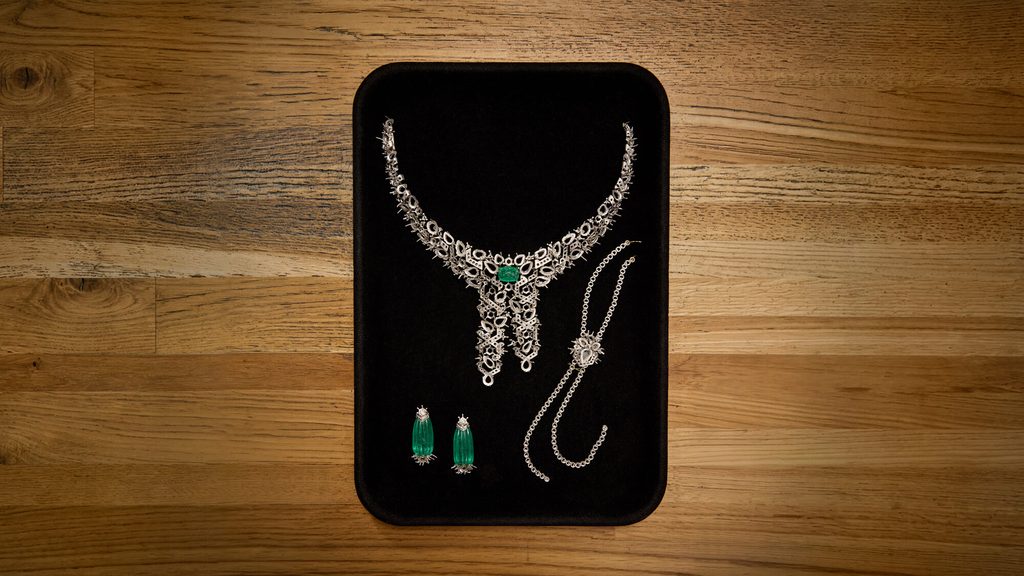
Together, the pieces show how Cartier continues to interpret its high jewellery craft through fresh combinations of colour, form and stone. From the graphic lines of Stellara to the fluid forms of Panthère Tunya, the collection gives its gems the leading voice, and the settings follow where the stones lead.