



Since its launch in 2015, the Legacy Machine Perpetual has earned a GPHG Best Calendar Watch Prize, wide critical acclaim, and a reputation for doing things the hard way, which in watchmaking usually means doing them better. The new Chromatic editions build on that foundation not by changing what the watch is, but by giving it a good deal more presence on the wrist.
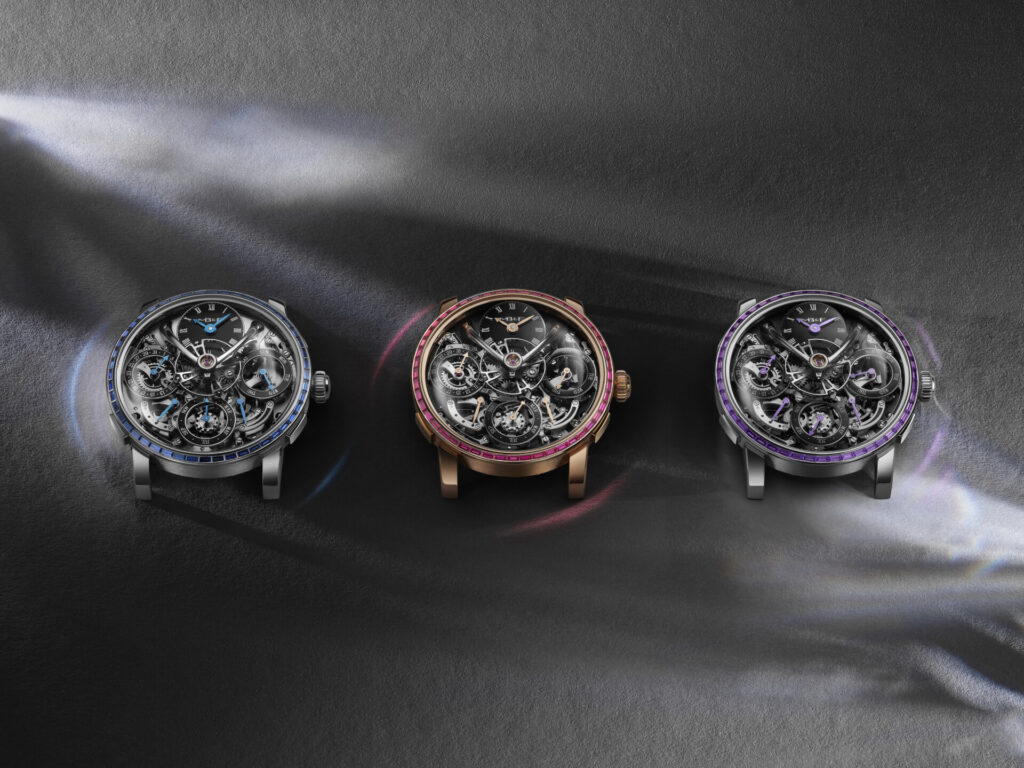
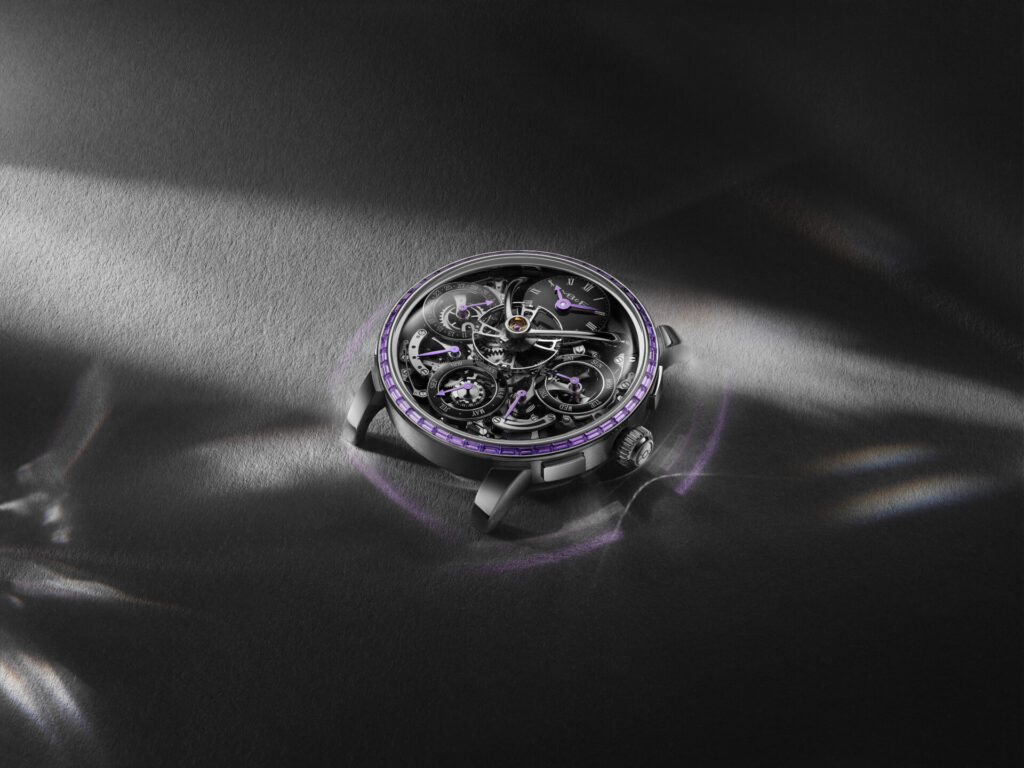
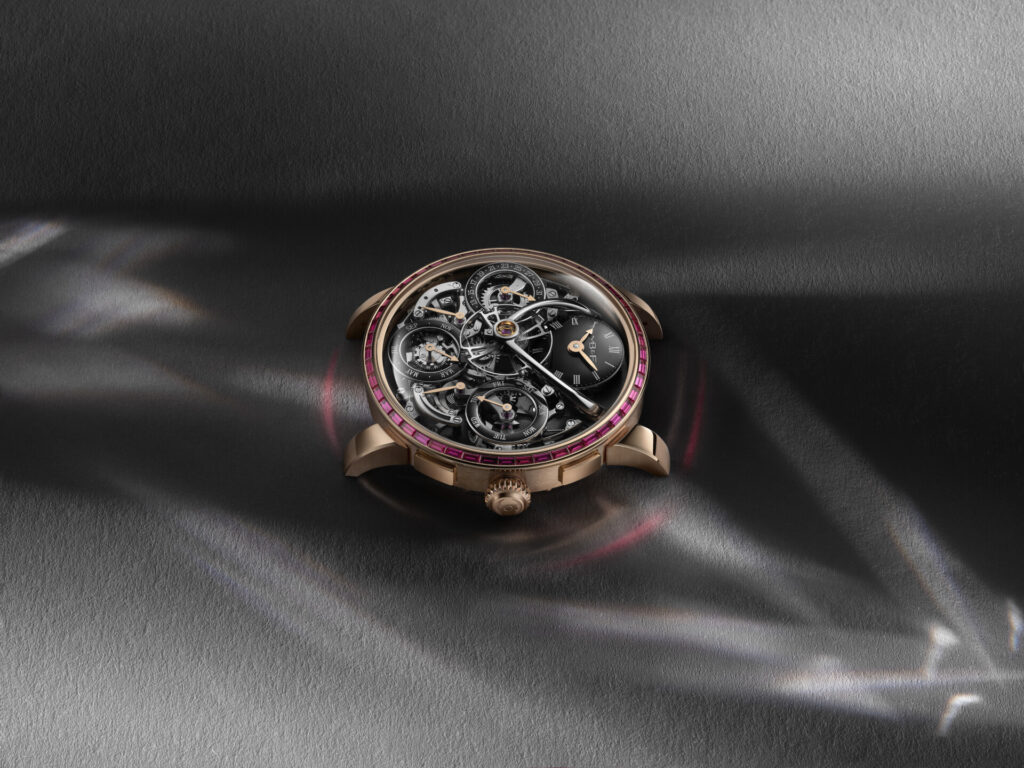
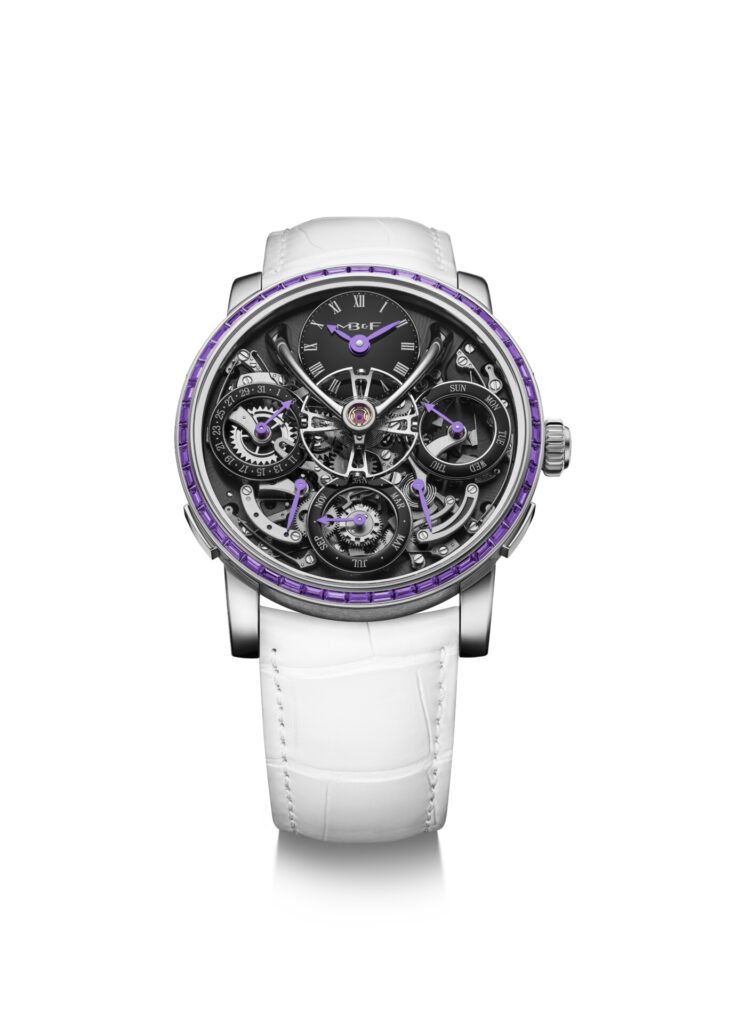
Three editions form the Chromatic series. The first two are cased in 18k white gold, their bezels set with either blue sapphires sourced from Madagascar and Sri Lanka, or purple sapphires from Madagascar. The third is crafted in 18k red gold, fitted with a bezel set in red rubies from Mozambique. Each bezel traces an unbroken line of 48 baguette-cut stones, all set by hand at STG Création in Geneva, and the hands on each edition are PVD-treated to match: purple for the purple sapphires, blue for the blue stones, and 5N PVD on the ruby version to echo the warmth of the red gold case.
With production limited to eight pieces per edition, the Chromatic series sits among the rarest LM Perpetuals ever made, an exceptionally short run for a watch of this calibre, in every sense of the word.
Rethinking the perpetual calendar
Perpetual calendars, for all their horological prestige, have a long-standing reputation for fragility. Gears jam, dates skip, and attempting to adjust the mechanism at the wrong moment can result in an expensive trip back to the manufacturer. MB&F founder and creative director Maximilian Büsser is direct about it: “I call perpetual calendars boomerang watches because they come back for repair so often.”

The solution came from Stephen McDonnell, a Belfast-born watchmaker whose path to the craft was anything but conventional. A theology degree from Oxford gave way to repairing clocks in Northern Ireland, then a move to Neuchâtel to study at WOSTEP, where he later taught as an instructor before setting up independently in 2007. What makes him a rare talent is the combination of skills he brings: a self-taught movement designer who can also build what he conceives, overseeing every stage from concept through 3D design and prototyping in his own workshop.
He has been a friend of the brand for years and played a role in MB&F’s very first timepiece, Horological Machine No.1. When Büsser began thinking about a perpetual calendar for the fourth watch in the Legacy Machine collection, McDonnell already had an idea in development that addressed the conventional system’s weaknesses at a structural level. Three years later, the Legacy Machine Perpetual was the result.
The mechanical processor
The root cause of most perpetual calendar problems lies in the grand levier, the long lever that runs across the top of a conventional perpetual calendar complication, transmitting date information back and forth as the month changes. Traditional perpetual calendars assume, by default, that every month has 31 days, then skip rapidly through the surplus dates at the end of shorter months. It is during these changeovers that dates can jump and mechanisms can break.
McDonnell’s approach inverts this logic entirely. Rather than starting at 31 and subtracting, the LM Perpetual’s mechanical processor, a series of superimposed discs, begins with a default of 28 days and adds the required number for each month. Since every month has at least 28 days, there are no redundant dates to skip through and no risk of the mechanism jamming. An inbuilt safety feature automatically disconnects the quickset pushers during date changeover, removing the possibility of accidental damage, and where a traditional perpetual calendar requires scrolling through up to 47 months to reset the leap year cycle, a dedicated quickset pusher on the LM Perpetual handles it directly.
Nothing to hide
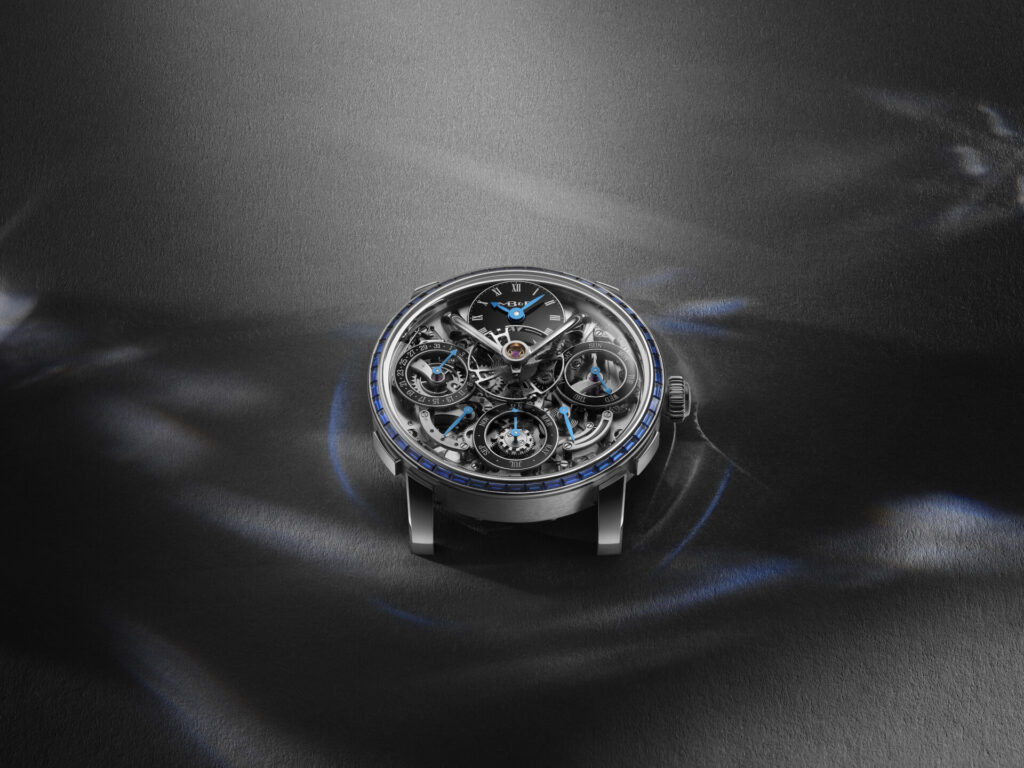
Eliminating the grand levier freed the centre of the movement, and with it came an entirely new set of aesthetic possibilities. Without a long lever running through it, the complication no longer required a full dial, which meant McDonnell and MB&F could place the entire perpetual calendar mechanism in open view on the dial side, below a suspended balance wheel that hovers at 12 o’clock.
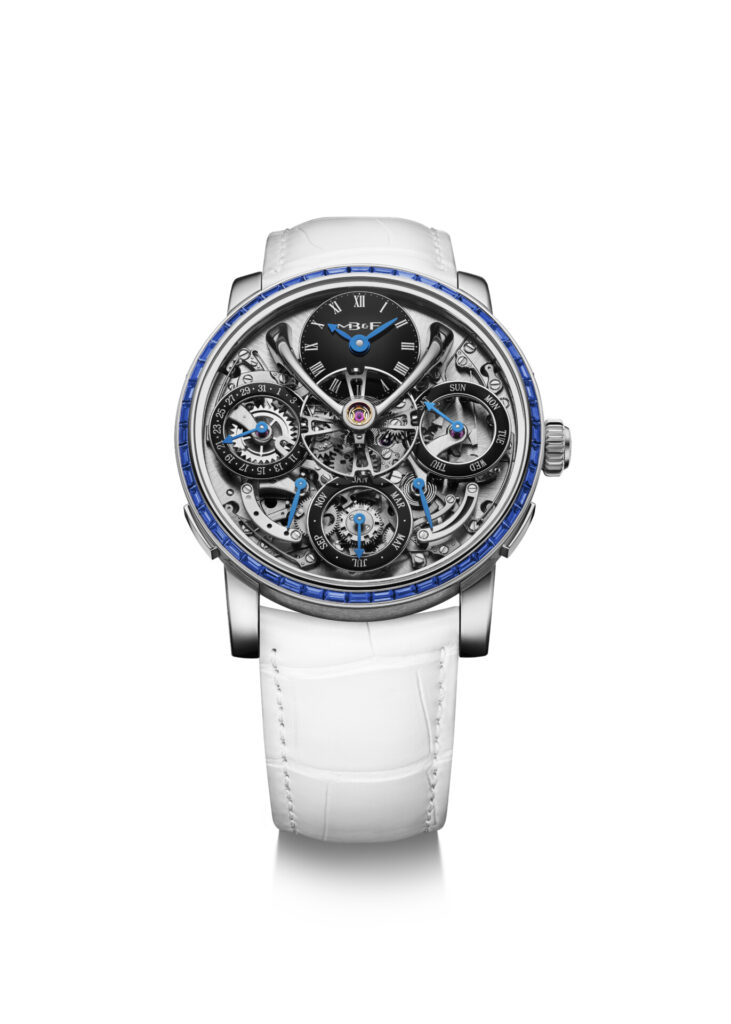
The fully integrated, purpose-built calibre contains 581 components, including 41 jewels, and does not rely on any module or base movement. The balance wheel, a bespoke 14mm unit oscillating at 18,000 beats per hour, is connected to the escapement on the back of the movement via what is believed to be the world’s longest balance wheel pinion.
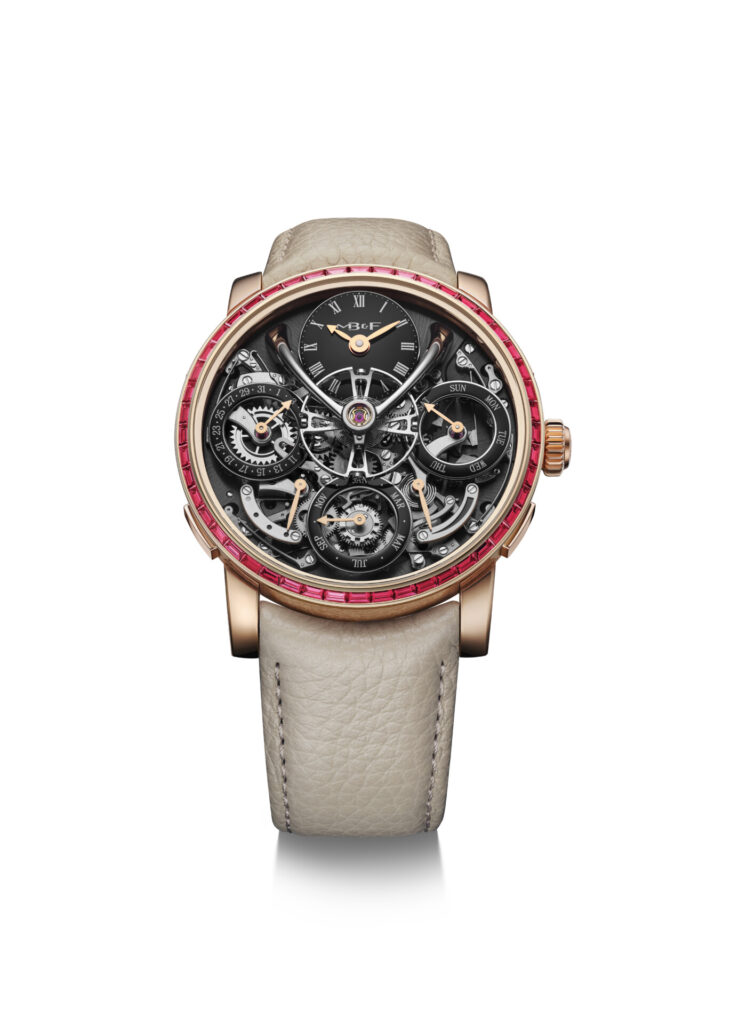
Power reserve runs to 72 hours from double mainspring barrels, and the case measures 44mm by 17.5mm. The skeletonised subdials carrying the day at 3 o’clock, power reserve at 4, month at 6, retrograde leap year indicator at 7, and date at 9 appear to float above the movement on hidden studs, an arrangement that would be structurally impossible with a conventional perpetual calendar system.
The gemstone bezels
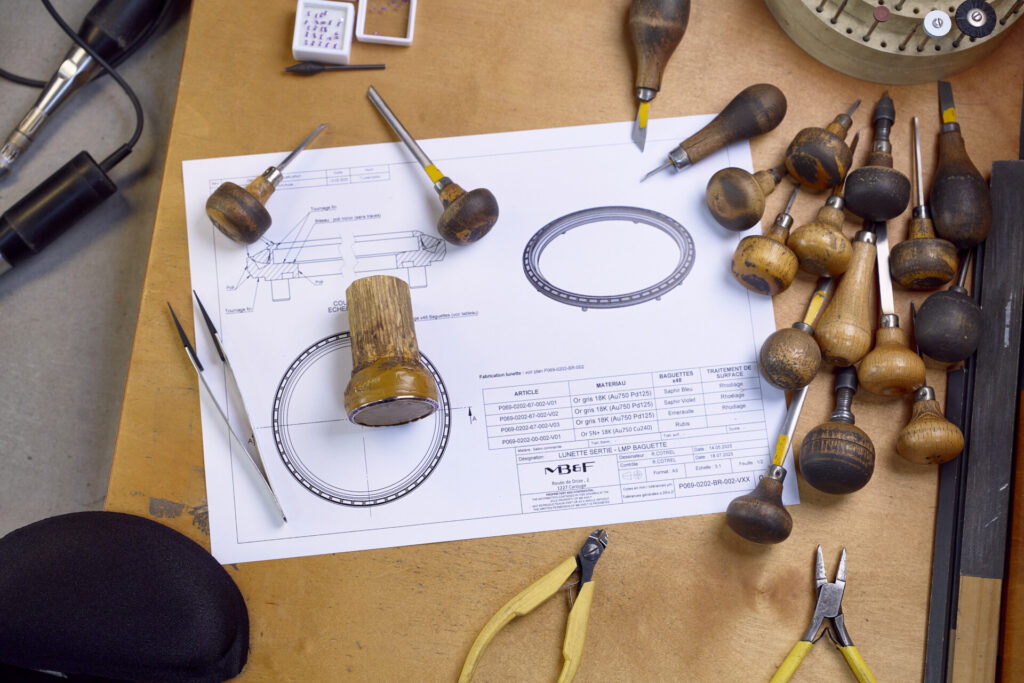
The Chromatic editions carry the full technical specification of the standard LM Perpetual while adding a layer of visual drama that the watch’s architecture handles with ease. The 48 baguette-cut gemstones on each bezel were individually set by hand at STG Création in Geneva, MB&F’s long-term partner for stone-setting work, and the entire bezel frame was engineered without increasing the case diameter, a detail worth noting given how precisely the original proportions were drawn.
The gemstone weights are specific: 1.95 carats for the red rubies, 1.95 carats for the blue sapphires, and 1.93 carats for the purple sapphires. The sourcing, Mozambique for the rubies and Madagascar and Sri Lanka for the sapphires, was chosen for the distinct tonal character each origin produces. The PVD treatment of the hands was matched accordingly, making these editions coherent objects rather than embellished ones.
MB&F Concept laboratory
Founded in 2005 by Büsser, MB&F, which stands for Maximilian Büsser & Friends, describes itself as the world’s first horological concept laboratory. Rather than operating as a conventional manufacturer, it brings together independent watchmakers, designers and craftspeople under a single creative framework. The Legacy Machine collection, launched in 2011, represents the more classical strand of that output, a tribute to 19th-century watchmaking filtered through a contemporary lens.