



A decade told through more than one hundred works
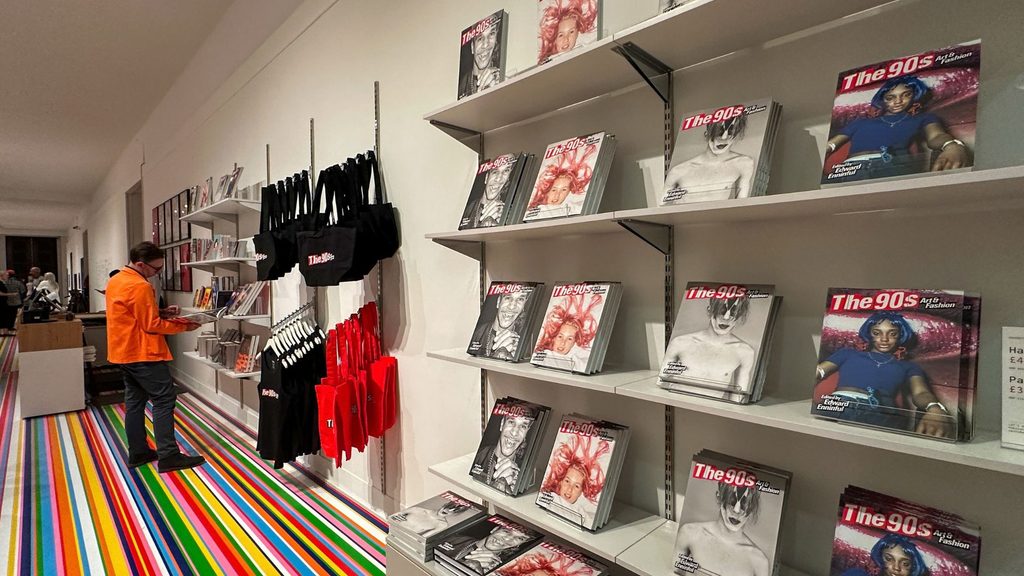
Tate Britain has opened The 90s: Art and Fashion, the first exhibition to examine the art, photography and fashion of the 1990s as a single cultural story. The survey draws together more than one hundred photographs, paintings, sculptures and garments from almost seventy artists, photographers and designers. Its subject is a decade remembered for opportunity, optimism and an audacious spirit, and the generation whose imagination changed how Britain saw itself.
The exhibition follows curator Edward Enninful’s own experience of the period, shaped with Tate’s contemporary art team including Jessica Vaughan and gallery director Alex Farquharson. Enninful, who became a fashion editor at eighteen and went on to lead one of the world’s most influential fashion titles, brings an insider’s eye to a decade he helped define. For visitors, the result reads as a portrait of a creative generation that moved from the margins to the centre of British life.
Grunge, tabloids and the anti-fashion image
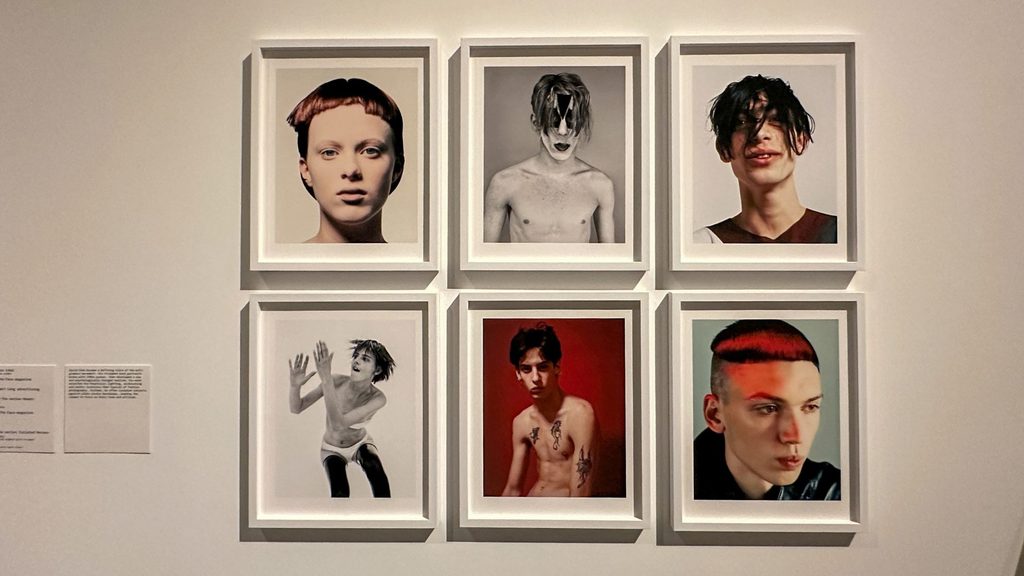
The show opens with the era’s taste for imperfection and authenticity, captured by photographers such as Corinne Day, Nigel Shafran and Juergen Teller. Their work for the youth style magazines of the day defined a deliberately unpolished, anti-fashion aesthetic that rejected the gloss of the previous decade. A single tabloid moment anchors the room: Kate Moss photographed in Liza Bruce’s sheer slip dress, an image that came to define the period’s stripped-back idea of glamour.
The influence of print media runs throughout. Work by Roshini Kempadoo and Eileen Perrier broadened mainstream notions of beauty at precisely the moment the slip dress filled the front pages. Real people became muses for artists including Barbara Walker, Jenny Saville and Gillian Wearing, while Tracey Emin, Sam Taylor-Johnson and Sarah Lucas held the public’s attention with frank, anarchic meditations on identity and class.
Club culture and the soundtrack of a generation
Nightlife forms the exhibition’s beating heart. Mark Leckey’s film Fiorucci Made Me Hardcore pieces together footage from Britain’s dancefloors, while photographs document young crowds at the Haçienda in Manchester and Bagley’s in London. Acid house is recorded by Dave Swindells, Peter J Walsh and Tony Davis, and Normski and Ewen Spencer follow the rise of jungle and drum and bass.
Raves and free parties, photographed by Seana Gavin and Vinca Petersen, illustrate a counterculture organised through flyers and payphones. Joyful queer club nights are captured by Poulomi Desai and Stuart Linden Rhodes, and Elaine Constantine’s series Burn up Northampton documents the boy racer culture of the era. Together the photographs recreate a country dancing through the small hours.
Where couture met the art world
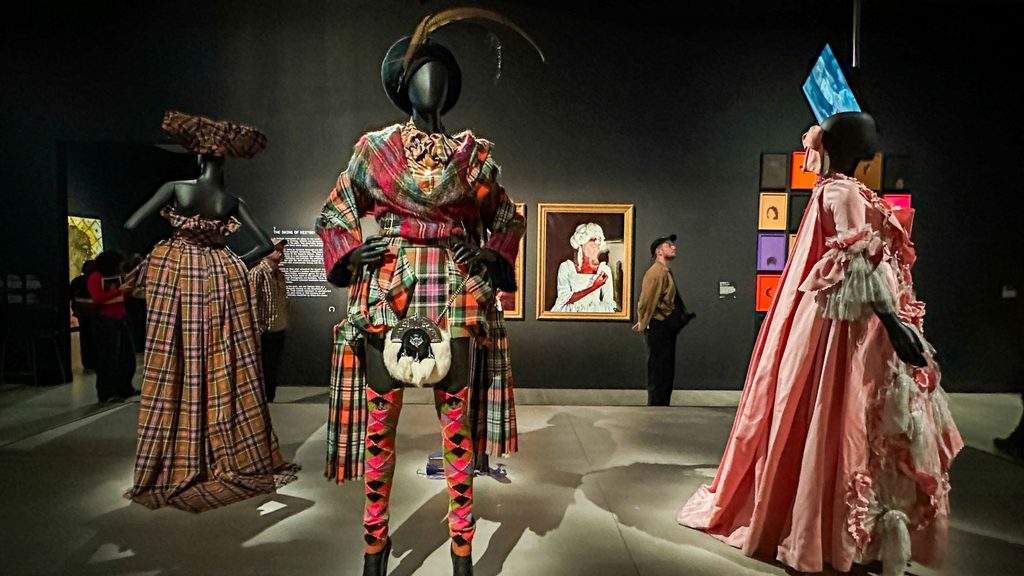
Fashion in this decade refused to behave like an industry. Alexander McQueen’s provocative, sometimes nightmarish presentations turned the runway into theatre, while Hussein Chalayan’s designs took inspiration from everyday objects to question what clothing could be. Philip Treacy’s sculptural hats and collections by Stella McCartney sit alongside the anachronistic historicism of Vivienne Westwood and John Galliano, who interrogated style, class and national mythology with every collection.
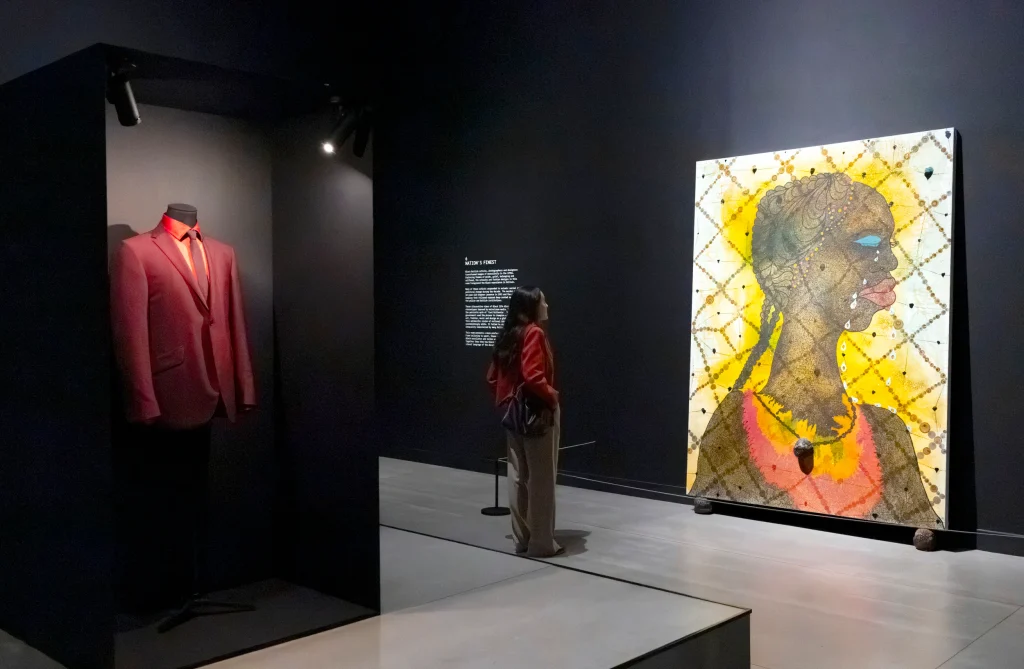
The exhibition also celebrates Black British creativity. Suits by Ozwald Boateng, runway footage of Joe Casely-Hayford’s presentations and fashion photography by Koto Bolofo record designers whose influence long outlasted the decade. Street style is spotlighted through a collaboration between photographer Jason Evans and stylist Simon Foxton.
The generation that changed the gallery
The Young British Artists dominate the final rooms in all their variety. Steve McQueen’s early film Bear, a cinematic faceoff between two men, appears near Chris Ofili’s No Woman No Cry, a moving tribute to Doreen and Stephen Lawrence. Damien Hirst’s fabricated sculptures in formaldehyde sit against Rachel Whiteread’s pared-back casts and Gary Hume’s flat, uncanny surfaces.
Helen Chadwick, Jake and Dinos Chapman and Cathy de Monchaux pursued a gothic interest in decay and revulsion, while Hamad Butt responded to the continuing impact of the AIDS crisis. Wolfgang Tillmans’ Concorde Grid captures the optimism and anxiety of a decade closing on the promise of a new millennium.
A closing room between past and future
The exhibition ends with reflection rather than nostalgia. Yinka Shonibare and Maud Sulter drew on European art history and dandyism to ask pointed questions about representation, while the era’s designers borrowed across cultures and centuries to challenge national myth. The 90s: Art and Fashion positions the decade as a hinge between an old establishment and the creative country Britain was becoming.
The 90s: Art and Fashion runs at Tate Britain, Millbank, into early 2027, with the gallery open daily from 10.00 to 18.00. For a female audience that lived through the decade or discovered it secondhand through vintage fashion, it offers a rare chance to see its photography, art and clothing placed where they belong, together.