


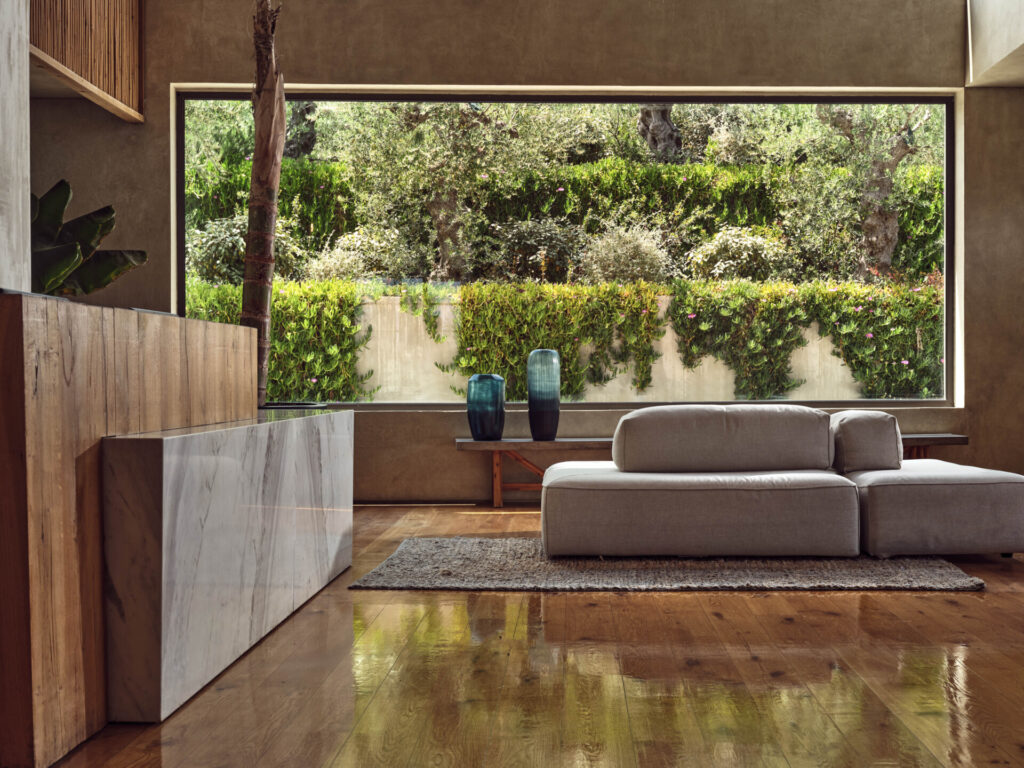
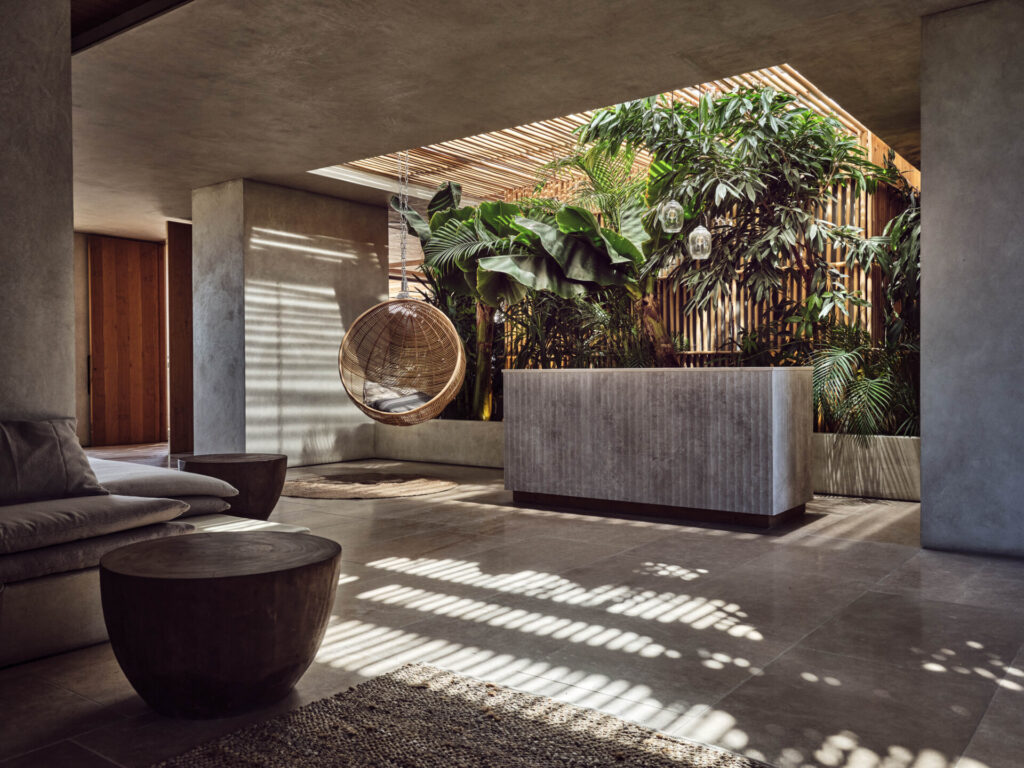
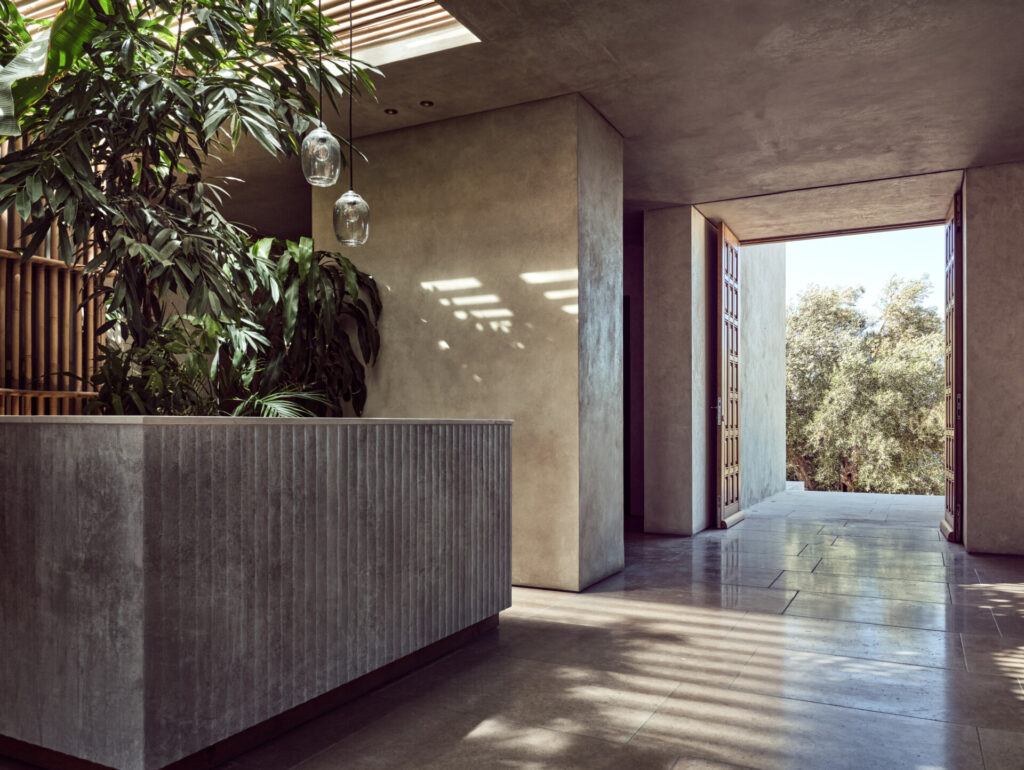
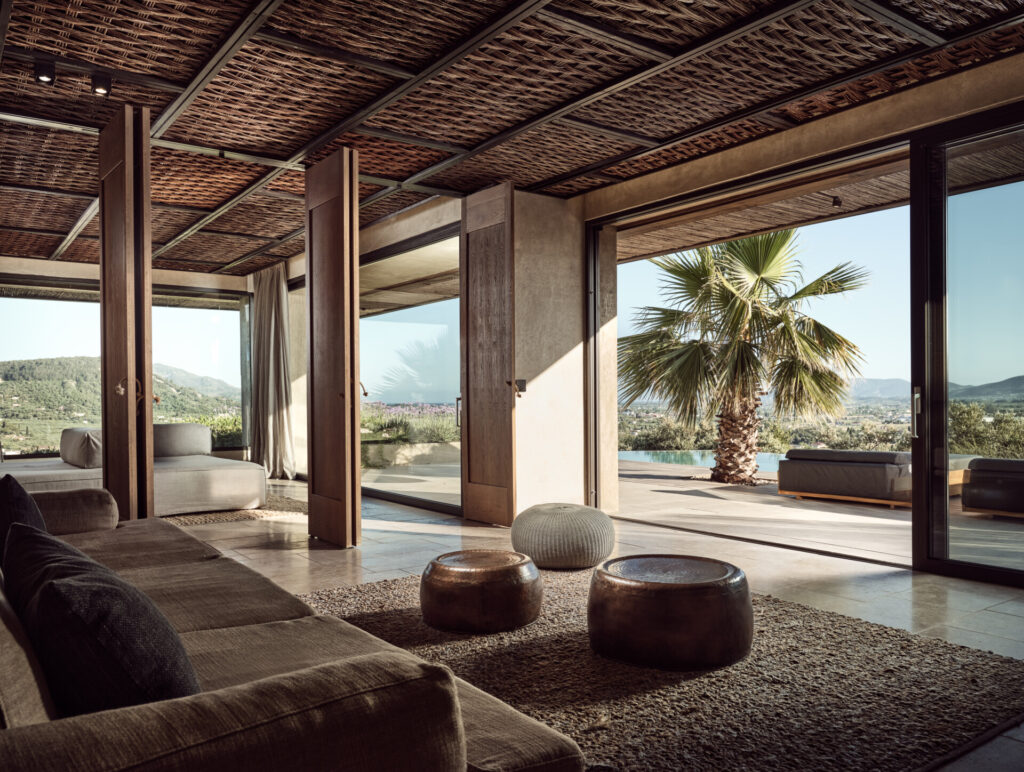
Arriving at Olea, we took a long road leading up from Tsilivi. At the top, a cart meets guests at the entrance and carries them through the grounds towards the lobby, and it is during this short ride that the property begins to reveal itself. The architecture is immediately striking, with a combination of polished concrete, bamboo, oak and rattan, with high ceilings and modernist cube forms that owe more to Bali than to the Cyclades. The lobby itself is grand and open, functioning almost like an outdoor atrium, and the check-in process is refreshingly unhurried. We were shown to seats and handed a glass of sparkling wine before a single form was signed.
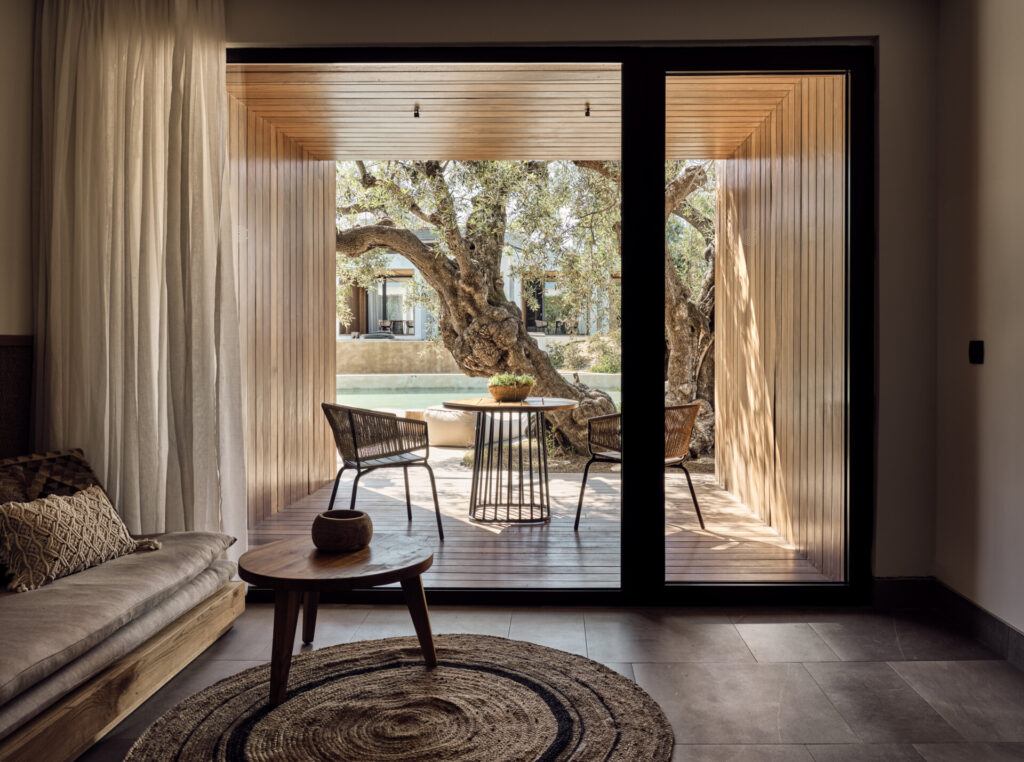
The setting is ancient in the best sense. The hotel sits within several acres of landscaped grounds that include a 500-year-old olive tree, flowering lavender and an array of cacti and native plants. Since 2023, an annual cultural residency has brought photographers and artists to the property, and their sculptures and oversized prints are woven through the communal spaces with quiet confidence. From the upper reaches of the estate, the views extend across rolling, pine-studded fields towards the Ionian Sea and the island of Marathonisi, which is as close to a Tuscan panorama as Greece tends to offer. In 2025, Olea was awarded a Michelin Key, a recognition that feels entirely earned.
Design and character
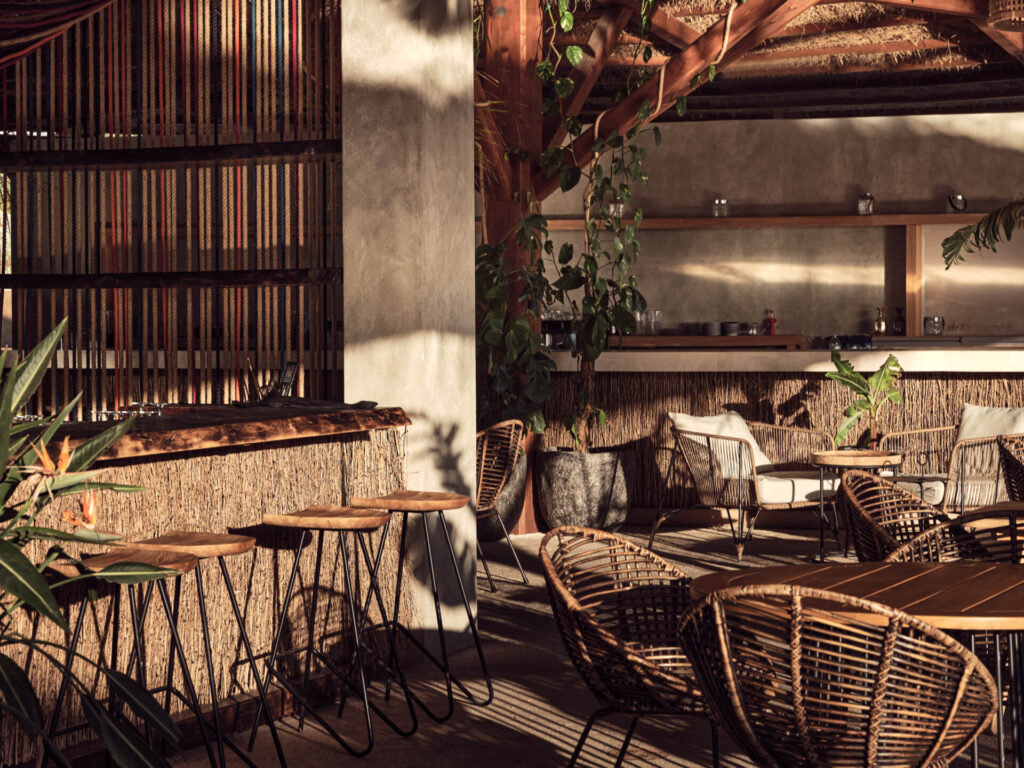
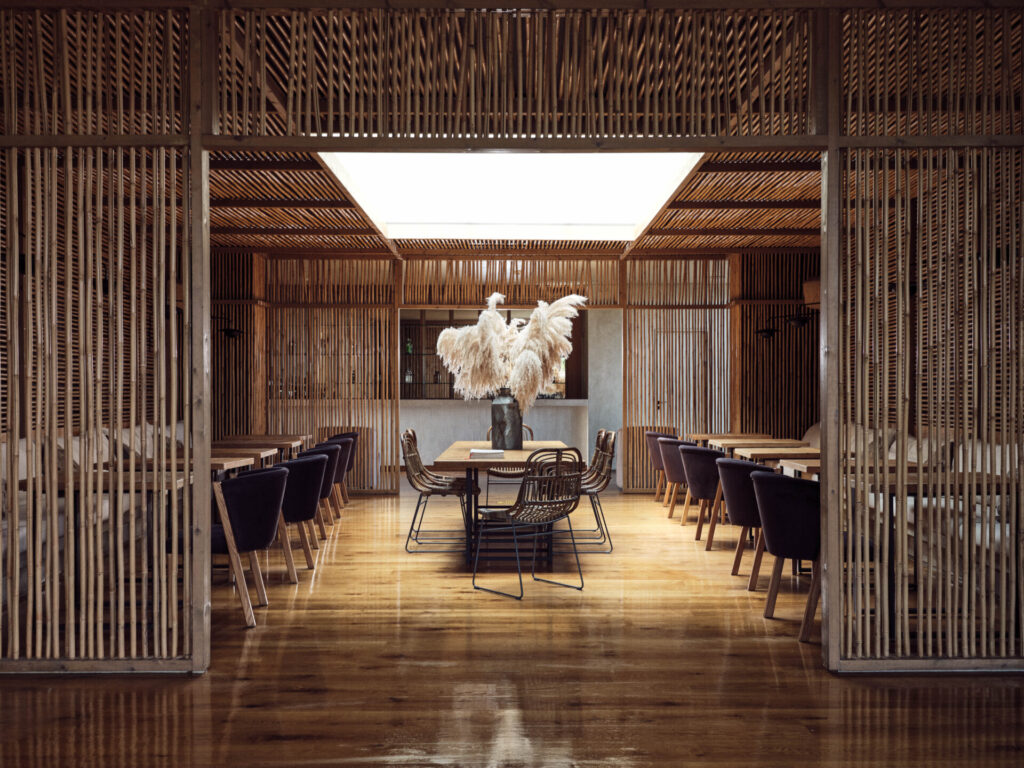
Block722’s design brief at Olea appears to have been the studied rejection of easy Greek clichés. Natural materials dominate throughout: bamboo, oak and rattan sit alongside polished grey concrete and stone, while the landscaping softens the angularity without diluting it. The result is a property that feels more Asian in temperament than Mediterranean, pared back and precise, yet never cold. Day beds are positioned beneath the silver limbs of olive trees, hanging rattan pod seats appear at intervals through the communal areas, and a low-key DJ soundtrack shifts from mellow ambience during the day to something with slightly more momentum as the evening progresses. The atmosphere is neither a beach club nor a private members’ retreat, but occupies a comfortable, confident position between the two.
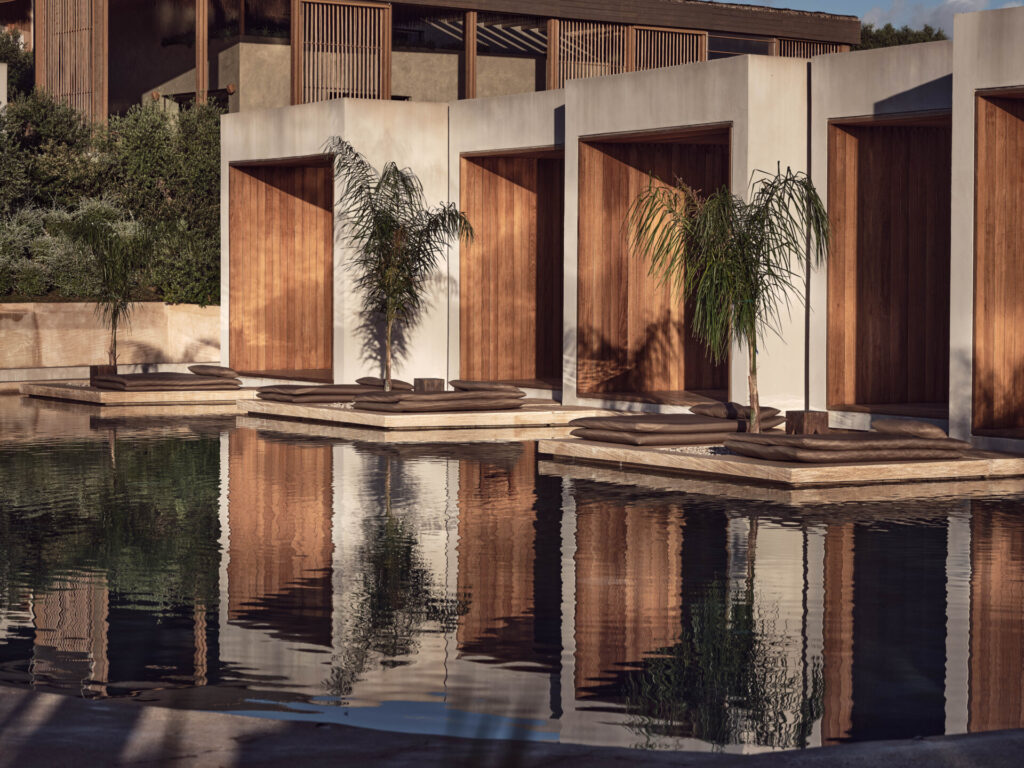
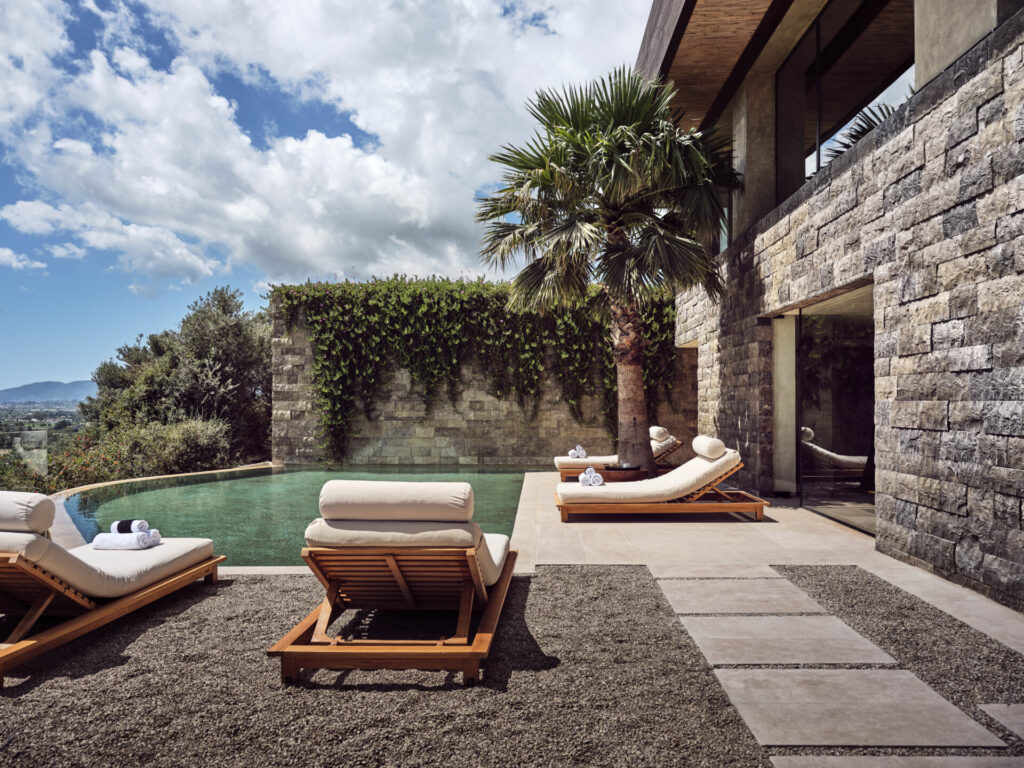
Water is central to the design in a way that extends well beyond decoration. A lake-like central pool of 4,000 square metres forms the gravitational heart of the resort, with suites arranged along its perimeter so that the distinction between indoors and outdoors is deliberately blurred. Sixteen suites cluster directly around this main pool with sunloungers positioned on a floating deck, while others are strung along the hillside above, their terraces angled to catch either sea or landscape views. The overall effect is of a property that has grown organically from its site rather than been placed upon it.

Accommodation
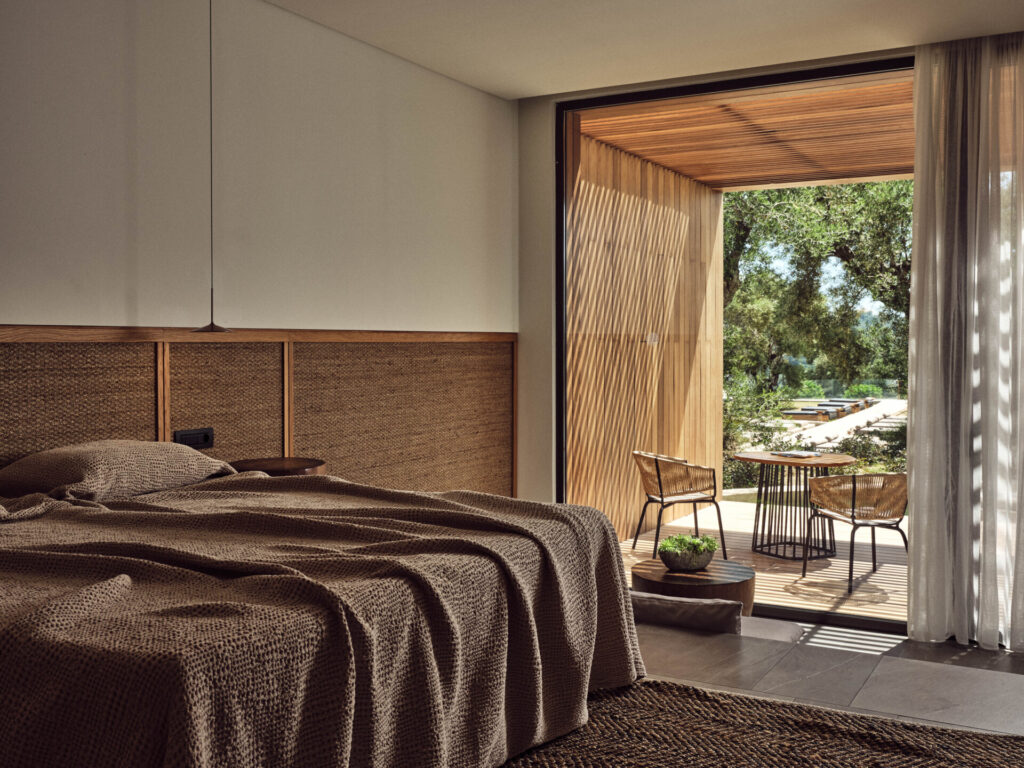
Our room, a Superior Suite Swim Up with pool view, covered 36 square metres and included a 15 square metre private terrace with dedicated beanbag loungers and direct swim-up access to the pool. The design language throughout follows the same earthy palette: sand and biscuit tones, raffia-panelled wardrobes and headboards, bedside tables carved from tree trunks, embroidered cushions and rope-woven chairs. The mattresses, produced by Greek brand Coco-Mat, are among the most comfortable we have encountered, and the bathroom, separated from the main sleeping area by a partition wall, features a glass-walled shower and double sink area with enough space to feel genuinely generous.
Each of the 89 suites across the property follows this same design approach, spanning between 36 and 105 square metres. Several categories include a private plunge pool, while swim-up suites allow guests to move directly from their terrace into the main pool at any point in the day. The suite categories are carefully differentiated by position and orientation, and it is worth noting that swim-up rooms offer more immediacy but correspondingly less privacy, with terraces that open directly to the poolside.
Pool and facilities
The main pool is, without question, the defining feature of a stay here, and it is among the finest we have found on the island. Its calm, lake-like surface reflects the surrounding olive trees and the hillside above, and the scale of it means that even at busy periods there is a sense of room. A second pool, 25 metres in length, was added to the gym complex in 2026 and forms part of a fitness offering that includes a good range of Matrix equipment, from treadmills to a cross-trainer, as well as a dedicated weights area.
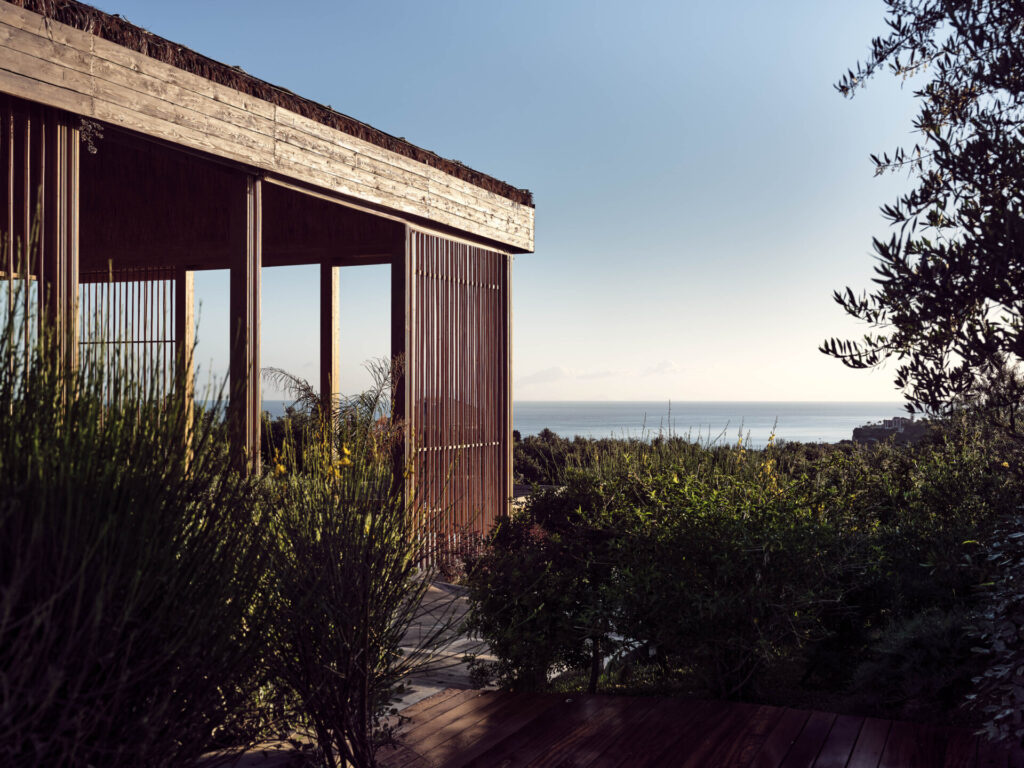
A small spa towards the top of the property features two treatment rooms, a sauna and a steam room, both available by advance reservation, drawing on German skincare brand Babor for its treatments. Yoga classes are offered twice daily at no additional cost, are held in an outdoor pavilion within the olive grove adjacent to the Flow restaurant, and are well suited to all levels of experience.
We joined a morning session and found the instruction clear, patient and well paced. The resort also maintains a bio-garden where tomatoes, peppers, cucumbers and herbs are grown for use in the kitchens, and for guests who request it, a private evening wine tasting can be arranged in this space, guided by an in-house sommelier whose knowledge of Ionian varieties extends to rare grapes such as Avgoustiatis, Skiadopoulos and Goustolidi that are unlikely to be encountered elsewhere.
Service
The staff at Olea are one of the property’s most quietly impressive features. Friendly and relaxed without being informal, they operate with an awareness of when presence is required and when discretion is more valuable. The concierge team can arrange boat tours and restaurant reservations, and an on-demand cart service carries guests between the various points of the resort throughout the day. A bespoke bergamot-based scent wafts through the lobby, and on arrival the welcome felt personal rather than procedural. This is a property that understands the difference.
Dining
Flow Dine and Wine
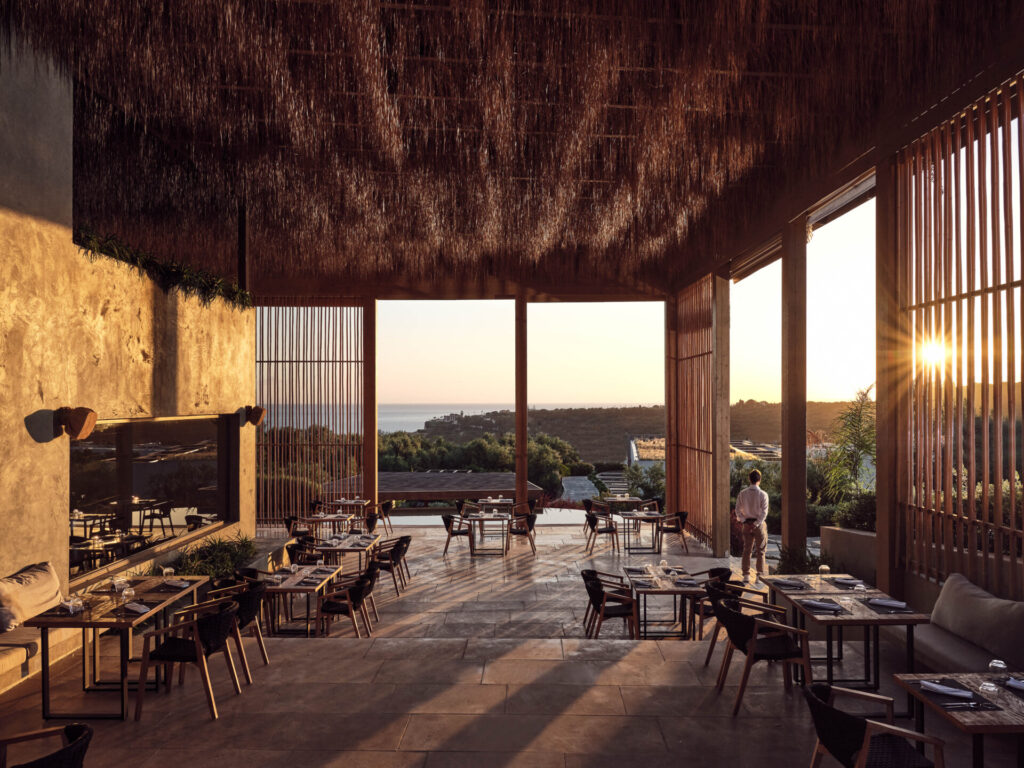
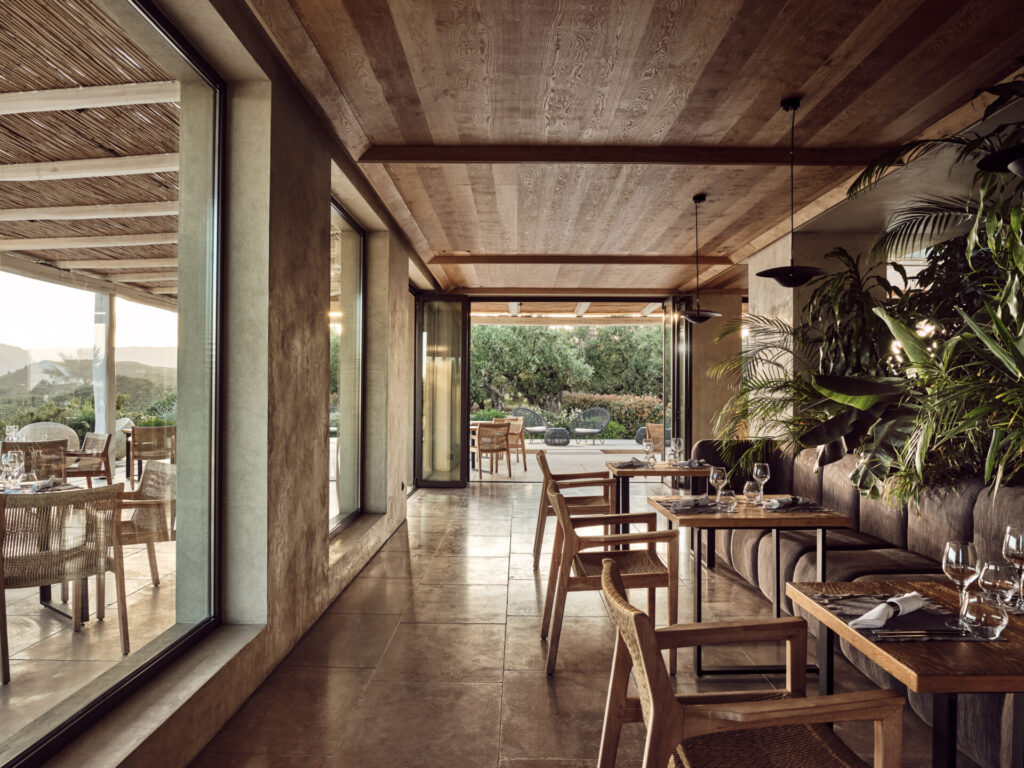
Flow sits at the highest point of the estate, tucked away with sweeping views across the valley and the sea beyond, and is the kind of restaurant that would deserve a visit from outside guests regardless of whether they were staying at the hotel. Under the direction of chef Michalis Nourloglou, the menu transforms seasonal Mediterranean ingredients into dishes of considerable elegance, and three degustation menus offer a structured way to move through the kitchen’s range.
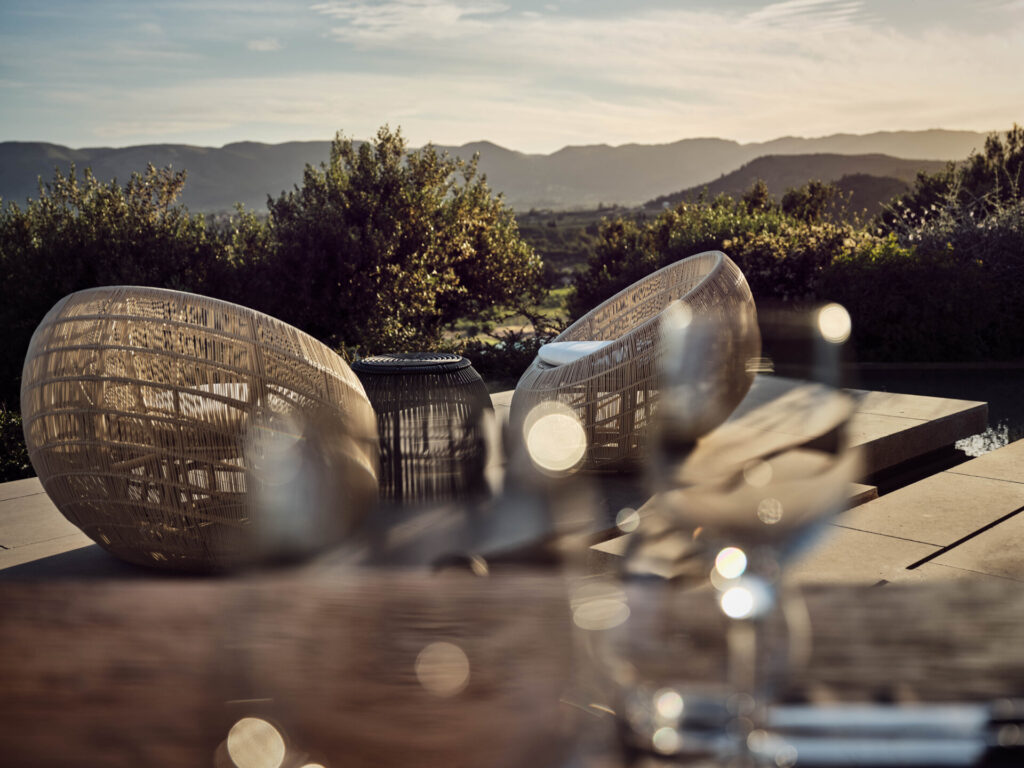
We ate from the à la carte selection. Cocktails set the tone well: the Sundown Serenade, with Disaronno, Aperol, lime, bergamot and tangerine soda, was light and clean, while the Kepos, built around Ramazzotti Aperitivo Rosato and pink grapefruit soda, offered a fresh take on a classic Paloma. Among the starters, a tuna tartare with cucumber, chive oil and avocado and wasabi foam was precisely calibrated, the heat arriving slowly and adding depth rather than heat for its own sake.
A crayfish tempura with potato crust and passion fruit brought an unexpected brightness to the dish and held together well. From the mains, lobster lasagna with rose cream and pistachio béchamel was an intelligent departure from the Italian original, richer than expected but balanced by restraint in the seasoning, while a fresh sole with salted lemon, brown butter, romaine, peas and spearmint oil handled the delicacy of the fish without overwhelming it.
For dessert, we had a chocolate tart with salted caramel and gold finish, which was deliciously indulgent, and the New Style Ekmek, with caramelised tsoureki and mascarpone cream, proved to be one of the more interesting ways to end a meal that we encountered on the island. Flow operates for dinner only, from 19:00 with a last sitting at 22:00.
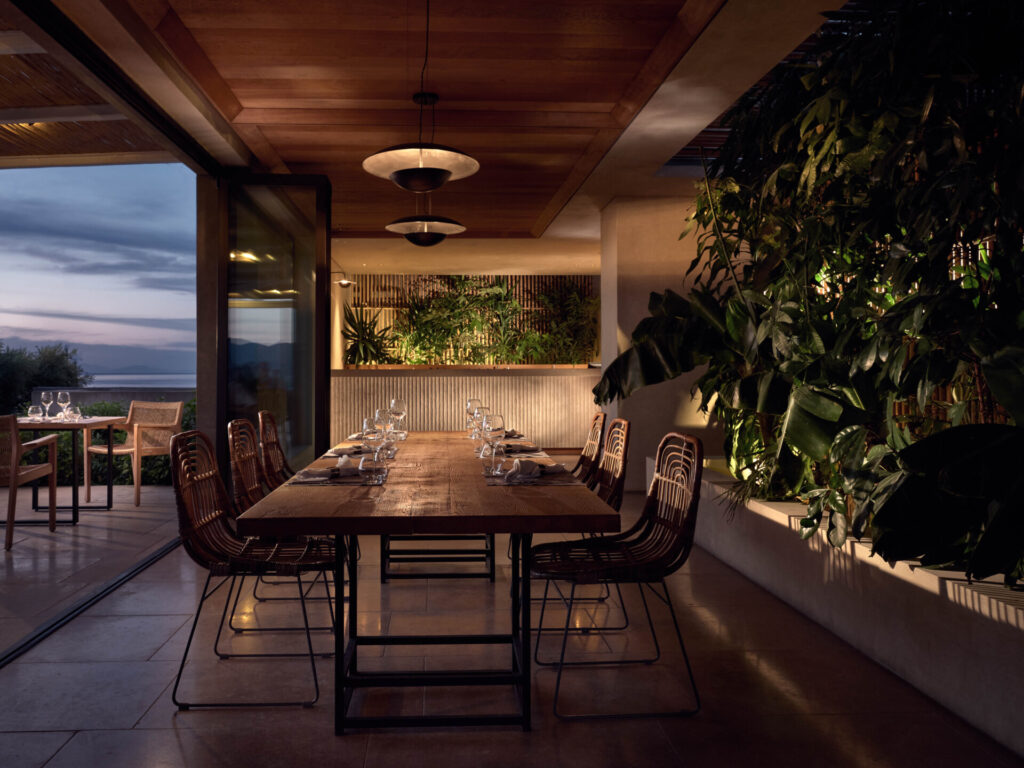
Flame
Flame occupies the resort’s social centre, sunken into the heart of the pool and lounging areas. During the day it operates as Cocoon, a casual poolside space with a sandy floor and a menu that covers gyros, Caesar salads, dolmades, calamari, burgers and grilled fish. By evening, Flame takes over, focussing on fire-kissed Greek specialities such as veal sofrito, chicken kontosouvli and rooster with local pasta. The transition between the two modes is handled well: the space shifts in atmosphere rather than décor, and the informal setting suits both a leisurely lunch and a more unhurried dinner equally.
We dined at Flame on multiple occasions across our stay, sampling widely from the menu on the recommendation of staff who were both enthusiastic and genuinely knowledgeable about what to order. The flame-grilled items in particular were consistently excellent: full of character, simply presented, and as close to authentic Greek cooking as one tends to find in a hotel dining environment. Service throughout, as in every corner of the property, was warm without being overbearing.
Breakfast and the bio-garden
Breakfast is served at Omikron, the main restaurant adjacent to the lobby, and amounts to a generous buffet that covers pastries, freshly baked bread, seasonal fruit, Greek yoghurt, honeycomb and local cheeses alongside hot options including scrambled eggs, roasted vegetables and spinach pies. The bio-garden, from which many of the kitchen’s herbs and vegetables are sourced, is available for private dining evenings, and on Mondays the hotel also offers wood-fired pizzas in the garden, a casual addition to the programme that draws guests together in a way more formal restaurants rarely manage.
Location and surroundings
Olea sits roughly five minutes by car from Tsilivi, which is one of Zakynthos’ busiest towns and offers the full range of tavernas, supermarkets and beachside amenities. The hotel’s elevated position above the valley means it feels considerably further removed than the distance would suggest. A shuttle runs to the nearest sandy beach, and Zakynthos Town is approximately 15 minutes by car, while the island’s airport is around 20 minutes from the property. For those wishing to explore, a hire car is strongly recommended: the road down to Tsilivi is steep and winding, manageable on foot but best avoided in the heat of an August afternoon.
The island itself rewards the effort. Zakynthos is greener and more varied than much of the Cyclades, its landscape running from pine-forested hillsides to secluded coves accessible only by boat, and the southern shore in particular offers stretches of extraordinarily clear water. The famous Navagio beach, with its stranded wreck, draws significant visitor numbers but remains an extraordinary sight. Olea’s concierge team can arrange boat tours to the quieter coves along the coast, and for guests who have never explored the Ionian Islands, this represents a compelling introduction.
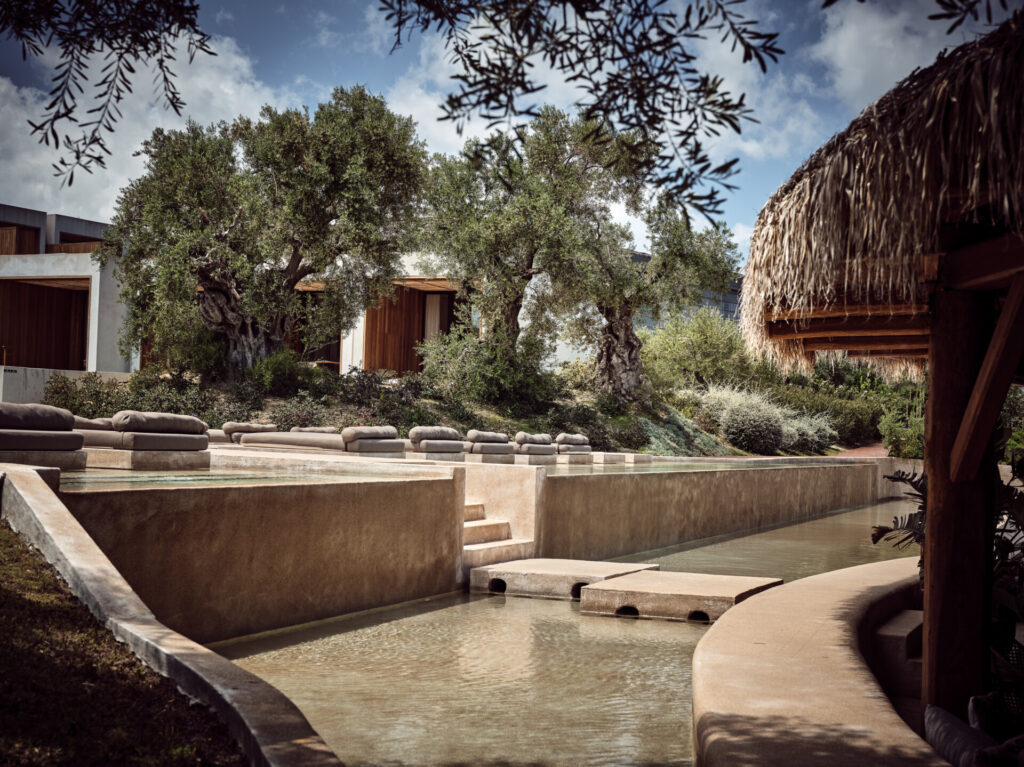
What Olea offers, above all else, is a coherent and well-realised alternative to the more typical Greek island resort. It is not trying to be the Maldives, though the sandy-floored poolside bar and cascading water features invite the comparison. It is, more simply, a thoughtfully designed property in a naturally beautiful setting, staffed by people who appear to take genuine pleasure in their work. That is, in our experience, a rarer thing than it ought to be.