



Aston Martin has built the most powerful front-engined production car any manufacturer has put on sale, and only 150 people will own one. Valen carries 850PS from a 5.2-litre twin-turbocharged V12, sheds up to 110kg and runs to 214mph. Adrian Hallmark, Marek Reichman and Simon Newton set out what Q by Aston Martin and the new Special Vehicle Operations department were after, from Bilstein dampers and Pirelli Cyber Tyre technology to a titanium exhaust tuned like a set of organ pipes.
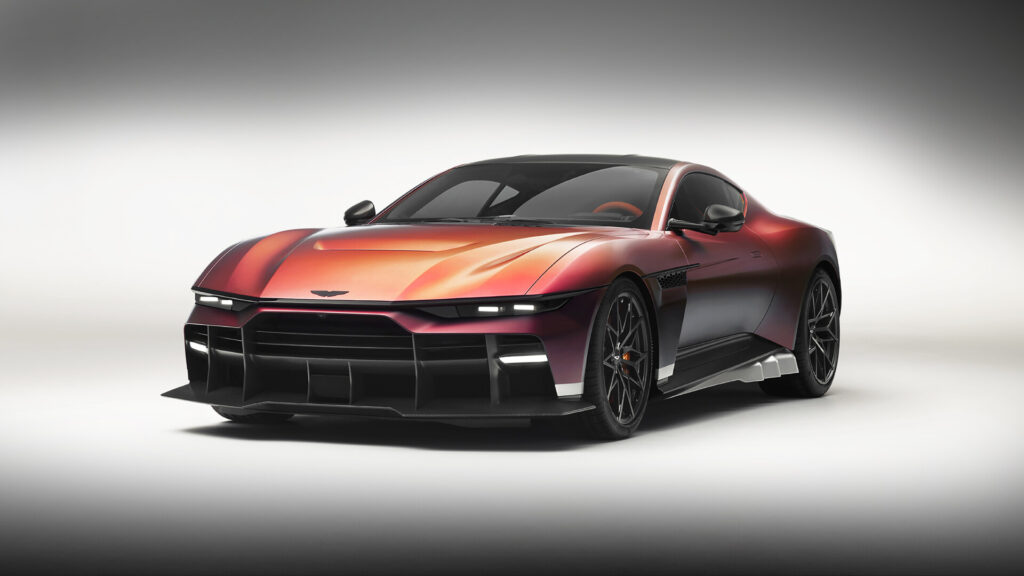
The 5.2-litre twin-turbocharged V12 now produces 850PS and 1,000Nm of torque from just 2,500rpm, enough for 0-60mph in 3.0 seconds and an electronically limited top speed of 214mph. Weight has gone the other way, with savings of up to 110kg against the core V12 platform, and the whole car is wrapped in a coach-built carbon fibre body. Production stops at 150 cars worldwide.
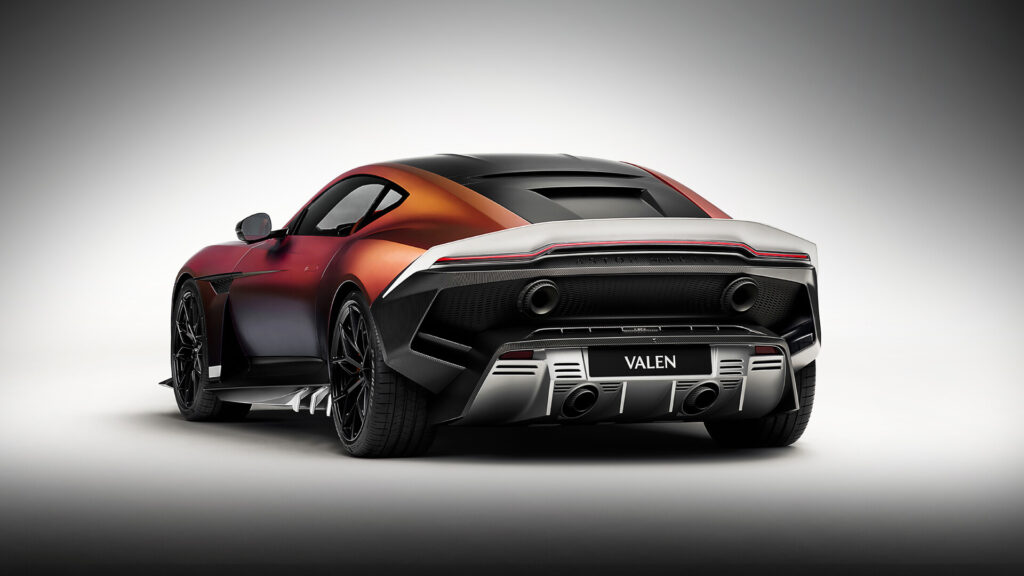
“The latest in a bloodline of limited production special series models from our bespoke service, Q by Aston Martin, Valen’s world-beating performance required a design to capture the raw motion and unmatched output of our V12 powertrain. With more power, less weight, and a spectacular soundtrack, the dramatic design is backed up by equally dramatic performance.”
Adrian Hallmark, Chief Executive Officer, Aston Martin
The project comes from Q by Aston Martin, the bespoke arm behind Valour, Valiant and DBR22, working with the newly formed Special Vehicle Operations department. Adrian Hallmark, chief executive, and Marek Reichman, executive vice president and chief creative officer, both describe a car built around drama first, then engineered to make good on it. A car with this much output needed a name capable of carrying it. Valen is drawn from the Latin valens, meaning strong or powerful, and joins a dynasty of Aston Martin ‘V’ names that stretches back decades. It is a plain choice, and a sensible one.
Power and delivery
Behind the engine sits a sharper-shifting eight-speed ZF transmission running race-proven shift strategies developed for the Vantage GT4 programme. Shifts are crisper in every drive mode, and the change is measurable, since it is part of what takes the sprint to 60mph down to 3.0 seconds.
Three performance modes govern how the powertrain behaves. Sport, Sport+ and Track each bring their own throttle map, with the road-biased settings using a shorter map that delivers more throttle earlier in the pedal’s travel.
“When your basis for a project is the world’s most powerful front-engined production car you know you’re going to have fun. Valen channels the more overt dynamic purpose of a true sportscar and amplifies that energy and focus to further unleash Valen’s potential. Everything we’ve done to the powertrain and chassis has been driven by the same objective; to intensify the character and capability to deliver a truly thrilling experience that’s accessible to all skill levels, but keen drivers will absolutely relish.”
Simon Newton, Director of Vehicle Performance, Aston Martin
Removing 110kg from a twelve-cylinder grand tourer takes patience and a generous materials budget. Carbon fibre, aluminium, titanium and magnesium all appear, and an optional lightweight pack of machined-from-solid aluminium suspension arms, knuckles and titanium chassis bolts accounts for 16.9kg of the total on its own.
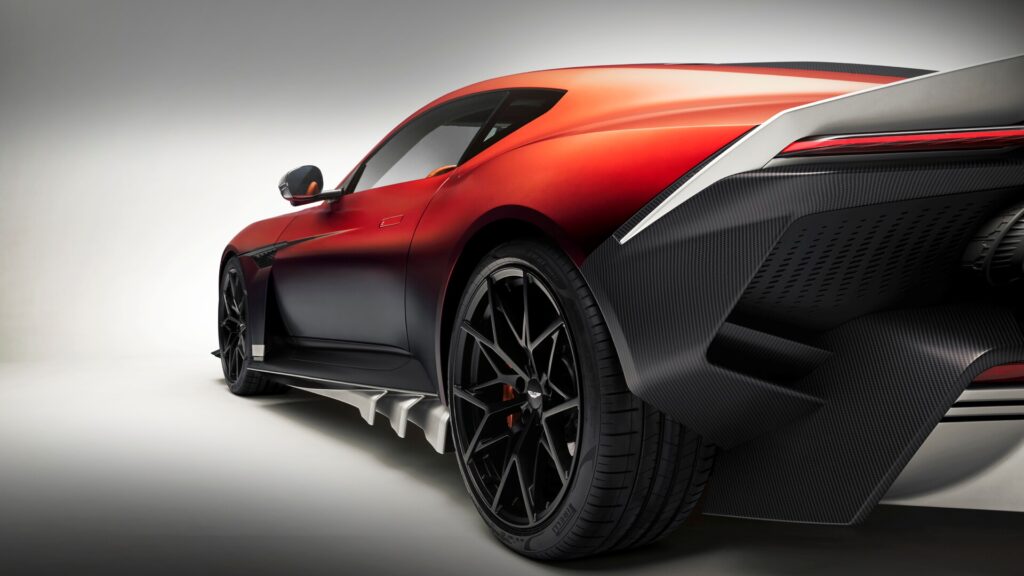
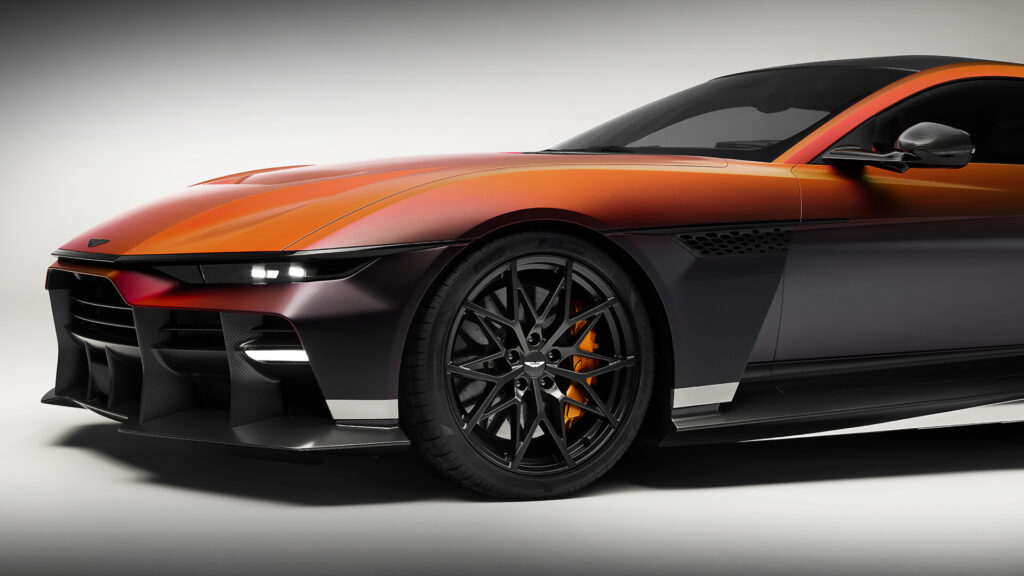
Lightweight magnesium wheels are standard, which cuts unsprung mass and pays back twice over. Steering response improves, and so does wheel control and ride refinement, which matters on a car owners are expected to drive properly long distances rather than trailer to track days.
Grip and control
Pirelli developed two bespoke tyres for the car, with P Zero R rubber in 275/35 ZR21 front and 325/30 ZR21 rear, alongside P Zero Winter 2 alternatives at 275/35 R21 and 325/30 R21. Both were tuned to hold onto everyday usability while still delivering lateral and longitudinal grip suited to circuit work. Valen also adopts Pirelli’s Cyber Tyre technology, developed with Bosch Engineering, which shares live tyre data with the car’s dynamic control systems so that ESP, ABS and traction control adjust their thresholds continuously.
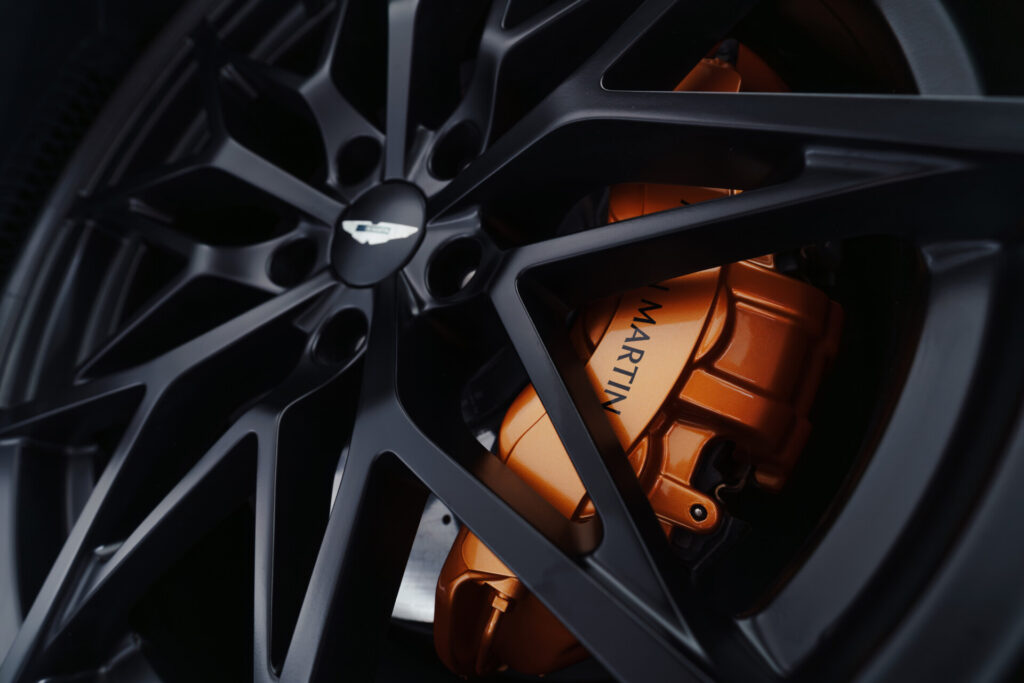
The chassis has been reworked to match. A solid-mounted rear subframe joins model-specific springs, helper springs and Bilstein DTX semi-active dampers, while front and rear lateral stiffness has been raised to sharpen direction changes and reduce roll and pitch. Steering has been tuned so the car behaves like something shorter and lighter, and the brake booster holds a firm pedal for precise modulation of the 410mm front and 360mm rear carbon ceramic discs.
A fine-tuned roar
A new titanium exhaust system was built specifically for the car, using micro mufflers to satisfy homologation rules while saving weight. Four tailpipes are split between two upper and two lower exits, with 3D-printed titanium finishers, and the arrangement borrows the visual language of a mid-engined hypercar. The upper exits stay open at all times; the lower pair are valved and open according to drive mode.
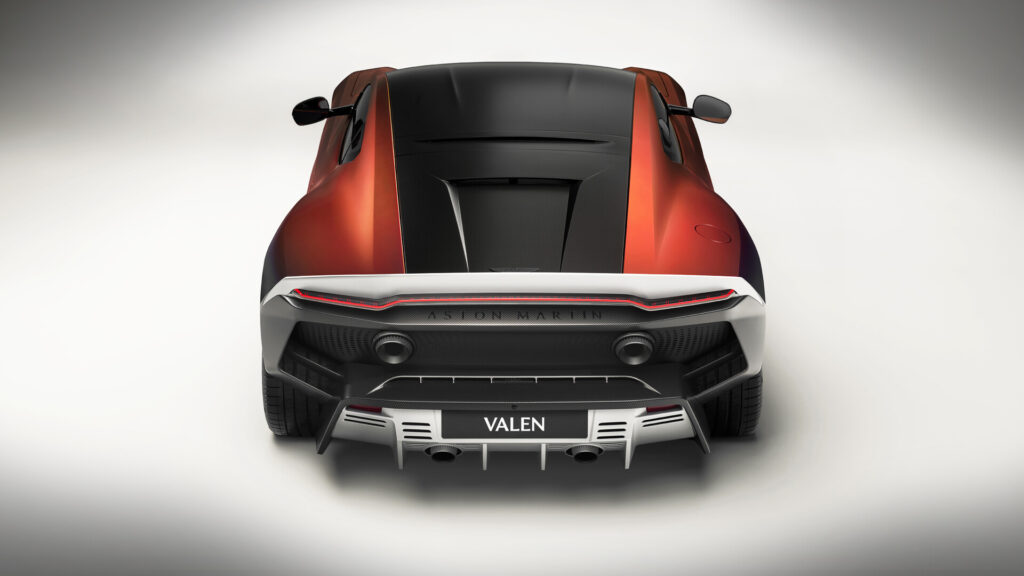
The tuning itself is where the engineering gets interesting. Lower frequencies have been reduced and higher tones amplified, and the upper outlets have been shaped along the principles of organ pipes to generate resonance as revs climb. Optimised system dimensions extend the build towards a crescendo, which is a great deal of thought applied to a noise, and entirely justified.
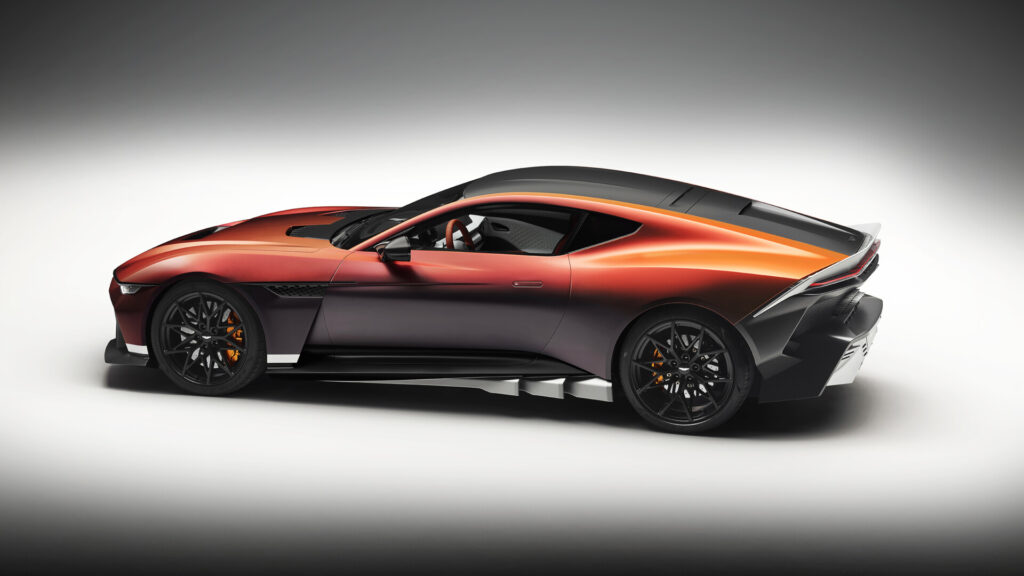
Valen reinterprets Aston Martin’s front-engined formula with a harder edge. Slimline headlamp units sit deeply recessed and hooded beneath the leading edge of a plunging bonnet line, above an angular radiator aperture, geometric mesh grille and acutely angled front splitter. The bonnet carries a single top vent with perforations at its trailing edge.
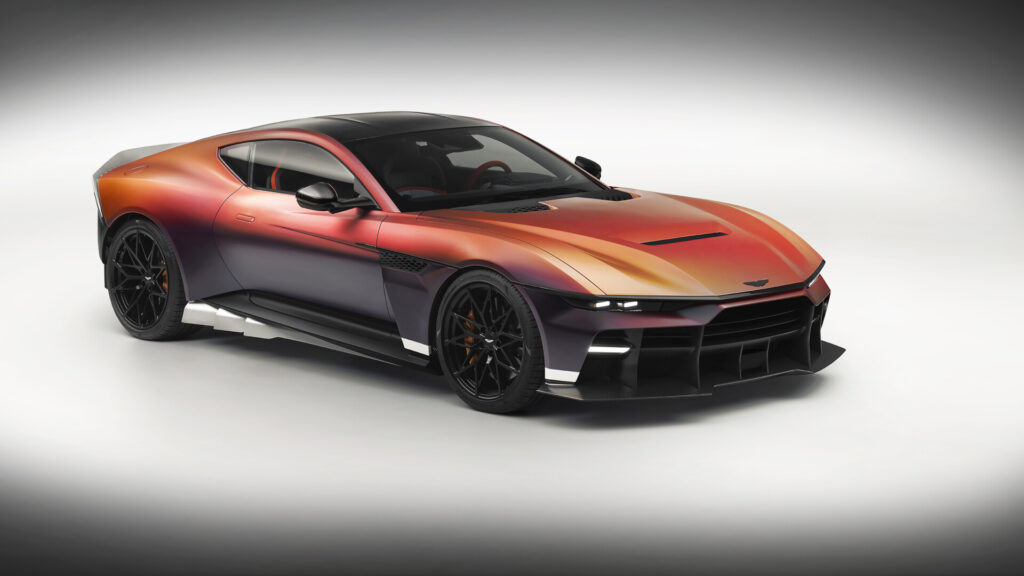
Along each flank, the traditional side strake has been sharpened, elongated and folded into a large functional vent that pulls air out of the wheel arch and guides it rearwards, running almost the full length of the door before the rear haunches swell over the back wheels. A stepped sill cinches the waistline, saw-toothed vortex generators on its trailing edge pull high-speed air from beneath the car to cut lift, and new quarter windows alter the profile.
“Valen gave us the opportunity to explore and express more extreme emotions through a new form language and surface treatment. As such, Valen is a significant departure from what has gone before; sharply sculpted lines to reflect the aggressive dynamics, an attacking stance that emphasises the front-engine rear-drive layout and a bespoke interior design that creates a more sporting cockpit environment.”
Marek Reichman, EVP & Chief Creative Officer, Aston Martin
Both the fixed rear window and the boot lid have gone, replaced by a solid tailgate with an aerodynamic wing in its upper section, opening onto a 170-litre trunk that can be fitted with a bespoke luggage set under the optional Touring Pack. A soft tailored cover unfolds to protect the paint while cases go in and out.
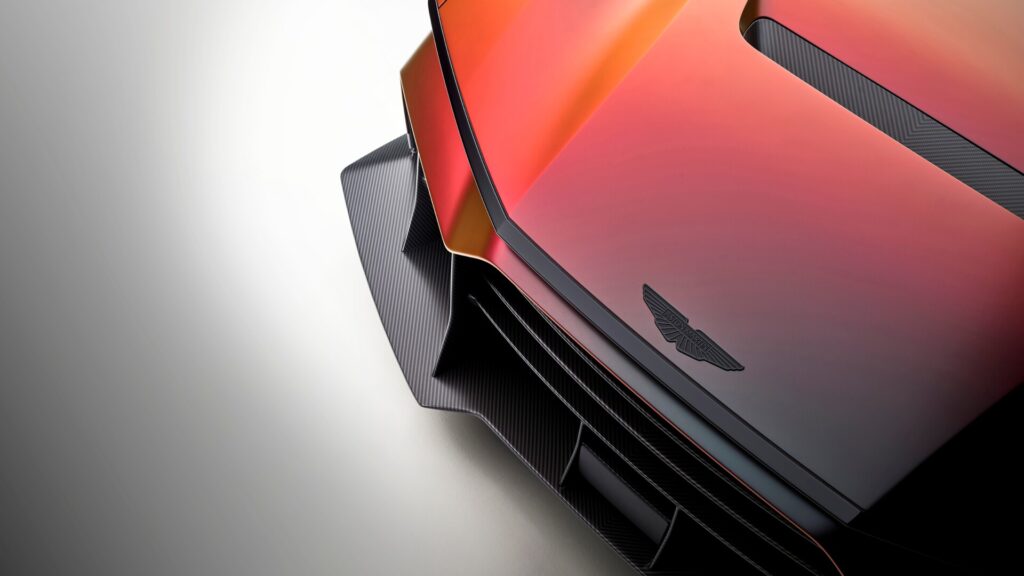
A full-width light bar sits beneath a large upswept tail that works as a Gurney flap, generating downforce with minimal drag and no need for motorsport-style wings. Below it, a perforated panel extracts hot air from around the exhaust.
Colour and carbon
The show car wears a Q Ultra developed paint called Satin Andromeda Red, which blends deep red, copper and golden highlights that shift towards intense blue undertones. Chromaflair pigments do the work, and the satin top coat keeps the colour shift active even under poor light.
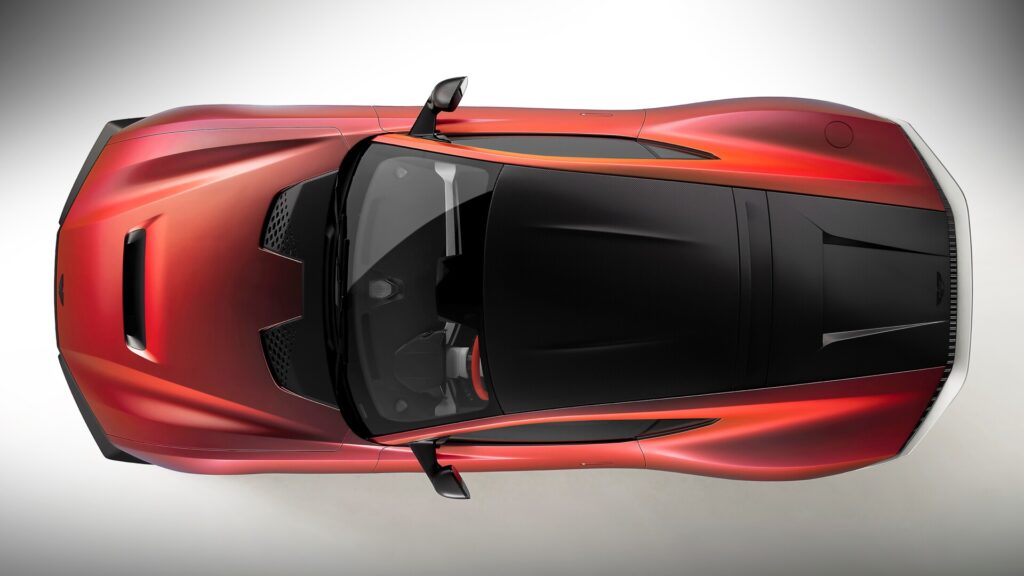
Buyers can also leave the carbon fibre body exposed, with the herringbone weave running down the centre line of the car. Tints are available in satin and gloss finishes, and customers can work with the Q team to develop their own.
Cabin architecture
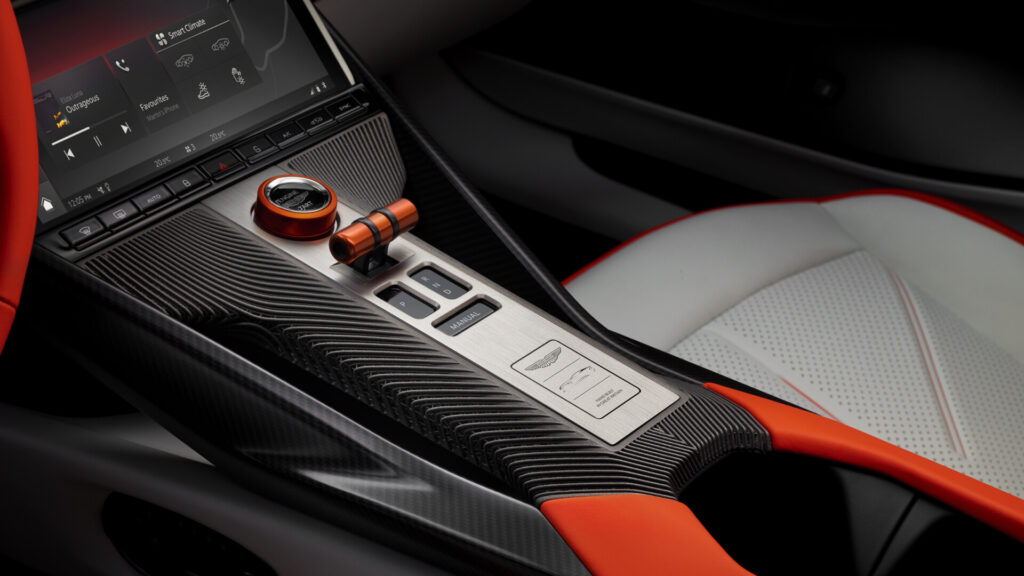
The interior follows a principle of visual lightness. A slim centre console, made possible by advanced 3D-printed components, carries the performance switchpack introduced on Valhalla and is angled towards the driver. Newly developed Sports Plus seats cover long-distance duty, with lightweight carbon fibre performance seats for anyone with firmer intentions.
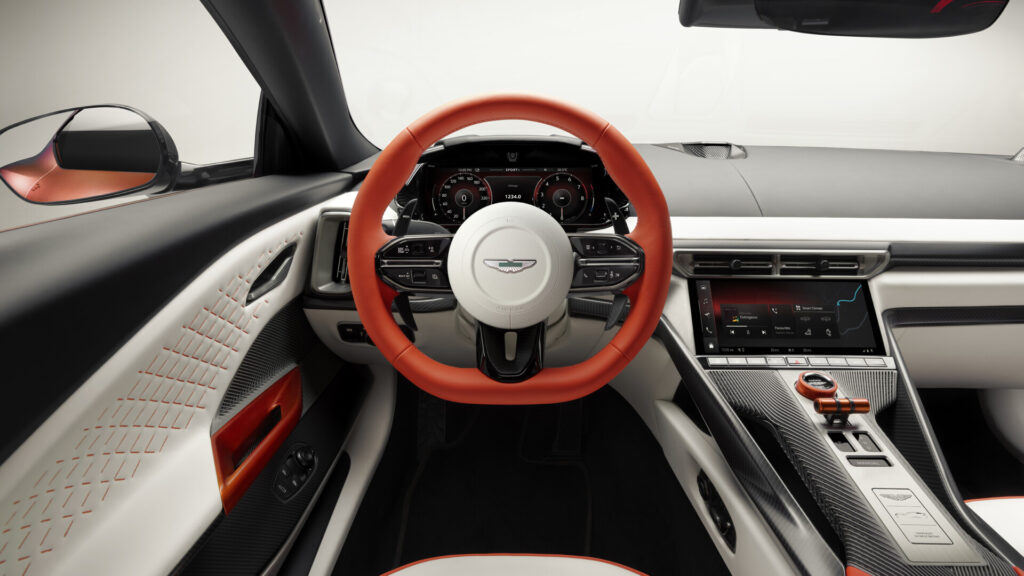
Trim selection has been simplified into a hierarchy. Customers choose between Semi-Aniline Leather with Alcantara or full Semi-Aniline Leather, then pick from five material splits called Monotone, Duotone, Light Duotone, Tritone and Driver Focused, with the new quilting treatment spreading further across the cabin at each tier until it reaches the headlining.
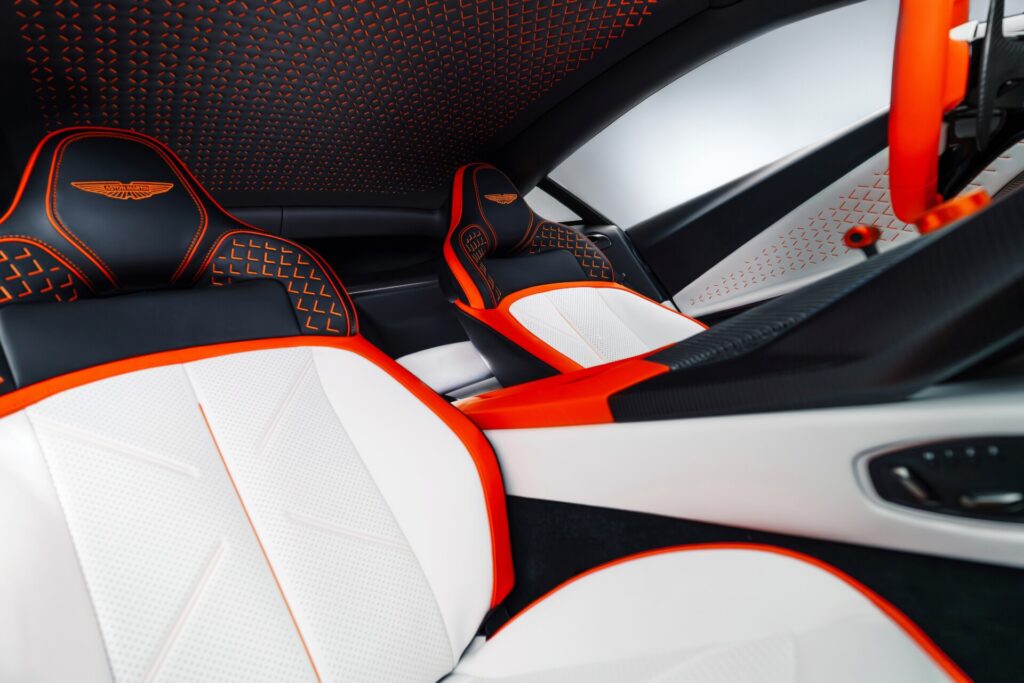
Perforated 3D-printed elements echo the exterior vents and recall the approach taken on Valkyrie and DBS Zagato, the central touchscreen is reclined into the geometry of the dashboard, and a new palette of anodising colours widens what Q can do with the details.