


The London Insurance Market faces a peculiar paradox. Agile frameworks have become ubiquitous across major carriers and underwriters, yet consistent application remains elusive. Senior representatives from TMHCC, Neuron, MS Amlin, Riverstone, AXA, The Hartford, Brit, Chaucer and Howden convened recently to confront this reality directly.
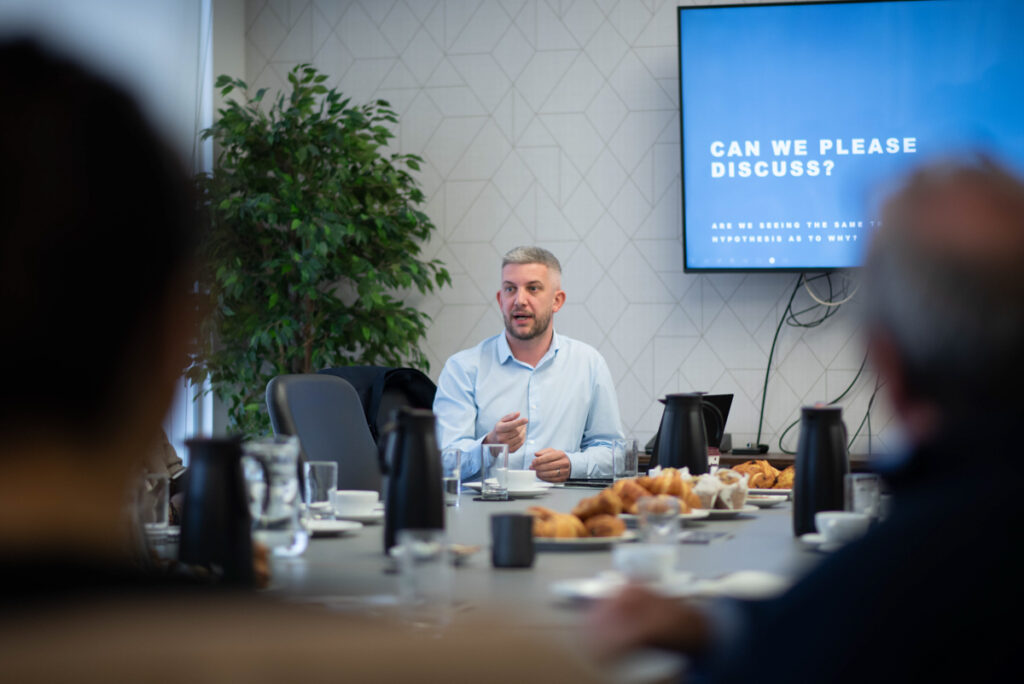
Daniel Mills, a specialist in agile delivery and product leadership, facilitated a session that moved beyond conventional discussions of sprint velocities and stand-up meetings. Instead, the conversation centred on fundamental misalignments that prevent organisations from realising the full potential of product-based delivery models. The dialogue revealed that despite significant investment in transformation programmes, many institutions operate with fragmented understandings of their own delivery frameworks.
The roundtable created space for honest reflection rather than corporate posturing. Participants acknowledged challenges that rarely surface in formal settings, examining why agile adoption often remains superficial despite genuine organisational commitment.
The framework disconnect
Mills opened the discussion by identifying a critical vulnerability within established institutions. When organisations declare adherence to specific agile frameworks such as Kanban or Scrum, individual stakeholders frequently describe contradictory approaches to delivery execution. This disconnect extends beyond semantic confusion, representing a fundamental barrier to successful transformation.

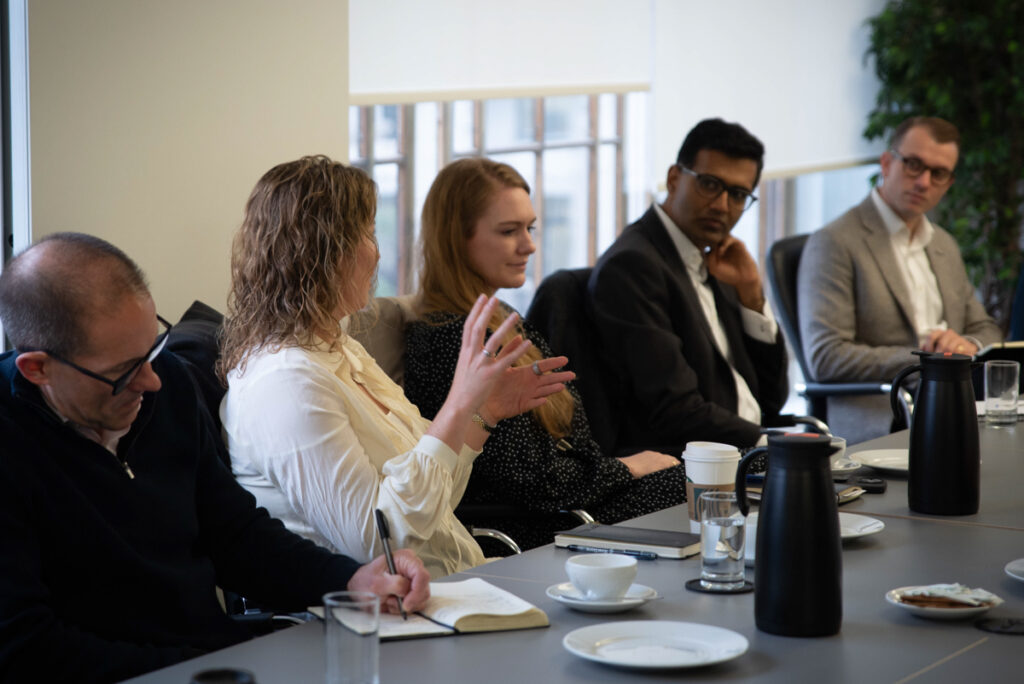
The observation resonated throughout the room. Leaders acknowledged that whilst agile terminology pervades their organisations, consistent interpretation and application vary significantly across departments and teams. This fragmentation undermines the collaborative principles that underpin agile methodologies, creating silos that mirror the traditional structures these frameworks were designed to dismantle.
The discussion revealed that post-pandemic working patterns have exacerbated these challenges. Pressure to accelerate delivery timelines has, in numerous cases, led to shortcuts that compromise strategic rigour. Speed has occasionally superseded substance, with teams adopting agile labels whilst maintaining conventional waterfall practices beneath the surface.
Beyond technology teams
Mills directed attention toward a frequent limitation in transformation efforts: the tendency to confine agile practices within technology and delivery functions. Sustainable change, he argued, requires comprehensive alignment across what he termed PoPIT—People, Organisation, Process and IT.
This holistic framework challenges the notion that successful transformation can emerge from isolated departmental initiatives. Technology upgrades alone cannot deliver meaningful change when organisational structures, business processes and human capabilities remain anchored to legacy models. The four elements must evolve in tandem, with deliberate attention to their interdependencies.

Attendees explored how this integrated approach applies within their own institutions. Several participants shared experiences where technological capabilities outpaced organisational readiness, creating friction between what systems could deliver and what business structures could accommodate. Others described scenarios where process redesign occurred without corresponding adjustments to team composition or reporting lines, undermining potential benefits.
The conversation highlighted that genuine transformation demands leadership attention across all four PoPIT dimensions simultaneously. Partial implementation creates internal contradictions that ultimately constrain progress regardless of individual component quality.
Critical questions for self-assessment
Mills posed two deceptively simple questions that prompted substantial debate. First, whether products within participating organisations were genuinely business-led or remained systems-led. Second, whether teams employed regular structured checkpoints for retrospective assessment and adjustment.
These questions exposed uncomfortable realities. Several leaders acknowledged that whilst their organisations espouse business-led product development, technical constraints and legacy system architectures frequently dictate feature prioritisation. The aspiration toward customer-centric design often yields to the practical limitations of existing infrastructure.
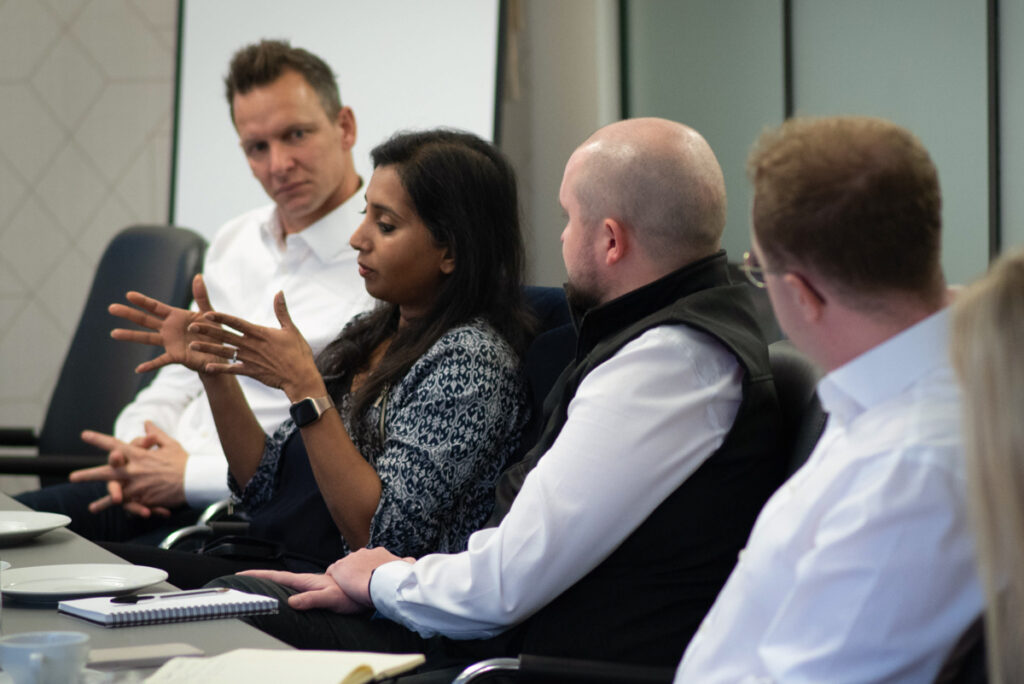
The checkpoint discussion revealed similar gaps between intention and practice. Retrospectives appear widely scheduled yet frequently devolve into superficial exercises rather than meaningful opportunities for course correction. Time pressure and deliverable urgency often compromise the reflective space these sessions require to generate genuine insight.
Participants recognised these challenges as systemic rather than exceptional. The roundtable format enabled candid acknowledgment that sophisticated financial institutions across the market face comparable struggles with agile maturity and consistent adoption.
Practical outcomes
The session distinguished itself from theoretical seminars by emphasising actionable intelligence over abstract principles. Attendees departed with specific insights applicable to their institutional contexts, alongside reassurance that their challenges reflect broader industry patterns rather than isolated failures.
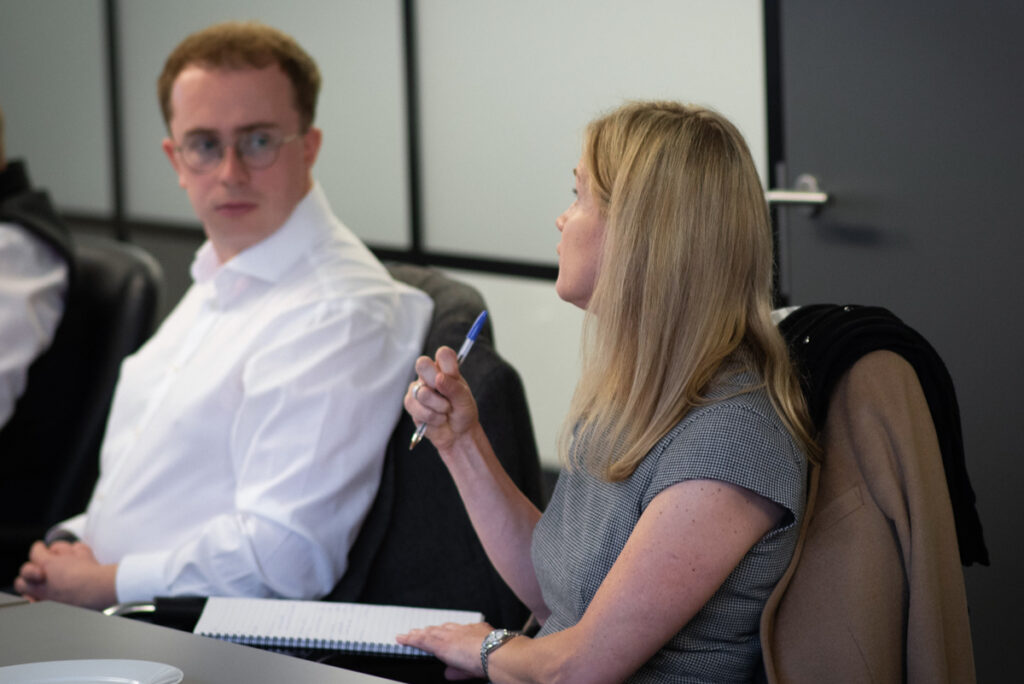
The collaborative environment fostered peer learning through shared vulnerability. Leaders exchanged practical strategies for addressing framework misalignment, improving cross-functional coordination and establishing more rigorous checkpoint disciplines. Conversations continued beyond formal proceedings, with participants identifying opportunities for ongoing knowledge exchange.
Mills concluded by reinforcing that agile success requires more than accelerated delivery cadences. Sustainable performance emerges from alignment between organisational vision, team structures and daily working practices. Speed without coherence generates activity rather than value, exhausting teams whilst delivering marginal business impact.
The roundtable demonstrated appetite within the London Insurance Market for honest examination of transformation challenges. Morson Edge continues supporting this evolution, facilitating connections between talent development, delivery methodologies and operational excellence across the sector.