


Rolls-Royce has revealed Project Nightingale, the opening chapter of its new Coachbuild Collection and a fully electric open-top two-seater built in a run of just 100. The name comes from Le Rossignol, a house beside Henry Royce’s winter home on the Côte d’Azur, and the design borrows from the marque’s experimental streamliners of the 1920s that once went chasing speed records.
Entry to the programme comes by invitation, offered to people who genuinely love the way the marque designs its cars, and they’re already enjoying years of private gatherings that follow their own car as it comes to life. Deliveries begin in 2028.
“Project Nightingale shares the spirit of those landmark projects and is the most extravagant expression of what Rolls-Royce is capable of today.” Chris Brownridge, Chief Executive, Rolls-Royce
Speed and Streamliners
The distinct look of this model comes from Streamline Moderne, that late chapter of Art Deco. The designers clearly loved the idea and leaned right into it, giving the car big, smooth surfaces that look even better up close.

Even the red badges dotted around the body have a tale to tell. They once belonged to the marque’s experimental cars of the 1920s, the rare and much-loved ‘EX’ machines, and two of them shaped this whole project. Built in 1928 when the Jazz Age was in full swing, 16EX and 17EX dressed powerful Phantom chassis in lightweight aluminium and cracked on past 90 miles per hour. Their torpedo shape, long bonnet and low windscreen with the two occupants tucked down inside, is exactly where the new car gets its swagger.
Three ideas came out of studying that pair. First is the way the car flows from upright to low, as the tall Pantheon Grille softens into a long, graceful tail. Then there’s the central fuselage, running the full length of the body, and the flying wings, sculpted forms that stretch tension across the car and pull the eye towards the back. The upshot feels instantly like a Rolls-Royce, and at the same time like nothing the marque has done before.
Grille and grace
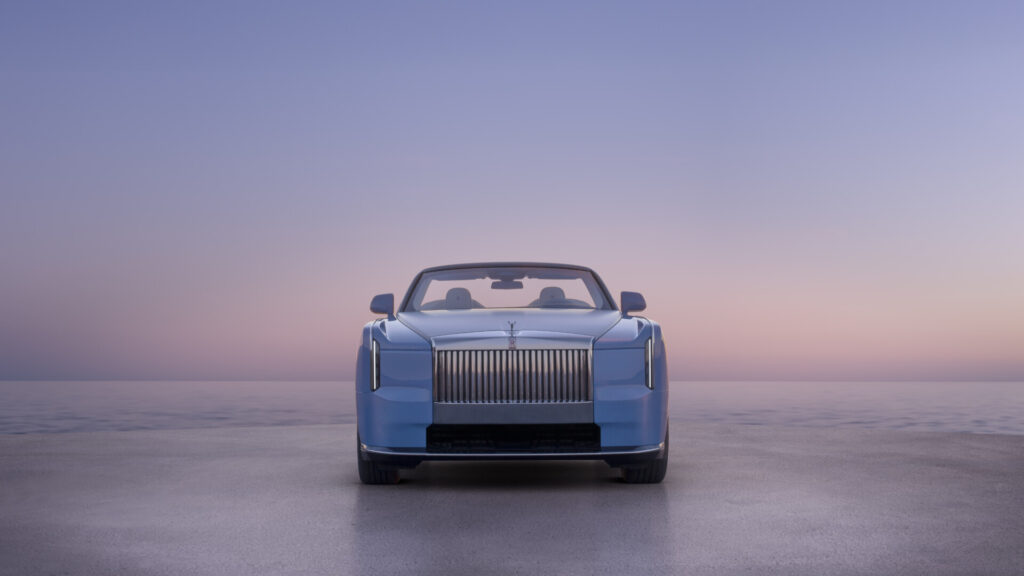
At 5.76 metres, Project Nightingale is almost exactly as long as Phantom, the marque’s flagship saloon, and yet every inch of it serves a two-seat convertible. Going electric changes the front completely, and for the better. There’s no engine to cool, so no need for big intakes, which lets the designers lay out huge, unbroken sweeps of metal between the wings and the grille.
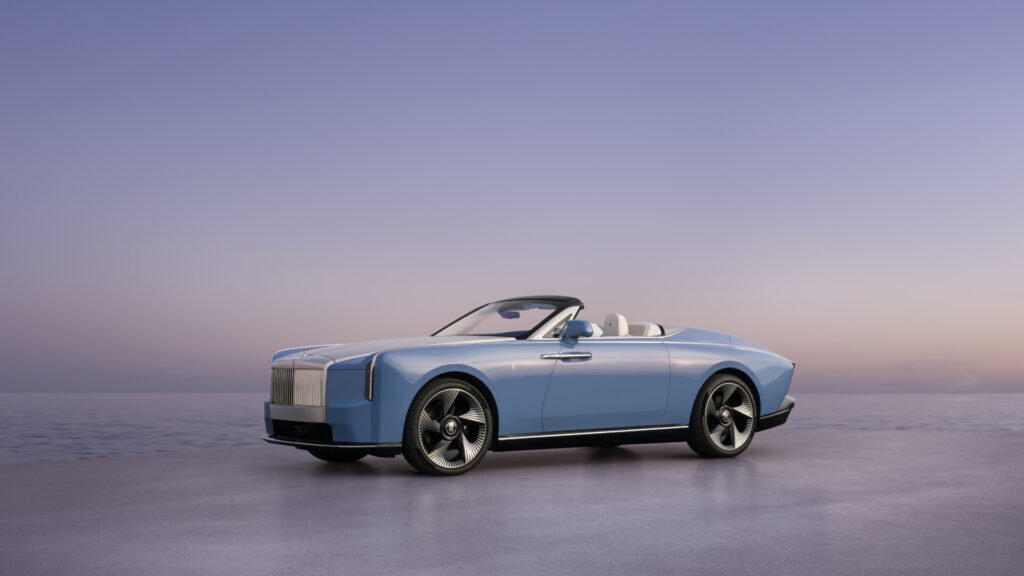
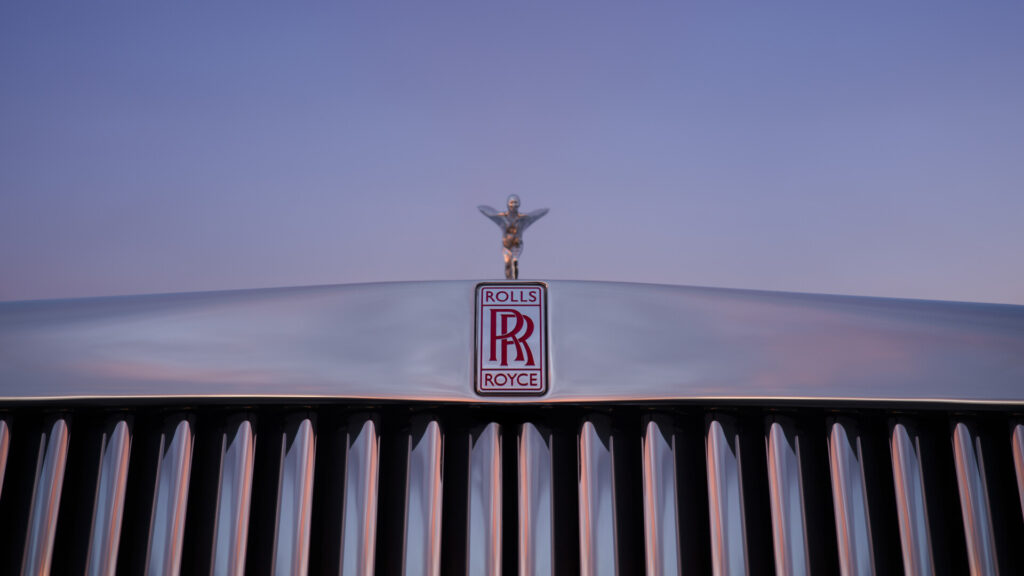
The grille itself is a bold new take on one of the best-known shapes in motoring, and it’s a real beauty. The surround is close to a metre wide and looks carved from a single block of stainless steel, with 24 vanes set deep inside. The Spirit of Ecstasy sits on top in a little recess, her lines trailing back into the bonnet as if she’s slipping through water and the metal is parting gently around her.
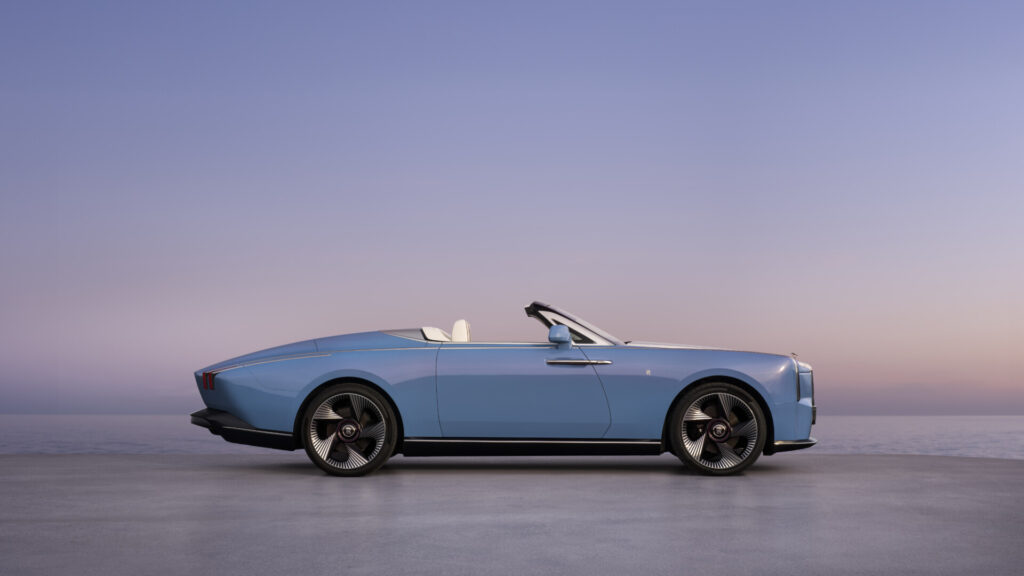
Look at the car side-on and the torpedo shape really comes alive, a generous bonnet running into a steeply raked windscreen and a snug cabin set low in the body. One hull line, taken from the seam that splits a yacht’s hull from its superstructure, runs the whole way without a break. And the wheels are a proper highlight. At 24 inches they’re the biggest ever put on a Rolls-Royce, with a pattern based on a yacht’s propellers seen from under the waterline, so they look like they’re spinning even when the car is parked.
“For me, this landmark motor car feels both inevitable and completely unexpected, and it will shape everything that follows.” Domagoj Dukec, Director of Design, Rolls-Royce
Tail of intent
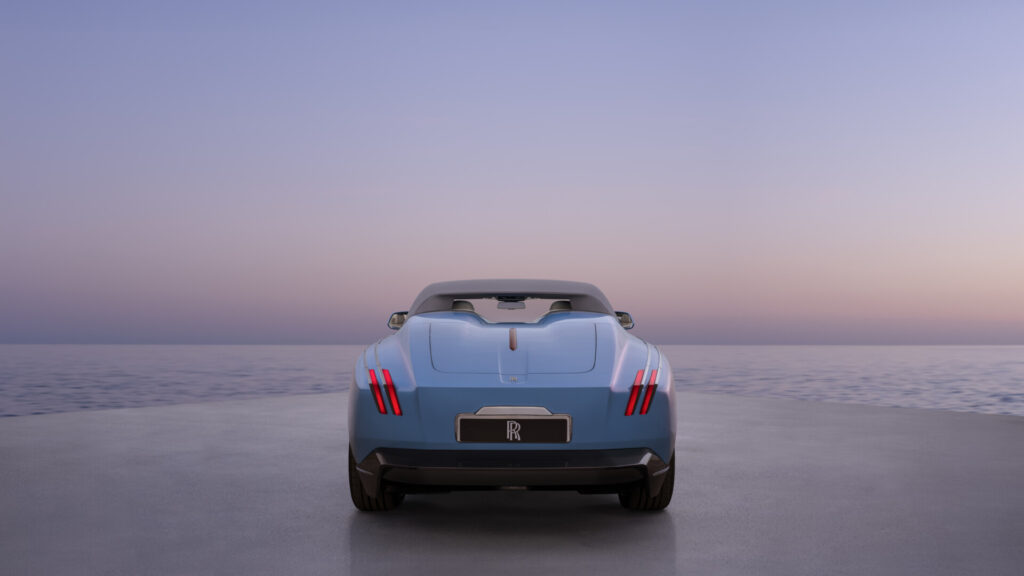
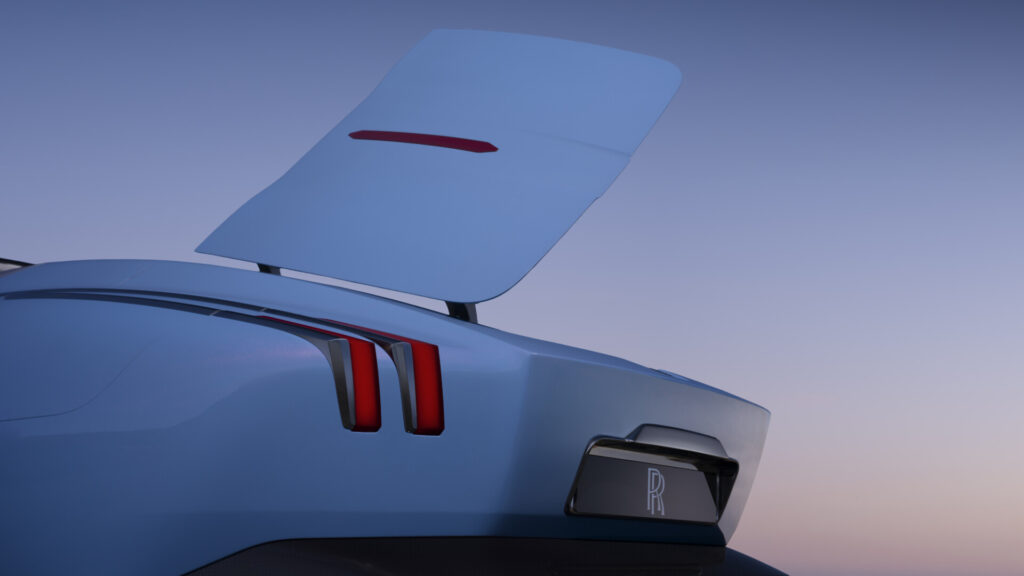
The back is where the drama really turns up. The bodywork swells around the rear arches for a planted, muscular stance, while the deck on top stays flat, broken only by two slim lamp clusters that fall from the top surface to the bottom at almost a perfect right angle. Then there’s the Piano Boot, which opens sideways on a cantilever and turns loading a few bags into a proper little event.
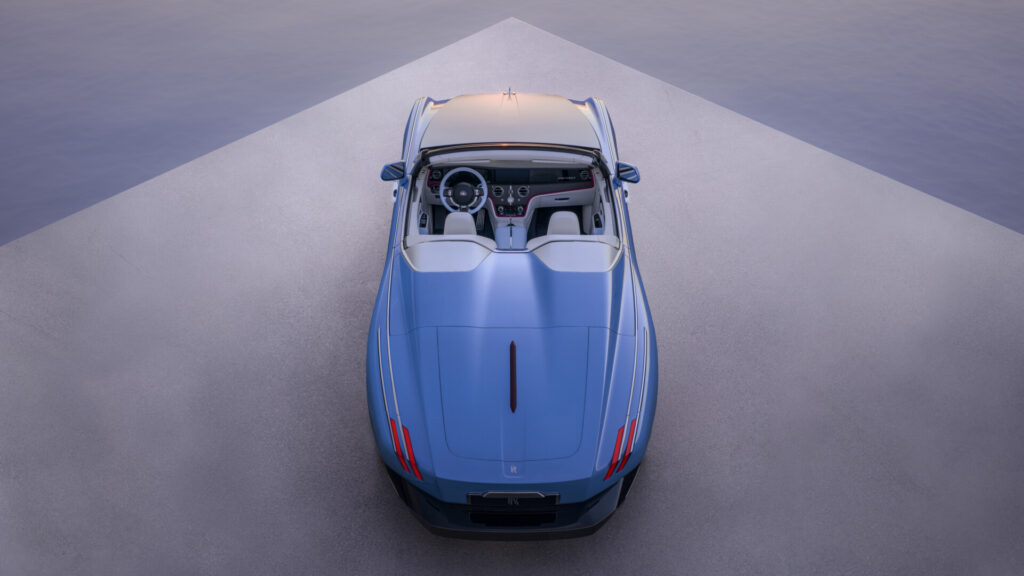
One brake lamp runs the length of the centreline, a cheeky nod to the speed stripes of old Streamline Moderne cars. Just under it, the number plate surround is set in with the neatness of a watch bezel. Lower down sits the Aero Afterdeck, a carbon fibre diffuser that only works because an electric car has no exhaust to route, and it keeps everything steady at speed without a spoiler barging in on that gorgeous line.
Sound and silence
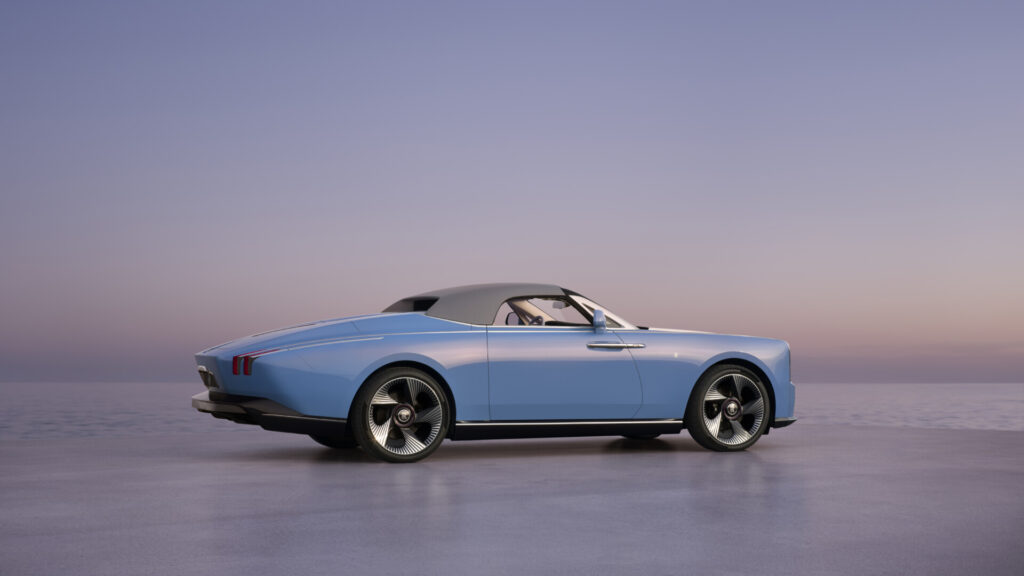
Drop the roof and Project Nightingale becomes effortlessly cool convertible, put it up and the car suddenly looks every inch a coupé. Woven into the fabric is a sound-deadening material made from cashmere, ordinary fabric and high-performance composites, and the electric drivetrain barely makes a peep of its own.
On an early drive the designers could hear birdsong with unusual clarity, so, as a nod to the car’s name, they studied recordings of nightingales and traced the patterns the song makes on a soundwave.
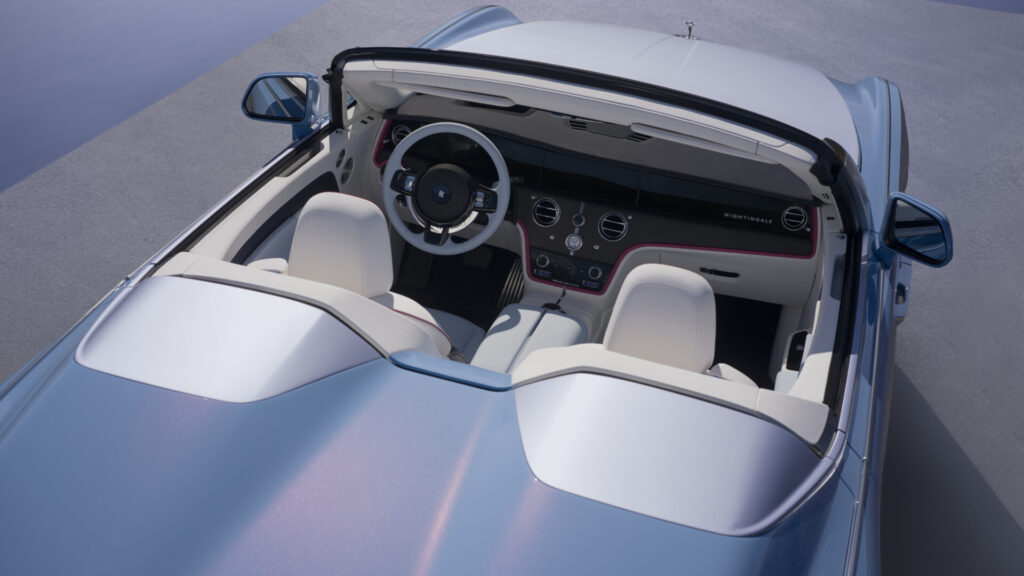
The Starlight Breeze suite, a scattering of 10,500 tiny stars in three sizes that wraps around driver and passenger and follows the very soundwave shapes the team studied. It sits inside a sculpted surround called the Horseshoe, which rises behind the seats like a protective arm around the pair. Leather laid over the doors and console looks like a beautifully made saddle, following a line that runs from the bonnet, through the cabin, all the way to the brake light at the tail.
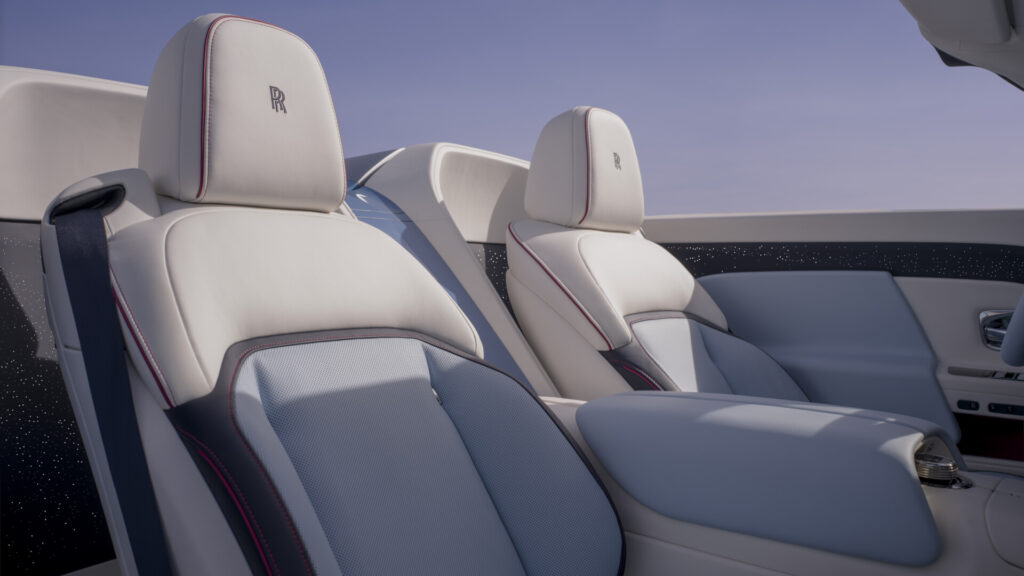
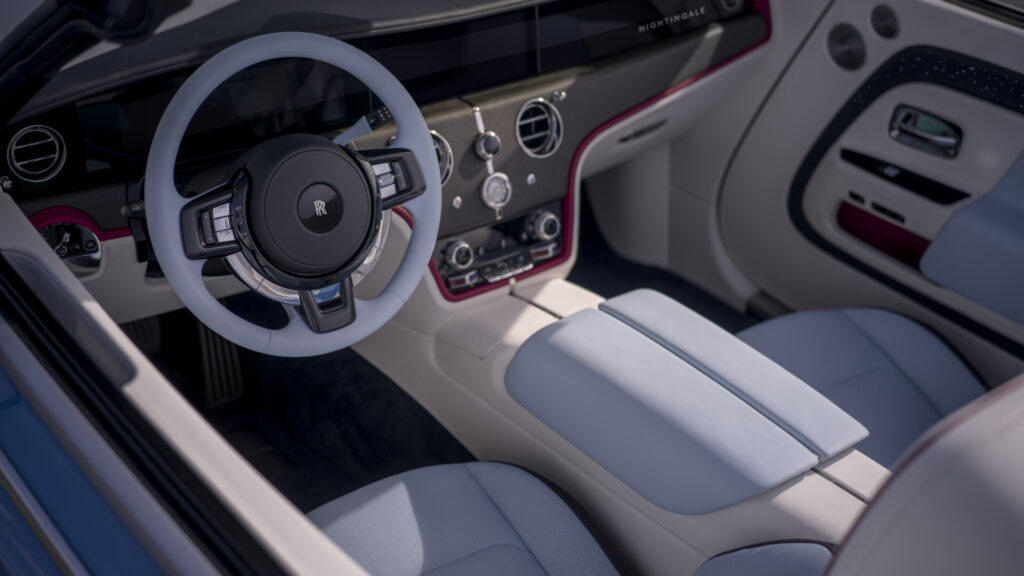
Open the coach door and the armrest glides back to show off the Spirit of Ecstasy controller, finished with a stainless-steel collar cut with four grooves like fine jewellery. Restraint is very much the theme, and the marque has kept the rotary controls down to just five. Cupholders machined from solid billet and a hidden shelf for hand luggage round off a cabin built for long, easy journeys. Bliss.
Colour and coast
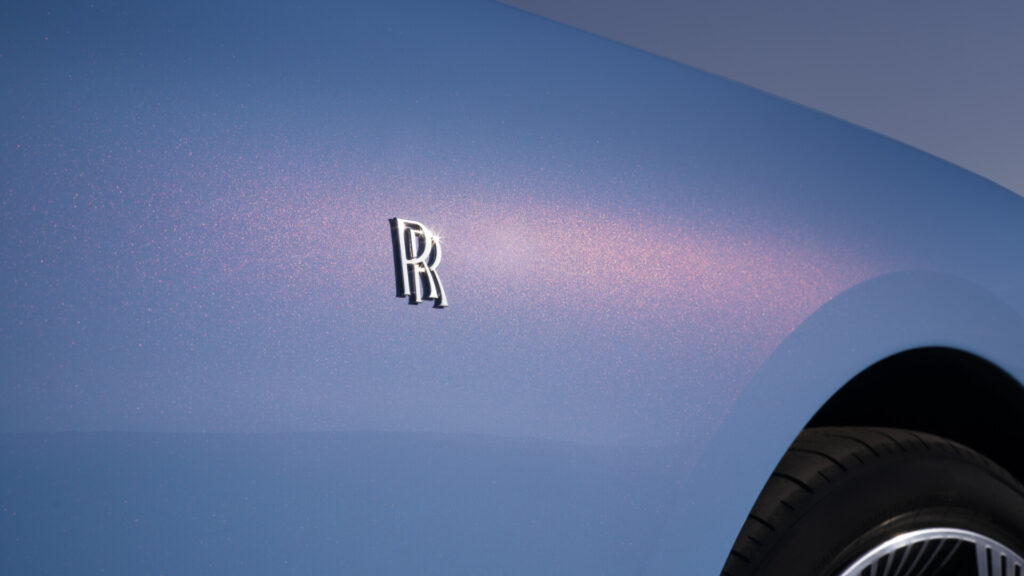
Project Nightingale’s paint takes a cue from the experimental 17EX of 1928, read afresh instead of copied, a pale solid blue called Côte d’Azur Blue laced with red flakes that catch the changing light. The flakes are a neat wink to the red badges on the original cars, and a silver soft top finishes the exterior.
Inside, the cabin brings the coast along for the ride. Seats in soft pastel Charles Blue sit next to a warm Grace White, deep navy inserts add depth, and little flashes of Peony Pink pop up on the fascia and headrests, borrowed from the wild flowers of the Riviera. Openpore Blackwood is laid in a ‘V’ that opens upwards, gently lifting the eye to the sky.
Power comes entirely from the marque’s electric drivetrain, that silent, effortless shove lifts every quality that’s made a Rolls-Royce a Rolls-Royce for more than a century, and it opens up design tricks a combustion engine would simply rule out. More engineering detail will follow as the car works through its global testing programme, which gets going this summer.
Project Nightingale sets a wonderful tone for everything the Coachbuild Collection wants to become. Leaning on Henry Royce’s love of a good experiment and all the swagger of the Art Deco years, it looks back without a shred of nostalgia. The 100 people lucky enough to get the nod will take delivery in 2028, and the rest of us will just have to enjoy the view.