



Nine Bugattis. One engine. One room, and it has never happened before. The Louwman Museum has gathered nine W16 cars in its Great Hall for Beasts of Bugatti, and this selection has not been exhibited together anywhere. Outputs run to 1,600 hp and top speeds to 490 km/h, with the earliest test cars a few paces from the record breakers they led to.
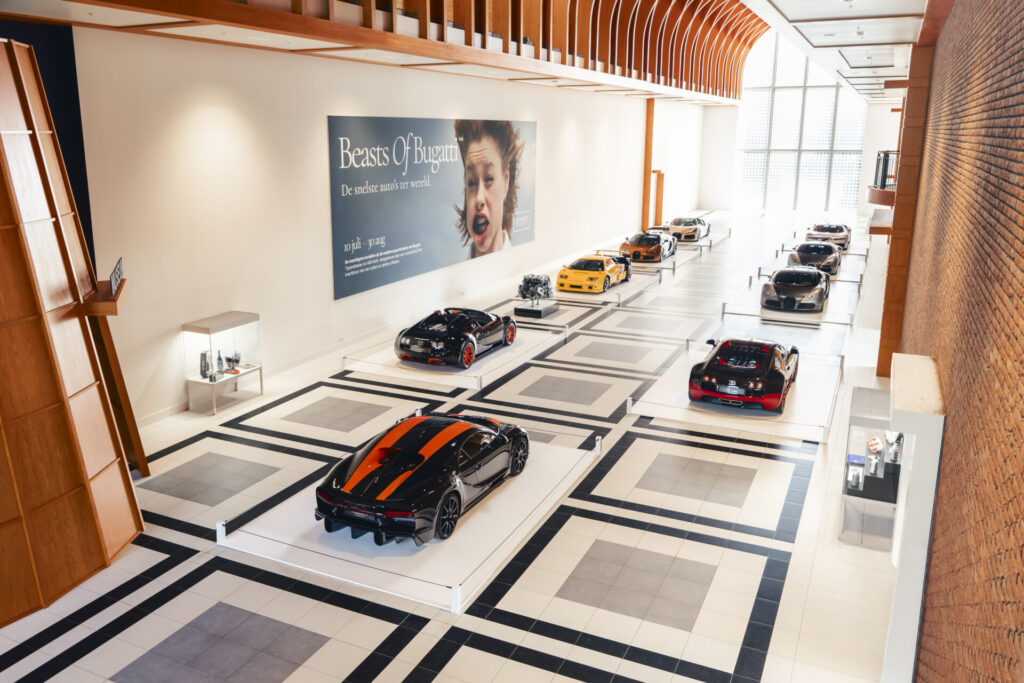
Every one of them carries the same eight-litre engine, sixteen cylinders arranged in a W with four turbochargers feeding them, and the whole thing is roughly the length of a picnic table. Walking the hall is the closest thing to reading the W16 story in order, and the show closes on 30 August 2026.
Veyron Prototype 1
The production car appeared in 2005 named after Pierre Veyron, a test and racing driver from the 1930s and 40s. It was the first production car with 1001 hp, the first with a top speed of more than 400 km/h, and the first to cost more than one million euros before taxes. The result was a new word, the hypercar.
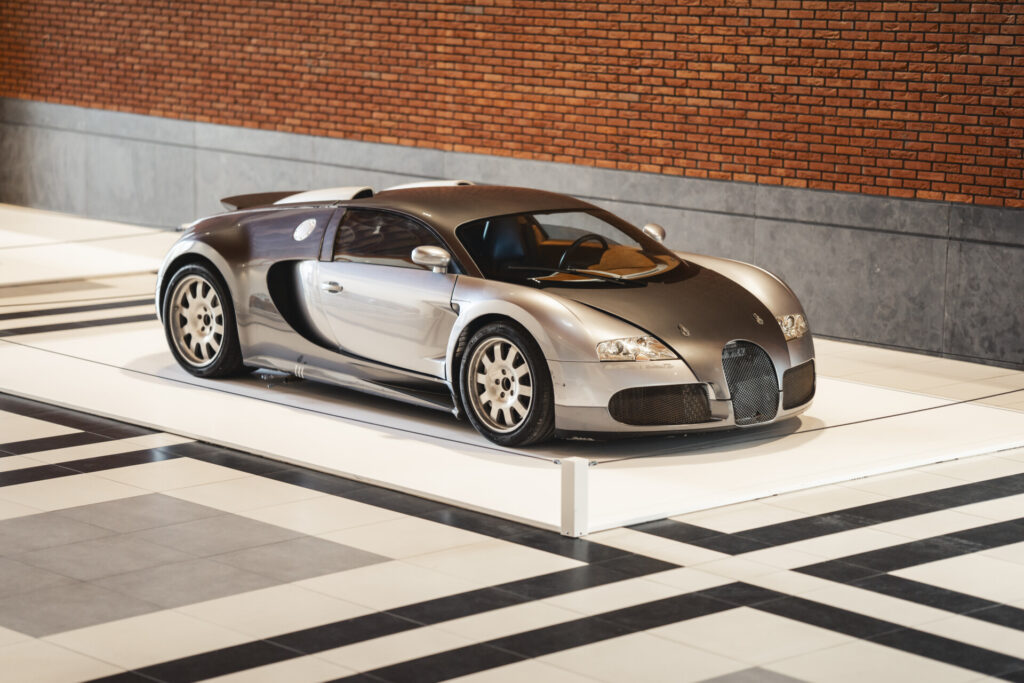
The engineering behind the headline figures is the fun part. Ten radiators keep the engine and gearbox alive, a seven-speed dual-clutch gearbox handles 1250 Nm, and 100 km/h arrives in around two and a half seconds. Reaching the full 407 km/h needs a second key, which drops the car closer to the road and closes the diffuser flaps.

Getting from that to a finished machine took patience. Cooling problems and test results that didn’t quite hit the mark sent the design department back to refine the bodywork, test sessions with a modified prototype began two years later, and it took another two years before production started in 2005.
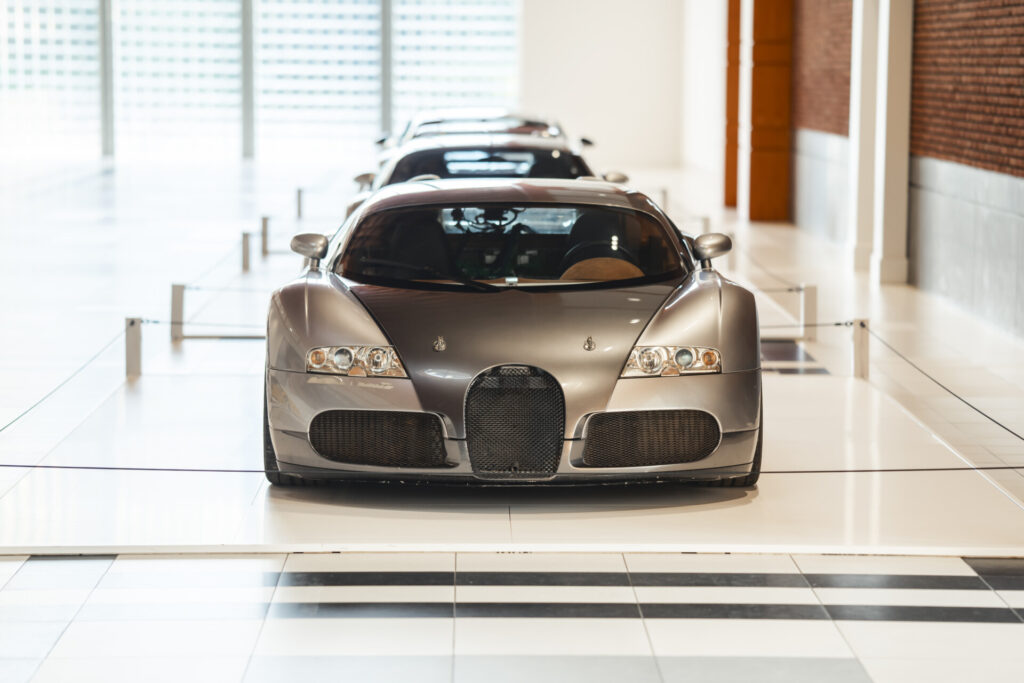
Veyron 16.4
The production car appeared in 2005 named after Pierre Veyron, a test and racing driver from the 1930s and 40s. It was the first production car with 1001 hp, the first with a top speed of more than 400 km/h, and the first to cost more than one million euros before taxes. The result was a new word, the hypercar.
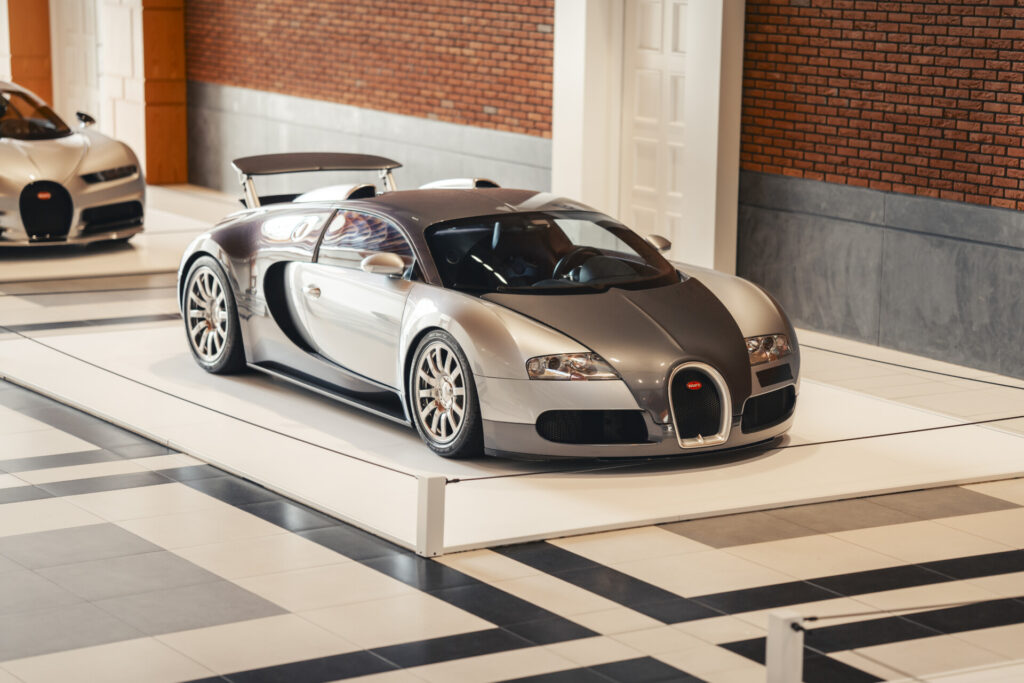
At the time, the development programme had cost so much, so the company decided only a small number would be built to limit further expense. Three hundred cars was the final amount, which was a small run for a machine that seemed to outclass everything around it.
Veyron Super Sport
The original target had been 1000 hp, and the first dyno sessions squeezed more than 1200 hp out of the 8.0 litre W16. The figure was reduced to 1001 hp for the Veyron 16.4, with the rest kept in reserve. The Super Sport of 2010 released it.
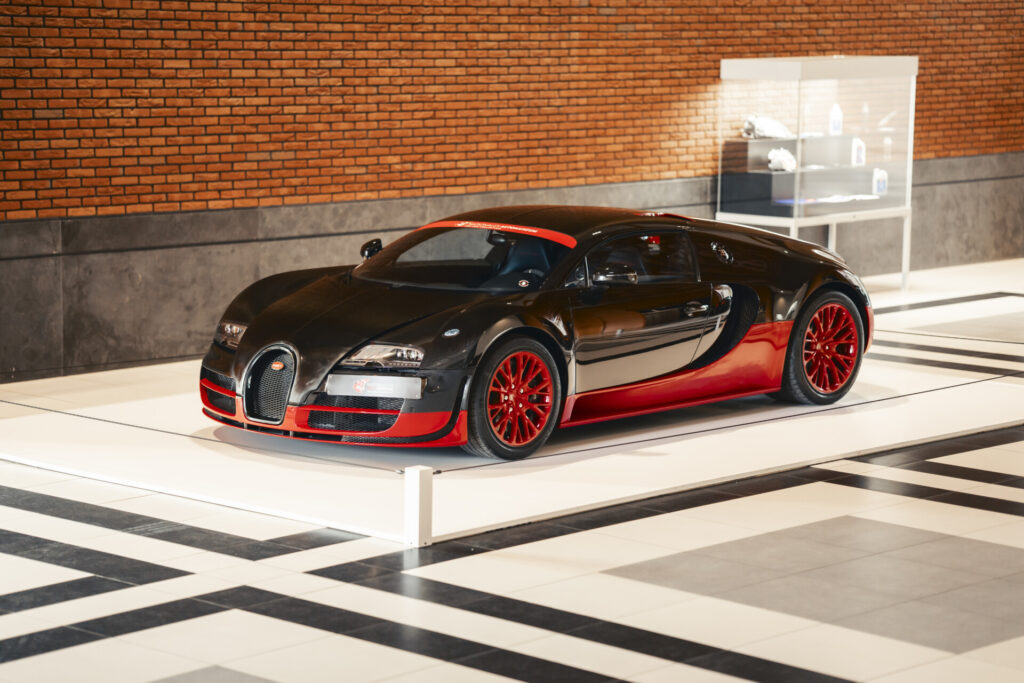
Along with the extra power came 1500 Nm, a carbon fibre body, a stiffer chassis and a pair of NACA ducts in the roof in place of the earlier air scoops. Speed tests recorded 427.933 km/h one way and 434.211 km/h in the opposite direction, an average of 431.072 km/h and an official Guinness World Record.
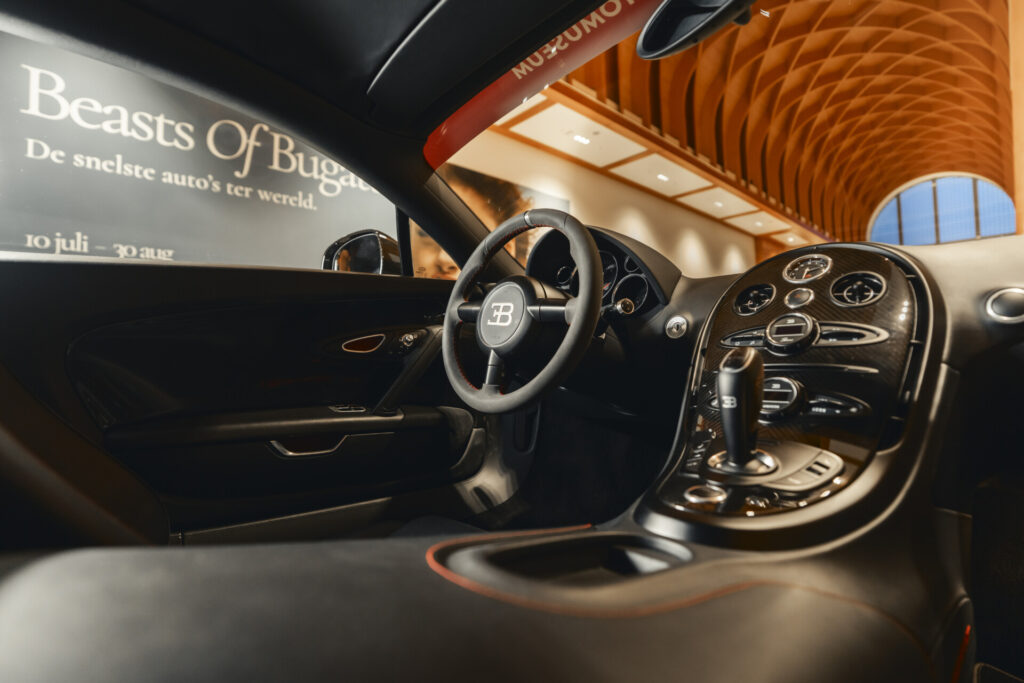
The run took place on Volkswagen’s Ehra-Lessien test track, which has a straight almost nine kilometres long, and Pierre-Henri Raphanel was the driver. Road cars got the larger turbos as well, with the top speed held to 415 km/h to protect the tyres.
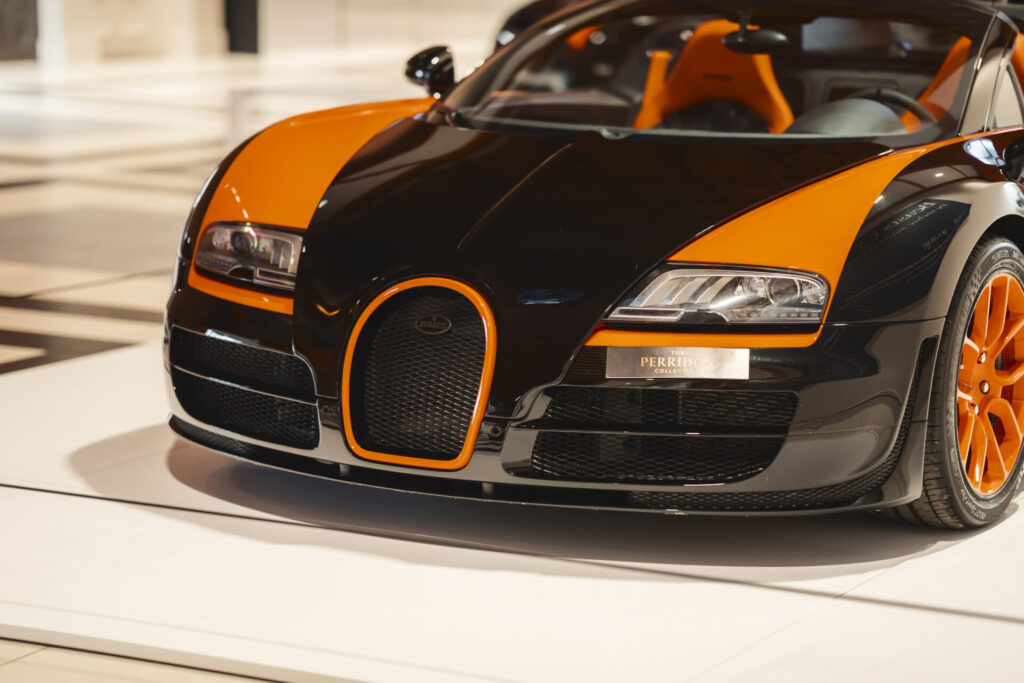
Veyron Grand Sport Vitesse WRC
The Grand Sport was already the fastest open car in the world with a limited top speed of 375 km/h, and the engineers set out to break 400. The 1200 hp version of the W16 went into the rear, with further technical changes to suit, and official measurement returned 408.84 km/h from an open two-seater.
That figure was set at Ehra-Lessien in April 2013 with Chinese racing driver Anthony Liu at the wheel, roof panel removed, which takes a certain amount of nerve. The more powerful car reached customers as the Vitesse, sharing the 1500 Nm of the Super Sport.
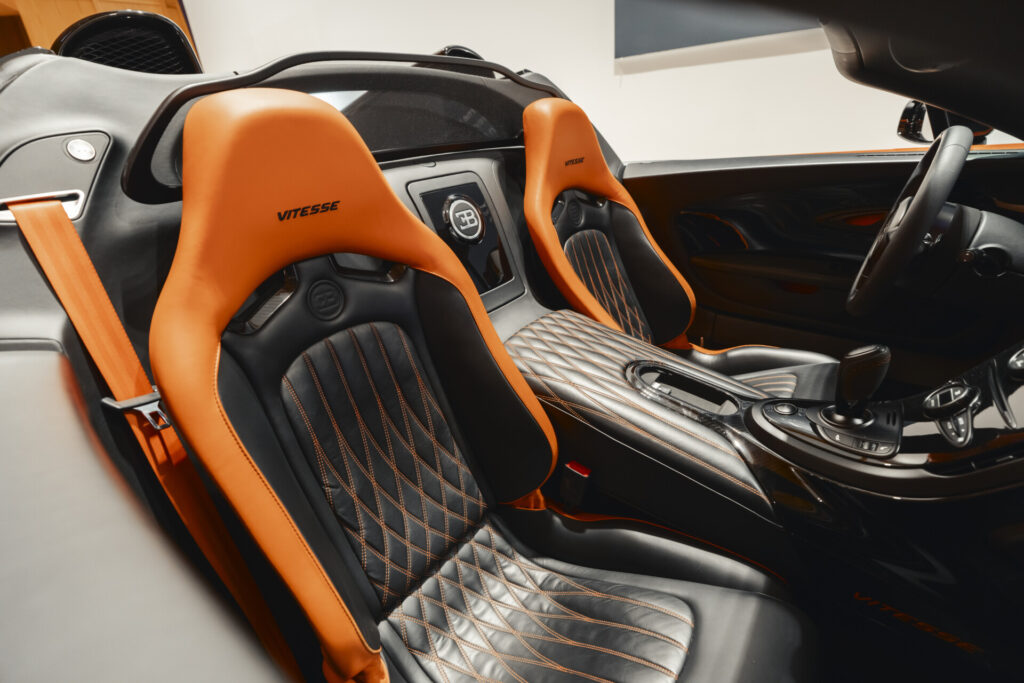
Eight were then built as the World Record Car edition, wearing the colour scheme of the record car and rated at 410 km/h, which is higher again than the run itself. One of the eight is in the hall.
Veyron Grand Sport Bernar Venet
The Veyron had been planned as a coupe and nothing else, until the design department started looking at open versions. The Barchetta, with no roof and a small windscreen, stayed a paper dream, while the version with a removable roof panel reached production. Planned as 50 cars, it ran to 150 to recoup development costs.
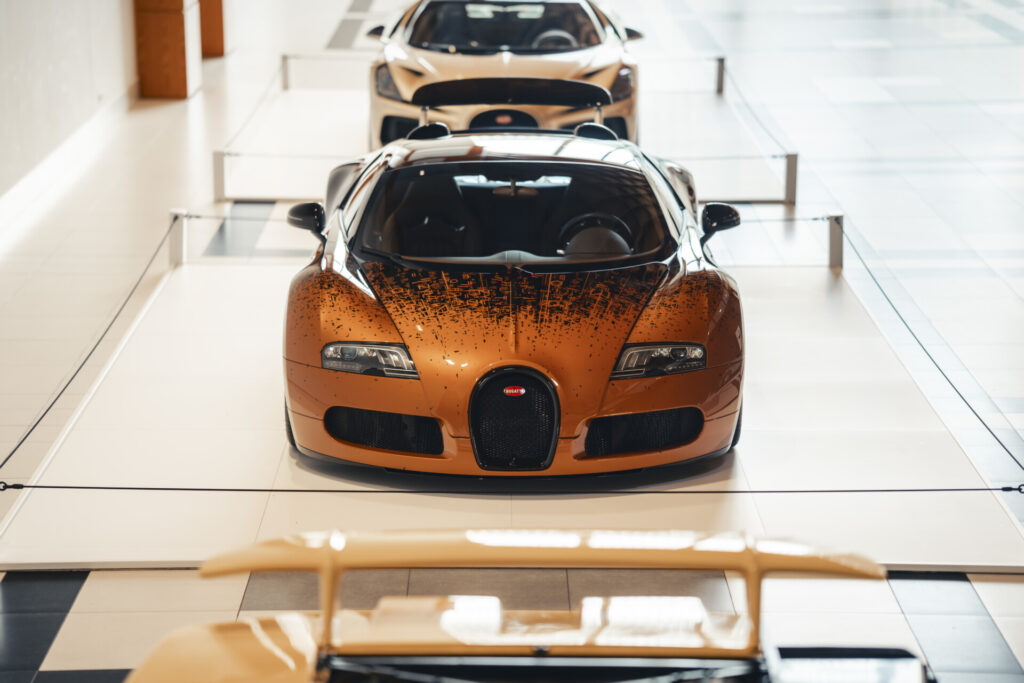
Owners leave the central roof panel at home, and in the event rain arrives, there is an umbrella that connects to the window frame and roll bars. Fitting it caps the car at 160 km/h.
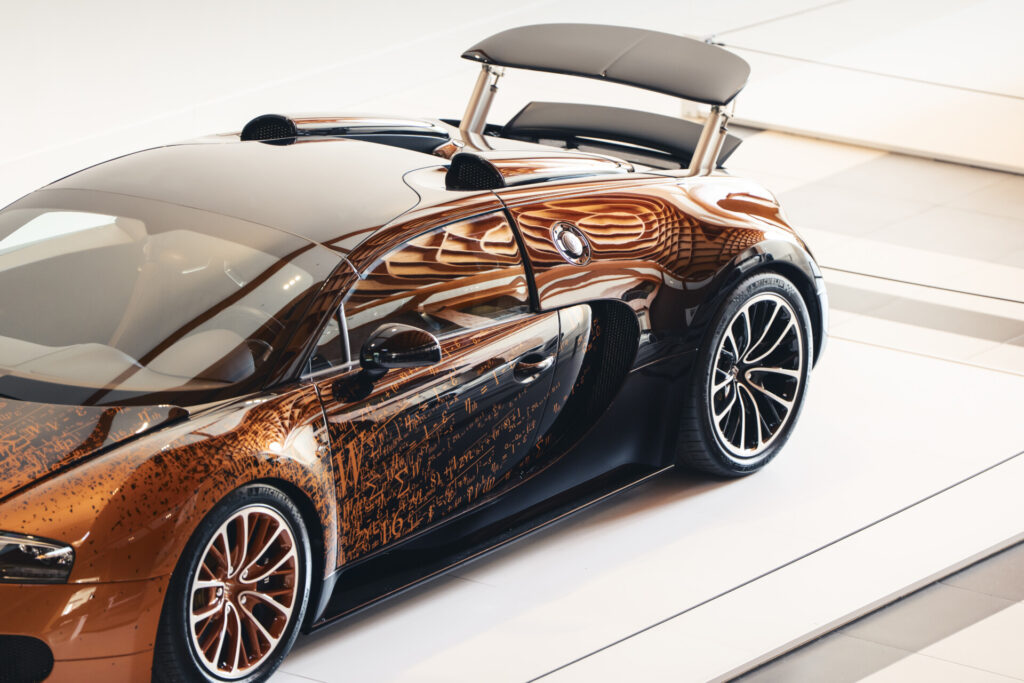
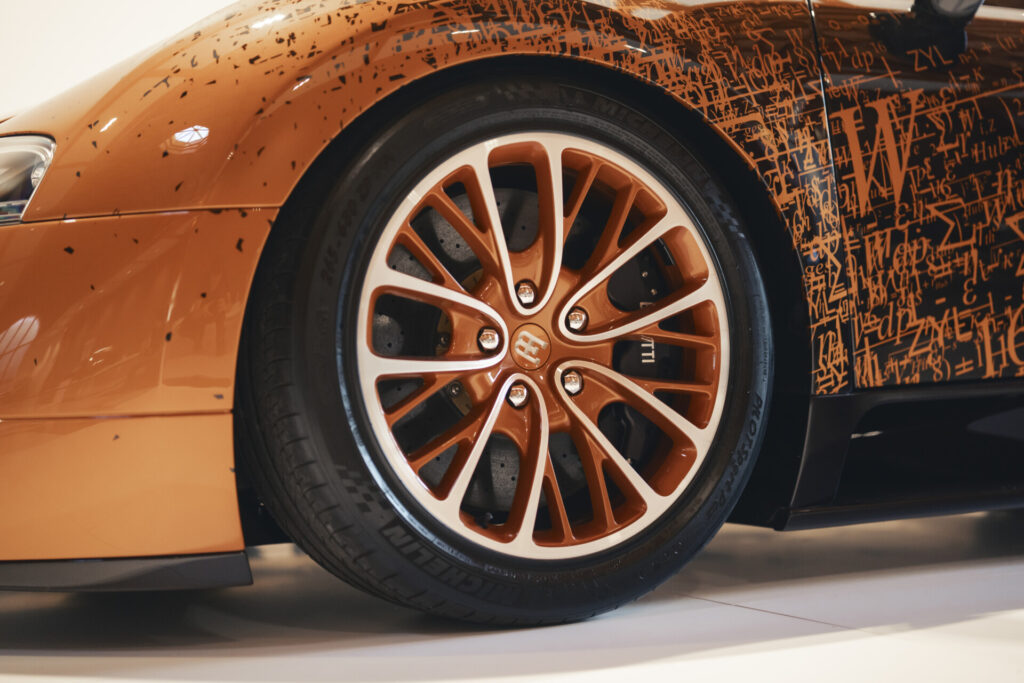
The most expensive of them left the Atelier at Molsheim as the Bernar Venet, with the French artist putting his passion for mathematical equations and scientific treatises into three-dimensional form on the bodywork. Venet had spent decades working with arcs, angles and lines in sculpture before he got hold of a Grand Sport, and the equations across the orange paint came from the engineers themselves.
Chiron
The successor to the Veyron took its name from a former Bugatti racing driver, as its predecessor had. A luxurious sports saloon had been the next plan, but a design error ended the project and another hypercar took its place.
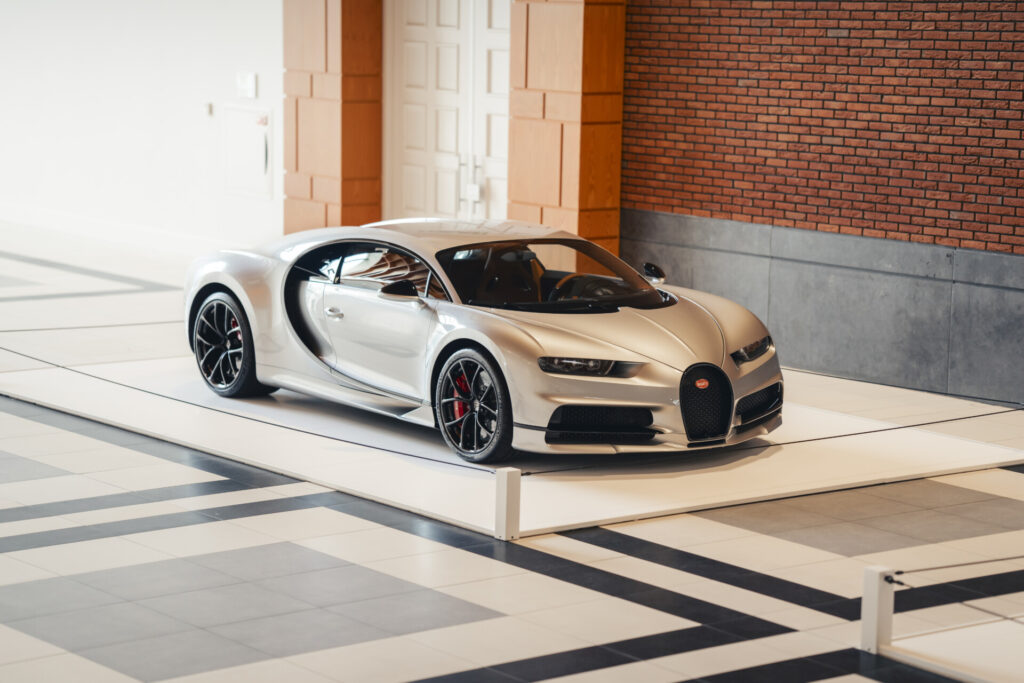
Four years of development produced a completely new car, with four driven wheels handling 1500 hp from the 8.0 litre W16 and its four turbochargers, now working in a two-stage sequential arrangement so the smaller pair do the early work. Torque reached 1600 Nm, held from 2,000 rpm upwards, and 100 km/h took 2.4 seconds.
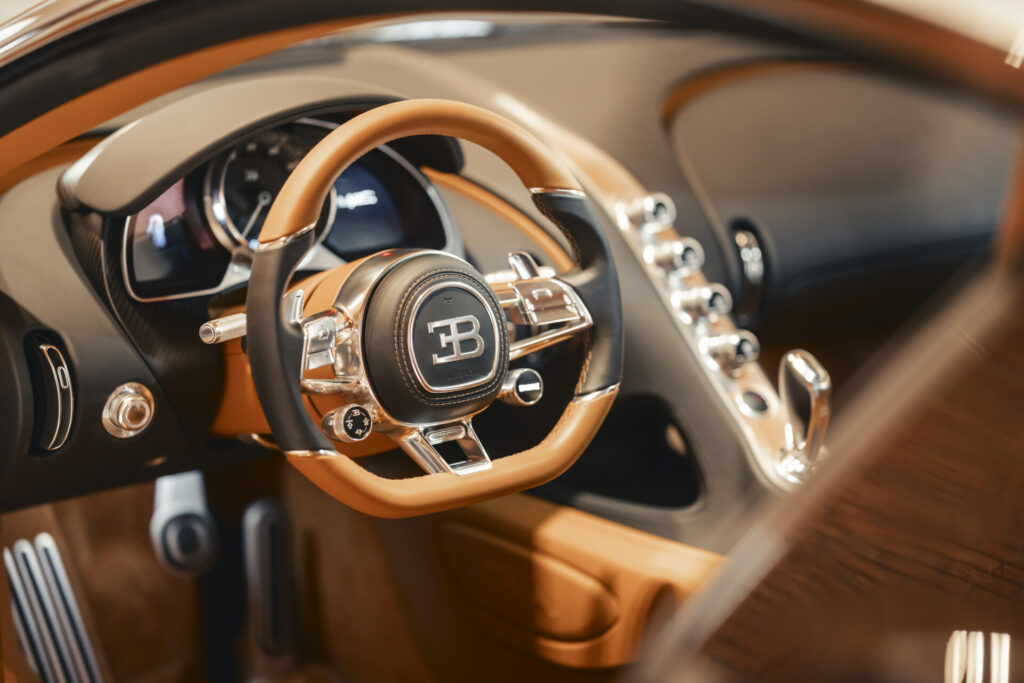
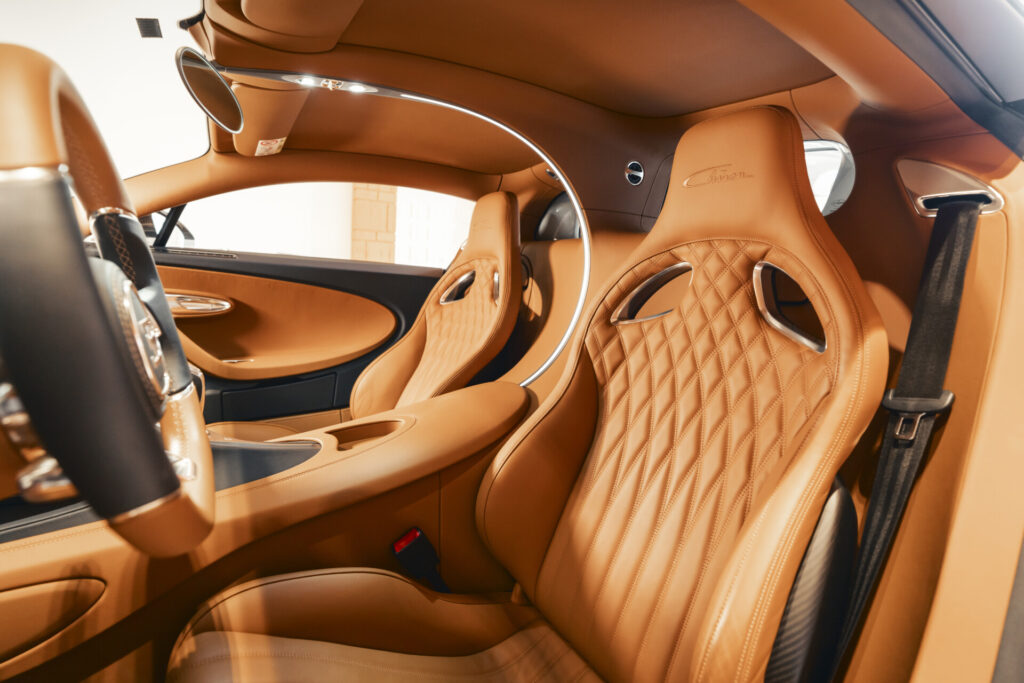
Flat out the engine swallows 60,000 litres of air a minute and the cooling system pushes 800 litres of water in the same time. Five hundred were built, coupe only, and one of them later covered 0 to 400 km/h and back to a stop in 41.96 seconds with Juan Pablo Montoya driving.
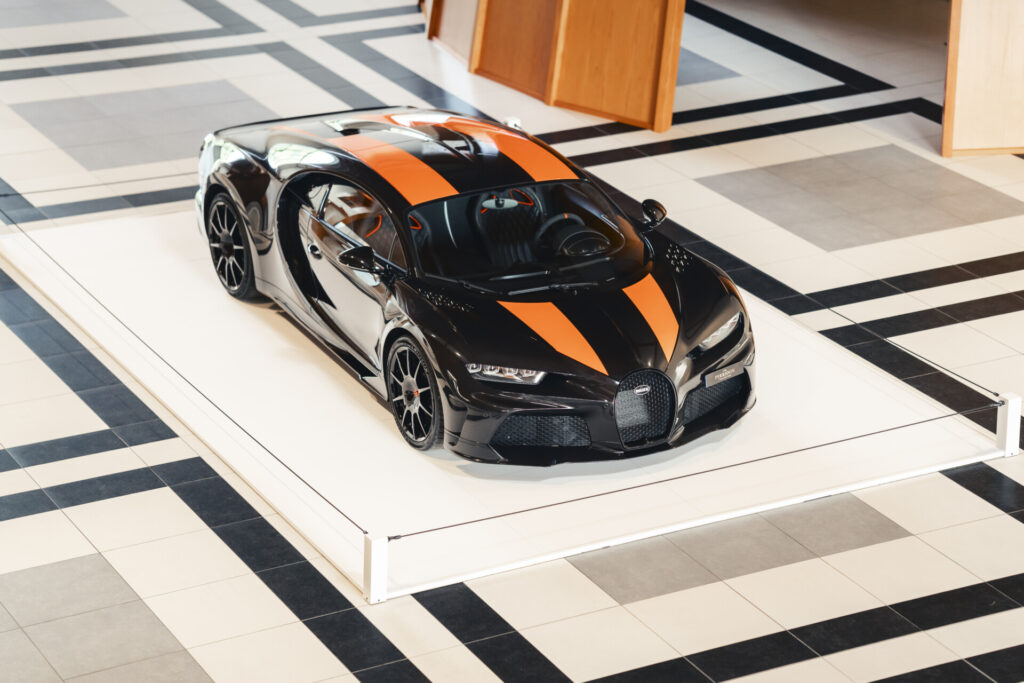
Chiron Super Sport 300+
The outright speed record had gone elsewhere, which was reason enough for a new record run. Andy Wallace clocked 490.4837 km/h in a modified Chiron at Ehra-Lessien on 2 August 2019, taking a car past 300 miles per hour for the first time.
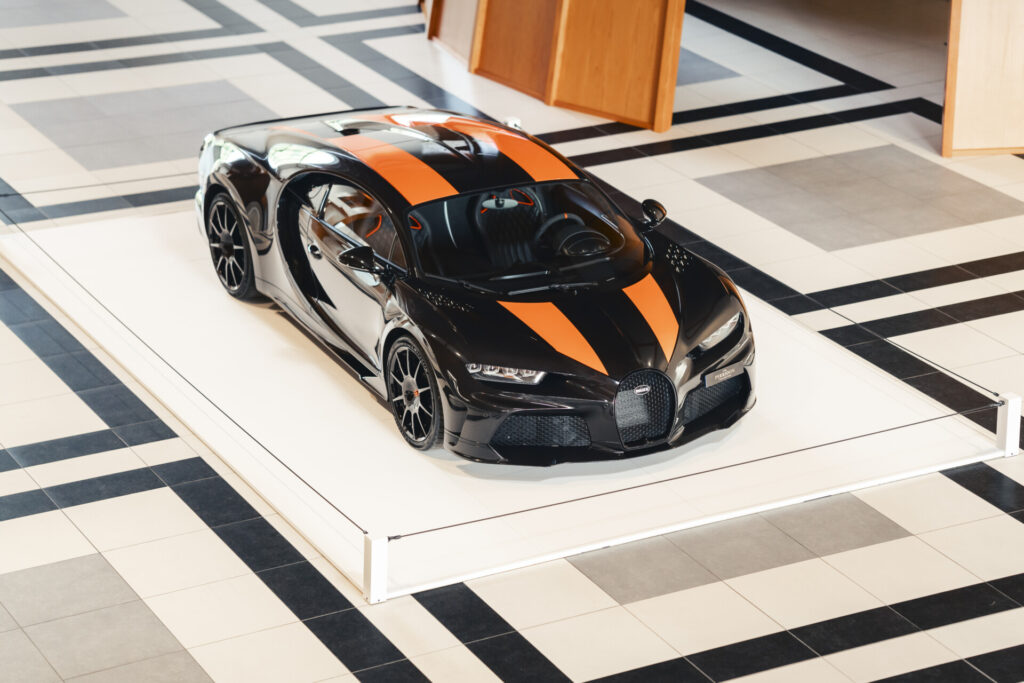
The car had 1,600 hp and tyres tested to 500 km/h, and the bodywork had been stretched at the back to keep the air attached at the point where drag usually wins. That test car formed the basis of the Super Sport 300+, recognisable by a rear section 25 cm longer and the addition of air vents.
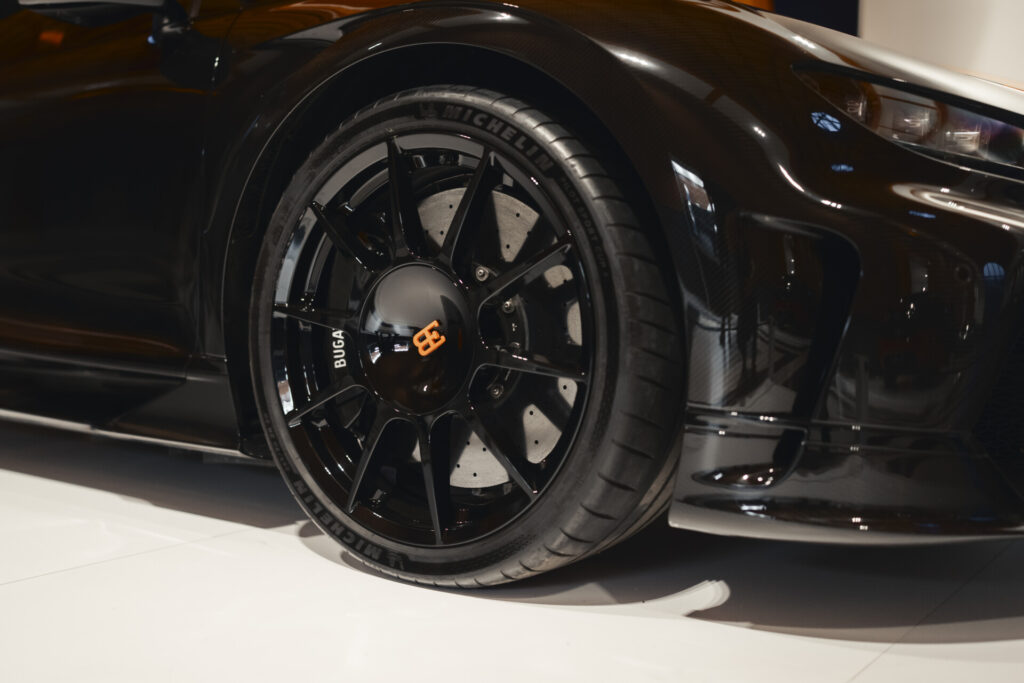
The name refers to the speed achieved in miles per hour, 300 and a bit, which is a rare piece of understatement from Molsheim. Thirty road cars were built, with an electronically limited top speed of 440 km/h.
W16 Mistral
The official line was that an open version of the Chiron was not technically feasible. Left unsaid was that it could be done at a price, and enthusiasts turned out to be willing to pay five million before tax without blinking, so the Mistral was born.
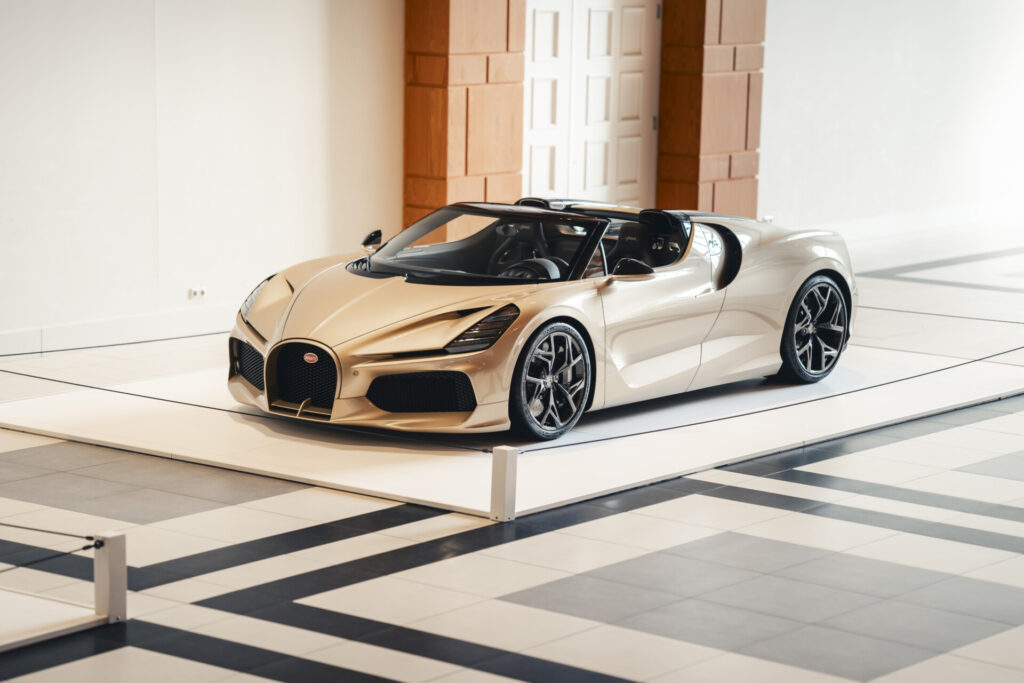
Its removable roof panel fits on top of the car and nowhere else, and the air intakes for the engine sit behind the headrests, so the induction noise arrives at the back of the neck. The X-shaped rear lights and the deep horseshoe grille came with it, and 1,600 hp made it the most powerful roadster the marque had built.
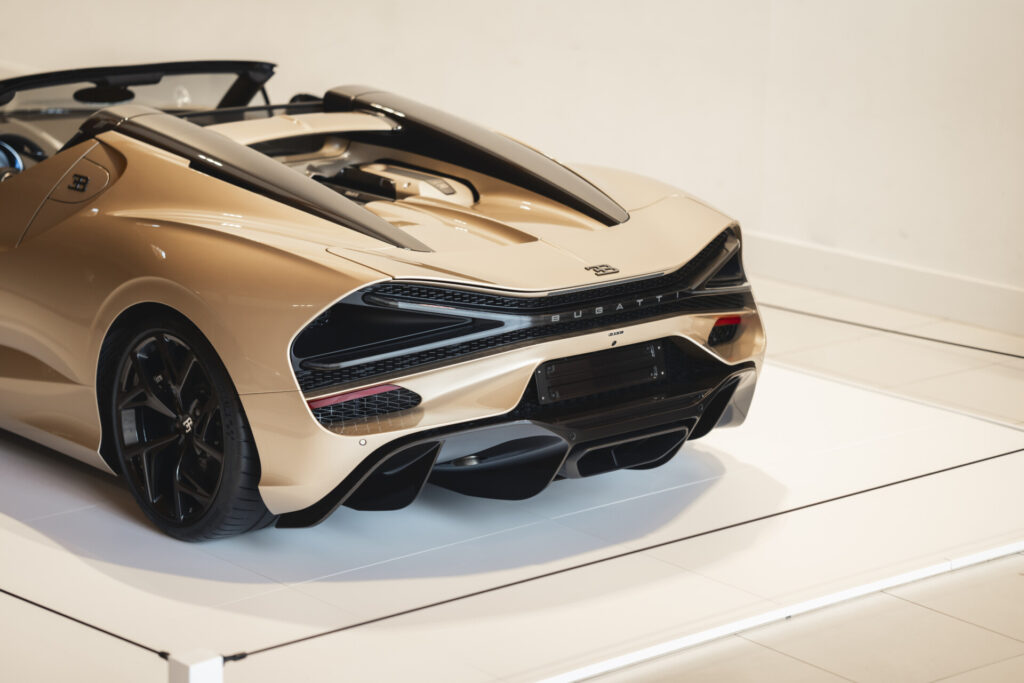
The car arrived only after production of the last Chiron had stopped, and ninety-nine were built. Andy Wallace later took one to 453.91 km/h, the fastest speed recorded by a production roadster. It was supposed to mark the end of the W16, and two one-offs followed on the same basis, the Brouillard and the FKP Hommage.
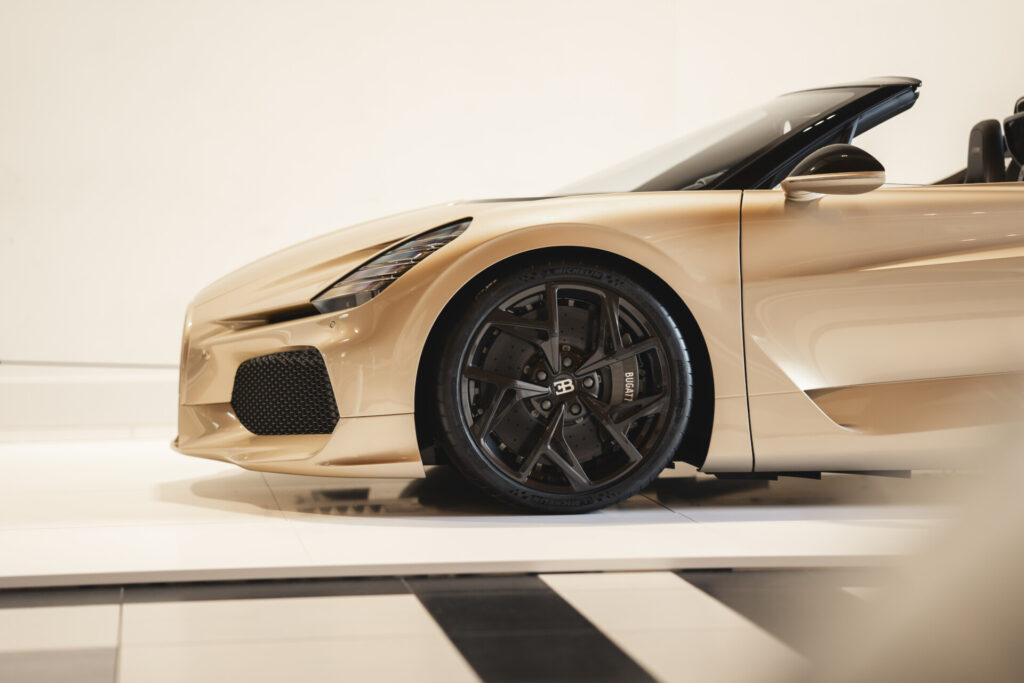
A Spectacular Showcase
The nine share the building with one of the most remarkable historic Bugatti collections in the world, which is on permanent display.
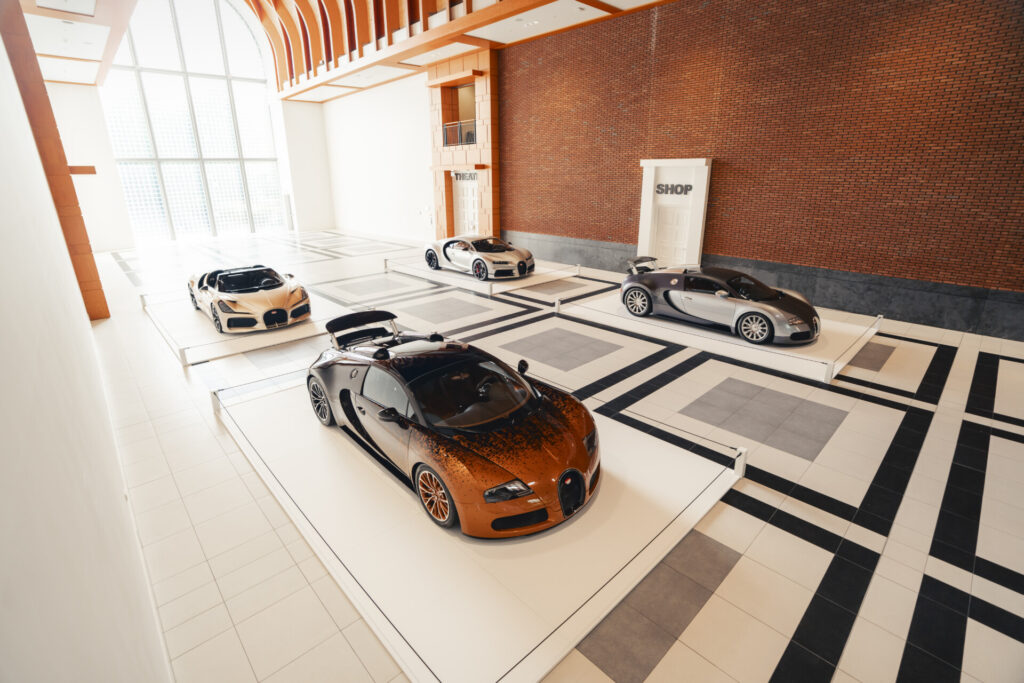
The museum is open seven days a week from 10:00 to 17:00 while the exhibition runs, and a regular admission ticket covers everything with nothing extra to pay. After 30 August 2026 the nine go their separate ways again.