


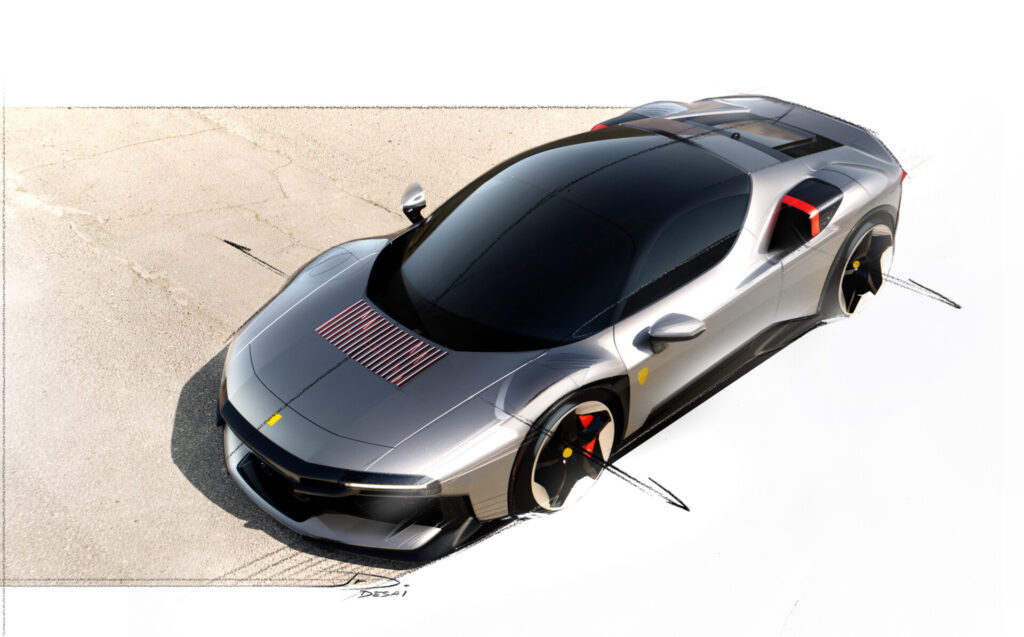
Ferrari has pulled the covers off the CZ26 at Monterey, a one-off built for a single client in the United States and drawn by the Ferrari Design Studio under Flavio Manzoni.
Every bit of the SF90 Stradale has been kept, so there is a twin-turbo V8 backed by three electric motors, 1000 cv all in, 2.5 seconds to 100 km/h and a top speed of 328 km/h.
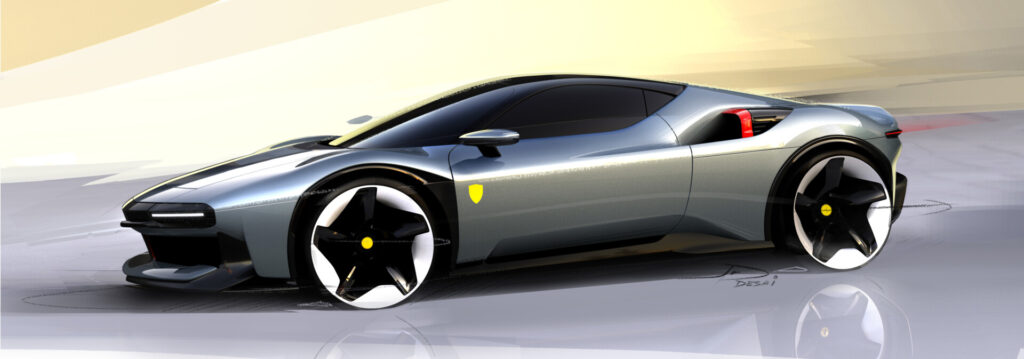
The bodywork is entirely new, the aerodynamic package has been reworked front to back, and the cabin has been rebuilt around materials made specifically for this car. The bodywork is entirely new, the aerodynamic package has been reworked front to back, and the cabin has been rebuilt around materials made specifically for this car.
A Clean Cut
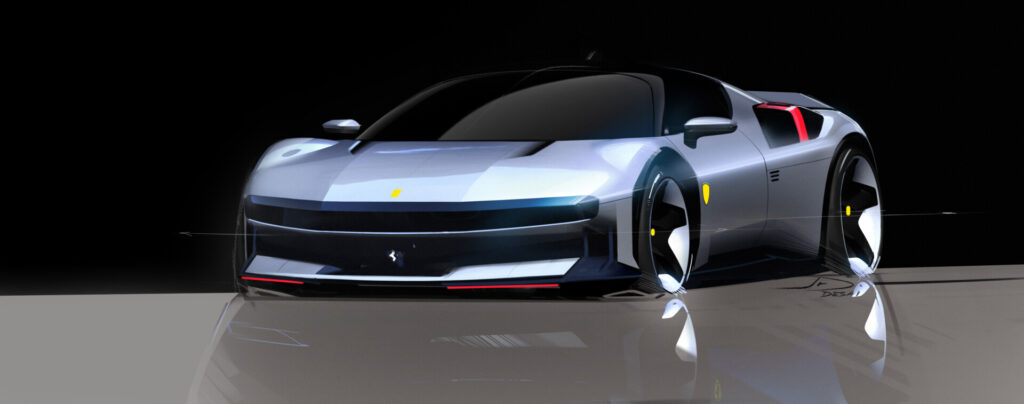
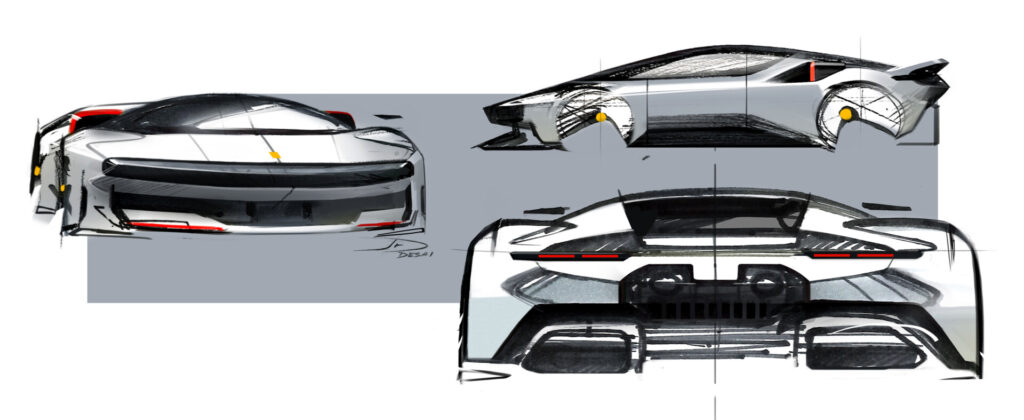
The CZ26 is a two-box car with one long horizontal line running end to end. The centre section is a single smooth block sitting on four wide bulges over the wheels. No bonnet line, no boot line, nothing to break the run from nose to tail.

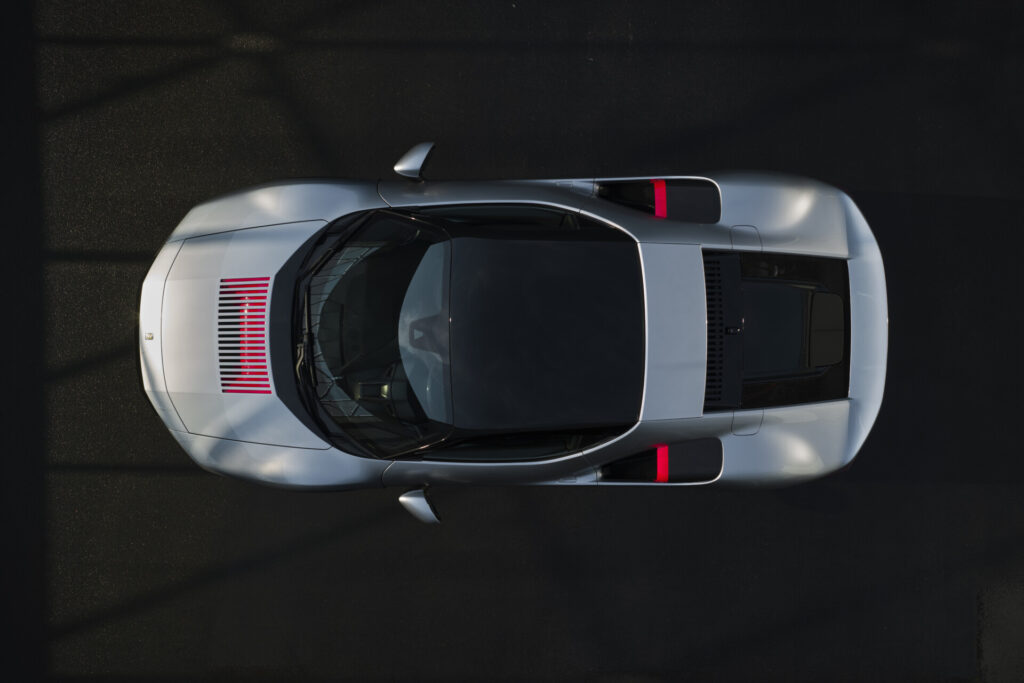
The front is one full-width grille holding ultra-slim hidden lights, brake ducts, sensors and cooling parts. A hard vertical edge runs down the leading edge of the nose. The tail is cut off flat, the rear lights stand clear of the bodywork on short arms, and a wide horizontal diffuser stretches the back of the car sideways.
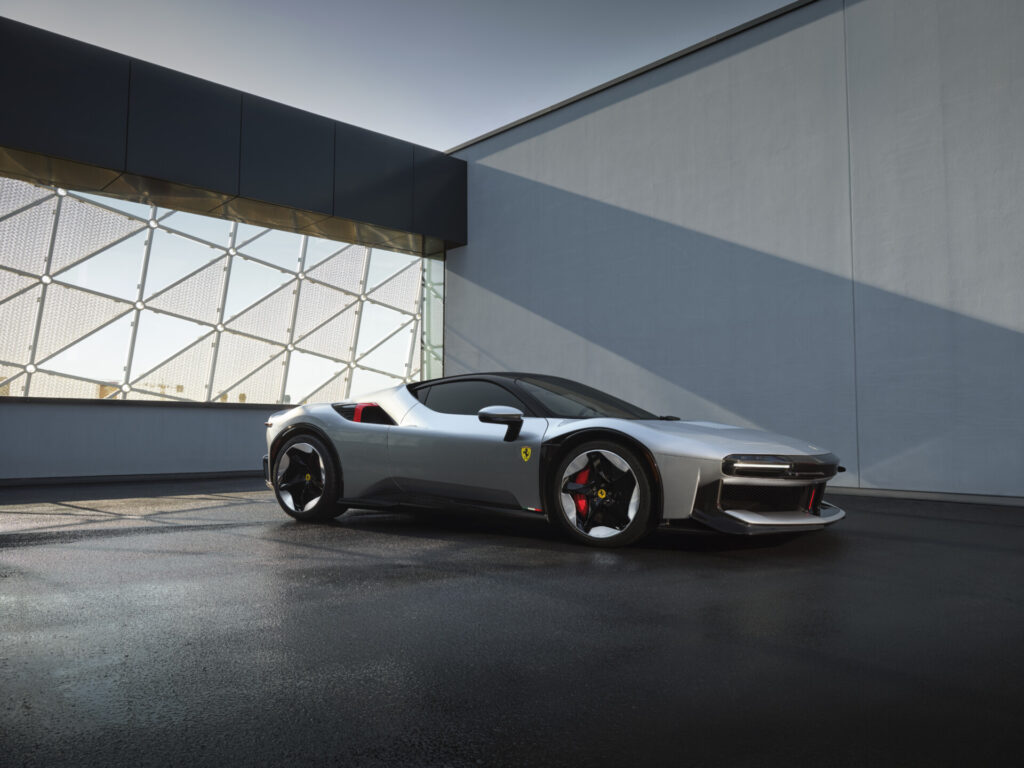
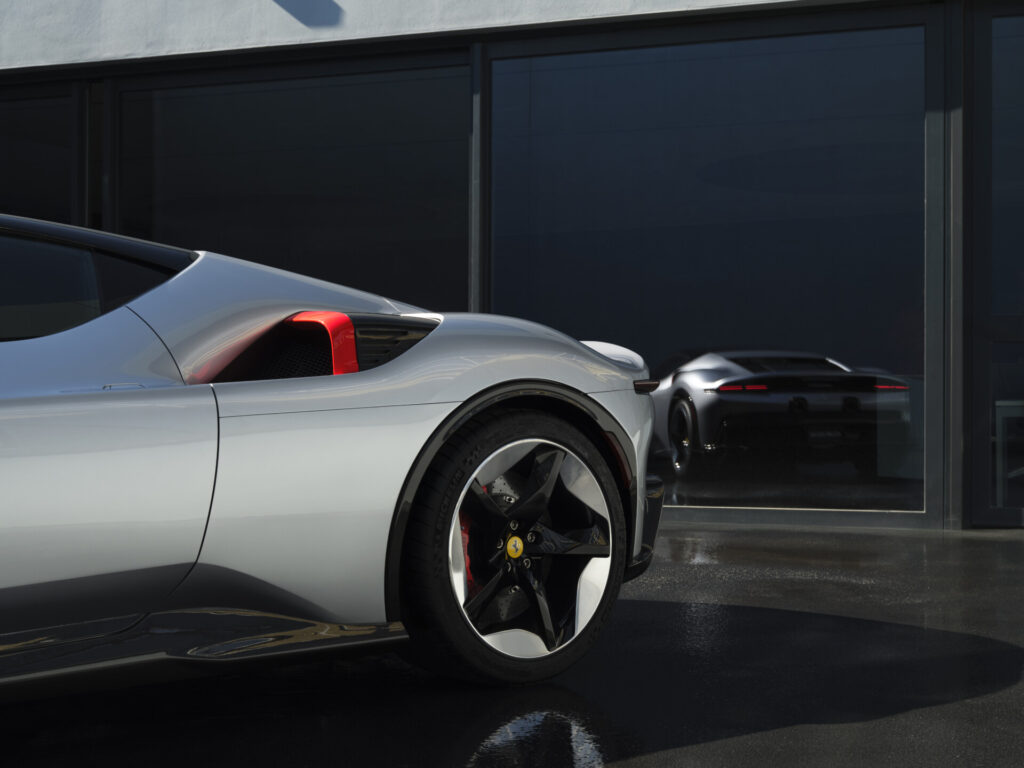
Every detail rises out of the main body surface. The side cooling vents, the nose, the rear diffuser, the light clusters and the carbon-fibre pieces around the wheel arches are all part of the same panel work. Black trim covers the roof and the pillars, dropping the cabin down into the body. The glass area reads as a cockpit set inside the car.
Painted and ducted
The paint is a one-off shade called Argento Veloce, a silver with a wet look that catches every curve and crease in the panels. Rosso Lampante red runs across the technical parts, and pigmented carbon fibre adds another texture again.
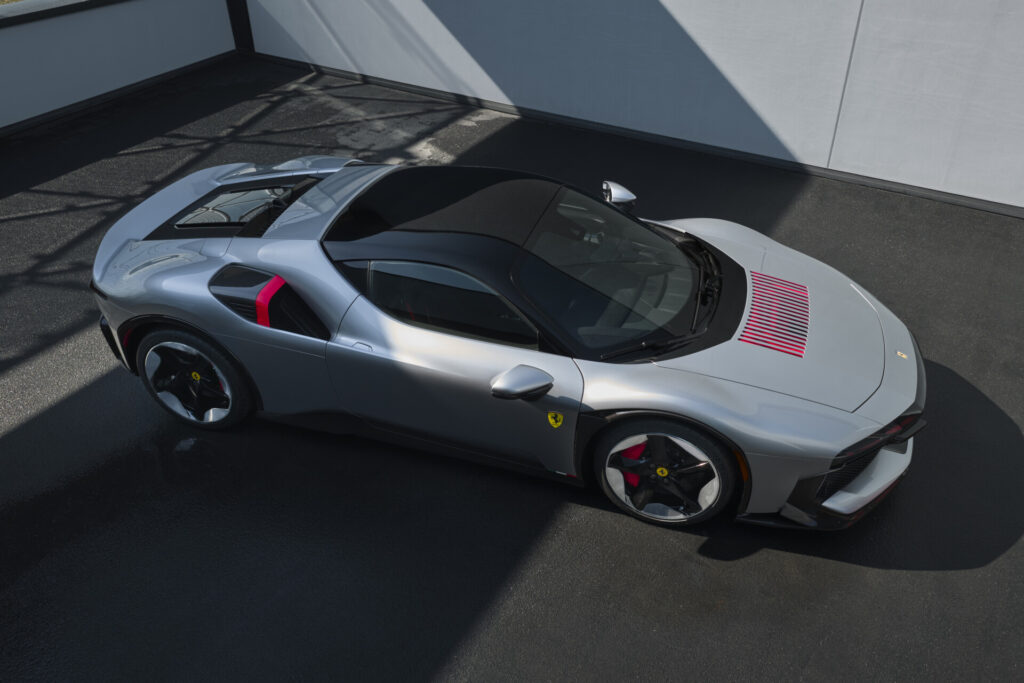
The wheels were drawn for this car and no other. Gloss black paint, then a shot-peened finish, blasted with microscopic beads until it comes up polished. The exhaust tips are titanium, left in their natural colour.
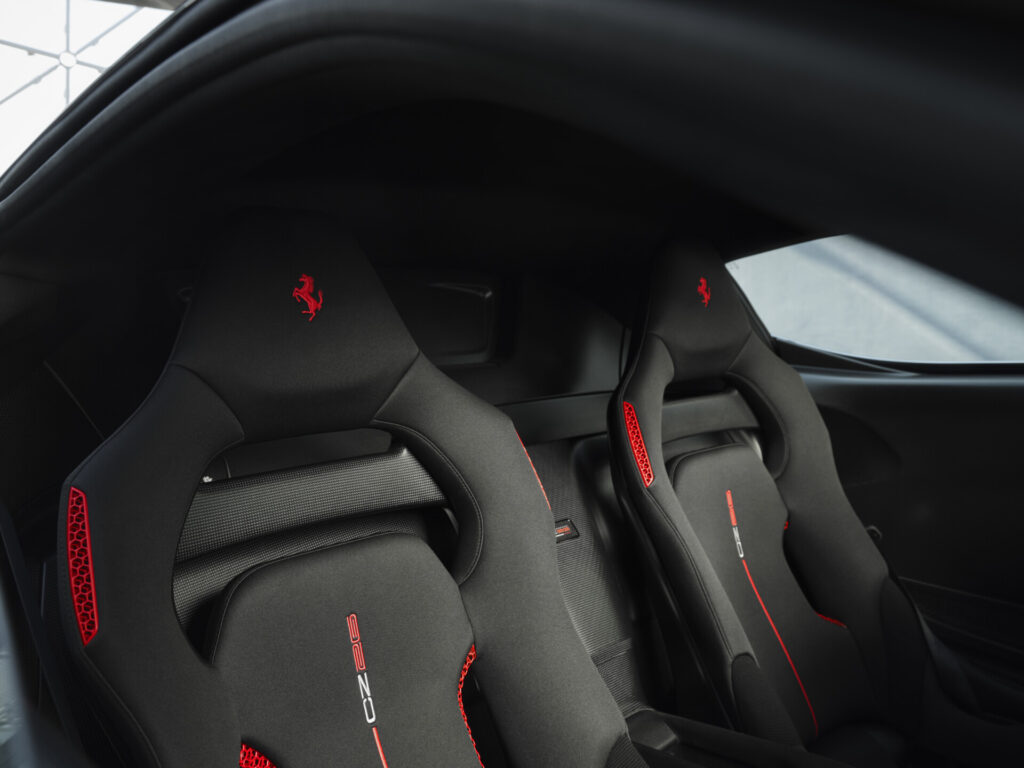
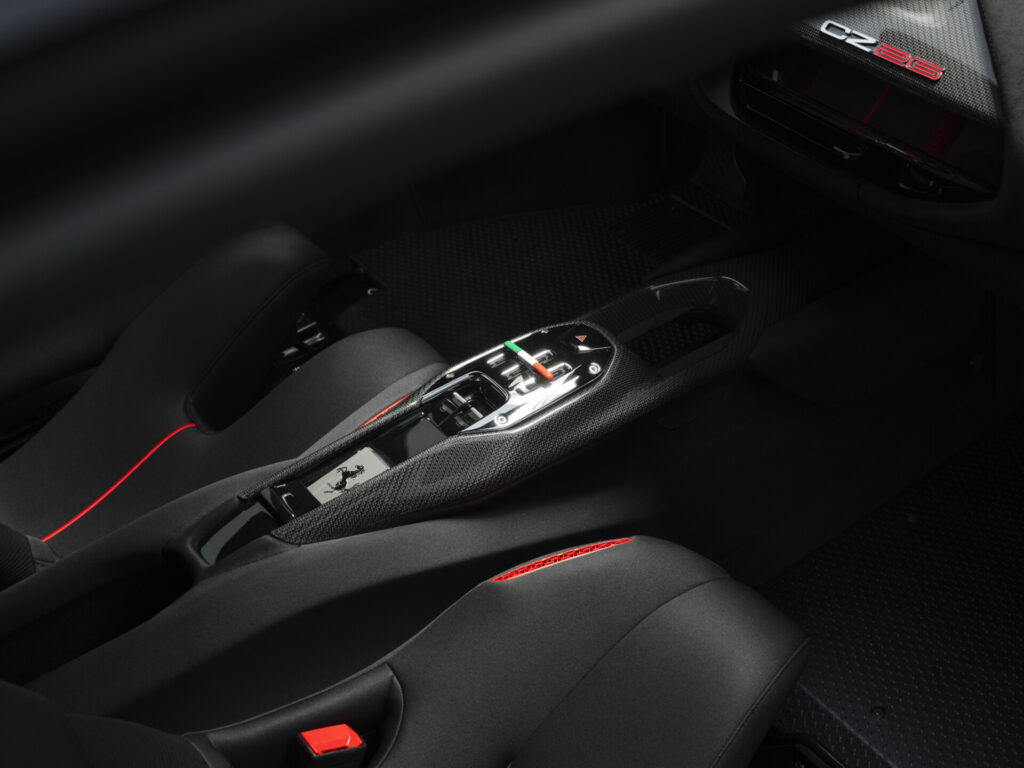
The cabin consists of black technical fabric, made for this car, covers most of it, and the seat inserts are 3D printed to a pattern drawn for the CZ26 alone. Red details carry over from outside, and a CZ26 logo is embroidered into the trim.
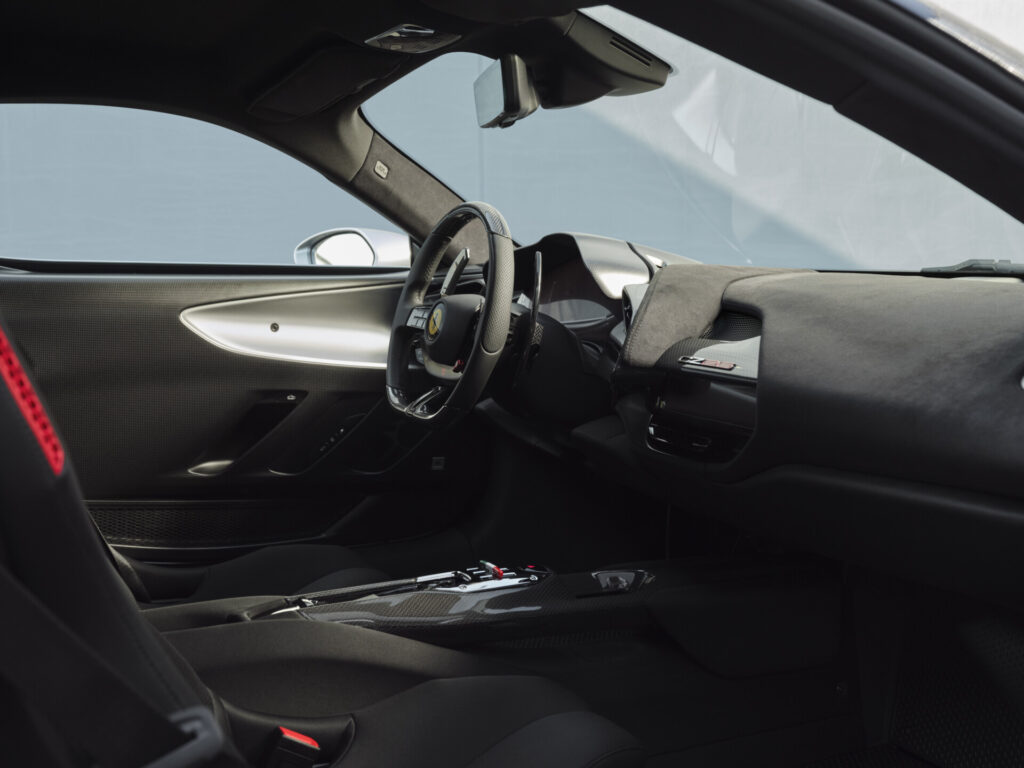
Matte fabric sits against satin carbon fibre, with a gloss carbon woven through with metallic threads for contrast. The door panels and the top of the dashboard are painted in the body colour.
Ferrari reworked the airflow over the whole car. The central radiator pack has been turned round and fed by new bypass ducts, cooling harder and adding downforce over the front axle. The floor and the vortex generators beneath it were redesigned with it.
Air curtains in the outer corners of the front bumper clear the air coming off the front wheels and cut drag. The back end gained a large upper spoiler and its own diffuser, plus a new engine cover vented straight into the engine bay.
Power and pace
The 3990 cm3 V8 makes 797 cv at 7900 rpm and 804 Nm at 6250 rpm, and revs to 8000 rpm. The electric motors add 162 kW, fed by a 7.9 kWh battery good for 25 km on its own. An eight-speed dual-clutch F1 gearbox takes it from there.
From a standstill, 100 km/h takes 2.5 seconds and 200 km/h takes 6.7. Stopping from 100 km/h needs less than 29.5 metres. The car is 4762 mm long, 2005 mm wide and 1189 mm tall, on a 2650 mm wheelbase, with 45 per cent of its weight at the front.
One of One
Special Projects cars start with the client, not the factory. The owner brings the idea and works it up with a team at the Styling Centre, through blueprints and a full-size styling buck, before any panel is made. The job runs to about two years, with the client signing off at each stage.
The SF90 Stradale was the first Ferrari road car built in series with a plug-in hybrid layout, named for the 90th anniversary of Scuderia Ferrari, and it has since led to the SF90 Spider, the 849 Testarossa, the 849 Testarossa Spider and the SF90 XX Stradale and Spider.