


Arranging a private jet charter for a chief executive involves a long list of logistical details, most of them handled by executive assistants (EAs) and travel managers well before anyone reaches the airport. Catering is one of those details, and when the CEO is the only passenger it is usually straightforward. Their breakfast order for an early departure, their preferred coffee or tea, and any ingredients to avoid are already well known.
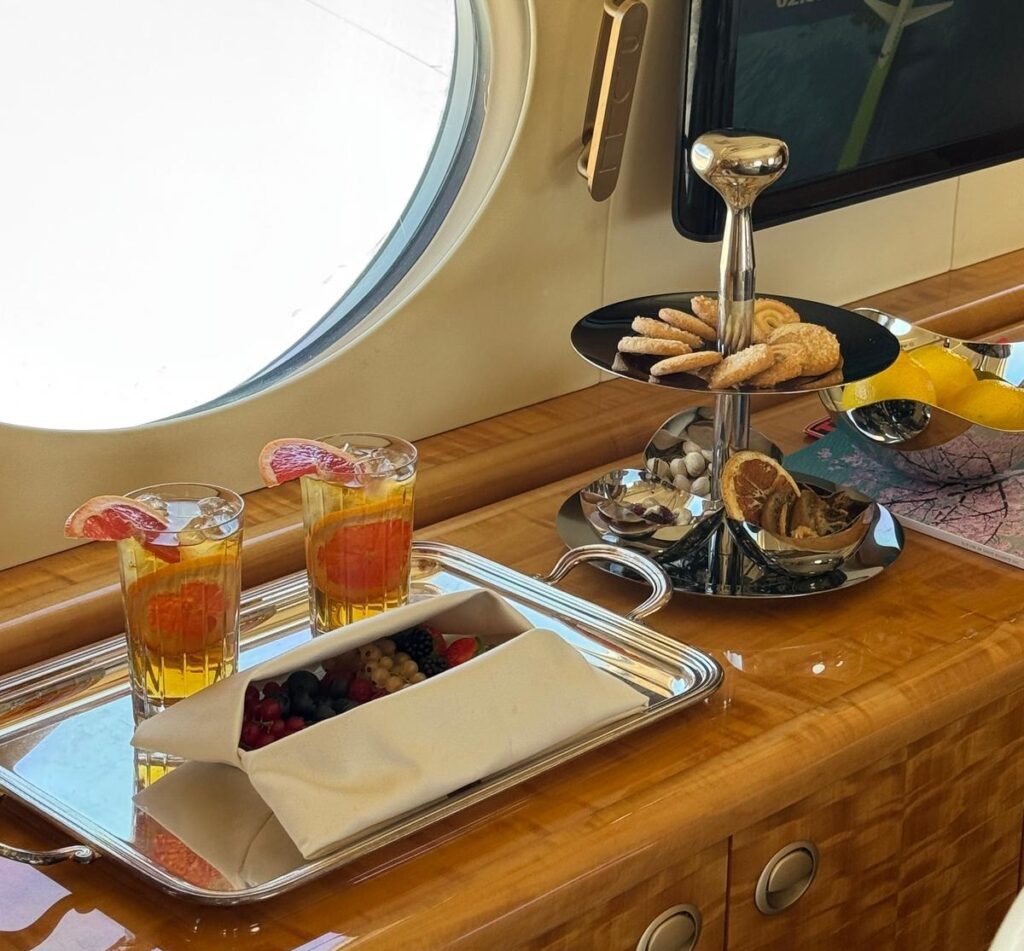
Adding clients to the flight changes the brief. Their private jet catering preferences are unlikely to be on file, dietary requirements may not be known until someone asks, and the right menu depends on why and when the group is travelling rather than on what the CEO usually orders. With a clear process and the right catering partner, the EA can account for all of this while keeping the order itself simple.
Purpose and timing come first
Before choosing individual dishes, the EA or travel manager should establish the purpose and timing of the trip, as these two details answer many questions at once. A CEO accompanying clients to a business meeting will often treat the flight as an extension of the office, while a leisure trip with the same guests brings a more relaxed atmosphere. The purpose sets the tone of the service, from a working breakfast to something more celebratory.
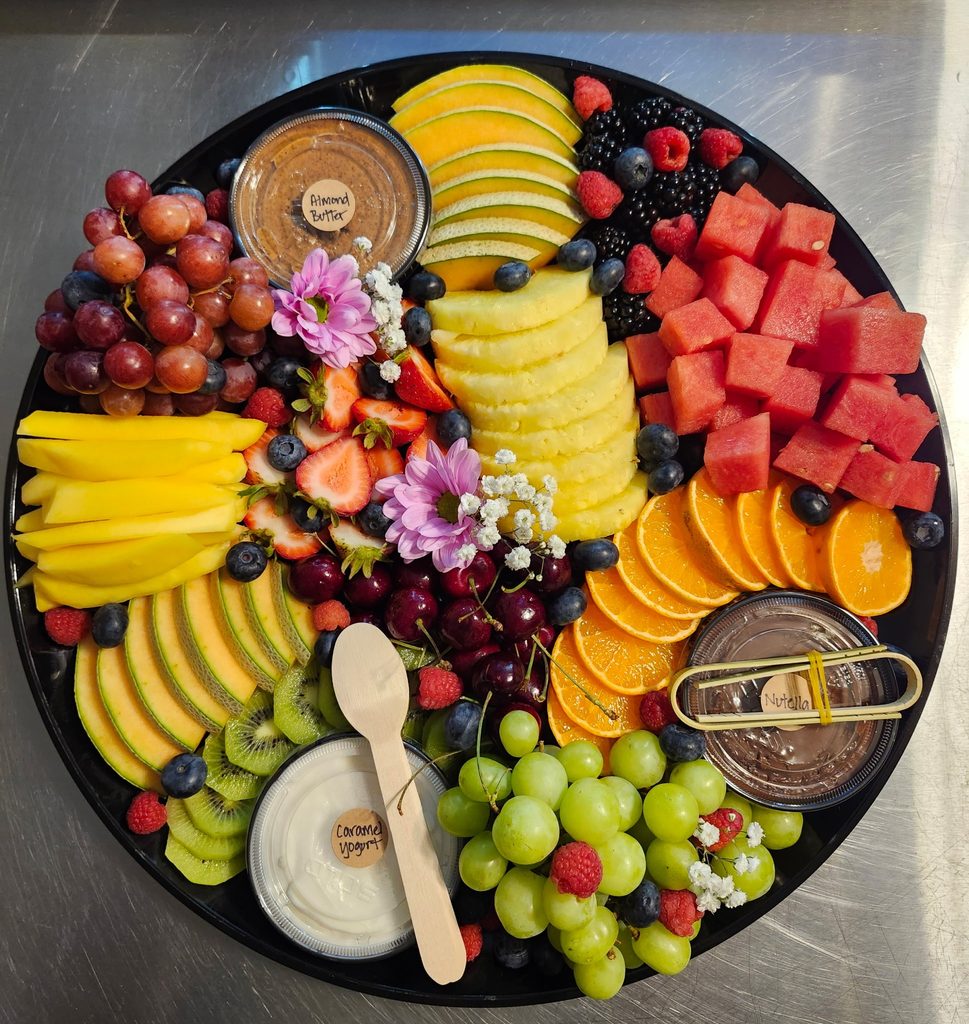
Timing then points towards the type of food required. A 07:00 departure suggests breakfast, coffee, juice, and lighter options, while a midday flight is likely to call for lunch. An early evening departure may need something more substantial, and a late-night return is often better served by light food that is easy to eat.
Flight duration adds a further layer. On a 60-minute flight an elaborate service makes little sense, whereas a 4-hour flight spanning a normal mealtime brings very different expectations. Purpose, departure time, flight duration, and the wider itinerary together form the first filters for any catering order.
Planning for every passenger
Knowing the CEO’s preferences and dietary needs is a strong starting point, but it does not cover the rest of the cabin. If the CEO invites three guests on board, the order needs to work for four people, and the CEO’s usual choices should not automatically become the menu for everyone.
The EA’s first step is to establish what is already known about the guests. If the company has flown with them before, there may be a record of their requirements, and a contact at the client company can often confirm preferences ahead of time. A short conversation usually gives the EA enough to make sensible decisions for the whole group.
The dietary question that matters
Dietary requirements are the one area where nothing should be assumed. A guest may have an allergy or follow a vegetarian, vegan, gluten-free, halal, kosher, or other diet. Having nothing suitable on board for a hosted client is an entirely avoidable problem.
This does not require a detailed questionnaire. A discreet question during travel coordination is usually enough: ‘Do you have any dietary requirements, allergies, or foods you prefer to avoid?’ Asked alongside the rest of the logistics, it keeps communication smooth and adds almost nothing to the planning process.
Once the answers are in, they need to pass clearly from the EA to the operator and the catering team. Working with a caterer that packages every order for the galley helps ensure each special meal reaches the right passenger in the right condition.
Choosing variety over volume
When VIP clients are on board, there is a natural instinct to order more, with extra main courses, additional dishes, and broader menus offered as a display of hospitality. In practice, a surplus takes up galley and storage space, adds to the cabin crew’s workload, and often ends up as waste.
Versatility delivers better hospitality than volume. An early morning flight might include pastries, fruit, yoghurt, and a hot option with suitable drinks, while a midday service could combine salads, proteins, a vegetarian dish, and desserts. The aim is a good option for every passenger on board, and a well-chosen menu achieves that with less.
Building flexibility into the order
Even with careful planning, schedules shift. A meeting runs late and everyone boards having already eaten. The CEO who normally takes lunch only wants coffee, or a guest who requested a full meal would prefer something lighter.
Items that can be served on their own handle these changes well. Individual portions of fruit, salads, sandwiches, and proteins allow the crew to adapt the service with minimal disruption. This approach also keeps costs in check, since private jet catering becomes expensive quickly when an order is padded with backup dishes that nobody eats.
Matching the menu to the aircraft
The aircraft itself is one of the most overlooked factors in private jet catering. Refrigeration, ovens, galley equipment, and storage space vary from one aircraft to the next, and not every restaurant dish translates well to that environment. The same order can perform very differently depending on the aircraft used.
Knowing the aircraft type in advance allows a far more accurate order, and the operator or flight crew can confirm capabilities where needed. SkyDine prepares every order in galley-spec packaging designed for the aircraft environment, so food travels, reheats, and presents as intended.
A good catering partner will also say when a requested dish is unlikely to work on board and suggest a suitable alternative. That advice is far more valuable than accepting the request and leaving the crew to manage the result.
Keeping pace with last-minute changes
Client travel rarely stands still. Passengers are added or cancel, departures move forward, airports change, aircraft are substituted, and dietary requirements sometimes arrive only hours before take-off.
SkyDine is built for exactly this. Its service is same-day capable, and its dispatch lane stays open when the manifest changes, so updates to passengers, timings, or aircraft can be handled rather than turned away.
When an exact item cannot be sourced at short notice, the right response is a clear alternative with transparent pricing, agreed before anything reaches the aircraft. A straightforward ‘we cannot source that today, but we can provide these two alternatives’ gives the person responsible for the trip the certainty they need.
The details passengers never see
Well-managed executive travel is often measured by what passengers never have to think about. The client does not know their dietary requirements were confirmed three days earlier, and the CEO never sees the discussion about whether a dish will work in the galley. Nobody on board needs to know the catering delivery was rescheduled after the departure moved.
They simply board and find everything they need already in place. With careful planning and a partner such as SkyDine, built for the way private aviation actually moves, the EA can deliver that experience on every flight, however much the plans change along the way.